Types of Rosacea: A Complete Guide to the Four Subtypes and Their Treatments
Rosacea is a chronic inflammatory skin condition that affects millions of people worldwide, yet it is frequently misunderstood — partly because it does not look the same in every person. The term covers at least four distinct subtypes, each with its own pattern of symptoms, affected areas, and treatment approach. Understanding which type or combination of types is present is the first step toward managing rosacea effectively, and it is the basis on which dermatologists and aesthetic practitioners now build personalised treatment plans.
Key Takeaways
- Rosacea is classified into four main subtypes: erythematotelangiectatic, papulopustular, phymatous, and ocular rosacea — plus recognised variants such as granulomatous rosacea.
- Many people present with features of more than one subtype simultaneously, so treatment is increasingly guided by individual symptom patterns rather than a single label.
- Each subtype has specific first-line treatments ranging from topical medications and oral antibiotics to laser therapy and surgical intervention.
- Rosacea flare-ups are driven by identifiable triggers — sun exposure, heat, alcohol, and stress among the most common — and trigger management is a core part of every treatment plan.
- Early diagnosis and treatment matter: untreated rosacea can progress, and phymatous changes such as rhinophyma are far more difficult to reverse once established.
What Is Rosacea?
Rosacea is a long-term skin condition characterised by episodes of flushing, persistent central facial erythema, and — depending on the subtype — visible blood vessels, acne-like breakouts, skin thickening, or eye involvement. It most commonly affects the central face: the cheeks, nose, chin, and forehead. The condition tends to follow a relapsing and remitting course, with rosacea flare-ups triggered by environmental, dietary, or emotional factors and periods of relative calm in between.
The National Rosacea Society (NRS) published its widely used four-subtype classification in 2002. In 2017, both the NRS and the ROSCO (Rosacea COnsensus) expert panel updated their guidance to incorporate a phenotype-based classification — an approach that focuses on the specific signs and symptoms a patient actually presents with, rather than fitting them into a single subtype box. This shift matters in practice because many patients display overlapping features, and treatment is now increasingly matched to individual phenotypes rather than assigned by subtype alone. For clarity, this article covers both frameworks.
The Four Main Types of Rosacea
The four subtypes of rosacea each have a distinct clinical profile. They can occur independently, but it is common for a person to have features of two or more subtypes at the same time — for example, persistent redness alongside acne-like breakouts, or facial flushing alongside eye irritation.
Subtype 1: Erythematotelangiectatic Rosacea (ETR)
Erythematotelangiectatic rosacea, often abbreviated to ETR, is characterised primarily by flushing and persistent central facial erythema — a fixed redness across the cheeks, nose, and sometimes the forehead and chin that does not fully resolve between episodes. Visible blood vessels, known as telangiectasias or thread veins, are a hallmark feature: these are small, dilated capillaries visible just beneath the skin surface, typically across the cheeks and nose. Many people with ETR also experience a burning or stinging sensation, heightened skin sensitivity, and swelling of the central face during flare-ups.
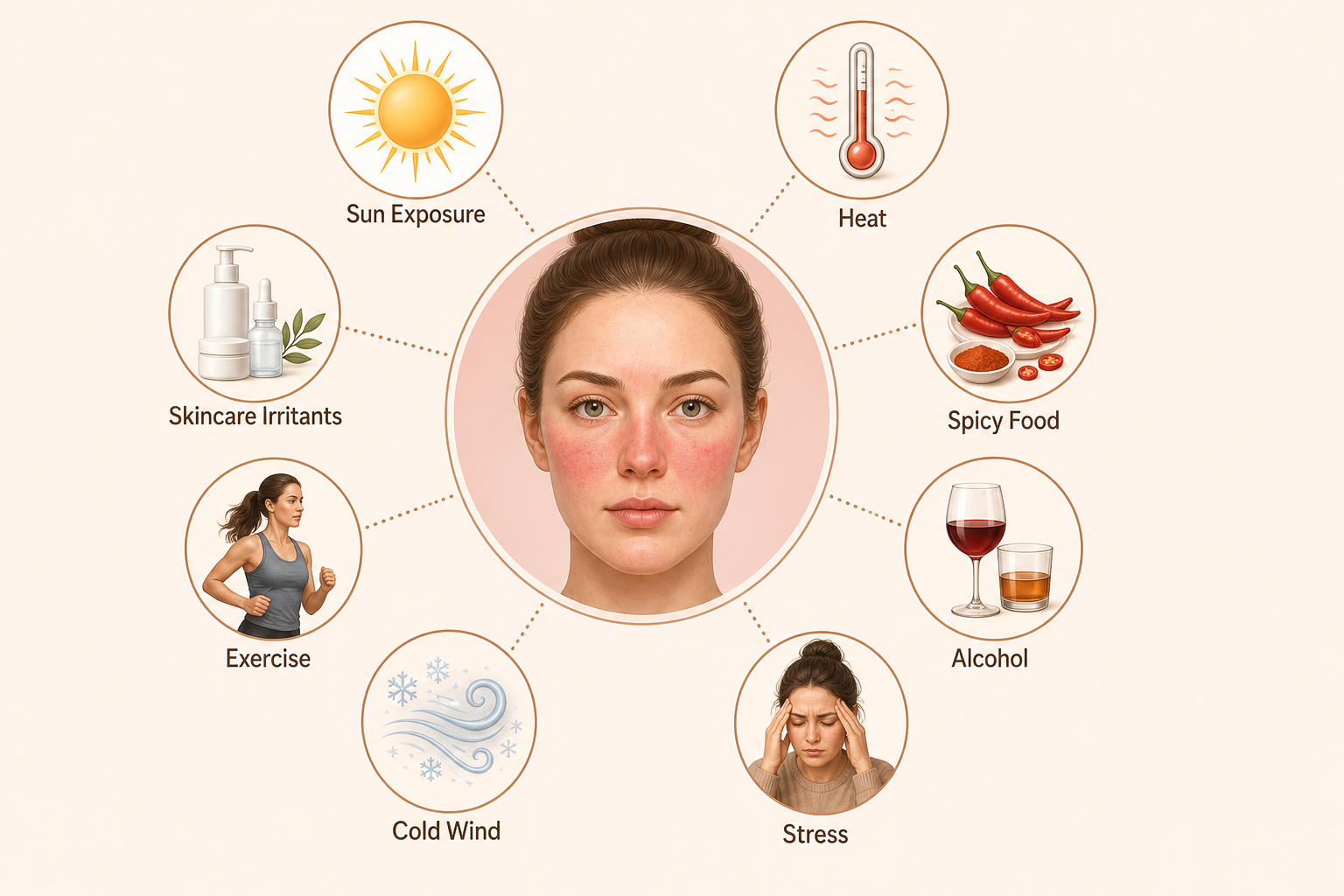
ETR is the subtype most closely associated with rosacea triggers. Sun exposure is the most consistently reported trigger, followed by heat, hot beverages, alcohol, spicy food, exercise, cold wind, and emotional stress. Identifying and managing personal triggers is a central part of treatment for this subtype. Daily use of a broad-spectrum mineral sunscreen with SPF 30 or higher is considered a baseline recommendation.
Medical treatments for ETR focus on reducing redness and flushing. Topical brimonidine and topical oxymetazoline are alpha-adrenergic agonists that temporarily constrict blood vessels and reduce visible redness, typically within 30 minutes of application. For longer-term reduction of telangiectasias and persistent erythema, vascular laser treatments — particularly pulsed dye laser — and intense pulsed light (IPL) are established procedural options. IPL uses broad-spectrum light to target haemoglobin in dilated vessels, reducing their visibility over a course of sessions. Results vary between individuals, and maintenance treatments are often needed.
Subtype 2: Papulopustular Rosacea (PPR)
Papulopustular rosacea — sometimes called acne rosacea, though this term is now considered imprecise — is defined by the presence of inflammatory papules (solid red bumps) and pustules (pus-filled spots) on a background of persistent facial redness. It is most commonly seen in middle-aged women, though it affects people of all ages and genders. The acne-like appearance frequently leads to misdiagnosis, but there are important distinguishing features: rosacea pustules do not involve blackheads or whiteheads (comedones), and the background redness is diffuse rather than localised around individual spots.
The absence of comedones is one of the most reliable clinical clues that separates papulopustular rosacea from acne vulgaris. Additionally, rosacea breakouts tend to be concentrated on the central face and are often accompanied by flushing and sensitivity, whereas acne vulgaris more commonly involves the jawline, chest, and back, and is typically driven by hormonal factors and sebaceous gland activity rather than vascular inflammation.
First-line topical treatments for PPR include metronidazole gel or cream, azelaic acid, and ivermectin cream (marketed as Soolantra in some countries). Ivermectin targets Demodex mites, which are found in higher numbers on the skin of people with rosacea and are thought to contribute to inflammation. For moderate to severe PPR, oral sub-antimicrobial dose doxycycline — a low-dose formulation that works through anti-inflammatory rather than antibiotic mechanisms — is a well-established treatment that reduces the risk of antibiotic resistance. Topical and oral treatments are often combined for greater effect. Patients should be aware that some acne treatments, including high-strength retinoids and glycolic acid, can worsen rosacea symptoms and should be used with caution or avoided.
Subtype 3: Phymatous Rosacea
Phymatous rosacea is the least common subtype and is characterised by progressive skin thickening, irregular surface texture, and nodular changes. The nose is the most frequently affected site, producing a condition known as rhinophyma — a bulbous, enlarged appearance caused by overgrowth of sebaceous glands and connective tissue. Less commonly, phymatous changes affect the chin (gnathophyma), forehead (metophyma), ears (otophyma), or eyelids (blepharophyma).
Phymatous rosacea is significantly more common in men than in women, and it tends to develop in people who have had longstanding, inadequately treated rosacea — though it can occasionally appear without a clear prior history of other subtypes. The skin changes are gradual and may go unnoticed until they are well established. This underlines why early treatment of rosacea matters: rhinophyma is far more difficult to manage once significant tissue overgrowth has occurred.
In early phymatous rosacea, oral isotretinoin may help slow progression by reducing sebaceous gland activity, though it does not reverse established tissue changes. Once rhinophyma is established, surgical or laser-based debulking procedures — including CO2 laser resurfacing, electrosurgery, or dermabrasion — are the primary treatment options. These procedures reshape the nose by removing excess tissue, but they carry risks including scarring, pigmentation changes, and recurrence, and should be performed by an experienced clinician. Referral to a dermatologist or plastic surgeon is appropriate for established phymatous disease.
Subtype 4: Ocular Rosacea
Ocular rosacea affects the eyes and eyelids and is thought to be present in a significant proportion of people with rosacea — estimates vary, but some studies suggest it may affect up to 50% of rosacea patients at some point. Despite this, it is frequently underdiagnosed, partly because patients and clinicians may not connect eye symptoms with a skin condition, and partly because ocular rosacea can occur without obvious skin involvement.
Symptoms of ocular rosacea include persistent eye redness, a gritty or foreign-body sensation, dryness, watering, light sensitivity, and recurrent styes. Blepharitis — inflammation of the eyelid margins — is a common associated finding, causing crusting, scaling, and irritation along the lash line. In more severe cases, ocular rosacea can affect the cornea, potentially threatening vision if left untreated.
Management of ocular rosacea typically begins with eyelid hygiene: warm compresses applied to closed eyelids help loosen debris and improve meibomian gland function, and gentle lid cleaning reduces bacterial load. Artificial tears can relieve dryness and irritation. For more significant inflammation, topical or oral antibiotics — including low-dose doxycycline — may be prescribed. Patients with persistent or worsening eye symptoms should be referred to an ophthalmologist, as specialist assessment is important to rule out corneal involvement and guide treatment.
Rosacea Variants: Beyond the Four Subtypes
In addition to the four main subtypes, several rosacea variants are recognised, though they do not fit neatly into the standard classification.
Granulomatous Rosacea
Granulomatous rosacea is characterised by firm, indurated (hardened) papules or nodules — typically yellow, brown, or skin-coloured — that appear on the face. Unlike other rosacea subtypes, granulomatous rosacea does not require background redness or other classic rosacea features for diagnosis. It tends to be resistant to standard rosacea treatments and may require oral antibiotics, oral isotretinoin, or other systemic therapies. Biopsy is sometimes needed to confirm the diagnosis.
Rosacea Fulminans
Rosacea fulminans, also called pyoderma faciale, is a rare and severe variant that occurs almost exclusively in women, often with a sudden onset. It presents with widespread, confluent inflammatory nodules, papules, and pustules across the face, sometimes accompanied by significant swelling. It is distinct from typical rosacea in its severity and rapid progression, and it requires prompt medical treatment — usually a combination of oral isotretinoin and systemic corticosteroids.
Neurogenic Rosacea
Neurogenic rosacea is an emerging proposed variant characterised by burning and stinging sensations that are disproportionate to the degree of visible redness or skin changes. It is thought to involve heightened sensitivity of cutaneous nerves rather than primarily vascular or inflammatory mechanisms. This variant is not yet formally classified by the NRS, but it is increasingly recognised in clinical practice and research. Standard rosacea treatments may be less effective for neurogenic rosacea, and management may require different approaches targeting nerve sensitivity.
Phenotype-Based Classification: A More Personalised Approach
The 2017 updates from both the National Rosacea Society and the ROSCO panel moved away from rigid subtype labelling toward a phenotype-based classification. Rather than assigning a patient to a single subtype, this approach identifies the specific features — or phenotypes — present in that individual: persistent redness, flushing, telangiectasias, papules and pustules, skin thickening, or ocular signs. Treatment is then selected to target the phenotypes that are actually causing the patient’s symptoms.
This matters for patients because it acknowledges that rosacea-prone skin rarely fits a single category. A person might have persistent central facial erythema and telangiectasias (ETR features) alongside inflammatory papules (PPR features), and their treatment plan should address both. The phenotype-based approach also allows treatment to be adjusted as the condition evolves over time, rather than being locked to an initial subtype diagnosis.
Rosacea Triggers: What Causes Flare-Ups?
Rosacea flare-ups are typically provoked by specific triggers that vary between individuals. The most commonly reported triggers include:
- Sun exposure — ultraviolet radiation is the most consistently identified trigger across all subtypes
- Heat — hot weather, saunas, hot baths, and central heating
- Spicy foods and hot beverages — including coffee, tea, and alcohol (particularly red wine)
- Exercise — particularly vigorous aerobic activity that raises core body temperature
- Emotional stress — anxiety, embarrassment, and anger
- Cold wind — temperature extremes in either direction can provoke flushing
- Skincare ingredients — alcohol, fragrance, menthol, glycolic acid, and high-strength retinoids are common irritants for rosacea-prone skin
Keeping a trigger diary — noting what preceded each flare-up — is a practical way to identify personal patterns. Not every trigger affects every person, and the goal is not to eliminate all potential triggers but to identify the most significant individual ones and manage them where possible.
Rosacea vs. Acne: How to Tell the Difference
Papulopustular rosacea is frequently confused with acne vulgaris, and the distinction matters because some acne treatments can worsen rosacea. The key differences are summarised below.
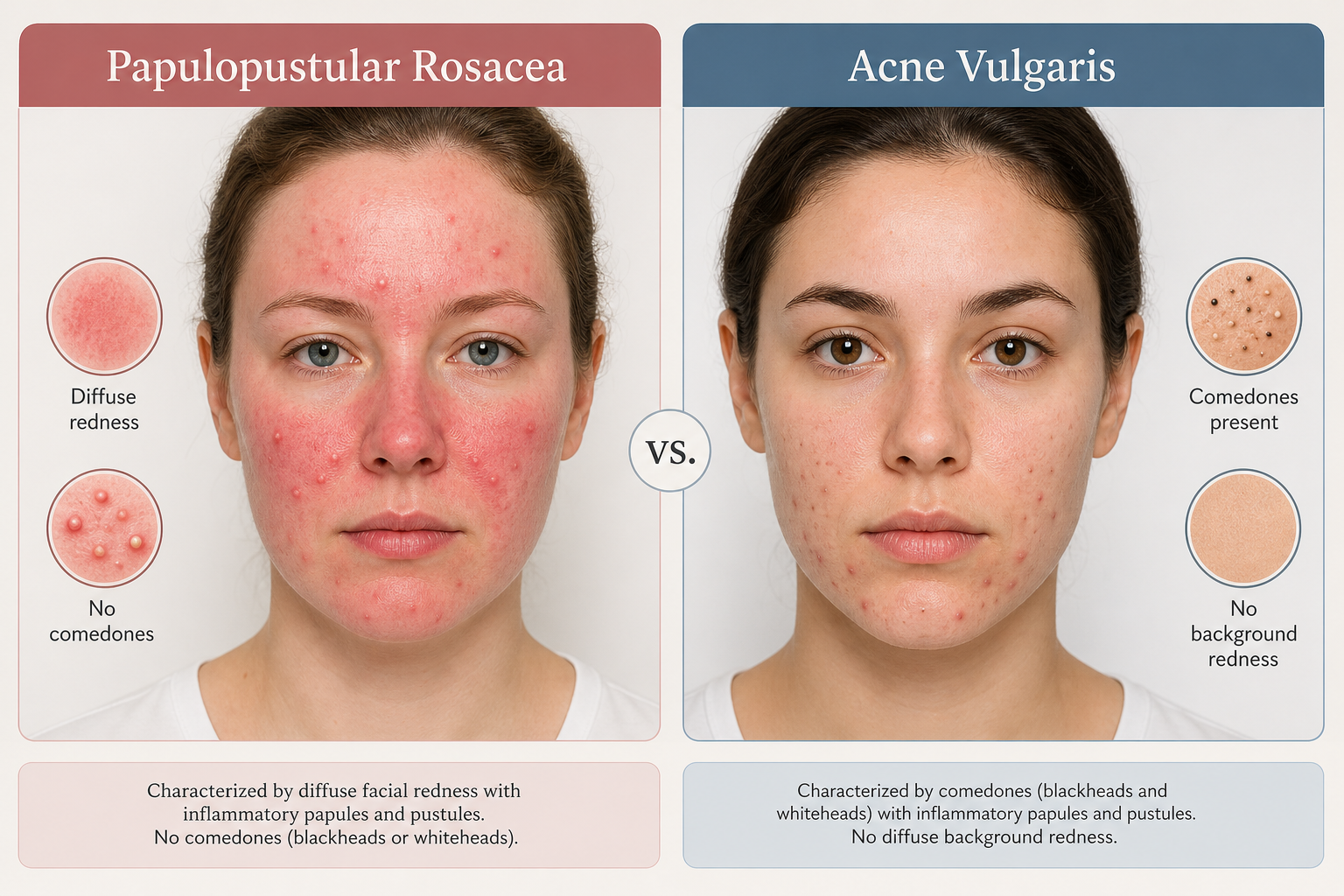
| Feature | Papulopustular Rosacea | Acne Vulgaris |
|---|---|---|
| Comedones (blackheads/whiteheads) | Absent | Present |
| Background redness | Persistent, diffuse | Usually absent |
| Flushing | Common | Uncommon |
| Typical location | Central face | Face, chest, back |
| Primary driver | Vascular and inflammatory | Hormonal, sebaceous |
| Triggers | Sun, heat, alcohol, stress | Hormonal fluctuations, diet |
| Response to retinoids | May worsen symptoms | Often beneficial |
If there is uncertainty about the diagnosis, a consultation with a dermatologist is the appropriate next step. Treating rosacea as acne — particularly with high-strength topical retinoids or benzoyl peroxide — can aggravate inflammation and worsen the skin barrier, making symptoms harder to manage.
Rosacea in Darker Skin Tones
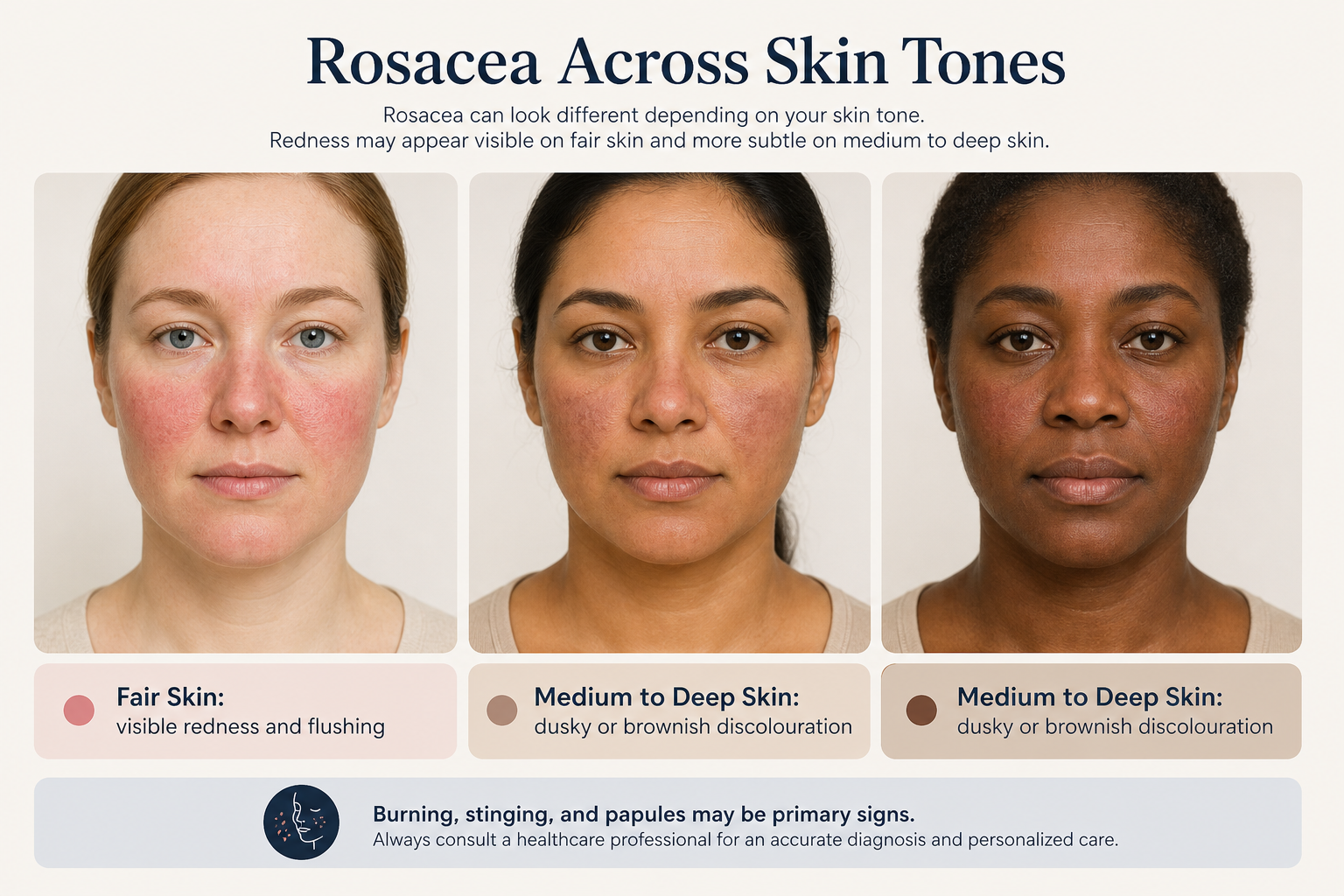
Rosacea is often described as a condition affecting fair-skinned individuals, but it occurs across all skin tones and ethnicities. In people with medium to deeper skin tones, the characteristic redness may be less visible or may appear as a dusky, brownish discolouration rather than obvious flushing. This can delay diagnosis significantly. Burning, stinging, papules, pustules, and ocular symptoms may be the presenting features rather than visible erythema, and clinicians should consider rosacea in the differential diagnosis regardless of skin tone. Awareness of this diagnostic gap is important for both patients and practitioners.
Skincare for Rosacea-Prone Skin
Regardless of subtype, protecting and supporting the skin barrier is a consistent priority in rosacea management. The skin barrier in rosacea-prone skin is often compromised, contributing to sensitivity, transepidermal water loss, and increased reactivity to environmental triggers. A simplified, gentle skincare routine is generally recommended.
- Cleanser: Use a fragrance-free, non-foaming, gentle cleanser. Avoid physical scrubs and cleansing brushes, which can aggravate inflammation.
- Moisturiser: A ceramide-rich, fragrance-free moisturiser helps repair and maintain the skin barrier. Apply while skin is slightly damp to improve absorption.
- Sunscreen: A broad-spectrum mineral sunscreen (zinc oxide or titanium dioxide) with SPF 30 or higher should be applied every morning. Mineral formulations are generally better tolerated than chemical filters by rosacea-prone skin.
- Avoid known irritants: Alcohol-based toners, glycolic acid at high concentrations, menthol, camphor, and synthetic fragrance are common triggers. Patch test new products before full application.
Rosacea-friendly makeup — mineral-based, fragrance-free, and non-comedogenic — can help camouflage redness while the skin is being treated. Green-tinted primers may reduce the appearance of redness for some individuals.
Treatment by Subtype: A Summary
| Subtype | Key Symptoms | First-Line Treatments | Procedural Options |
|---|---|---|---|
| ETR (Subtype 1) | Flushing, persistent redness, telangiectasias, burning | Topical brimonidine or oxymetazoline, trigger avoidance, SPF | Intense pulsed light (IPL), pulsed dye laser, vascular laser |
| PPR (Subtype 2) | Papules, pustules, background redness, no comedones | Topical metronidazole, azelaic acid, ivermectin; oral sub-antimicrobial dose doxycycline | IPL (for background redness component) |
| Phymatous (Subtype 3) | Skin thickening, rhinophyma, nodular texture | Oral isotretinoin (early disease) | CO2 laser, electrosurgery, dermabrasion (established disease) |
| Ocular (Subtype 4) | Eye redness, blepharitis, gritty sensation, dryness | Lid hygiene, warm compresses, artificial tears, oral doxycycline | Ophthalmologist referral for corneal involvement |
The Psychosocial Impact of Rosacea
The ROSCO 2019 expert panel explicitly highlighted the psychosocial burden of rosacea as a clinically important dimension that is often underestimated. Persistent facial redness, visible blood vessels, and acne-like breakouts can significantly affect self-confidence, social behaviour, and quality of life. Research has found higher rates of anxiety, depression, and social withdrawal among people with rosacea compared to the general population. This is not a minor or cosmetic concern — it is a recognised aspect of the condition’s impact that should be part of any holistic management discussion. Patients who feel their rosacea is affecting their mental wellbeing should raise this with their clinician, as psychological support can be an important part of overall care.
Frequently Asked Questions
Can you have more than one type of rosacea at the same time?
Yes, and this is common. Many people present with features of two or more subtypes simultaneously — for example, persistent redness and telangiectasias alongside inflammatory papules and pustules. The phenotype-based classification now used by dermatologists is designed precisely to address this overlap, allowing treatment to target the specific combination of features present rather than forcing a single subtype label.
Is rosacea curable?
Rosacea is a chronic condition without a known cure, but it can be effectively managed. With appropriate treatment and trigger avoidance, many people achieve significant reduction in symptoms and long periods of remission. The goal of treatment is control rather than cure, and most people need some form of ongoing management to maintain improvement.
How do I know which subtype of rosacea I have?
A diagnosis should be made by a qualified clinician — typically a dermatologist or an experienced aesthetic practitioner. They will assess your specific symptoms, their distribution, and their severity. Because subtypes frequently overlap, the clinician may identify features of more than one subtype and tailor treatment accordingly. Self-diagnosis based on photographs or online descriptions is unreliable and may lead to inappropriate treatment choices.
Can rosacea get worse if left untreated?
For many people, rosacea does progress over time without treatment. Persistent inflammation can lead to more permanent vascular changes, and phymatous rosacea — including rhinophyma — can develop in people with longstanding, untreated disease. Ocular rosacea, if unrecognised and untreated, can in rare cases affect the cornea. Early treatment generally leads to better long-term outcomes.
Does rosacea only affect fair skin?
No. Rosacea affects people of all skin tones and ethnicities, though it is more frequently diagnosed in lighter-skinned individuals. In darker skin tones, redness may be less visible, which can delay diagnosis. Burning, stinging, papules, and eye symptoms may be more prominent presenting features in people with deeper skin tones.
Are there any foods I should avoid with rosacea?
Dietary triggers vary between individuals. Spicy foods, hot beverages, and alcohol — particularly red wine — are among the most commonly reported dietary triggers. However, not everyone with rosacea is affected by the same foods. Keeping a food and symptom diary can help identify personal dietary triggers without unnecessarily restricting the diet.
Finding the Right Approach for Your Rosacea Subtype
Rosacea is not a single condition with a single solution. The four subtypes — erythematotelangiectatic, papulopustular, phymatous, and ocular rosacea — each have distinct features, different affected populations, and different treatment priorities. Variants such as granulomatous rosacea and rosacea fulminans add further complexity. The shift toward phenotype-based classification reflects the clinical reality that most people with rosacea present with a unique combination of symptoms that does not fit neatly into one box.
Effective management begins with an accurate diagnosis from a qualified clinician who can identify which features are present, assess severity, and recommend a treatment plan matched to your specific phenotype. This may involve topical medications, oral treatments, procedural options such as intense pulsed light or laser therapy, and ongoing skincare adjustments. Trigger management and skin barrier support are relevant for every subtype. If rosacea is affecting your confidence or quality of life, that is a valid and important reason to seek professional advice — the condition is treatable, and meaningful improvement is achievable for most people with the right approach.