How Long Does TRT Take to Work: A Realistic Timeline
Testosterone replacement therapy (TRT) does not produce overnight results, and understanding the realistic TRT timeline before you begin can make the difference between informed patience and unnecessary frustration. Most men with clinically confirmed hypogonadism notice the first changes within two to four weeks, but meaningful improvements in body composition, sexual function, and bone mineral density unfold over months to years. This article explains what to expect at each stage, which factors influence how quickly you respond, and what to do if results are slower than anticipated.
Key Takeaways
- Early changes such as improved mood and energy may appear within one to four weeks, but some of this initial response may partly reflect a placebo effect rather than full hormonal action.
- Libido and sexual function typically improve between weeks three and twelve; lean body mass and body composition changes become measurable from around weeks twelve to sixteen.
- The delivery method — injections, gels, or pellets — affects how quickly serum testosterone levels stabilise, which in turn influences when results appear.
- Factors including baseline testosterone levels, body fat percentage, aromatization, and lifestyle choices all affect how fast medically supervised testosterone therapy produces noticeable benefits.
- Blood work at six weeks, twelve weeks, and then annually is essential for confirming therapeutic levels, monitoring safety markers, and guiding dose adjustment.
What Happens in Your Body When TRT Begins
When testosterone replacement therapy is initiated, exogenous testosterone enters the bloodstream and begins binding to androgen receptors throughout the body. Androgen receptor sensitivity varies between individuals and is influenced by genetics, age, and prior hormone exposure, which partly explains why two men on identical protocols can experience different rates of improvement. Within the first one to two weeks, serum testosterone levels begin rising toward the therapeutic range, though steady-state levels — the point at which hormone concentrations stabilise — are not typically reached until after several weeks of consistent dosing.
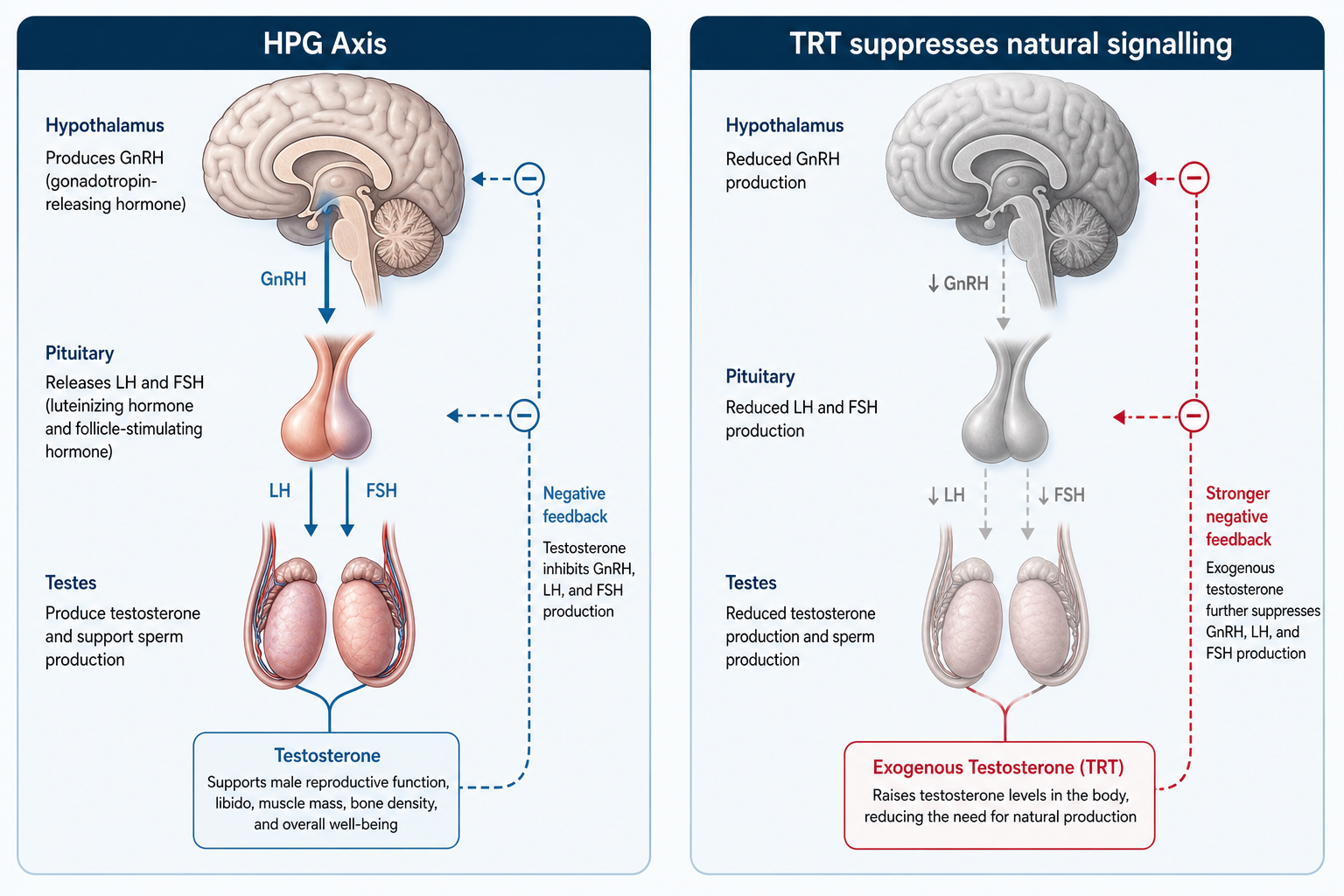
A clinically important process that begins during this early phase is HPG axis suppression. The hypothalamic-pituitary-gonadal (HPG) axis is the hormonal feedback loop that normally signals the testes to produce testosterone. Once exogenous testosterone is introduced, the brain detects rising hormone levels and progressively reduces its own signalling. By approximately weeks six to eight, the body’s endogenous testosterone production is largely suppressed. This is a normal and expected consequence of medically supervised testosterone therapy, but it means that TRT is a long-term commitment: stopping abruptly without medical guidance can leave the body temporarily unable to produce adequate testosterone on its own.
Aromatization is another early process worth understanding. Testosterone is naturally converted to oestradiol (a form of oestrogen) by an enzyme called aromatase, which is found in higher concentrations in adipose (fat) tissue. Men with higher body fat percentages tend to aromatize more testosterone into oestradiol, which can blunt the effects of TRT and delay results. Elevated oestradiol can also contribute to symptoms such as water retention, mood changes, and reduced libido — the very symptoms TRT is intended to address. This is one reason why body composition and lifestyle factors meaningfully affect the TRT timeline.
TRT Timeline: Week-by-Week and Month-by-Month Results
The following breakdown reflects general patterns reported in clinical literature and practice. Individual results vary depending on the delivery method, dosing protocol, baseline health, and adherence to treatment. Timelines should be treated as approximate guides rather than guarantees.
Weeks 1–2: Early Hormonal Shifts
During the first two weeks, serum testosterone levels begin rising but have not yet reached steady-state. Some men report a subtle improvement in energy, sleep quality, or general sense of wellbeing during this period. It is important to acknowledge that some of this early improvement may partly reflect a placebo response — the psychological benefit of beginning treatment — rather than full hormonal action. This does not make the experience less real, but it is a clinically honest caveat that helps set appropriate expectations. Significant changes to libido, muscle mass, or body composition are not expected this early.
Weeks 3–6: Mood, Energy, and Early Libido Changes
Between weeks three and six, many men begin noticing more consistent improvements in mood, mental clarity, and energy levels. Brain fog — a commonly reported low T symptom involving difficulty concentrating and mental fatigue — often begins to lift during this window. Libido may start to increase, and some men notice the return of morning erections, which can be an early indicator that testosterone levels are moving into a therapeutic range. Peer-reviewed research, including a review published in the Journal of Sexual Medicine, suggests that improvements in sexual desire can begin as early as week six in men with confirmed hypogonadism. Blood work at the six-week mark is typically recommended to assess serum testosterone levels and check safety markers including hematocrit and oestradiol.
Weeks 6–12: Sexual Function and Cognitive Improvements
Erectile function tends to respond more slowly than libido, with meaningful improvements in erectile quality often emerging between weeks six and twelve. This distinction matters: libido (desire) and erectile function (physical response) are related but separate processes, and the latter may require a longer period of hormonal stabilisation. Cognitive function — including mental clarity, motivation, and mood stability — typically continues to improve through this phase. Men who began treatment with very low baseline testosterone levels, particularly below 200 ng/dL, may notice more pronounced changes during this period compared with those who started with borderline-low levels, because the relative hormonal shift is greater.
Months 3–6: Body Composition and Lean Muscle Mass
Measurable changes in lean body mass and body composition generally begin to emerge between weeks twelve and sixteen, with more substantial differences visible by months three to six. Clinical studies, including a 2024 narrative review examining men over fifty, found that improvements in lean muscle mass and reductions in fat mass became statistically significant within three months of initiating testosterone replacement therapy. These changes are more pronounced when TRT is combined with resistance training and a protein-adequate diet, as testosterone enhances the anabolic response to exercise rather than producing muscle growth independently. Fat loss tends to follow a similar timeline, with body fat percentage declining gradually as lean body mass increases and metabolic health improves.
Months 6–24+: Bone Mineral Density and Long-Term Changes
Bone mineral density (BMD) is one of the slowest-responding outcomes of testosterone replacement therapy. Meaningful improvements in BMD typically require at least six months of treatment, with continued gains documented over eighteen to thirty-six months of sustained therapy. This is particularly relevant for men with hypogonadism who are at elevated risk of osteoporosis. Insulin sensitivity and glycaemic control may also improve over this longer arc, contributing to broader metabolic health benefits. It is worth noting that if TRT is discontinued, many of these benefits — including changes in lean body mass, bone density, and hormonal balance — will gradually reverse, underscoring the importance of discussing long-term treatment planning with a qualified clinician.
| Symptom or Outcome | Approximate Onset | Approximate Full Effect |
|---|---|---|
| Mood and energy | Weeks 1–4 | Weeks 6–12 |
| Mental clarity / brain fog | Weeks 2–4 | Weeks 6–12 |
| Libido / sex drive | Weeks 3–6 | Weeks 6–12 |
| Erectile function | Weeks 6–12 | Months 3–6 |
| Lean body mass / muscle | Weeks 12–16 | Months 6–12 |
| Body fat / body composition | Months 3–4 | Months 6–12 |
| Bone mineral density | Months 6–12 | Months 18–36 |
| Insulin sensitivity | Days to weeks | Months 3–6 |
Does the Delivery Method Affect How Fast TRT Works?
The delivery method used for testosterone replacement therapy has a meaningful effect on how quickly serum testosterone levels rise and stabilise, which in turn influences when results begin to appear. The most common delivery methods each have distinct pharmacokinetic profiles.
Testosterone Injections
Testosterone cypionate and testosterone enanthate are the most widely used injectable forms of TRT. Both are administered intramuscularly, typically every one to two weeks, though some protocols use more frequent smaller doses to reduce hormonal fluctuation. Injections produce a relatively rapid rise in serum testosterone levels within twenty-four to seventy-two hours of administration, followed by a gradual decline before the next dose. Steady-state levels are generally reached after three to four injection cycles. The peak-and-trough pattern of less frequent injections can mean that some men feel the effects more strongly in the days immediately after injection and notice a dip toward the end of the dosing interval.
Testosterone Gels and Patches
Topical testosterone gel and transdermal patches deliver testosterone through the skin, producing more stable daily hormone levels compared with less frequent injections. Steady-state absorption is typically achieved within two to four weeks of consistent daily application. Because levels rise more gradually, some men may notice a slightly slower onset of subjective improvements compared with injections, though the more consistent hormone profile can reduce mood fluctuations associated with injection peaks and troughs.
Testosterone Pellets
Testosterone pellets (sometimes referred to by the brand name Testopel) are small implants inserted subcutaneously, typically in the hip or buttock area, every three to six months. Pellets release testosterone gradually over their active period, providing stable levels without the need for frequent self-administration. Hormone levels rise over the first two to four weeks after insertion and remain relatively stable thereafter. Because pellets cannot be adjusted once inserted, dose optimisation requires careful planning before each insertion procedure.
| Delivery Method | Time to Steady-State | Dosing Frequency | Level Stability |
|---|---|---|---|
| Testosterone cypionate / enanthate (injection) | 3–4 injection cycles | Weekly to fortnightly | Moderate (peaks and troughs) |
| Topical gel / transdermal patch | 2–4 weeks | Daily | High (consistent daily levels) |
| Testosterone pellets | 2–4 weeks post-insertion | Every 3–6 months | High (gradual sustained release) |
Factors That Affect How Quickly TRT Works
Several variables influence the speed and magnitude of response to testosterone replacement therapy. Understanding these factors helps set realistic expectations and identifies areas where lifestyle changes can support treatment outcomes.
- Baseline testosterone levels: Men starting treatment with very low serum testosterone — particularly below 200 ng/dL — often experience more noticeable early improvements because the relative hormonal change is larger. Those with borderline-low levels may notice more gradual changes.
- Age and BMI: Older men and those with higher body mass index may respond more slowly, partly due to reduced androgen receptor sensitivity and higher rates of aromatization in adipose tissue.
- Body fat and aromatization: Higher body fat increases the conversion of testosterone to oestradiol. Elevated oestradiol can counteract some of the intended effects of TRT, delaying improvements in libido, energy, and body composition. Managing body fat through diet and exercise supports better treatment outcomes.
- Lifestyle factors: Resistance training, adequate sleep, and a nutritious diet all enhance the body’s response to testosterone. TRT is not a substitute for healthy habits; it works most effectively when combined with them.
- Comorbidities: Conditions such as obesity, type 2 diabetes, thyroid dysfunction, and metabolic syndrome can blunt the response to TRT and may require concurrent management.
- Protocol accuracy: Subtherapeutic dosing — where the prescribed dose is insufficient to raise serum testosterone into the therapeutic range — is a common and correctable reason for a slow or absent response. This is identified through blood work and addressed through dose adjustment.

TRT for Women: A Brief Note on Onset
While most TRT discussions focus on men, testosterone therapy is also used in women — typically at much lower doses — to address symptoms including reduced libido, fatigue, and bone protection in postmenopausal women. The onset timeline for women on testosterone therapy differs from the male experience. Improvements in libido and energy in women may begin within four to eight weeks of initiating low-dose testosterone, though the evidence base for female TRT is less extensive than for male hypogonadism. Women considering testosterone therapy should discuss the available evidence, appropriate dosing, and monitoring requirements with a clinician experienced in female hormonal health, as this remains a more nuanced and evolving area of practice.
Monitoring: Why Blood Work Is Tied to the Results Timeline
The recommended blood work schedule for TRT is not arbitrary — it is directly connected to the results timeline and to patient safety. A first blood test at approximately six weeks allows the clinician to confirm that serum testosterone levels have reached the therapeutic range and to check early safety markers. Hematocrit monitoring is particularly important because testosterone stimulates red blood cell production; elevated hematocrit (a condition called polycythemia) increases the risk of blood clots and requires prompt management, which may include dose reduction or therapeutic phlebotomy.
A twelve-week blood test provides a more complete picture of the hormonal response, including total testosterone, free testosterone, oestradiol, and prostate-specific antigen (PSA) in men over a certain age. Oestradiol monitoring helps identify excessive aromatization, which may warrant protocol optimization. After the first year, annual blood work is typically sufficient for stable patients. Understanding this monitoring schedule helps explain why patience is clinically necessary: dose adjustment decisions are made based on laboratory data, not solely on subjective symptoms, and meaningful data takes weeks to accumulate.
What to Do If TRT Does Not Seem to Be Working
If you have been on testosterone replacement therapy for twelve or more weeks without noticing meaningful improvement, there are several structured steps worth discussing with your prescribing clinician before concluding that TRT is ineffective for you.
- Review your blood work: Confirm that serum testosterone levels are genuinely within the therapeutic range. Subtherapeutic dosing is a common and correctable cause of poor response.
- Assess oestradiol levels: Elevated oestradiol due to aromatization can suppress the benefits of TRT. If oestradiol is high relative to testosterone, your clinician may consider protocol adjustments.
- Evaluate your delivery method: Some men absorb topical gels poorly through the skin. Switching to a different delivery method — for example, from gel to injections — can significantly change the hormonal response.
- Examine lifestyle factors: Poor sleep, high alcohol intake, a sedentary lifestyle, and excess body fat all blunt the effects of testosterone therapy. Addressing these factors is not optional; it is part of effective treatment.
- Consider underlying conditions: Untreated thyroid dysfunction, insulin resistance, or sleep apnoea can independently cause fatigue, low mood, and reduced libido, making it difficult to assess TRT’s contribution.
- Allow adequate time: Some outcomes, particularly body composition changes and erectile function improvements, require three to six months of optimised therapy before a fair assessment is possible.
It is also worth acknowledging that a small proportion of men do not respond as expected to testosterone replacement therapy even with optimised protocols. Honest communication with your clinician about realistic expectations — and the possibility that TRT may not fully resolve every symptom — is an important part of informed consent.
Frequently Asked Questions
How long does TRT take to work for energy and mood?
Most men notice improvements in energy and mood within one to four weeks of starting TRT, though some early changes may partly reflect a placebo response. More consistent and sustained improvements in mood and mental clarity typically emerge between weeks three and twelve as serum testosterone levels stabilise.
How long does TRT take to improve libido?
Libido often begins to improve between weeks three and six. Full improvement in sexual desire may take up to twelve weeks, and erectile function — which is a separate process — may take longer, sometimes three to six months, to reach its best response.
When will I see muscle gains on TRT?
Measurable increases in lean body mass typically begin around weeks twelve to sixteen and become more substantial by months three to six. Combining TRT with regular resistance training and adequate dietary protein significantly enhances muscle-building outcomes.
Does the injection type affect how fast TRT works?
Testosterone cypionate and testosterone enanthate produce a relatively rapid rise in serum testosterone within days of injection, while topical gels and pellets produce more gradual increases. All methods generally reach steady-state levels within two to four weeks, after which the onset of symptom improvement follows a similar pattern regardless of delivery method.
Can TRT stop working over time?
TRT itself does not typically lose effectiveness, but changes in body weight, age-related shifts in androgen receptor sensitivity, or changes in aromatization rates can alter the response over time. Regular blood work and periodic protocol optimization help maintain consistent therapeutic levels.
Is it normal to feel worse before feeling better on TRT?
Some men report a temporary dip in wellbeing during the first few weeks as the body adjusts to changing hormone levels. This is generally short-lived. If symptoms worsen significantly or persist beyond four to six weeks, this should be discussed with your clinician, as it may indicate that oestradiol levels or dosing require adjustment.
How long does TRT need to be continued to maintain benefits?
TRT is generally a long-term treatment. Most benefits — including improvements in lean body mass, bone mineral density, and sexual function — are maintained only while therapy continues. Discontinuing TRT typically leads to a gradual return of low T symptoms as endogenous production, suppressed by HPG axis suppression, recovers slowly over weeks to months.
Starting TRT with Realistic Expectations
Testosterone replacement therapy can produce meaningful improvements in quality of life for men and women with clinically confirmed low testosterone, but the timeline is measured in weeks and months rather than days. The earliest changes — mood, energy, and the beginning of libido improvement — may appear within the first month, while body composition changes, full sexual function recovery, and bone mineral density improvements unfold over a longer arc. Delivery method, baseline hormone levels, body composition, lifestyle, and the quality of ongoing monitoring all influence how quickly and completely results appear.
The most important step before beginning TRT is a thorough clinical assessment that confirms a genuine diagnosis of hypogonadism through blood work, reviews relevant medical history, and establishes a monitoring plan. If you are already on TRT and feel that results are slower than expected, a structured review of your serum testosterone levels, oestradiol, delivery method, and lifestyle factors — in partnership with your prescribing clinician — is the appropriate next step rather than simply waiting longer or increasing the dose independently. A qualified clinician experienced in medically supervised testosterone therapy can help you interpret your results in the context of your individual health profile and adjust your protocol accordingly.