Non-Surgical Vaginal Rejuvenation: A Complete Guide to Intimate Wellness Options
Non-surgical vaginal rejuvenation refers to a range of minimally invasive and non-invasive treatments designed to address changes in vaginal and vulvar tissue caused by ageing, childbirth, menopause, or hormonal shifts. These treatments aim to improve concerns such as vaginal laxity, vaginal dryness, urinary leakage, and discomfort during intercourse — without the recovery time associated with surgical procedures. This guide explains the main treatment categories, how they work, what the evidence suggests, who may be suitable, and what realistic expectations look like.
Key Takeaways
- Non-surgical vaginal rejuvenation includes energy-based treatments (radiofrequency and laser), injectable therapies such as platelet-rich plasma, hormonal options, and pelvic floor rehabilitation — each addressing different concerns.
- Radiofrequency therapy and fractional CO2 laser are the most studied energy-based modalities; both stimulate collagen and elastin production in vaginal tissue, but results vary between individuals and maintenance treatments are typically needed.
- Genitourinary syndrome of menopause (GSM) is the clinical umbrella covering vaginal dryness, vulvovaginal atrophy, and related urinary symptoms — and it is one of the most common reasons patients seek these treatments.
- Hormonal options such as vaginal estrogen and non-hormonal prescription alternatives are effective first-line treatments for many GSM symptoms and are often overlooked in consumer-facing discussions of intimate wellness.
- A qualified medical assessment is essential before any treatment, as candidacy depends on medical history, symptoms, and individual anatomy.
What Is Non-Surgical Vaginal Rejuvenation?
The term covers a broad spectrum of treatments that aim to restore or improve the function and appearance of vaginal and vulvar tissue without surgery. Surgical options such as vaginoplasty, labiaplasty, or perineoplasty involve incisions and general or regional anaesthesia; non-surgical alternatives work through energy delivery, injectable agents, hormonal support, or physical rehabilitation. The appeal lies primarily in minimal downtime, no surgical scarring, and the ability to address functional concerns — such as stress urinary incontinence or dyspareunia (painful sex) — alongside aesthetic ones.
These treatments are not a single procedure. They span several distinct mechanisms and are suited to different concerns. Understanding which category addresses which problem is the most important step before any consultation.
Understanding Genitourinary Syndrome of Menopause (GSM)
Genitourinary syndrome of menopause (GSM) is the medical term for a cluster of symptoms caused by declining oestrogen levels, most commonly during and after menopause. Symptoms include vaginal dryness, vaginal atrophy, reduced lubrication, burning, irritation, urinary urgency, and dyspareunia. GSM affects a significant proportion of postmenopausal women, yet it is frequently undertreated because many patients do not raise the subject with their clinician.
GSM is also relevant to younger women who experience hormonal decline due to cancer treatment, surgical menopause, or the use of aromatase inhibitors. For breast cancer survivors in particular, systemic hormonal therapy may be contraindicated, making non-hormonal energy-based treatments and non-hormonal topical options especially relevant. Recognising GSM as the underlying clinical framework helps patients and practitioners choose treatments that address the root cause rather than individual symptoms in isolation.
Energy-Based Treatments: Laser and Radiofrequency
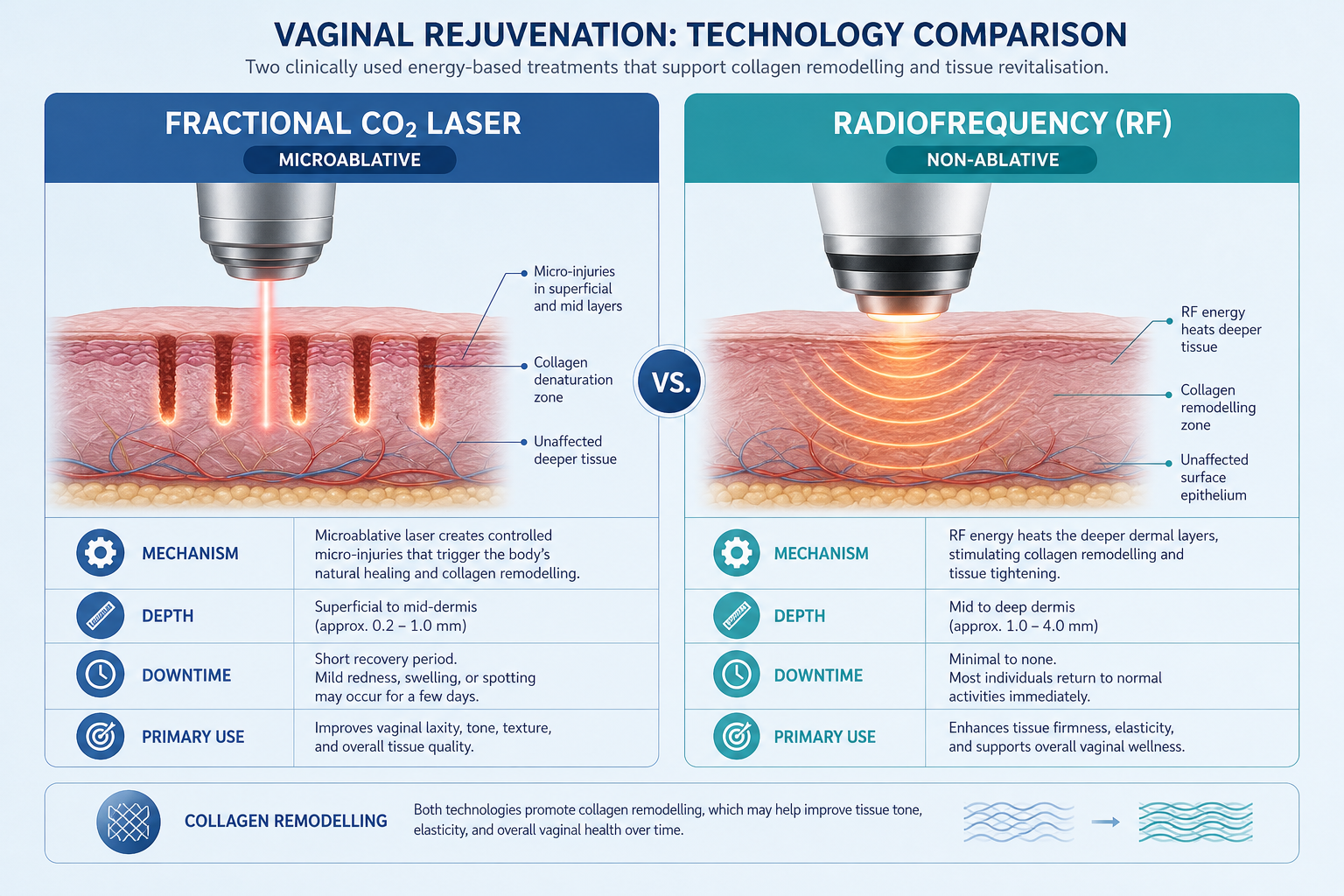
Energy-based treatments are the most widely discussed category of non-surgical vaginal rejuvenation. They use controlled thermal energy to stimulate the body’s natural wound-healing response in vaginal and vulvar tissue, triggering neocollagenesis (new collagen formation), neoelastogenesis, and neovascularisation (improved blood flow). The result, over a series of weeks, is remodelled, better-hydrated, and more elastic tissue.
Fractional CO2 Laser
Fractional CO2 laser devices — including branded platforms such as MonaLisa Touch, FemTouch, and FemiLift — deliver microablative energy to the vaginal mucosa or vulvar skin. The laser creates microscopic columns of thermal injury surrounded by intact tissue, which accelerates healing and collagen remodelling. Clinical studies have reported improvements in vaginal dryness, vaginal laxity, and dyspareunia, particularly in postmenopausal women and breast cancer survivors for whom hormonal therapy is not appropriate. A 2024 review published in Urology Times, drawing on data presented at the Sexual Medicine Society of North America (SMSNA), concluded that laser and radiofrequency vaginal rejuvenation procedures may be safe and effective when performed by trained practitioners, though the authors noted that larger randomised controlled trials are still needed.
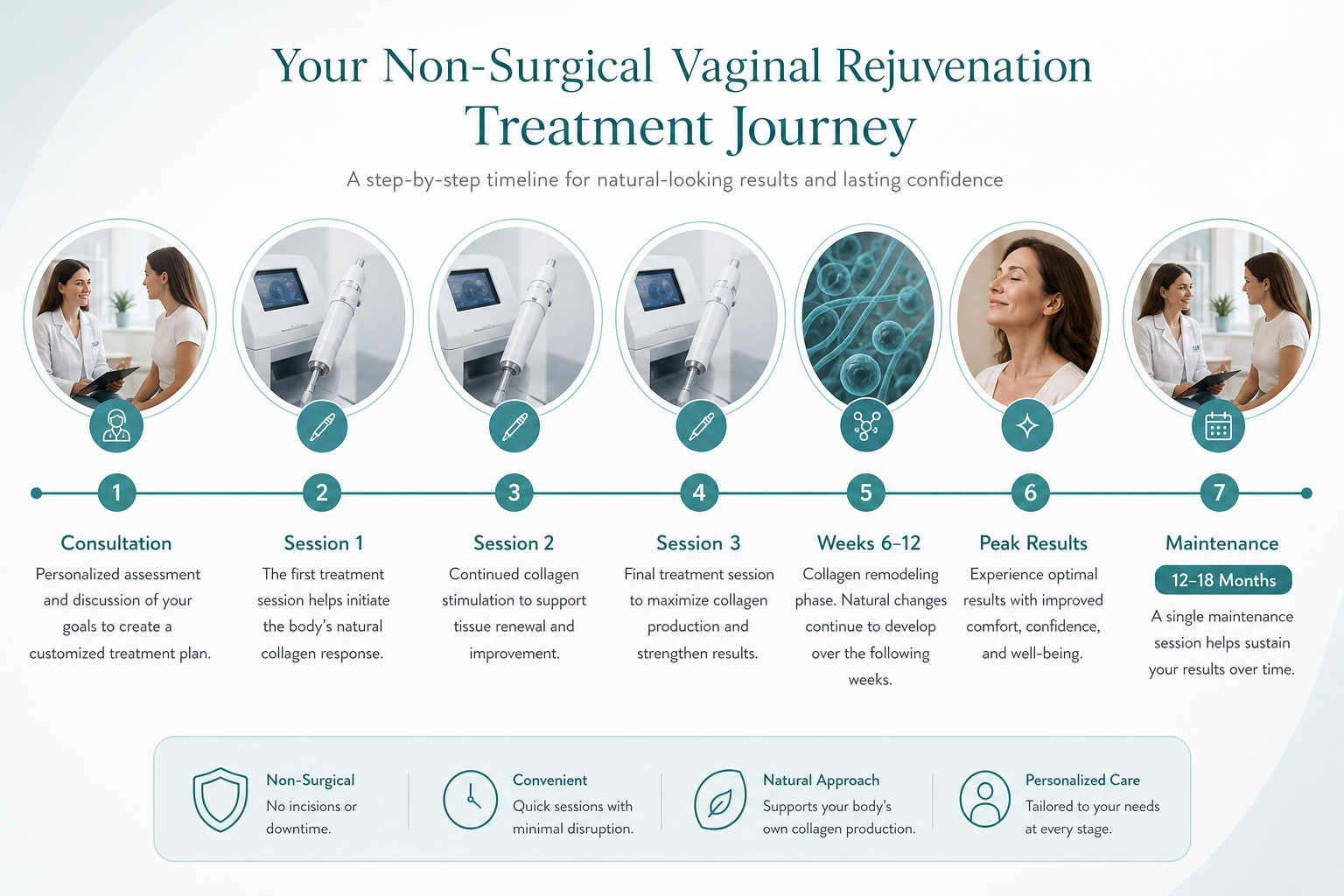
A typical CO2 laser course involves two to three in-office sessions spaced four to six weeks apart. Each session usually takes under thirty minutes. Mild discomfort, temporary discharge, and light spotting are possible in the days following treatment. Most patients can resume normal activities within one to two days, though sexual activity is generally avoided for a short period as advised by the treating clinician.
Radiofrequency (RF) Therapy
Radiofrequency therapy uses electromagnetic energy to heat the deeper layers of vaginal and vulvar tissue without ablating the surface. Devices such as ThermiVa, Viveve, FormaV, and Morpheus8 V deliver controlled subdermal heating that stimulates fibroblast activity and collagen remodelling. Because RF energy is non-ablative, there is typically no surface wound, which means downtime is minimal — often described as none or very limited. Some platforms, such as the InMode EmpowerRF system, combine multiple RF modalities in a single treatment session.
Radiofrequency therapy is used for vaginal laxity, mild to moderate stress urinary incontinence, vulvar laxity, and symptoms associated with vulvovaginal atrophy. A peer-reviewed review published in PubMed (2020) found that RF devices showed promising results for vaginal laxity and sexual function outcomes, though the authors highlighted variability in study design and the need for standardised outcome measures. Results from RF treatments typically become noticeable over six to twelve weeks as collagen remodelling progresses, and maintenance treatments are generally recommended every twelve to eighteen months.
Electromagnetic Muscle Stimulation
Devices such as Emsella and VTone use high-intensity focused electromagnetic (HIFEM) or electrical muscle stimulation technology to induce involuntary pelvic floor muscle contractions. These treatments target the pelvic floor directly and are primarily used for stress urinary incontinence and urge incontinence rather than tissue remodelling. A single Emsella session is said to produce thousands of supramaximal muscle contractions, which may strengthen the pelvic floor more efficiently than voluntary Kegel exercises alone. These devices are non-invasive — the patient remains fully clothed during treatment — and are typically delivered as a course of six sessions over three weeks.
Injectable Treatments: PRP and Dermal Fillers
Injectable options for intimate rejuvenation include platelet-rich plasma (PRP) therapy and hyaluronic acid (HA) dermal fillers. These are distinct in mechanism and intended outcome.
Platelet-Rich Plasma (PRP) — The O-Shot
Platelet-rich plasma is derived from the patient’s own blood, which is centrifuged to concentrate growth factors. When injected into the vaginal wall, clitoral area, or G-spot region, PRP is thought to stimulate tissue regeneration, neovascularisation, and improved nerve sensitivity. The O-Shot is a branded PRP protocol marketed for improving sexual function, orgasmic dysfunction, and urinary incontinence. While some patients report subjective improvements, the clinical evidence base for PRP in this context remains limited and largely based on small, uncontrolled studies. PRP is generally considered low-risk given its autologous nature, but it should not be presented as a proven treatment for sexual dysfunction without acknowledging the current evidence limitations.
Hyaluronic Acid Filler for Labia Majora
Hyaluronic acid filler can be used to restore volume to the labia majora, which may thin and lose fullness with age or significant weight loss. This is an aesthetic rather than functional treatment, and results are temporary — typically lasting twelve to eighteen months depending on the product used and individual metabolism. As with all injectable treatments in this area, the procedure should be performed by a clinician with specific training in vulvovaginal anatomy.
Hormonal and Non-Hormonal Medical Options
Energy-based treatments receive the most attention in consumer discussions of intimate wellness, but hormonal and non-hormonal medical therapies are often the most appropriate first-line approach for GSM symptoms — and they are frequently overlooked in this context.
Local vaginal oestrogen (available as creams, rings, or tablets) delivers low-dose oestrogen directly to vaginal tissue with minimal systemic absorption. It is highly effective for vaginal dryness, vulvovaginal atrophy, and dyspareunia associated with menopause. For women who cannot use oestrogen — including many breast cancer survivors — vaginal DHEA (prasterone, brand name Intrarosa) and ospemifene (a selective oestrogen receptor modulator taken orally) are licensed non-oestrogenic alternatives with clinical evidence supporting their use for GSM. The North American Menopause Society (NAMS) and the International Society for the Study of Women’s Sexual Health (ISSWSH) both recognise these options as effective treatments for GSM symptoms.
Vaginal moisturisers and lubricants are non-prescription options that can provide symptomatic relief for vaginal dryness, though they do not address the underlying tissue changes associated with atrophy. They are useful as adjuncts to other treatments or for women who prefer to avoid medical interventions.
Pelvic Floor Rehabilitation and At-Home Options
Pelvic floor physical therapy is a clinically supported, non-invasive approach to improving pelvic floor muscle function. A specialist pelvic physiotherapist can assess muscle tone, coordination, and strength, and design a personalised programme that may include manual therapy, biofeedback, and progressive exercises. Pelvic floor physical therapy is particularly relevant for stress urinary incontinence, pelvic organ prolapse symptoms, and dyspareunia related to pelvic floor tension or weakness.
At-home tools such as Kegel weights, vaginal dilators, and pelvic floor trainers can support rehabilitation when used as part of a guided programme. The CO2Lift V kit is a carboxy therapy product marketed for at-home vaginal rejuvenation; it may offer modest improvements in hydration and tissue comfort, but its effects are not comparable to in-office energy-based treatments. Honest expectation-setting is important: at-home options can complement professional treatments but are unlikely to replicate their outcomes for significant vaginal laxity, atrophy, or incontinence.
Combining Treatment Modalities
An emerging clinical approach involves combining treatment modalities to address multiple concerns simultaneously or to enhance outcomes. For example, radiofrequency therapy targeting tissue remodelling may be combined with electromagnetic muscle stimulation targeting the pelvic floor — as seen in the InMode EmpowerRF platform, which integrates FormaV and VTone in a single treatment programme. Similarly, some practitioners combine RF or laser treatments with PRP injections to potentially amplify the regenerative response, though the evidence for combination protocols is still developing.
Combination approaches are not universally appropriate and require careful patient selection. A thorough consultation should identify which concerns are primary, which modalities are best suited to those concerns, and whether combining treatments is clinically justified rather than simply additive.
Who May Be a Suitable Candidate?
Non-surgical vaginal rejuvenation treatments may be appropriate for women experiencing one or more of the following:
- Vaginal laxity or reduced vaginal tone following vaginal delivery or with natural ageing
- Vaginal dryness, reduced lubrication, or vulvovaginal atrophy associated with menopause or hormonal changes
- Mild to moderate stress urinary incontinence
- Dyspareunia (painful intercourse) related to tissue changes rather than pelvic floor dysfunction
- Reduced sexual sensation or difficulty achieving orgasm related to tissue or vascular changes
- Vulvar laxity or volume loss in the labia majora
- GSM symptoms in women for whom systemic hormonal therapy is not suitable
Candidacy is not determined by symptoms alone. A full medical history, including current medications, gynaecological history, and any active conditions, is essential before treatment.
Who May Not Be Suitable?
Certain conditions may make energy-based or injectable intimate treatments inadvisable. These include:
- Active vaginal, vulvar, or pelvic infection (including active herpes simplex outbreaks)
- Current pregnancy or breastfeeding
- Undiagnosed vaginal bleeding or abnormal cervical smear results that have not been investigated
- Active or recent gynaecological cancer (depending on treatment type and oncology guidance)
- Implanted electronic devices such as pacemakers (relevant for RF and electromagnetic treatments)
- Severe pelvic organ prolapse requiring surgical correction
- Certain autoimmune or connective tissue disorders affecting wound healing
This list is not exhaustive. A qualified practitioner will conduct a thorough assessment to determine whether a specific treatment is appropriate for an individual patient.
The FDA Regulatory Context
In 2018, the US Food and Drug Administration (FDA) issued a safety communication warning against the use of energy-based devices for vaginal rejuvenation and cosmetic vaginal procedures, citing a lack of evidence for safety and efficacy and reports of adverse events including burns and scarring. This communication was directed at manufacturers marketing devices for these indications without adequate clinical data, rather than a blanket prohibition on the treatments themselves.
Since 2018, the evidence base has grown considerably. A 2024 review presented at the SMSNA and reported in Urology Times concluded that laser and radiofrequency vaginal rejuvenation procedures may be safe and effective when performed by appropriately trained practitioners using validated protocols. The regulatory landscape continues to evolve, and patients should ask their practitioner about the specific device being used, its regulatory status, and the evidence supporting its use for their particular concern.
Non-Surgical vs. Surgical Vaginal Rejuvenation
| Factor | Non-Surgical | Surgical (e.g. Vaginoplasty, Labiaplasty) |
|---|---|---|
| Anaesthesia | Topical or none | General or regional |
| Downtime | Minimal (hours to 1–2 days) | Several weeks |
| Results onset | Gradual over weeks | Visible after healing (weeks to months) |
| Results longevity | 12–24 months; maintenance needed | Long-lasting; may be permanent for structural changes |
| Degree of change | Moderate tissue improvement | More significant structural correction possible |
| Risk profile | Lower; temporary side effects common | Higher; surgical risks including scarring, infection |
| Cost per session | Lower per session; multiple sessions needed | Higher upfront; fewer repeat procedures |
| Best suited for | Mild–moderate laxity, dryness, SUI, GSM | Significant structural laxity, labial hypertrophy |
How Long Do Results Last and What Does Maintenance Involve?
Results from energy-based treatments are not permanent. Collagen remodelling continues for several months after a treatment course, meaning the full benefit may not be apparent until eight to twelve weeks after the final session. Most patients who respond well to RF or laser treatments report that improvements in vaginal laxity, dryness, and sexual function are maintained for twelve to eighteen months, after which tissue changes associated with ageing and hormonal decline continue to progress.
Maintenance treatments — typically a single session every twelve to eighteen months — are generally recommended to sustain results. The need for maintenance is not a sign that the initial treatment failed; it reflects the ongoing nature of the biological processes that these treatments address. Patients should factor maintenance costs and scheduling into their decision-making from the outset.
Cost and Insurance Considerations
Non-surgical vaginal rejuvenation treatments are almost universally classified as cosmetic or elective procedures and are not covered by standard health insurance, even when they address functional concerns such as stress urinary incontinence. Costs vary significantly by treatment type, device, geographic location, and the number of sessions required. As a general guide, individual RF or laser sessions may range from several hundred to over a thousand pounds or dollars per session, with a full initial course of two to three sessions representing a meaningful investment. PRP treatments and injectable options carry their own pricing structures.
Many clinics offer financing options through providers such as CareCredit or in-house payment plans, which can make treatment more accessible. Patients should request a full cost breakdown — including the initial course and recommended maintenance — before committing to treatment.
The Quality-of-Life Dimension
The physical symptoms addressed by intimate rejuvenation treatments — vaginal dryness, discomfort during intercourse, urinary leakage, reduced sensation — can have a significant impact on quality of life, self-confidence, and intimate relationships. Many patients delay seeking help because of embarrassment or the mistaken belief that these changes are an inevitable and untreatable consequence of ageing or childbirth. Acknowledging the emotional and relational dimensions of these concerns is an important part of a patient-centred consultation. Validated tools such as the Female Sexual Function Index (FSFI) and the Vaginal Health Index Score (VHIS) are used in clinical research to measure these outcomes objectively, and some practitioners use them in clinical practice to track individual progress.
Frequently Asked Questions
Is non-surgical vaginal rejuvenation painful?
Most energy-based treatments involve mild warmth or a sensation of pressure rather than significant pain. Topical anaesthetic cream is sometimes applied before treatment to improve comfort. Injectable treatments such as PRP may involve brief discomfort at the injection site. Pain tolerance varies between individuals, and practitioners should discuss comfort management before the procedure.
How many sessions are typically needed?
Most RF and laser treatment protocols involve two to three sessions spaced four to six weeks apart for the initial course. Electromagnetic muscle stimulation devices such as Emsella are typically delivered as six sessions over three weeks. The number of sessions required depends on the treatment type, the severity of the concern, and individual response.
Can these treatments help with urinary incontinence?
Mild to moderate stress urinary incontinence may improve with RF therapy, electromagnetic muscle stimulation, or pelvic floor physical therapy. These treatments are not appropriate for all types of incontinence, and a medical assessment is needed to determine the underlying cause before selecting a treatment approach.
Are these treatments suitable for breast cancer survivors?
Breast cancer survivors who cannot use systemic or local oestrogen due to their treatment history may find energy-based treatments (RF and laser) and non-hormonal options such as vaginal DHEA or ospemifene particularly relevant for GSM symptoms. A 2023 review published in PMC found that fractional CO2 laser showed promise for GSM in breast cancer survivors, though the authors noted the need for further large-scale studies. Oncology guidance should always be sought before proceeding.
What is the difference between RF therapy and CO2 laser for vaginal rejuvenation?
Fractional CO2 laser creates microablative injuries in the vaginal mucosa, triggering a wound-healing and collagen remodelling response. Radiofrequency therapy heats deeper tissue layers without ablating the surface, stimulating fibroblast activity and collagen production. CO2 laser may be more effective for vaginal dryness and atrophy; RF therapy is often preferred for vaginal laxity and vulvar tightening. Both require a course of sessions and periodic maintenance. The best choice depends on the individual’s primary concern and clinical assessment.
Do results from non-surgical treatments last permanently?
No. Results from energy-based treatments are not permanent. Improvements in collagen density and tissue quality typically last twelve to eighteen months before maintenance is needed. Ongoing hormonal changes and natural ageing continue to affect vaginal tissue, which is why periodic maintenance treatments are part of a realistic long-term plan.
Choosing the Right Approach for Your Concerns
Non-surgical vaginal rejuvenation is not a single treatment — it is a category of options, each suited to different concerns, different patients, and different goals. Vaginal dryness and GSM symptoms may respond well to local hormonal therapy or fractional CO2 laser. Vaginal laxity may be better addressed by radiofrequency therapy. Stress urinary incontinence may benefit from electromagnetic muscle stimulation or pelvic floor physical therapy. Reduced sexual sensation may be approached with PRP or energy-based treatments, though the evidence for some of these indications is still developing.
The most important step is a thorough consultation with a qualified practitioner who can assess your specific symptoms, medical history, and goals — and recommend a treatment plan grounded in clinical evidence rather than marketing. If you are experiencing symptoms that affect your quality of life or intimate relationships, these concerns deserve to be taken seriously and discussed openly. Effective, evidence-informed options exist across a wide range of needs, and a personalised assessment is the best starting point.