Microneedling for Scars: How Collagen Induction Therapy Works and What to Expect
Microneedling is one of the most widely used minimally invasive treatments for improving the appearance of scars, particularly atrophic acne scars that leave the skin looking pitted or uneven. By triggering the skin’s own repair mechanisms through controlled micro-injuries, the procedure stimulates new collagen and elastin production without removing the outer skin layer. This article explains how collagen induction therapy works for different scar types, which scars respond best, how many sessions are typically needed, what realistic results look like, and how microneedling compares to other options — so you can approach a consultation with a clear understanding of what the treatment can and cannot achieve.
Key Takeaways
- Microneedling stimulates collagen and elastin production through controlled micro-injuries, gradually improving scar texture and depth over a treatment series of typically three to six sessions.
- Rolling scars and boxcar scars tend to respond best; ice pick scars usually require combination treatment such as TCA CROSS or subcision alongside microneedling.
- Results develop gradually — most patients notice meaningful improvement between weeks four and six after a session, with peak results at three to six months after completing a course.
- Microneedling is generally considered safer for darker Fitzpatrick skin types than ablative laser resurfacing, though post-inflammatory hyperpigmentation (PIH) risk still exists and conservative settings are important.
- Hypertrophic scars and keloid-prone skin are contraindications; a clinical assessment is essential before treatment.
What Is Collagen Induction Therapy?
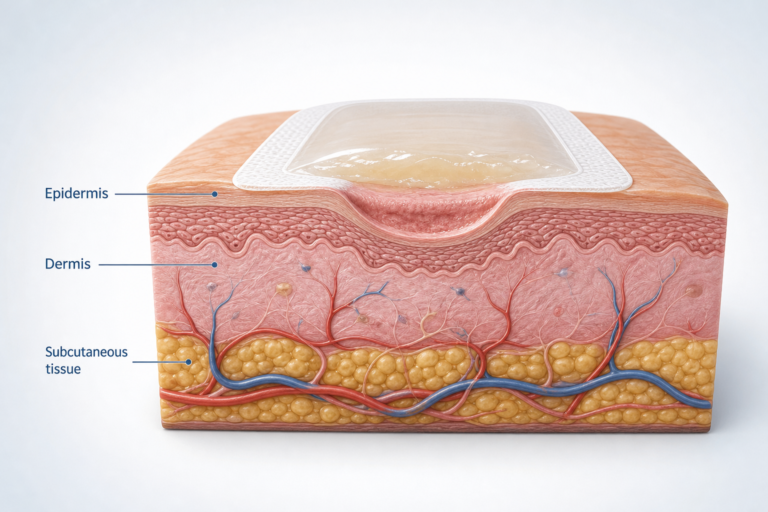
Collagen induction therapy (CIT) — also called percutaneous collagen induction — is the clinical term for what most people know as microneedling. The treatment uses a device fitted with fine needles to create thousands of microscopic punctures in the skin at a controlled depth. These controlled micro-injuries are small enough to avoid significant surface damage but deep enough to reach the dermis, where collagen and elastin fibres are produced. The skin interprets each puncture as a minor wound and initiates its natural wound healing cascade: platelets aggregate, growth factors are released, fibroblasts are recruited, and new collagen is deposited over the following weeks.
The key distinction between microneedling and more aggressive resurfacing procedures is that the epidermis — the outer protective layer — remains largely intact. This means the skin can heal quickly, and the risk of post-treatment pigmentation changes is lower than with ablative techniques. Devices used in professional settings include automated microneedling pens such as the Dermapen and SkinPen, which allow the practitioner to adjust needle depth precisely for different areas and scar types. Older dermaroller devices are still used but offer less depth control. At-home rollers operate at depths too shallow (typically 0.1–0.3 mm) to reach the dermis meaningfully, which is why professional treatment is necessary for genuine scar remodeling.
How Microneedling Triggers Scar Remodeling
Scar tissue forms when the skin’s normal repair process produces an excess or deficit of collagen in response to injury. Atrophic scars — the depressed, pitted type common after acne — result from insufficient collagen deposition during healing, leaving a structural deficit in the dermis. Microneedling addresses this by restarting a controlled version of the wound healing cascade within and around the scar.
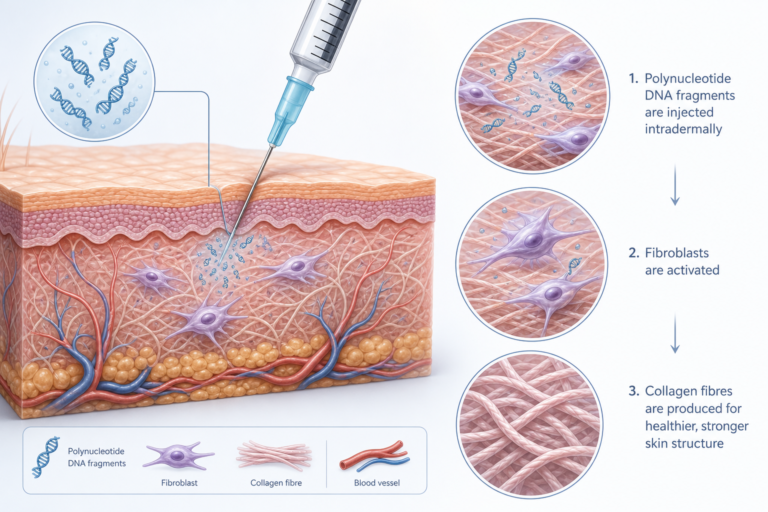
When the needles penetrate the dermis, fibroblasts — the cells responsible for producing structural proteins — are activated. These fibroblasts synthesise new collagen (initially collagen III, which gradually matures into the stronger collagen I over several months) and elastin, as well as glycosaminoglycans such as hyaluronic acid that contribute to dermal volume and hydration. Neoangiogenesis, the formation of new small blood vessels, also occurs, improving local circulation and nutrient delivery to the remodeling tissue. Over time, this process raises the floor of depressed scars, softens their edges, and improves overall skin texture and tone. The transformation from collagen III to collagen I is a slower process, which is why results continue to develop for months after each session and why a treatment series rather than a single appointment is standard practice.
Needle depth plays a central role in how effectively this process reaches scar tissue. For facial scars, depths typically range from 0.5 mm to 2.0 mm depending on scar severity and skin thickness. Body scars — which have thicker dermis — generally require depths of 1.5 mm to 3.0 mm and often need more sessions to achieve comparable improvement. A practitioner will adjust depth based on the scar type, location, and the patient’s Fitzpatrick skin type.
Which Scar Types Respond Best?
Not all scars respond equally to microneedling, and understanding the differences helps set realistic expectations before starting treatment.
Rolling Scars
Rolling scars are broad, shallow depressions with gently sloping edges caused by fibrous bands tethering the skin to deeper tissue. They tend to show the strongest response to microneedling because their relatively wide base allows new collagen to fill the depression effectively. Multiple sessions typically produce visible softening and elevation of the scar floor.
Boxcar Scars
Boxcar scars have sharper, more defined vertical edges and a flat base. They respond well to microneedling, though the degree of improvement depends on their depth. Shallow to moderate boxcar scars often show meaningful improvement over a treatment series; deeper boxcar scars may benefit from combination approaches.
Ice Pick Scars
Ice pick scars are narrow, deep channels that extend into the mid-dermis or deeper. Microneedling alone has limited reach into these narrow tracts, and most clinical guidance suggests combining microneedling with TCA CROSS (trichloroacetic acid chemical reconstruction of skin scars) — a technique that deposits a high-concentration acid precisely into the scar channel to stimulate focal collagen production. Ice pick scars are the most challenging subtype and typically require a combination protocol rather than microneedling as a standalone treatment.
Chickenpox and Surgical Scars
Chickenpox scars are structurally similar to atrophic acne scars and can respond to microneedling in a comparable way. Surgical or incision scars — particularly those that are flat or slightly depressed — may also improve in texture and colour with a treatment series, though results depend on scar maturity and individual healing characteristics.
Hypertrophic and Keloid Scars
Hypertrophic scars (raised, firm scars that remain within the original wound boundary) and keloid scars (raised scars that extend beyond the wound) are generally considered contraindications for microneedling. Introducing further controlled injury to keloid-prone skin risks stimulating additional abnormal collagen production and worsening the scar. Anyone with a history of keloid formation should discuss this clearly with their practitioner before any needling procedure.
Stretch Marks
Stretch marks (striae) share some structural similarities with atrophic scars and may show improvement in texture and colour with microneedling, particularly when treated at the red or purple stage. White, mature stretch marks contain fewer active fibroblasts and typically show more modest results.
Does Scar Age Affect Results?
This is a clinically relevant question that is rarely addressed in patient-facing information. Evidence from burn scar research suggests that newer scars — those under approximately one year old — may respond more readily to microneedling than older, fully mature scar tissue. One study measuring outcomes using the Vancouver Scar Scale (a validated clinical tool that scores scar vascularity, pigmentation, pliability, and height) reported a reduction from a mean score of 8.8 to 4.1 following a microneedling course in burn scars, with better responses in less mature tissue. The Vancouver Scar Scale runs from 0 (normal skin) to 13 (worst possible scar), so this represents a clinically meaningful shift.
Older, fully remodeled scar tissue is more structurally stable and may require more sessions or combination approaches to achieve comparable improvement. This does not mean long-standing scars cannot benefit — many patients with years-old acne scarring do see meaningful improvement — but it is a useful factor when timing treatment decisions.
Microneedling and Skin of Colour
For patients with darker Fitzpatrick skin types (Fitzpatrick IV through VI), the choice of scar treatment requires careful consideration of post-inflammatory hyperpigmentation (PIH) risk. Ablative laser resurfacing carries a higher risk of triggering PIH or hypopigmentation in darker skin tones, which is one reason microneedling is often preferred in this population. Because microneedling preserves the epidermis and does not generate significant heat, the risk of melanocyte disruption is lower — though not absent.
Clinical data comparing microneedling to glycolic acid peels for atrophic acne scars in patients with darker skin tones has shown microneedling to produce greater improvement (approximately 73% improvement versus 33% for glycolic peel in some studies), with a more favourable PIH profile. However, conservative needle depth settings, adequate sun protection, and appropriate post-treatment care remain important for all skin tones. A practitioner experienced in treating skin of colour will adjust the protocol accordingly and may recommend a longer interval between sessions to allow full resolution of any post-treatment redness before the next appointment.
Combination Therapies That May Enhance Results
Microneedling is frequently combined with other treatments to improve outcomes, particularly for more resistant scar types.
Microneedling with Platelet-Rich Plasma (PRP)
Platelet-rich plasma (PRP) is derived from the patient’s own blood and contains concentrated growth factors that support tissue repair. Applied to the skin immediately after microneedling — when the microchannels are open — PRP may enhance collagen stimulation and accelerate healing. The American Academy of Dermatology has acknowledged PRP combined with microneedling as a supported approach for atrophic acne scars. Evidence for this combination is more established than for some newer add-ons, though individual results still vary.
Radiofrequency (RF) Microneedling
Radiofrequency (RF) microneedling devices — such as Morpheus8, Vivace, and Genius — deliver radiofrequency energy through insulated needles directly into the dermis. This adds a thermal stimulus to the mechanical collagen induction, promoting additional skin tightening and dermal remodeling. RF microneedling is generally considered more effective than standard microneedling for moderate to severe atrophic scarring and for patients who also want skin tightening, though it typically involves greater cost and slightly more downtime.
Exosomes and Regenerative Add-Ons
Exosome serums — derived from stem cell cultures — are increasingly offered as a post-microneedling topical to enhance healing and collagen signalling. The evidence base for exosomes in this context is still developing and is considerably thinner than for PRP. While early results are promising, patients should be aware that exosome treatments are not yet supported by the same volume of peer-reviewed clinical data as PRP, and claims should be evaluated critically.
Subcision and TCA CROSS
For tethered rolling scars, subcision — a minor procedure in which a needle is used to release the fibrous bands anchoring the scar — is often performed before or alongside a microneedling course. Releasing the tether allows the scar to lift before collagen induction fills the space. For ice pick scars, TCA CROSS is typically performed between microneedling sessions, spaced several weeks apart, to allow each treatment to resolve before the next is applied. This sequencing — subcision first, then microneedling, with TCA CROSS interspersed for ice pick scars — represents a practical combination protocol that addresses different scar mechanisms simultaneously.
Microneedling vs. Laser vs. Chemical Peels for Scars
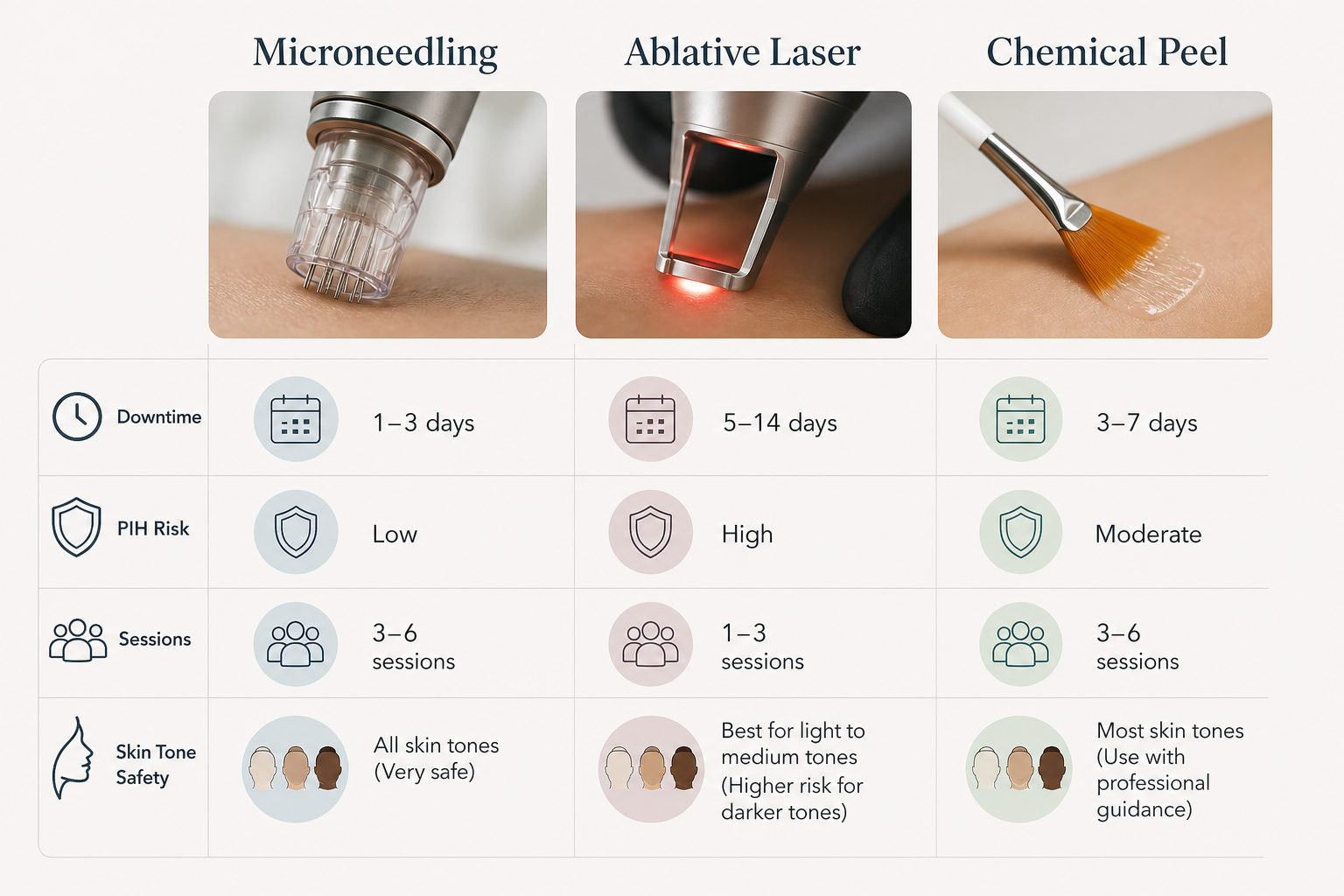
| Factor | Microneedling | Ablative Laser (CO2/Fractional) | Chemical Peels (TCA/Glycolic) |
|---|---|---|---|
| Mechanism | Mechanical collagen induction via micro-injuries | Thermal ablation and collagen remodeling | Chemical exfoliation and collagen stimulation |
| Best scar types | Rolling, boxcar, mild–moderate atrophic | Moderate–severe atrophic, textural | Superficial textural, mild atrophic, PIH |
| Downtime | 1–3 days redness/sensitivity | 5–14 days depending on depth | 3–7 days depending on strength |
| PIH risk (darker skin) | Lower | Higher | Moderate |
| Sessions typically needed | 3–6 (facial); 6–8 (body) | 1–3 | 3–6 |
| Relative cost per session | Moderate | Higher | Lower–moderate |
| Epidermis preserved? | Yes | No (ablative) | Partially |
Ablative laser resurfacing can achieve significant scar improvement in fewer sessions but involves more downtime, higher cost per session, and greater risk of pigmentation changes in darker skin tones. Chemical peels address surface texture and post-inflammatory hyperpigmentation effectively but have limited reach into deeper dermal scar tissue. Microneedling occupies a middle ground: it reaches the dermis without ablating the surface, suits a wider range of skin tones, and can be repeated safely at four-to-six-week intervals. The total cost of a full microneedling course (typically three to six sessions) may be comparable to one or two laser sessions when calculated across the full treatment plan.
What Microneedling Cannot Do
Setting honest expectations is as important as explaining the benefits. Microneedling improves scar appearance — it does not erase scars. Several limitations are worth understanding before committing to treatment.
- Deep tethered scars rarely achieve complete flattening with microneedling alone. Subcision is usually needed to release the fibrous attachment before collagen induction can fill the space effectively.
- Ice pick scars are too narrow and deep for microneedling needles to remodel effectively without adjunctive TCA CROSS or other focal treatments.
- White or hypopigmented scars lack the melanocytes needed to restore normal skin colour. Microneedling can improve texture in these areas but cannot reliably restore pigmentation.
- Very old, fully mature scar tissue may show more modest improvement than newer scars, and more sessions may be needed.
- At-home microneedling devices operate at depths insufficient for true dermal remodeling of scar tissue. Consumer rollers may improve product absorption and superficial skin texture but should not be expected to produce the same results as professional treatment.
How Many Sessions Are Needed and What to Expect
A treatment series of three to six sessions is standard for facial atrophic acne scars, spaced four to six weeks apart to allow the collagen remodeling process to progress between appointments. Body scars typically require six to eight sessions due to the greater dermal thickness and slower healing response in non-facial skin.
Results do not appear immediately after each session. The wound healing cascade takes time: most patients notice the first visible improvement in skin texture around weeks four to six after a session. Peak results from a full course are generally seen at three to six months after the final treatment, as collagen maturation continues. A session-by-session progression typically looks like this:
-
- After session 1: Skin may appear smoother and more even in tone, but scar depth is unlikely to have changed significantly. Redness resolves within one to three days.
- After sessions 2–3: Gradual improvement in scar texture becomes more noticeable. Rolling scars may begin to appear shallower. Skin tone and overall radiance often improve alongside scar changes.
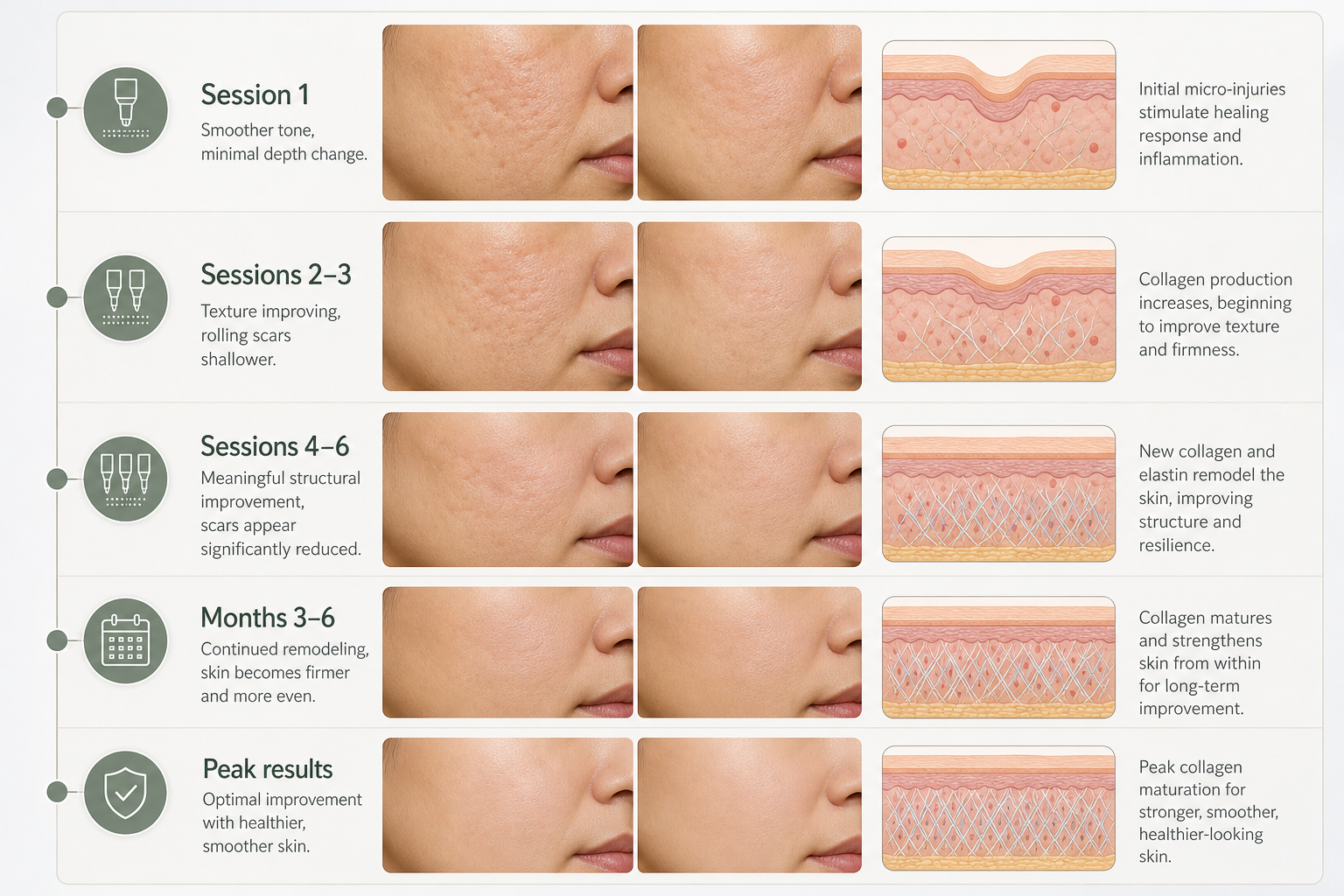
- After sessions 4–6: The most meaningful structural improvement in scar depth and surface regularity typically occurs across this phase. Collagen deposition continues to mature for several months after the final session.
New collagen produced through microneedling is durable — studies suggest it can persist for five to seven years — though the underlying skin continues to age naturally. Maintenance sessions once or twice a year are sometimes recommended to sustain results, particularly for patients with ongoing acne activity that may produce new scarring.
What Happens During a Professional Microneedling Session
A topical numbing cream is applied to the treatment area approximately thirty to forty-five minutes before the procedure to minimise discomfort. Once the skin is adequately anaesthetised, the practitioner uses an automated microneedling pen to pass systematically over the treatment area, adjusting needle depth for different zones — typically deeper over thicker-skinned areas and shallower near bony prominences or delicate skin. The procedure itself usually takes twenty to forty minutes for a full face.
Immediately after treatment, the skin appears red and may feel warm, similar to mild sunburn. If PRP or another topical is being applied, it is introduced at this stage while the microchannels remain open. Most patients experience redness and mild sensitivity for one to three days. Swelling is possible, particularly around the eyes, and typically resolves within forty-eight hours.
Aftercare and Recovery
The days immediately following microneedling require straightforward but consistent care to support healing and avoid complications.
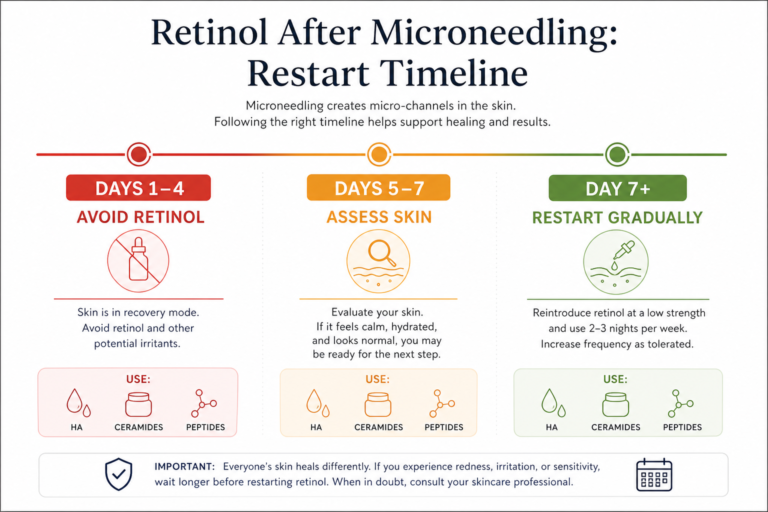
- Avoid active skincare ingredients — retinoids, vitamin C, AHAs, BHAs — for at least forty-eight to seventy-two hours post-treatment, as the skin barrier is temporarily compromised.
- Use a gentle, fragrance-free moisturiser and apply broad-spectrum SPF 30 or higher daily. Sun exposure should be minimised during the recovery period and throughout the treatment course.
- Avoid heat exposure — saunas, steam rooms, intense exercise — for twenty-four to forty-eight hours.
- Do not apply makeup for at least twenty-four hours, or as directed by your practitioner.
- Avoid touching or picking at the skin during the healing phase.
Patients with darker skin tones should be particularly diligent about sun protection throughout the treatment series, as UV exposure during the healing phase increases the risk of post-inflammatory hyperpigmentation (PIH).
Who May Be Suitable — and Who Should Avoid Treatment
Microneedling for scars may be appropriate for adults with atrophic acne scars, chickenpox scars, surgical scars, or stretch marks who have realistic expectations about gradual improvement over a treatment series. It is suitable for a wide range of skin tones, including Fitzpatrick types IV through VI, when performed by an experienced practitioner using appropriate settings.
Treatment is generally not recommended for:
- Patients with active acne lesions or active skin infection in the treatment area
- Keloid-prone skin or a personal history of keloid formation
- Pregnancy or breastfeeding
- Blood clotting disorders or current anticoagulant therapy
- Active eczema, psoriasis, or rosacea in the treatment area
- Recent use of isotretinoin (typically a six-month washout period is recommended before treatment)
- Implanted electronic devices near the treatment area (particularly relevant for RF microneedling)
A thorough medical history and clinical assessment are essential before beginning any microneedling course. A qualified practitioner will evaluate scar type, skin tone, medical history, and treatment goals to determine whether microneedling is appropriate and which protocol is most likely to be effective.
Frequently Asked Questions
How long does it take to see results from microneedling for scars?
Most patients notice the first visible improvement in skin texture around four to six weeks after a session, as new collagen begins to mature. The most meaningful changes in scar depth and surface regularity typically become apparent three to six months after completing a full treatment series, when collagen remodeling is at its peak.
Is microneedling painful?
A topical numbing cream applied before treatment significantly reduces discomfort. Most patients describe the sensation during treatment as mild pressure or a light scratching feeling rather than sharp pain. Sensitivity varies by area — the forehead and bony areas tend to be more sensitive than the cheeks.
Can microneedling make scars worse?
When performed correctly by a trained practitioner on suitable candidates, microneedling does not worsen atrophic scars. However, treating keloid-prone skin or active acne lesions carries a risk of stimulating abnormal healing. This is why a thorough assessment and correct patient selection are essential.
How does RF microneedling differ from standard microneedling for scars?
Radiofrequency (RF) microneedling adds a thermal energy component to the mechanical collagen induction of standard microneedling. The radiofrequency energy delivered through insulated needles heats the dermis, promoting additional collagen contraction and skin tightening. RF microneedling is generally considered more effective for moderate to severe scarring and for patients who also want skin tightening, but it typically involves higher cost and slightly more downtime than standard microneedling.
Is one session of microneedling enough for scars?
A single session is unlikely to produce significant scar improvement. Meaningful dermal remodeling requires a treatment series — typically three to six sessions for facial scars — because each session builds on the collagen produced by the previous one. Spacing sessions four to six weeks apart allows the healing response to progress before the next stimulus is applied.
Can microneedling treat scars on the body as well as the face?
Yes, microneedling can be used on body areas including the back, chest, shoulders, and legs. Body scars generally require greater needle depth (1.5–3.0 mm) and more sessions (six to eight minimum) than facial scars, due to the thicker dermis and slower healing response in non-facial skin.
What is the difference between professional microneedling and at-home rollers for scars?
At-home dermarollers typically operate at depths of 0.1–0.3 mm, which is sufficient to enhance product absorption and improve superficial skin texture but too shallow to reach the dermis where scar remodeling occurs. Professional devices reach 0.5–2.5 mm or deeper, with precise depth control by area. For genuine scar tissue improvement, professional treatment is necessary.
Is Microneedling the Right Approach for Your Scars?
Microneedling — or more precisely, collagen induction therapy — is a well-supported, minimally invasive option for improving the appearance of atrophic scars, particularly rolling and boxcar acne scars. Its ability to stimulate dermal remodeling without ablating the skin surface makes it suitable for a broader range of skin tones than ablative laser resurfacing, and its safety profile is well established when performed by a trained practitioner on appropriate candidates.
The treatment works best when approached as a course rather than a single appointment, with realistic expectations that improvement is gradual and cumulative. For more complex scar presentations — deep ice pick scars, tethered rolling scars, or mixed scar types — combination protocols involving subcision, TCA CROSS, or RF microneedling are likely to produce better outcomes than microneedling alone. Patients with keloid-prone skin, active acne, or certain medical conditions are not suitable candidates.
If you are considering microneedling for scars, a consultation with a qualified aesthetic practitioner or dermatologist who can assess your specific scar types, skin tone, and medical history is the appropriate starting point. A thorough assessment will clarify which treatment approach — or combination of approaches — is most likely to deliver meaningful, safe improvement for your individual situation.