Best Facial for Aging Skin: Anti-Ageing Treatment Types Explained
Choosing the best facial for aging skin is rarely straightforward, because skin ages in several distinct ways — collagen loss, reduced cell turnover, photoaging, skin laxity, and facial volume loss can all occur simultaneously, and no single treatment addresses every concern equally well. This guide explains the most clinically relevant anti-ageing facial treatment types, how each one works, who may benefit, and what realistic results look like, so you can approach an esthetician consultation or dermatology appointment with a clearer sense of what to ask.
Key Takeaways
- Different anti-ageing facials target different mechanisms — hydration, exfoliation, collagen stimulation, or regeneration — and the best choice depends on your specific skin concerns, skin type, and downtime tolerance.
- Treatments such as microneedling, radiofrequency microneedling, and chemical peels have a stronger evidence base for collagen remodelling than some newer options, though emerging regenerative treatments are showing promising early results.
- Combination treatment protocols often deliver better outcomes than any single facial alone, particularly for moderate to advanced signs of aging.
- Realistic results require multiple sessions for most treatments, and maintenance appointments are typically needed to sustain improvement.
- A professional clinical assessment is essential before starting any treatment, as suitability varies by skin type, medical history, and the severity of aging changes.
Why Skin Ages: The Foundation for Choosing the Right Treatment
Understanding why skin ages helps explain why certain treatments work and why others may not suit your particular concerns. From the mid-twenties onward, the body produces roughly one percent less collagen per year. Elastin fibres — which give skin its ability to spring back — gradually degrade. Cell turnover slows from a roughly 28-day cycle in youth to considerably longer in mature skin, meaning dead skin cells accumulate on the surface and contribute to dullness and uneven texture. Cumulative UV exposure accelerates all of these processes through free radical damage to skin cells and DNA, a pattern clinically described as photoaging.
Hormonal changes, particularly the decline in oestrogen around menopause, accelerate collagen loss and reduce the skin’s ability to retain moisture. Fat redistribution and bone remodelling beneath the skin contribute to facial volume loss and the appearance of sagging. The dermis itself thins over time, making fine lines and wrinkles more visible. Effective anti-ageing facials target one or more of these underlying mechanisms rather than simply masking surface appearance.
Hydration-Based Facials: HydraFacial and Oxygen Facials
Dehydrated skin exaggerates the appearance of fine lines and dullness, making hydration-focused treatments a logical starting point for many patients. The HydraFacial is the most widely recognised treatment in this category. It combines mechanical exfoliation, a gentle vacuum-based extraction step, and the infusion of serums containing hyaluronic acid, peptides, and antioxidants into the skin in a single session. The treatment is non-invasive, involves no downtime, and is generally well tolerated across skin types including sensitive and mature skin.
HydraFacial does not stimulate significant collagen production on its own, so it is best understood as a skin quality and hydration treatment rather than a structural anti-ageing intervention. Results — improved radiance, smoother texture, and temporary plumping of fine lines — are visible immediately but typically last two to four weeks without maintenance. Monthly sessions are commonly recommended for ongoing skin health. The treatment is suitable for most skin types and can be combined with boosters targeting specific concerns such as hyperpigmentation or skin firmness.
Oxygen facials deliver pressurised oxygen alongside serums to the skin surface. Evidence for their anti-ageing efficacy beyond temporary hydration and radiance is limited, and they are generally considered a comfort and maintenance option rather than a primary treatment for significant aging changes.
Exfoliation-Based Treatments: Chemical Peels, Microdermabrasion, and Dermaplaning
Exfoliation-based treatments accelerate cell turnover by removing the outermost layers of the skin, prompting the body to generate fresher, more evenly pigmented skin beneath. Chemical peels are the most clinically studied option in this category and are classified by depth of penetration.
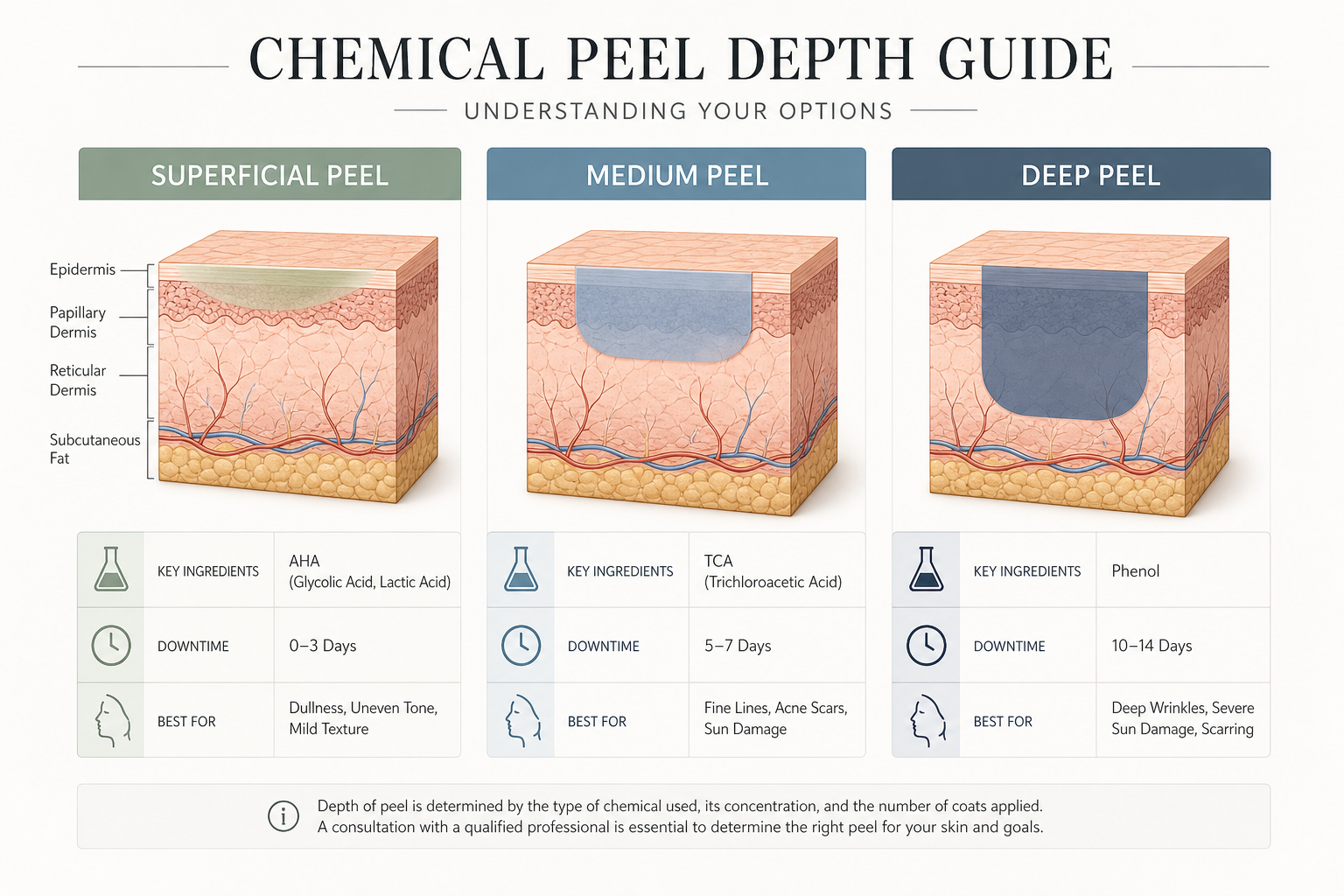
A superficial chemical peel uses low-concentration alpha hydroxy acids (AHAs) such as glycolic or lactic acid, or low-strength salicylic acid, to remove only the outermost epidermal layer. Downtime is minimal — mild redness and flaking for one to three days — and the treatment is suitable for early fine lines, mild hyperpigmentation, and dull skin texture. Multiple sessions spaced two to four weeks apart are typically needed for visible improvement.
A medium chemical peel, most commonly using trichloroacetic acid (TCA) at concentrations of 20–35%, penetrates into the upper dermis. This depth of treatment can meaningfully improve moderate fine lines, age spots, and uneven skin tone. Downtime is more significant — skin typically peels and crusts for five to ten days — and sun avoidance is essential during recovery. Medium peels are not suitable for all skin tones, as there is a risk of post-inflammatory hyperpigmentation in darker complexions.
A deep chemical peel using phenol reaches the mid-dermis and can produce dramatic improvement in deep wrinkles and severe photoaging. However, deep peels carry the most significant risks, including prolonged recovery of several weeks, permanent skin lightening, scarring, and cardiac risks associated with phenol absorption. They require careful patient selection and are typically performed by a dermatologist or plastic surgeon rather than an esthetician.
Microdermabrasion uses fine crystals or a diamond-tipped wand to physically buff away the outermost skin layer. It is gentler than chemical peels, with no meaningful downtime, and can improve skin texture and mild dullness. Its effect on deeper wrinkles or significant skin laxity is limited. Dermaplaning uses a surgical scalpel to remove dead skin cells and fine vellus hair from the face, leaving a smoother surface that reflects light more evenly. Both treatments work best as maintenance options or as preparation for other treatments rather than as standalone anti-ageing interventions for mature skin.
Collagen-Stimulating Treatments: Microneedling and Radiofrequency
Collagen-stimulating treatments are among the most evidence-supported options for addressing structural signs of aging such as fine lines, wrinkles, skin laxity, and loss of firmness. They work by creating a controlled injury response in the dermis, triggering the body’s natural wound-healing cascade and promoting new collagen and elastin production — a process formally known as collagen induction therapy.
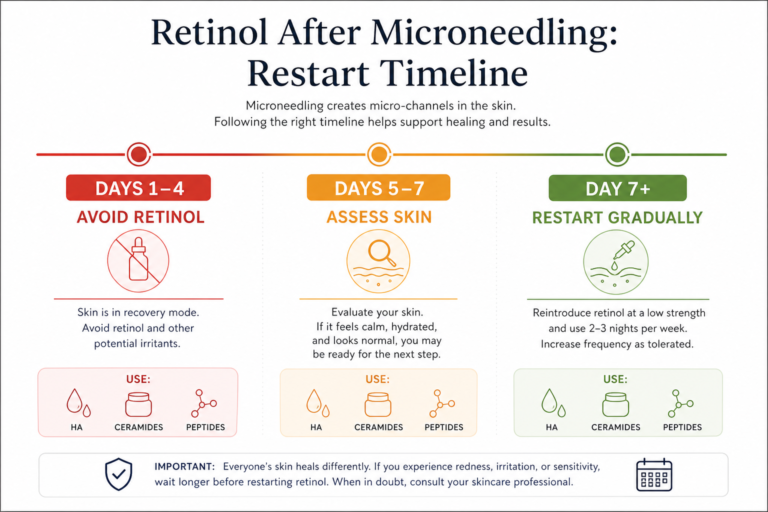
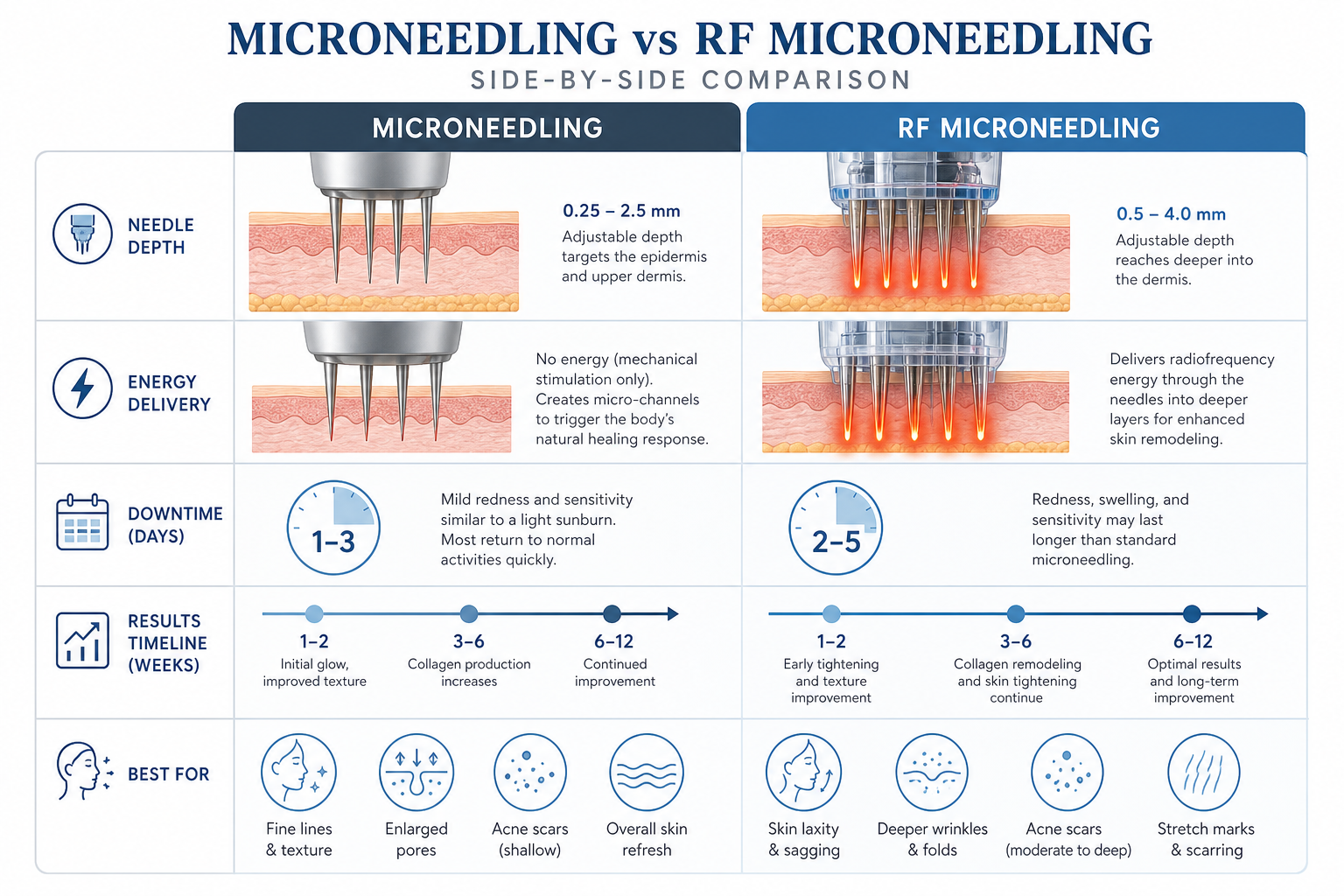
Standard microneedling uses a device with fine needles to create thousands of micro-channels in the skin at controlled depths. Clinical studies support its use for improving fine lines, skin texture, pore size, and mild to moderate skin laxity. Results develop gradually over four to eight weeks as new collagen matures, and a course of three to six sessions spaced four to six weeks apart is typically recommended. Downtime involves redness and mild swelling for 24 to 72 hours. Microneedling is generally not suitable during active skin infections, in patients taking certain blood-thinning medications, or in those with a history of keloid scarring.
Radiofrequency microneedling combines the collagen-stimulating effect of microneedles with the delivery of radiofrequency energy directly into the dermis. This dual mechanism produces more significant skin tightening and is particularly useful for addressing skin laxity and deeper wrinkles. Devices such as Morpheus8 and Genius are commonly used in clinical settings. Downtime is typically three to five days of redness and swelling, and results continue to develop for up to three months after treatment. Radiofrequency microneedling is generally considered a more advanced option than standard microneedling and is better suited to moderate or significant aging changes.
Standalone radiofrequency facials — which deliver RF energy through surface electrodes without needles — offer non-invasive skin tightening with minimal downtime. The depth of energy delivery is less precise than with RF microneedling, and results are generally more modest, but the treatment is suitable for patients who cannot tolerate any downtime or who have early skin laxity.
Microcurrent Facials: Non-Surgical Facial Lifting
Microcurrent facials deliver low-level electrical currents to the facial muscles and skin using handheld electrodes. The treatment is often described as a non-surgical facelift because it aims to re-educate and tone the underlying facial muscles, improving definition along the jawline, cheekbones, and brow. At the cellular level, microcurrent is thought to stimulate adenosine triphosphate (ATP) production, which supports collagen synthesis and cellular repair, though the clinical evidence for long-term structural change remains more limited than for microneedling or RF treatments.
Microcurrent facials are painless, involve no downtime, and produce an immediate lifting and firming effect that many patients find noticeable after a single session. However, results are temporary — typically lasting days to a couple of weeks — and regular maintenance sessions are required to sustain the effect. The treatment is best suited to patients with early to mild skin laxity who want a non-invasive option with no recovery period. It is not appropriate for patients with pacemakers, epilepsy, or metal implants in the face.
LED Light Therapy: Red Light and Beyond
LED (light-emitting diode) therapy uses specific wavelengths of light to stimulate biological processes in the skin without heat or physical disruption. For anti-ageing purposes, red light at wavelengths of approximately 630–660 nanometres and near-infrared light at 830–850 nanometres are the most clinically studied. These wavelengths penetrate the dermis and are absorbed by mitochondria in skin cells, stimulating collagen production, reducing inflammation, and supporting the skin barrier.
Clinical evidence for LED red light therapy in improving fine lines and skin texture is growing, though effect sizes in studies are generally modest compared to microneedling or chemical peels. LED therapy is painless, involves no downtime, and is safe for all skin types including sensitive and rosacea-prone skin. It is frequently used as an add-on to other treatments — for example, following microneedling to accelerate healing and enhance collagen stimulation — rather than as a primary standalone anti-ageing treatment for significant concerns.
At-home LED masks are widely available, but the irradiance (light intensity) of consumer devices is substantially lower than professional equipment, meaning results from home use are likely to be more limited. Professional LED panels used in clinical settings deliver higher energy doses in shorter treatment times.
Regenerative and Emerging Treatments: Exosomes, PRP, and Biostimulators
Regenerative aesthetics represents one of the fastest-growing areas of anti-ageing treatment, with several options gaining significant clinical interest in 2025 and 2026. These treatments aim to harness or amplify the body’s own biological repair mechanisms rather than simply stimulating a wound-healing response.
Platelet-rich plasma (PRP) and platelet-rich fibrin (PRF) therapy involve drawing a small amount of the patient’s own blood, processing it to concentrate growth factors, and reintroducing it into the skin via microneedling or injection. Growth factors in PRP and PRF stimulate collagen production, improve skin texture, and may support tissue regeneration. PRF, which releases growth factors more slowly than PRP, is considered by some practitioners to offer a more sustained effect. Evidence for both treatments is promising but still developing, and results vary between patients.
The exosome facial is an emerging treatment that applies exosomes — nano-sized vesicles derived from stem cells that carry signalling molecules — to the skin, typically following microneedling to enhance penetration. Exosomes are thought to communicate with skin cells and promote regeneration at a cellular level. Early clinical data and practitioner reports are encouraging, particularly for skin quality, texture, and recovery after more aggressive treatments, but large-scale randomised controlled trials are still limited. The exosome facial is one of the most discussed innovations in regenerative aesthetics for 2025–2026, though patients should be aware that the evidence base is less established than for microneedling or chemical peels.
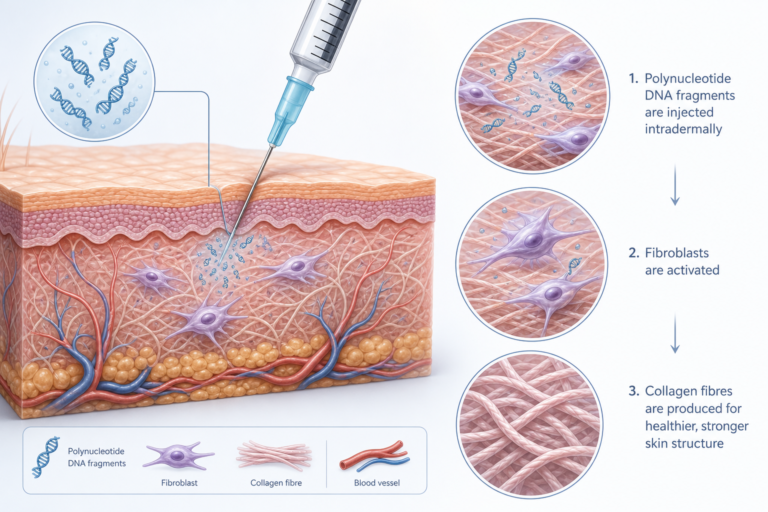
Injectable biostimulators such as Sculptra (poly-L-lactic acid) and Profhilo (stabilised hyaluronic acid) are not facials in the traditional sense, but they are increasingly discussed alongside facial treatment protocols because they address facial volume loss and skin laxity from within the dermis. Sculptra stimulates the body’s own collagen production over several months, while Profhilo spreads through the tissue to hydrate and remodel the skin matrix. Both require injection by a qualified medical professional and are subject to regulatory requirements that vary by country.
Choosing the Right Treatment: By Concern, Skin Type, and Decade
The most effective approach to anti-ageing facial treatment is to match the treatment mechanism to the primary concern, skin type, and stage of aging rather than choosing based on popularity alone.
By Primary Concern
- Fine lines and early wrinkles: Superficial chemical peels, microneedling, microcurrent, LED therapy, HydraFacial
- Deeper wrinkles and significant skin laxity: Radiofrequency microneedling, medium chemical peel, combination treatment protocols
- Hyperpigmentation and age spots: Chemical peels (superficial to medium), IPL photofacial, vitamin C-based facials
- Dullness and uneven texture: HydraFacial, dermaplaning, enzyme facials, superficial peels
- Dehydration and loss of plumpness: HydraFacial, hyaluronic acid-infused facials, oxygen facial
- Skin quality and regeneration: Exosome facial, PRP/PRF, microneedling with growth factors
By Skin Type
Dry and mature skin generally responds well to hydrating treatments such as HydraFacial and hyaluronic acid-infused protocols, combined with collagen-stimulating options. Sensitive skin benefits from LED therapy and gentle enzyme facials, with caution around chemical peels and microneedling until skin tolerance is established. Oily or combination mature skin can tolerate chemical peels and microneedling well, and may benefit from treatments that also address enlarged pores and uneven texture.
By Decade
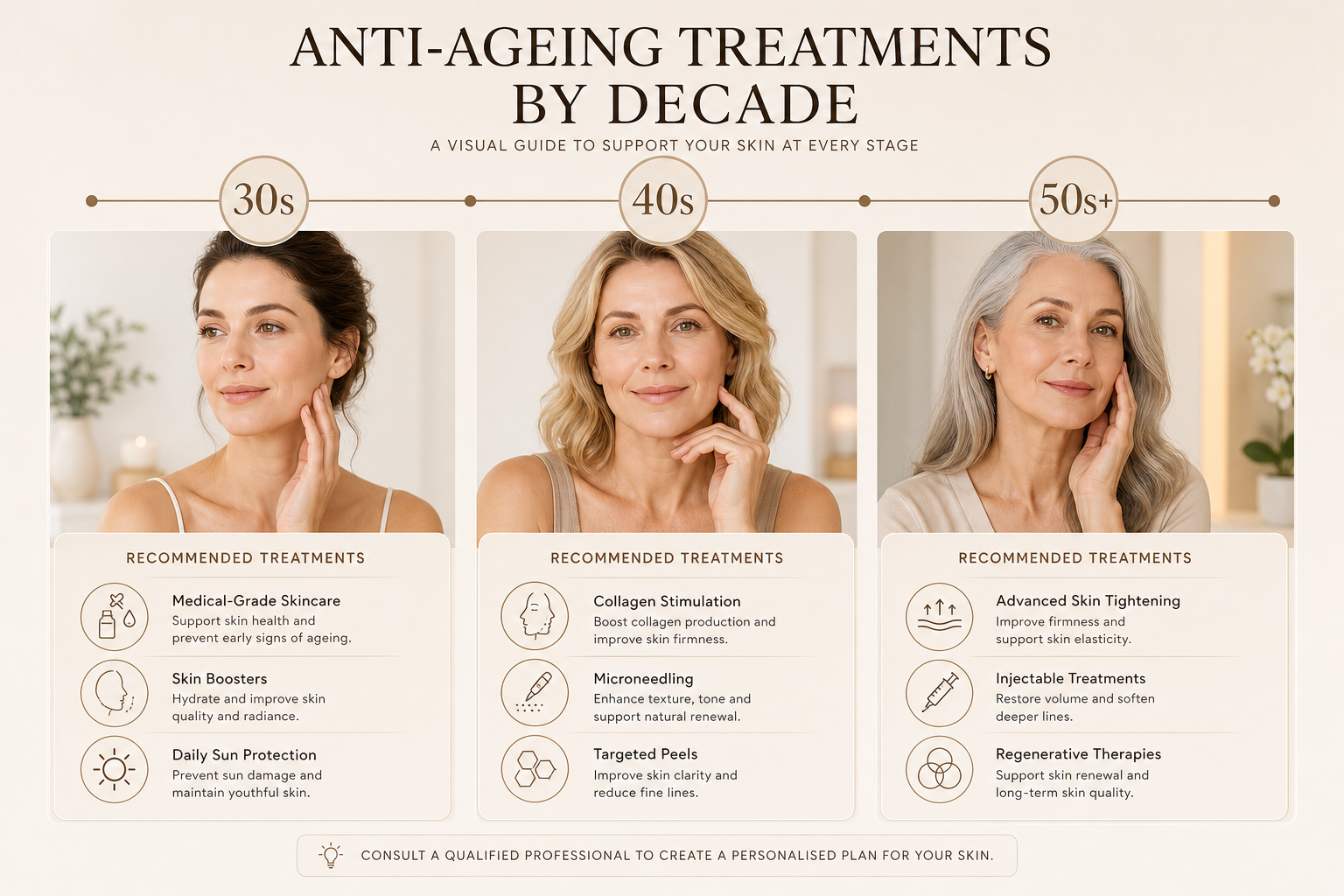
In the 30s, early collagen loss and the first signs of photoaging are the primary concerns. Preventive treatments such as regular HydraFacials, superficial peels, and LED therapy can maintain skin quality, while microneedling may be introduced for early fine lines. In the 40s, more significant collagen decline, skin laxity, and hyperpigmentation typically emerge. Microneedling, medium peels, and RF-based treatments become more relevant. In the 50s and beyond, hormonal changes — particularly post-menopausal oestrogen decline — accelerate skin thinning, dryness, and laxity. Radiofrequency microneedling, regenerative treatments such as PRP or exosome facials, and combination protocols addressing both surface quality and structural support tend to deliver the most meaningful results at this stage.
Combination Treatment Protocols and Realistic Timelines
Pairing complementary treatments within a structured treatment protocol often produces better outcomes than any single facial alone. Common and clinically logical combinations include microneedling followed by LED therapy to accelerate healing and enhance collagen stimulation, microneedling with PRP or exosome application to amplify regenerative effects, and a course of chemical peels alternated with HydraFacial sessions to address both cell turnover and hydration simultaneously. Microcurrent and LED therapy are frequently combined in a single session as a low-downtime maintenance option.
Realistic timelines vary by treatment. Hydration-based facials produce immediate but short-lived results. Exfoliation treatments show improvement within one to two weeks as new skin emerges. Collagen-stimulating treatments such as microneedling and RF microneedling require four to eight weeks for initial results to become visible, with continued improvement for up to three months as collagen matures. Regenerative treatments such as PRP and exosome facials follow a similar timeline. Most treatment courses require three to six sessions before optimal results are achieved, and maintenance sessions every three to six months are typically recommended to sustain outcomes.
When a Facial May Not Be Appropriate
Certain conditions may make specific anti-ageing facials unsuitable or require modification of the treatment protocol. Active skin infections, open wounds, or inflammatory skin conditions such as active rosacea or eczema flares are generally contraindications for most facial treatments. Pregnancy and breastfeeding rule out chemical peels, retinoid-based treatments, and many energy-based devices. Patients taking isotretinoin (Roaccutane) should typically wait six to twelve months after completing the course before undergoing chemical peels or microneedling. Blood-thinning medications may increase bruising risk with microneedling. A history of keloid scarring is a relative contraindication for microneedling. Patients with pacemakers or implanted metal devices should avoid microcurrent and radiofrequency treatments. Disclosing a full medical history during an esthetician consultation or medical assessment is essential for safe treatment planning.
Frequently Asked Questions
At what age should you start anti-ageing facials?
There is no fixed age. Preventive treatments such as HydraFacial, superficial peels, and LED therapy can be beneficial from the mid-to-late twenties onward to support skin health and slow early collagen loss. More targeted collagen-stimulating treatments are typically introduced when visible signs of aging begin to appear, which varies considerably between individuals depending on genetics, sun exposure history, and lifestyle.
Which anti-ageing facial gives the fastest visible results?
HydraFacial and microcurrent facials produce the most immediate visible improvement — typically within 24 hours — because they improve hydration, radiance, and temporary muscle tone rather than stimulating a biological repair process. Chemical peels show results within one to two weeks once the skin has shed. Collagen-stimulating treatments such as microneedling take four to eight weeks for meaningful results to develop.
How often should you get anti-ageing facials?
Frequency depends on the treatment type. Hydrating and maintenance facials such as HydraFacial are commonly performed monthly. Superficial chemical peels are typically spaced two to four weeks apart during a course. Microneedling sessions are usually four to six weeks apart. After completing an initial course, maintenance sessions every three to six months are typical for most collagen-stimulating treatments.
Can anti-ageing facials replace injectables or surgery?
Facials and energy-based treatments can meaningfully improve skin quality, texture, and mild to moderate laxity, but they cannot replicate the structural changes achievable with botulinum toxin, dermal fillers, or surgical procedures. For significant facial volume loss, deep wrinkles, or pronounced jowling, a combination approach that includes both facial treatments and injectable or surgical options may be more appropriate. A qualified practitioner can help determine which combination best matches individual goals.
Are professional anti-ageing facials significantly better than at-home treatments?
Professional treatments use higher-concentration active ingredients, more powerful devices, and controlled clinical conditions that are not replicable at home. At-home LED masks, microneedling rollers, and over-the-counter peels can support skin maintenance between professional sessions, but they are unlikely to produce equivalent results for significant aging concerns. Retinoids and broad-spectrum SPF remain the most evidence-supported at-home interventions for slowing photoaging and supporting cell turnover.
What questions should I ask before booking an anti-ageing facial?
Useful questions include: Which treatment do you recommend for my specific concerns and skin type? How many sessions will I need? What downtime should I expect? Are there any contraindications I should be aware of? What results are realistic for my age and skin condition? Can this treatment be combined with others for better outcomes? What aftercare will I need to follow?
Choosing an Anti-Ageing Facial That Matches Your Skin’s Actual Needs
The best facial for aging skin is the one that targets your specific concerns — whether that is collagen loss, skin laxity, hyperpigmentation, dehydration, or a combination — with a treatment mechanism that suits your skin type, downtime tolerance, and stage of aging. No single facial is universally superior. HydraFacial and microcurrent treatments offer accessible, low-downtime options for maintenance and early aging. Chemical peels and microneedling provide more meaningful structural improvement with a stronger evidence base. Radiofrequency microneedling and regenerative treatments such as exosome facials or PRP represent more advanced options for moderate to significant aging changes. Combination treatment protocols, guided by a qualified practitioner, often deliver the most comprehensive results.
Before committing to any treatment, a thorough esthetician consultation or medical skin assessment is the most important step. A practitioner who takes time to assess your skin, understand your goals, and explain realistic outcomes — including limitations — is far more valuable than any individual treatment. Sun protection with a broad-spectrum SPF remains the single most evidence-supported daily habit for slowing further photoaging and protecting the results of any professional treatment.