
Spots on Chin: Causes, Types, and What You Can Do About Them
Spots on the chin are one of the most frequently reported skin concerns among adults, and they can appear for a surprisingly wide range of reasons. Understanding what is actually causing the spots matters, because the right approach depends entirely on the underlying mechanism. This article explains the most common causes of chin spots, how each type differs in appearance and behaviour, and what treatment options may be worth discussing with a qualified skin professional.
Key Takeaways
- Chin spots in adults are most commonly linked to hormonal fluctuations, but other causes include blocked pores, bacterial activity, contact irritation, and post-inflammatory pigmentation.
- The appearance, timing, and pattern of spots can help identify the likely cause before seeking professional advice.
- Effective management depends on correctly identifying the type of spot; treating hormonal acne the same way as milia or contact dermatitis, for example, is unlikely to produce good results.
- Many chin spots respond well to targeted skincare or in-clinic treatments, but persistent or painful breakouts warrant a professional assessment rather than self-treatment alone.
- Some spots on the chin may indicate an underlying health condition, such as polycystic ovary syndrome, that benefits from medical evaluation beyond skincare.
Why the Chin Is a Common Spot Location
The chin sits within what dermatologists often call the lower face or jawline zone, an area that is particularly responsive to hormonal signals. Sebaceous glands in this region tend to be more active and more sensitive to androgens — hormones such as testosterone and its derivatives — than glands in other parts of the face. This makes the chin prone to excess sebum production, which can contribute to blocked follicles and breakouts. The chin is also a frequent contact point: resting a hand on the chin, wearing a face mask, or using certain musical instruments can all introduce bacteria and friction that aggravate the skin.
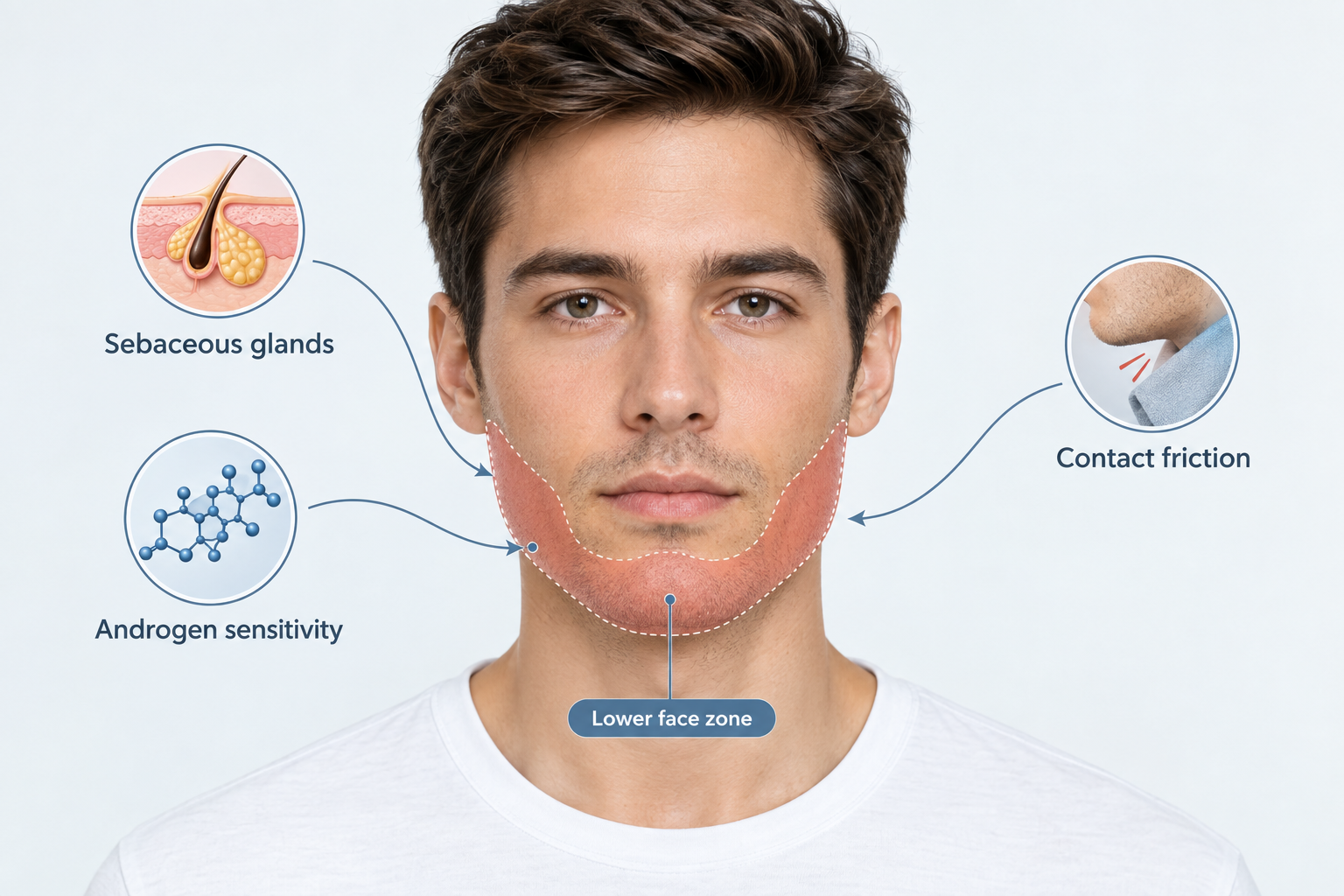
The lower face zone also receives drainage from lymph nodes in the neck and jaw, and some practitioners observe that congestion or inflammation in this area can contribute to skin reactivity, though the clinical evidence for this specific link remains limited. What is well established is that the chin and jawline are among the most common sites for adult-onset acne, particularly in women.
Hormonal Acne on the Chin
Hormonal acne is the most frequently identified cause of recurring spots on the chin and jawline in adults. Unlike the widespread teenage breakouts that often affect the forehead and nose, hormonal chin acne tends to appear in a predictable pattern: deep, tender papules or cysts that cluster along the chin, jawline, and sometimes the lower cheeks. These spots often flare in the days before menstruation, when oestrogen levels drop and androgen activity becomes relatively more prominent.
Androgens stimulate the sebaceous glands to produce more sebum. When excess sebum combines with dead skin cells inside a hair follicle, the follicle can become blocked, creating an environment where Cutibacterium acnes (formerly known as Propionibacterium acnes) bacteria can proliferate. The immune response to this bacterial activity produces the redness, swelling, and pus associated with inflammatory acne spots.
Hormonal chin spots are also associated with conditions that alter androgen levels, including polycystic ovary syndrome (PCOS), thyroid dysfunction, and the hormonal shifts that accompany perimenopause. Stress can worsen hormonal acne indirectly by elevating cortisol, which in turn influences androgen activity. If chin breakouts are persistent, cyclical, or accompanied by other symptoms such as irregular periods, excess facial hair, or unexplained weight changes, a medical evaluation is advisable to rule out an underlying hormonal condition.
Comedones: Blackheads and Whiteheads on the Chin
Comedones are non-inflammatory blocked pores and represent one of the earliest stages of acne development. Blackheads (open comedones) occur when a follicle is partially blocked and the contents oxidise on contact with air, producing the characteristic dark appearance. Whiteheads (closed comedones) form when the follicle opening is fully blocked, trapping sebum and dead skin cells beneath the surface.
The chin is a common site for comedones because of its relatively high density of sebaceous glands. Comedones are not caused by dirt, and scrubbing the skin vigorously can actually worsen them by irritating the follicle wall. Topical retinoids, which increase cell turnover and help prevent follicle blockage, are among the most evidence-supported treatments for comedonal acne. Salicylic acid, a beta-hydroxy acid that is oil-soluble and can penetrate the follicle, is also widely used to help clear blocked pores.
Cystic Acne on the Chin
Cystic acne represents the most severe form of acne and is particularly common on the chin and lower jaw. Cysts are large, painful, fluid-filled nodules that develop deep within the skin when a blocked follicle ruptures beneath the surface, triggering a significant inflammatory response. Unlike surface spots, cystic acne does not respond reliably to over-the-counter products and carries a meaningful risk of scarring if left untreated or handled incorrectly.
Squeezing or picking cystic spots on the chin is strongly discouraged. Attempting to extract a deep cyst can spread the infection, worsen inflammation, and significantly increase the likelihood of post-inflammatory hyperpigmentation or permanent scarring. A dermatologist or qualified skin clinician can assess whether prescription treatments — such as topical or oral antibiotics, hormonal therapies, or in some cases oral isotretinoin — are appropriate. Intralesional corticosteroid injections are sometimes used to reduce the size and inflammation of individual cysts relatively quickly.
Milia on the Chin
Milia are small, white, dome-shaped cysts that sit just beneath the skin surface and are often mistaken for whiteheads. Unlike whiteheads, milia are not caused by blocked sebaceous glands. They form when keratin — a structural skin protein — becomes trapped beneath the skin, typically in a tiny epidermal cyst. Milia on the chin can appear spontaneously, following skin trauma such as a burn or dermabrasion, or as a reaction to heavy occlusive skincare products.
Milia do not contain pus and are not inflamed. They are firm to the touch and do not respond to acne treatments. In many cases, milia resolve on their own over several weeks. When they persist, a trained aesthetician or clinician can remove them safely using a fine sterile needle in a process called extraction or de-roofing. Attempting to remove milia at home carries a risk of scarring and infection.
Contact Dermatitis and Irritant Reactions
Spots or a rash on the chin can sometimes result from contact with an irritant or allergen rather than from acne. Contact dermatitis produces redness, small bumps, itching, and sometimes blistering in the area that has been exposed to the triggering substance. Common triggers for chin contact dermatitis include certain skincare ingredients, fragrances, toothpaste (particularly those containing fluoride or sodium lauryl sulphate), food residue, and materials that come into contact with the chin such as instrument mouthpieces or chin straps.
Distinguishing contact dermatitis from acne is important because the treatments differ significantly. Acne treatments applied to a contact dermatitis rash can worsen irritation. If spots on the chin are accompanied by itching, burning, or a rash-like distribution that does not follow the typical pattern of acne, a patch test performed by a dermatologist can help identify the responsible allergen or irritant.
Perioral Dermatitis
Perioral dermatitis is a distinct inflammatory skin condition that produces small red papules and pustules around the mouth, including the chin. Despite its name, it is not a form of acne, though it can look similar. Perioral dermatitis is more common in women and is frequently associated with the prolonged use of topical corticosteroids on the face. Other possible triggers include fluorinated toothpaste, heavy moisturisers, and certain cosmetic products.
A key feature of perioral dermatitis is that it tends to worsen when treated with topical steroids, even though steroids may initially appear to suppress the redness. Stopping the triggering product is usually the first step in management. Oral antibiotics such as doxycycline are commonly prescribed for perioral dermatitis, and the condition generally responds well to appropriate treatment, though it can take several weeks to resolve fully.
Post-Inflammatory Hyperpigmentation on the Chin
Post-inflammatory hyperpigmentation (PIH) refers to the dark marks or patches that remain on the skin after an acne spot or other inflammatory lesion has healed. PIH is not a scar in the structural sense — it does not involve changes to the skin’s texture or collagen — but it can persist for months or even years, particularly in people with medium to deep skin tones. The chin is a common site for PIH because it is prone to inflammatory acne spots.
PIH develops when inflammation triggers melanocytes — the pigment-producing cells in the skin — to produce excess melanin in the affected area. Topical ingredients that may help fade PIH over time include vitamin C, niacinamide, azelaic acid, kojic acid, and retinoids. Sun protection is essential during treatment, as UV exposure can significantly deepen existing pigmentation. In-clinic treatments such as chemical peels, laser therapy, and microneedling may be considered for more persistent pigmentation, though suitability depends on skin tone, the depth of pigmentation, and individual clinical assessment.
Ingrown Hairs on the Chin
Ingrown hairs are a common cause of spots on the chin, particularly in people who shave regularly. An ingrown hair occurs when a hair curls back into the skin or fails to emerge properly from the follicle after shaving or waxing, triggering a localised inflammatory response. The result is a tender red papule or pustule that can closely resemble an acne spot. Ingrown hairs are more common in people with naturally curly or coarse hair.
Gentle exfoliation and adjusting shaving technique — using a sharp single-blade razor, shaving in the direction of hair growth, and avoiding pulling the skin taut — can help reduce the frequency of ingrown hairs. Topical salicylic acid or glycolic acid may help by encouraging cell turnover and keeping follicles clear. Laser hair removal is an option for people who experience frequent and troublesome ingrown hairs on the chin, as it reduces hair density over time and can significantly decrease the occurrence of this problem.
Rosacea and Chin Spots
Rosacea is a chronic inflammatory skin condition that primarily affects the central face, including the chin. One subtype, papulopustular rosacea, produces acne-like spots alongside persistent redness and visible blood vessels. These spots can be difficult to distinguish from acne without a professional assessment, but there are some useful differences: rosacea spots tend to appear without comedones, are often accompanied by flushing and facial redness, and are frequently triggered by heat, alcohol, spicy food, or sun exposure.
Treating rosacea with standard acne products — particularly those containing benzoyl peroxide or strong acids — can worsen the condition. Rosacea management typically involves identifying and avoiding personal triggers, using gentle skincare formulations, and in many cases using prescription topical or oral treatments. A dermatologist or qualified skin clinician is best placed to confirm a rosacea diagnosis and recommend an appropriate management plan.
Treatment Options for Chin Spots
The most appropriate treatment for spots on the chin depends on the underlying cause, the severity of the condition, and individual skin characteristics. A professional skin assessment is the most reliable starting point, particularly for persistent or painful breakouts.

Topical Skincare
For mild to moderate acne and comedones, evidence-supported topical ingredients include retinoids (adapalene, tretinoin), benzoyl peroxide, salicylic acid, niacinamide, and azelaic acid. These ingredients work through different mechanisms — retinoids regulate cell turnover, benzoyl peroxide has antibacterial and keratolytic properties, and salicylic acid helps clear blocked follicles. Combining ingredients requires care, as some combinations can cause significant irritation. A skincare professional can advise on a suitable routine based on skin type and concern.
Prescription Treatments
For hormonal chin acne, prescription options may include combined oral contraceptives, anti-androgen medications such as spironolactone, or topical prescription retinoids. Oral antibiotics are sometimes used for inflammatory acne but are generally considered a short-term measure due to concerns about antibiotic resistance. Oral isotretinoin is reserved for severe or treatment-resistant acne and requires careful medical supervision. All prescription treatments carry potential side effects and require individual clinical assessment before use.
In-Clinic Aesthetic Treatments
Several professional treatments may help manage chin spots and their after-effects. Chemical peels using glycolic acid, salicylic acid, or trichloroacetic acid can help reduce active breakouts, improve skin texture, and fade post-inflammatory pigmentation. Microneedling may be considered for acne scarring. LED light therapy, particularly blue light, has some evidence for reducing Cutibacterium acnes activity, though the evidence base is still developing. Laser treatments can target pigmentation, redness, and in some cases active acne. The suitability of any in-clinic treatment depends on skin type, active inflammation, and the specific concern being addressed.
When to Seek Professional Advice
Mild, occasional spots on the chin can often be managed with appropriate over-the-counter skincare. However, professional assessment is advisable when spots are persistent, painful, cystic, or accompanied by scarring; when breakouts are cyclical and linked to the menstrual cycle; when spots do not respond to several weeks of consistent skincare; when there is significant post-inflammatory pigmentation; or when other symptoms suggest an underlying hormonal condition. A GP, dermatologist, or qualified aesthetic skin clinician can assess the pattern and severity of chin spots and recommend a targeted management plan.
Frequently Asked Questions
Why do I keep getting spots on my chin but nowhere else?
Recurring spots specifically on the chin are most commonly linked to hormonal activity. The lower face zone is particularly sensitive to androgens, which stimulate sebum production. If breakouts follow a cyclical pattern or are deep and cystic, hormonal acne is a likely contributor. A skin professional or GP can help identify whether hormonal factors or another cause is responsible.
Are chin spots a sign of a health problem?
In most cases, chin spots are a skin concern rather than a sign of serious illness. However, persistent hormonal acne on the chin and jawline can sometimes be associated with conditions such as polycystic ovary syndrome (PCOS) or thyroid imbalance. If breakouts are accompanied by other symptoms such as irregular periods, excess hair growth, or unexplained weight changes, a medical evaluation is worthwhile.
Can diet affect spots on the chin?
The relationship between diet and acne is an active area of research. Current evidence suggests that high-glycaemic foods and dairy products may worsen acne in some individuals, though responses vary considerably between people. Diet is unlikely to be the sole cause of chin spots but may be a contributing factor worth considering alongside other management strategies.
Is it safe to squeeze spots on the chin?
Squeezing surface spots such as whiteheads carries a risk of spreading bacteria, worsening inflammation, and increasing the likelihood of post-inflammatory pigmentation. Squeezing deep cystic spots is particularly inadvisable, as it can push the infection deeper into the skin and significantly increase the risk of scarring. Professional extraction in a clinical setting is a safer option for persistent or deep spots.
How long does it take for chin spots to clear up?
This depends on the type and cause of the spots. Surface whiteheads may resolve within a few days. Inflammatory papules typically take one to two weeks. Cystic spots can persist for several weeks and may leave pigmentation that takes months to fade. Hormonal acne often requires consistent treatment over several months before significant improvement is seen.
Can wearing a face mask cause chin spots?
Yes. Friction, heat, and moisture trapped beneath a face mask can irritate follicles and contribute to breakouts, a phenomenon sometimes called maskne (mask acne). The chin and jawline are particularly affected. Using a gentle cleanser after mask-wearing, choosing breathable mask materials, and avoiding heavy makeup beneath the mask may help reduce this type of breakout.
Understanding Your Chin Spots Before Seeking Treatment
Spots on the chin are rarely a single, straightforward problem. Hormonal acne, comedones, milia, contact reactions, perioral dermatitis, ingrown hairs, and rosacea can all produce spots in this area, and each requires a different approach. Applying the wrong treatment — for example, using strong acne products on perioral dermatitis or rosacea — can worsen the condition rather than improve it. Taking time to observe the pattern, timing, and characteristics of chin spots before seeking advice will help a skin professional make a more accurate assessment and recommend a more targeted plan. If spots on the chin are persistent, painful, or affecting your confidence, a consultation with a qualified dermatologist or aesthetic skin clinician is a practical and worthwhile step.


