
Masseter Botox in London: Jaw Slimming Treatment Explained
Masseter Botox is one of the most requested non-surgical facial treatments in London, sought by people who want to reduce the appearance of a wide or square jaw, relieve teeth grinding, or achieve a softer facial contour. Botulinum toxin injected into the masseter muscles can gradually reduce their bulk, creating a slimmer lower face without surgery. This article explains how the treatment works, what realistic results look like, who may be suitable, what risks are involved, and what to consider when choosing a clinic in London.
Key Takeaways
- Masseter Botox involves injecting botulinum toxin into the large chewing muscles at the sides of the jaw to reduce their size over time.
- Results typically become visible over six to eight weeks and may last between four and six months, though individual response varies.
- The treatment may also help reduce symptoms of bruxism (teeth grinding) and jaw tension, though it is not a substitute for dental management.
- Suitability depends on anatomy, jaw muscle size, and individual goals; a clinical assessment is essential before treatment.
- Choosing a medically qualified and experienced practitioner in London is one of the most important factors affecting both safety and outcome.
What Is the Masseter Muscle and Why Does It Matter?
The masseter is a powerful muscle located on each side of the jaw, running from the cheekbone down to the lower jawbone. Its primary function is chewing, but it also plays a role in clenching and grinding. In some people, the masseter muscles are naturally large or become hypertrophied — meaning they enlarge over time — due to habitual teeth grinding (bruxism), jaw clenching, or simply genetic factors. When the masseter muscles are prominent, they can create a wider, squarer lower face, which some patients find aesthetically undesirable.
Masseter hypertrophy is not a medical problem in itself, but it can be associated with jaw discomfort, headaches, and dental wear when linked to bruxism. For patients seeking a more oval or heart-shaped facial profile, reducing masseter bulk through botulinum toxin injections has become a well-established non-surgical option. Understanding the anatomy helps explain both why the treatment works and why individual results vary considerably depending on the size and structure of each person’s jaw muscles.
How Does Masseter Botox Work?
Botulinum toxin — commonly known by the brand name Botox, though other brands such as Dysport and Azzalure contain the same active ingredient — works by temporarily blocking the nerve signals that cause muscle contraction. When injected into the masseter muscle, it reduces the muscle’s ability to contract with full force. Over several weeks, reduced muscle activity leads to a gradual reduction in muscle volume, a process sometimes described as muscle atrophy or remodelling.
This is different from how botulinum toxin works in cosmetic wrinkle treatments, where the goal is to prevent repetitive facial movements that cause lines. In masseter jaw slimming, the aim is specifically to reduce muscle bulk rather than to freeze movement entirely. The masseter still functions for chewing after treatment; patients do not lose the ability to eat normally. The reduction in muscle size is what produces the visible slimming effect along the lower face and jawline.
The degree of slimming depends on how large the masseter muscles are to begin with, how much botulinum toxin is used, and how the individual’s muscles respond. People with significantly hypertrophied masseters tend to see more noticeable changes than those with naturally smaller muscles. A thorough assessment of jaw muscle size and facial anatomy before treatment helps set realistic expectations.
What Can Masseter Botox Treat?
Masseter botulinum toxin injections are used for two overlapping purposes: aesthetic jaw slimming and functional relief from jaw-related symptoms.
Aesthetic Jaw Slimming and Facial Contouring
The most common reason patients seek masseter Botox in London is to achieve a slimmer, more tapered lower face. A wide or square jawline caused by large masseter muscles can be softened, creating a more oval facial shape. This is sometimes described as a V-shape or heart-shaped face effect. The treatment does not alter the bone structure of the jaw; it reduces only the soft tissue bulk of the muscle. Patients whose wide jaw is primarily due to bone structure rather than muscle size may see limited aesthetic benefit, which is why a proper clinical assessment matters.
Bruxism and Jaw Tension
Bruxism — the habit of grinding or clenching teeth, often during sleep — can cause masseter hypertrophy, jaw pain, headaches, and dental damage. Botulinum toxin injections into the masseter can reduce the force of clenching and may help relieve associated discomfort. Some patients report reduced jaw tension and fewer tension headaches following treatment. However, masseter Botox is not a standalone treatment for bruxism and should be considered alongside dental assessment and management, such as the use of a night guard. A dentist or specialist should be involved in managing bruxism comprehensively.
What Happens During a Masseter Botox Appointment?
A typical masseter Botox appointment in London begins with a consultation, which may be on the same day as treatment or at a separate visit depending on the clinic’s protocol. During the consultation, the practitioner assesses the size and symmetry of the masseter muscles, discusses the patient’s goals, reviews medical history, and explains what results are realistic. Patients are asked to clench their jaw so the practitioner can feel and observe the muscle bulk.
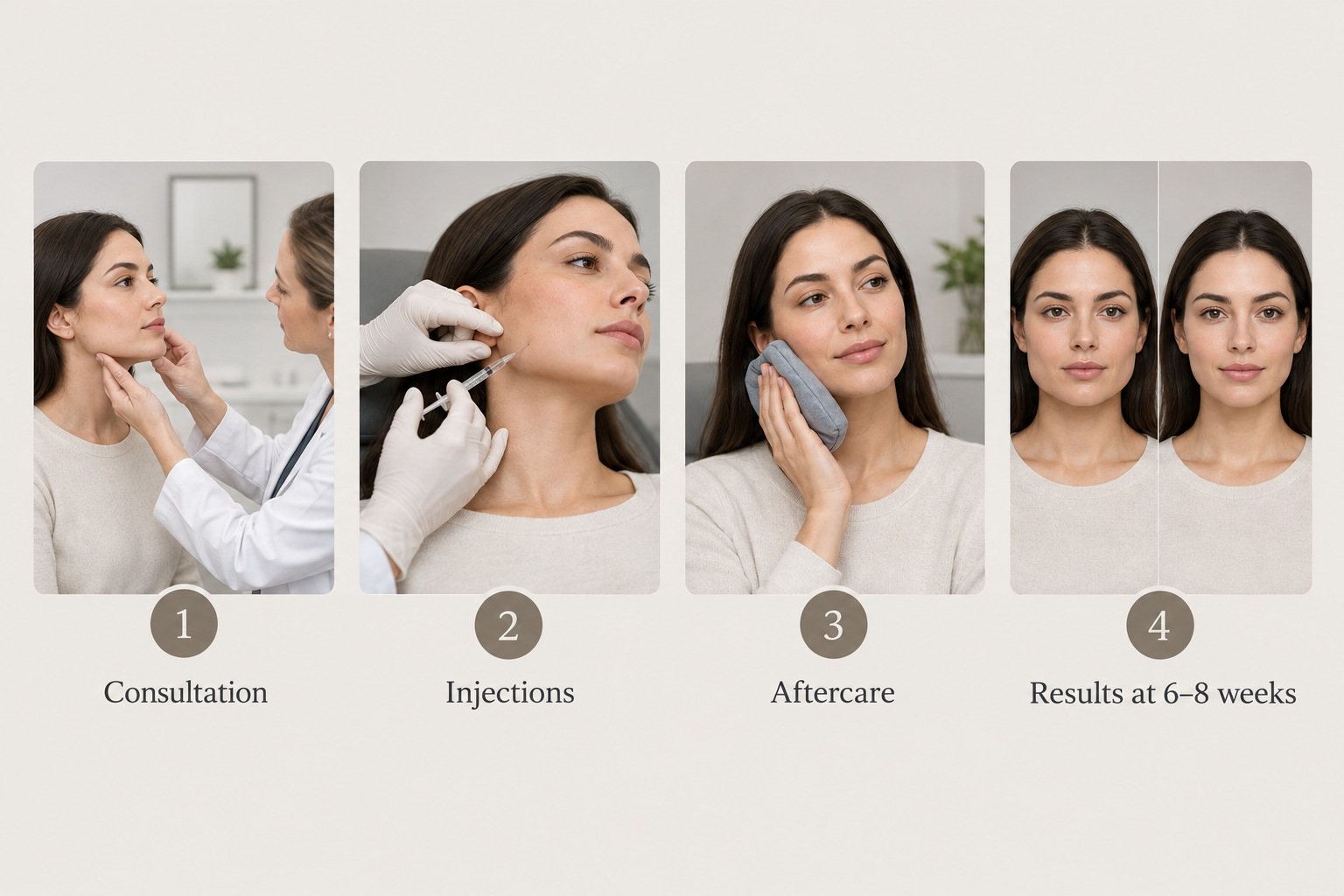
The injections themselves are relatively quick, usually taking around ten to fifteen minutes. A small number of injection points are used on each side of the jaw. Most patients describe the sensation as a brief sharp sting, similar to other facial injections. Topical anaesthetic cream is not always necessary but may be offered. There is no requirement for sedation or local anaesthetic for this treatment.
After the injections, patients can usually return to normal activities immediately. The practitioner will typically advise avoiding strenuous exercise, alcohol, and lying flat for a few hours after treatment, though specific aftercare instructions vary between clinics and practitioners.
When Do Results Appear and How Long Do They Last?
Masseter Botox results appear more gradually than wrinkle-relaxing treatments. Initial effects on muscle activity may begin within one to two weeks, but the visible slimming of the jawline typically develops over six to eight weeks as the muscle gradually reduces in volume. Some patients notice the full effect only at around the ten to twelve week mark, particularly those with larger masseter muscles.
Results generally last between four and six months, after which the botulinum toxin is metabolised and muscle activity gradually returns. With repeated treatments over time, some patients find that the masseter muscles remain smaller for longer, potentially allowing for less frequent maintenance. However, this is not guaranteed and varies between individuals. If treatment is stopped entirely, the masseter muscles will typically return to their original size over time.
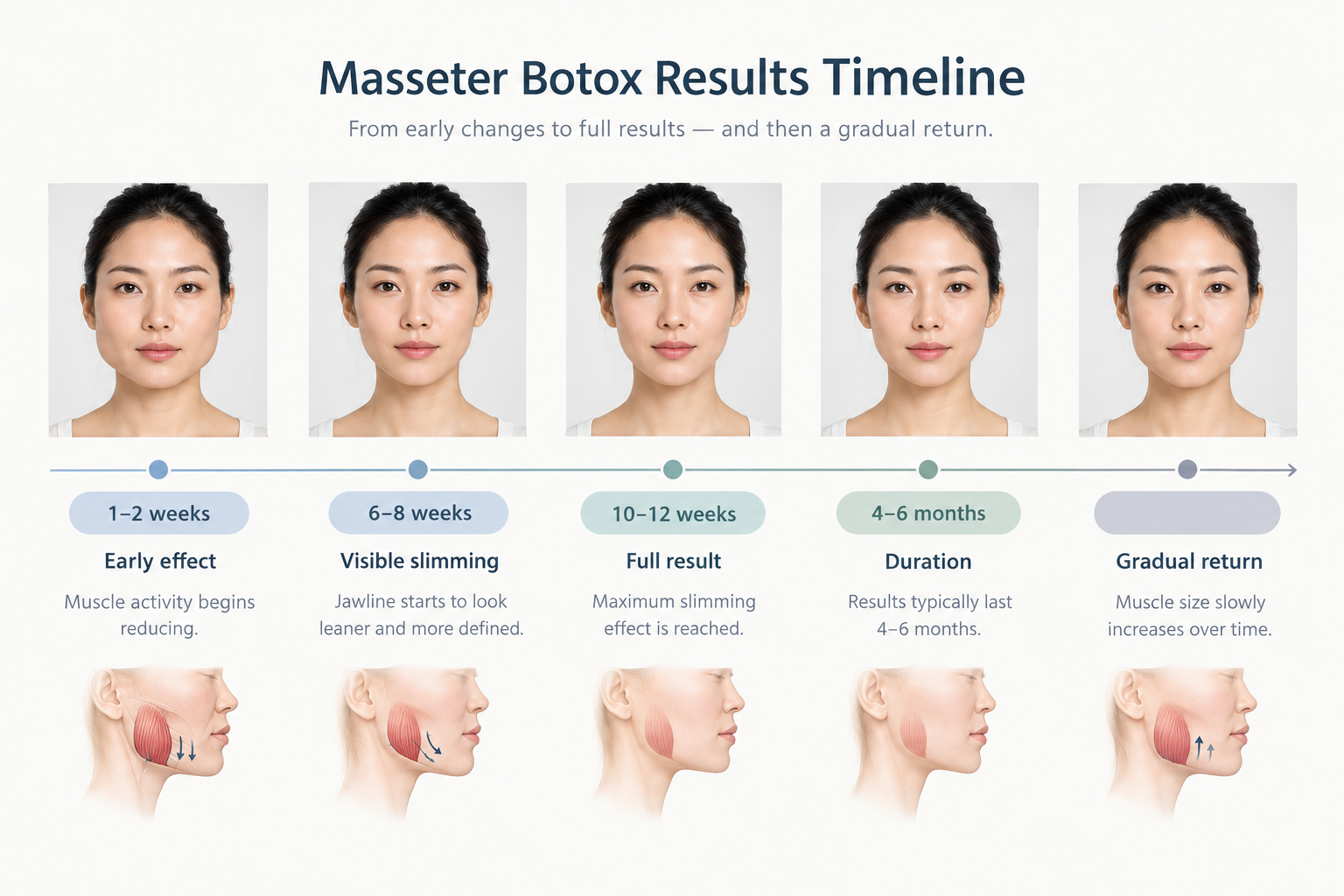
Longevity is influenced by factors including the dose used, individual metabolism, the degree of habitual jaw clenching, and how the muscles respond to repeated treatment. A practitioner experienced in masseter jaw slimming can advise on an appropriate treatment schedule based on individual response.
Risks and Side Effects of Masseter Botox
Masseter Botox is generally considered a low-risk procedure when performed by a qualified and experienced practitioner, but it is not without potential side effects. Understanding these before treatment is important for informed decision-making.
Common and Mild Side Effects
- Temporary bruising or swelling at the injection sites, usually resolving within a few days.
- Mild tenderness around the jaw area for a day or two after treatment.
- Headache in the hours following treatment, which typically resolves quickly.
- Temporary difficulty chewing hard foods, particularly in the first few weeks as the muscle adjusts.
Less Common but Clinically Relevant Risks
- Asymmetry: If the masseter muscles are not equal in size or if the botulinum toxin spreads unevenly, one side of the jaw may slim more than the other. This can often be corrected at a follow-up appointment.
- Unintended muscle weakness: If botulinum toxin spreads to adjacent muscles, it may temporarily affect nearby facial movements, such as smiling. This is uncommon when the treatment is performed by an experienced injector using appropriate technique.
- Paradoxical bulging: In rare cases, the overlying skin may appear to sag slightly as the muscle reduces, particularly in patients with less skin elasticity. This is more likely in older patients or those with significant skin laxity.
- Insufficient effect: Some patients do not achieve the degree of slimming they hoped for, particularly if the wide jaw is primarily structural (bone-related) rather than muscular.
Serious complications such as infection or significant adverse reactions are rare but possible. Choosing a practitioner who works in a clinical setting, has appropriate medical qualifications, and follows safe injection practices significantly reduces these risks.
Who May Be Suitable for Masseter Botox?
Masseter Botox may be worth discussing with a qualified practitioner if you have visibly enlarged masseter muscles contributing to a wide or square lower face, experience jaw clenching or teeth grinding, or have jaw-related tension and discomfort. The treatment tends to produce the most noticeable aesthetic results in patients whose jaw width is primarily due to muscle bulk rather than bone structure.
A clinical assessment is necessary to determine suitability. The practitioner will typically assess jaw muscle size by palpation (feeling the muscle when clenched), evaluate facial symmetry, and discuss realistic outcomes based on individual anatomy.
Who May Not Be Suitable?
Masseter Botox may not be appropriate for everyone. Contraindications and cautions include:
- Pregnancy or breastfeeding, as botulinum toxin is not recommended during these periods.
- Known allergy to botulinum toxin or any of its components.
- Certain neuromuscular conditions such as myasthenia gravis or Lambert-Eaton syndrome, which can be worsened by botulinum toxin.
- Active infection or skin condition at or near the injection site.
- Use of certain medications, including some antibiotics and blood thinners, which may interact with botulinum toxin or increase bruising risk.
- Patients whose wide jaw is primarily due to bone structure rather than muscle hypertrophy, as the aesthetic benefit may be limited.
- Patients with very little masseter muscle bulk, where further reduction may not be appropriate or beneficial.
A thorough medical history review before treatment is essential. Patients should disclose all medications, supplements, and relevant medical conditions to their practitioner.
Masseter Botox vs Surgical Jaw Reduction
For patients seeking a permanent reduction in jaw width, surgical options such as mandibular angle reduction (jaw bone shaving) or surgical masseter muscle reduction exist. These procedures are performed under general anaesthesia and carry significantly greater risks, longer recovery times, and higher costs than botulinum toxin treatment. They are typically considered only when non-surgical options have been exhausted or when the jaw width is primarily structural.
Masseter Botox offers a non-surgical, reversible alternative with minimal downtime. The trade-off is that results are temporary and require ongoing maintenance. For most patients seeking jaw slimming without surgery, botulinum toxin treatment is a practical starting point, and surgical options can be considered later if desired results are not achievable non-surgically.
Choosing a Masseter Botox Clinic in London
London has a large number of clinics and practitioners offering masseter Botox, which makes choosing carefully particularly important. The quality of the outcome and the safety of the treatment depend significantly on the practitioner’s qualifications, experience, and clinical environment.
When researching clinics in London, consider the following factors:
- Medical qualifications: Botulinum toxin injections should be performed by or under the supervision of a qualified medical professional, such as a doctor, dentist, or nurse prescriber with appropriate training and registration. In the UK, botulinum toxin is a prescription-only medicine, meaning it must be prescribed by a qualified prescriber following a face-to-face or thorough remote assessment.
- Experience with masseter treatment specifically: Masseter injections require knowledge of facial anatomy and experience with this particular treatment area. Ask how many masseter treatments the practitioner has performed and whether they can discuss realistic outcomes for your anatomy.
- Clinical setting: Treatment should take place in a clean, professional clinical environment with appropriate emergency protocols in place.
- Consultation process: A reputable clinic will offer a thorough consultation before treatment, assess your suitability, and not pressure you into proceeding immediately.
- Aftercare and follow-up: Check whether the clinic offers a follow-up appointment to assess results and address any asymmetry or concerns.
- Transparent pricing: Masseter Botox pricing in London varies depending on the clinic, practitioner, and the amount of product used. Be cautious of unusually low prices, which may reflect reduced product quality, inexperienced practitioners, or inadequate clinical standards.
Regulatory oversight of cosmetic injectables in the UK has been evolving, with increasing requirements around prescribing and practitioner qualifications. Checking that a practitioner is registered with a relevant regulatory body — such as the General Medical Council, Nursing and Midwifery Council, or General Dental Council — provides an important baseline assurance.
Alternatives to Masseter Botox for Jaw Slimming
Masseter botulinum toxin is not the only option for patients concerned about jaw width or facial shape. Depending on the underlying cause and the patient’s goals, other approaches may be relevant:
- Dermal fillers for facial contouring: While fillers do not slim the jaw directly, strategic placement in the chin or cheeks can create the visual impression of a more balanced or tapered lower face.
- Radiofrequency or ultrasound skin tightening: Treatments such as radiofrequency microneedling or high-intensity focused ultrasound (HIFU) may improve skin laxity around the lower face, which can complement jaw slimming results in some patients.
- Surgical jaw reduction: As discussed above, surgical options exist for patients seeking permanent structural change, though these carry considerably greater risk and recovery.
- Dental management for bruxism: For patients whose primary concern is jaw clenching and grinding rather than aesthetics, a dental night guard and behavioural strategies may be the most appropriate first-line approach.
The most appropriate option depends on the individual’s anatomy, goals, and medical history. A qualified practitioner can help determine which approach — or combination of approaches — is most likely to achieve the desired outcome.
Frequently Asked Questions
How many units of Botox are needed for masseter jaw slimming?
The amount of botulinum toxin used varies depending on the size of the masseter muscles and the brand of product used. Units are not directly interchangeable between different botulinum toxin brands. A qualified practitioner will determine the appropriate dose based on a clinical assessment of your jaw muscle size and your treatment goals. Providing specific unit numbers in advance of an assessment is not clinically appropriate.
Is masseter Botox painful?
Most patients describe the injections as a brief, sharp sting. The masseter area is generally well tolerated without topical anaesthetic, though some clinics offer numbing cream if preferred. Discomfort during the procedure is usually minimal and short-lived.
Can masseter Botox change my smile?
When performed correctly by an experienced practitioner, masseter Botox should not affect the muscles responsible for smiling. However, if botulinum toxin spreads to adjacent muscles, temporary changes in facial movement are possible. This risk is reduced by using appropriate technique and by choosing a practitioner with specific experience in this treatment area.
How soon can I eat normally after masseter Botox?
Most patients can eat normally immediately after treatment, though some practitioners advise avoiding very hard or chewy foods for a short period while the treatment takes effect. Any temporary difficulty chewing usually resolves as the muscle adjusts over the first few weeks.
Will my jaw look different straight away?
No. Unlike dermal fillers, which produce immediate volume changes, masseter Botox results develop gradually over six to eight weeks as the muscle reduces in size. Patients should not expect to see a visible difference in the days immediately following treatment.
Can masseter Botox help with headaches caused by jaw clenching?
Some patients report a reduction in tension headaches associated with jaw clenching following masseter botulinum toxin treatment. However, headaches have many causes, and masseter Botox is not a treatment for headaches in general. If jaw clenching is contributing to headaches, a combined approach involving dental assessment is advisable.
How often will I need repeat treatments?
Most patients require repeat treatment every four to six months to maintain results. With consistent treatment over time, some patients find that the masseter muscles remain smaller for longer, potentially allowing for less frequent sessions. This varies between individuals and should be discussed with your practitioner based on your response to treatment.
Is Masseter Botox in London Worth Considering?
Masseter Botox is a well-established non-surgical option for patients who want to slim the lower face or reduce jaw-related discomfort caused by muscle hypertrophy. When performed by a qualified and experienced practitioner, it carries a low risk of serious complications and requires no significant downtime. The gradual, natural-looking results appeal to patients who prefer a subtle change rather than a surgical outcome.
The main limitations are that results are temporary, requiring ongoing maintenance, and that the treatment is most effective when jaw width is due to muscle bulk rather than bone structure. Patients with primarily structural jaw width may see limited aesthetic benefit and should discuss this honestly during a consultation. The treatment is also not a standalone solution for bruxism and should be considered as part of a broader management plan when teeth grinding is the primary concern.
London offers a wide range of clinics providing masseter botulinum toxin treatment, but the quality of care varies considerably. Taking time to research practitioner qualifications, clinical experience, and the consultation process is as important as understanding the treatment itself. A thorough face-to-face assessment with a medically qualified practitioner is the appropriate starting point for anyone seriously considering masseter jaw slimming in London.


