
How to Reduce Nose Size Naturally: What Actually Works and What Doesn’t
Many people search for ways to reduce nose size naturally at home, hoping that exercises, massage, or topical products can reshape cartilage and bone. Understanding what is anatomically possible — and what is not — can save time, money, and frustration, and help you identify approaches that may genuinely make a difference to how your nose looks.
Key Takeaways
- No home remedy, exercise, or topical product can permanently reduce the physical size of nasal bone or cartilage, as these are structural tissues that do not respond to external pressure or massage in the way soft tissue does.
- Certain makeup contouring techniques can create a convincing optical illusion of a slimmer or shorter nose without any physical change.
- Non-surgical rhinoplasty using dermal filler is a clinically recognised option that can improve nasal symmetry and proportion, though it does not reduce actual nose size and carries real risks.
- Surgical rhinoplasty remains the only procedure that can physically alter nasal bone and cartilage structure.
- Swelling from injury, allergies, or skin conditions can temporarily increase apparent nose size, and addressing the underlying cause may help in those specific cases.
Why the Nose Cannot Be Reshaped at Home
The nose is composed of bone in its upper third and cartilage in its lower two thirds, covered by skin and soft tissue. Bone and cartilage are rigid structural materials. Unlike fat tissue, which can respond to caloric deficit, or muscle, which adapts to exercise load, nasal cartilage and bone do not remodel in response to massage, pinching, or topical application of any substance. Claims that nose exercises can slim the nostrils or that ginger, toothpaste, or ice can shrink nasal tissue are not supported by anatomical science or clinical evidence.
This does not mean that the appearance of the nose cannot change at all without surgery. Facial swelling, weight fluctuation, skin quality, and the way light falls across facial features can all influence how prominent the nose appears. However, these are perceptual or temporary factors rather than structural changes to the nose itself.
Popular Home Remedies: What the Evidence Shows
Nose Exercises and Pinching
Nose exercises — such as repeatedly pressing the sides of the nose, flaring the nostrils, or performing specific facial movements — are widely promoted on social media as a way to slim or reshape the nose. There is no credible clinical evidence that these exercises alter nasal cartilage shape or reduce nasal width. The muscles around the nose are involved in facial expression, not in determining the structural dimensions of the nose itself. Repeated pinching or pressure does not compress cartilage into a new permanent shape.
Massage Techniques
Some sources suggest that regular massage along the nasal bridge or tip can gradually reduce nose size. Massage can temporarily improve local circulation and may reduce minor puffiness caused by fluid retention, but it cannot alter the underlying bone or cartilage framework. Any perceived change after massage is likely due to reduced temporary swelling rather than structural reshaping.
Topical Ingredients: Toothpaste, Ginger, Apple Cider Vinegar
Applying toothpaste, ginger paste, apple cider vinegar, or similar substances to the nose is sometimes claimed to reduce its size. None of these ingredients have any mechanism by which they could reduce nasal bone or cartilage. Some, particularly acidic substances like apple cider vinegar, can irritate or damage the skin barrier if applied undiluted. These remedies carry a risk of contact dermatitis and should be approached with caution.
Ice Application
Applying ice to the nose may temporarily reduce swelling if the nose is inflamed due to injury, allergy, or infection. In that specific context, reducing inflammation can make the nose appear slightly less prominent. However, ice has no effect on the permanent structural dimensions of a nose that is not currently swollen.
Breathing Exercises and Yoga
Breathing exercises and certain yoga practices are sometimes linked to claims about nasal reshaping. These practices offer genuine benefits for respiratory health and stress reduction, but there is no evidence that they alter nasal anatomy or reduce nose size.
When Swelling Is the Real Issue
In some cases, what a person perceives as an oversized nose is partly or wholly the result of swelling rather than underlying bone or cartilage structure. Causes of nasal swelling that may be addressable include chronic allergic rhinitis, rosacea affecting the nasal skin, acne or sebaceous gland enlargement on the nasal tip, post-traumatic swelling following injury, and generalised facial puffiness linked to diet, alcohol, or poor sleep. If any of these factors are contributing to nasal appearance, addressing them through appropriate medical treatment or lifestyle changes may produce a noticeable improvement. A GP or dermatologist can assess whether an underlying condition is relevant.
Makeup Contouring: A Realistic Non-Invasive Option
Makeup contouring is the most evidence-supported non-invasive method for changing the perceived appearance of the nose. By applying a matte shade slightly darker than the natural skin tone along the sides of the nasal bridge and a lighter highlight down the centre, it is possible to create an optical illusion of a narrower, more defined nose. A darker shade applied beneath the nasal tip can make the nose appear shorter. These effects are entirely cosmetic, last only as long as the makeup is worn, and require no recovery time or clinical involvement.
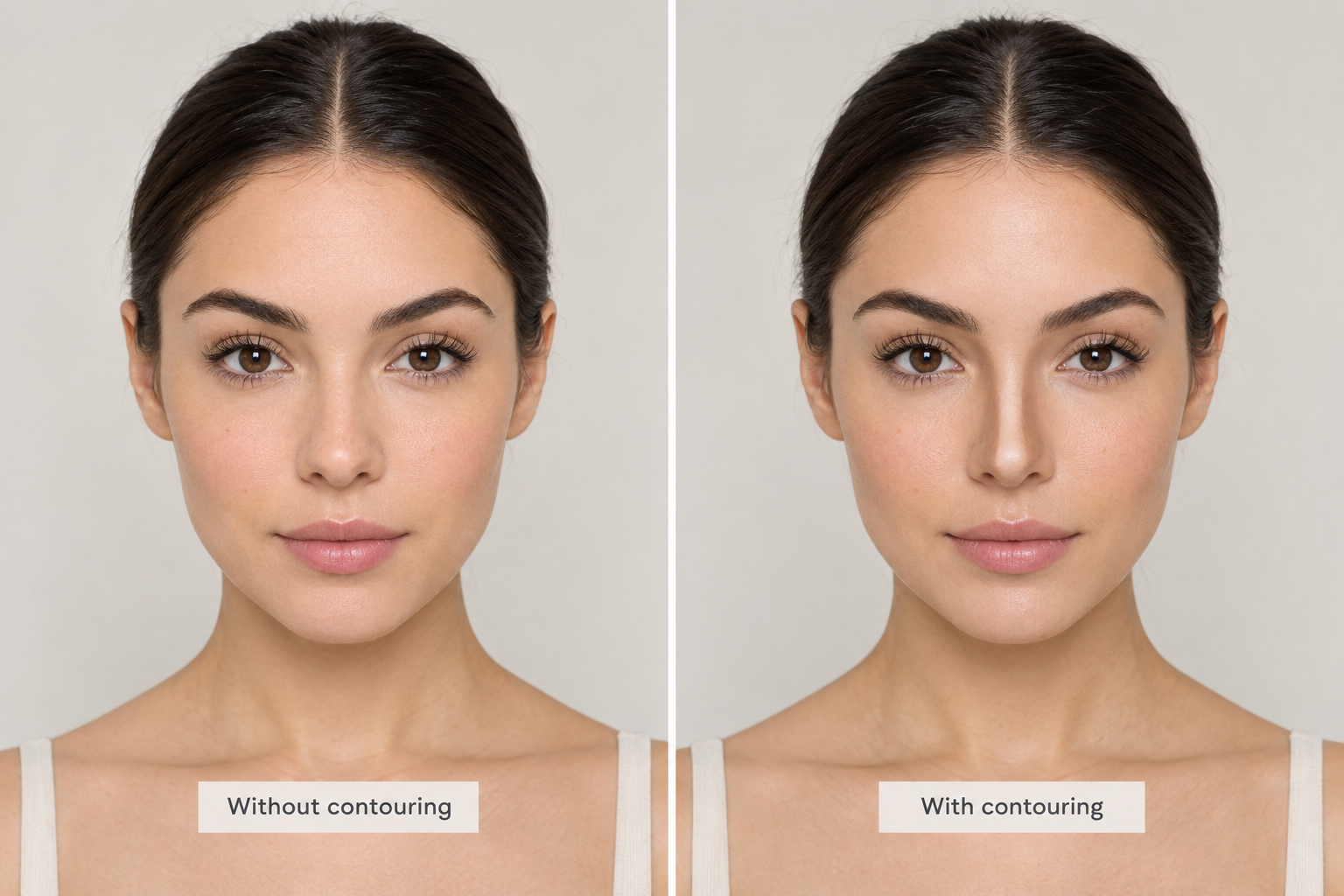
Contouring does not suit every skin type equally well. On oily skin, products may migrate during the day. On darker skin tones, choosing the right shade depth is important to avoid an unnatural result. Practising with different products and techniques, or consulting a professional makeup artist, can help achieve a more convincing outcome.
Non-Surgical Rhinoplasty: What It Can and Cannot Do
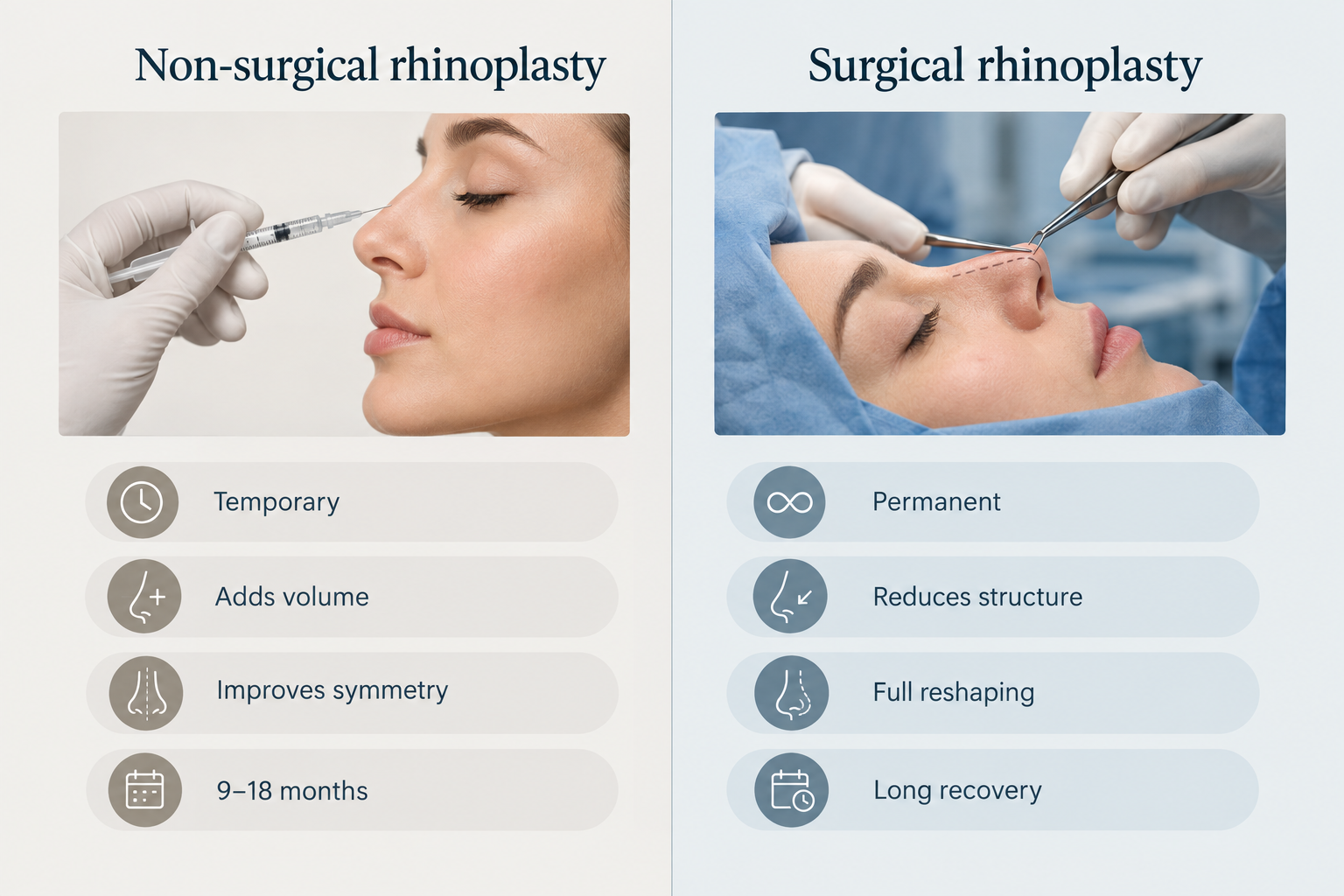
Non-surgical rhinoplasty, sometimes called a liquid nose job or non-surgical nose job, involves the precise injection of dermal filler — most commonly hyaluronic acid — into specific areas of the nose to improve its shape and symmetry. It is important to understand that this procedure adds volume rather than removing it, which means it cannot make the nose physically smaller. What it can do is improve the visual balance of the nose by, for example, smoothing a dorsal hump so the profile appears straighter, lifting a drooping nasal tip, or improving asymmetry between the two sides.
Non-surgical rhinoplasty is performed by trained medical practitioners and is not a home treatment. Results are temporary, typically lasting between nine and eighteen months depending on the filler used, the individual’s metabolism, and the area treated. The procedure carries real risks that distinguish it from other filler treatments. The nose has a complex vascular anatomy, and filler injected incorrectly can compress or enter blood vessels, potentially causing skin necrosis or, in rare but serious cases, vision changes or blindness. This is why non-surgical rhinoplasty should only be performed by a practitioner with specific training in nasal anatomy and vascular complications management.
Who May Be Suitable for Non-Surgical Rhinoplasty
Non-surgical rhinoplasty may be worth discussing with a qualified practitioner if the concern is a visible dorsal hump on the nasal profile, mild asymmetry, a drooping tip, or a nose that appears unbalanced relative to other facial features. It is generally not suitable for people who want to reduce the overall size of the nose, narrow wide nostrils, or correct significant structural deviation. Previous rhinoplasty surgery, certain skin conditions, bleeding disorders, and pregnancy are among the factors that may affect suitability. A thorough consultation with a qualified practitioner is essential before proceeding.
Surgical Rhinoplasty: The Only Option for Structural Change
Surgical rhinoplasty is the only procedure that can physically reduce nasal bone, reshape cartilage, narrow the nostrils, or alter the fundamental structure of the nose. It is performed under general or local anaesthesia by a plastic surgeon or ENT surgeon with specialist training. Recovery typically involves significant swelling and bruising for two to four weeks, with residual swelling that can take up to a year or more to fully resolve. Final results are not visible immediately after surgery.
Rhinoplasty is a major surgical procedure with associated risks including infection, bleeding, anaesthetic complications, scarring, asymmetry, breathing difficulties, and the possibility of requiring revision surgery. It is not a decision to make lightly, and a thorough consultation with a board-certified surgeon, including a discussion of realistic expectations, is essential. In the UK, the Care Quality Commission regulates surgical facilities, and surgeons should hold appropriate specialist qualifications.
Skincare and Skin Quality Around the Nose
While skincare cannot reduce nasal bone or cartilage, improving the quality and texture of the skin on and around the nose can influence how the nose appears. Enlarged pores, sebaceous hyperplasia, and rosacea-related skin thickening on the nasal tip — a condition called rhinophyma in its more advanced form — can make the nose appear larger or more bulbous. Treatments such as topical retinoids, niacinamide, azelaic acid, and in-clinic procedures like laser resurfacing or radiofrequency microneedling may help improve skin texture and reduce the appearance of enlarged pores or sebaceous changes. These are skin quality improvements rather than structural nose reduction, but they can contribute to a more refined nasal appearance in appropriate candidates.
Hairstyle and Styling Choices
Facial framing through hairstyle can influence how prominent the nose appears in relation to overall facial proportions. Hairstyles that add volume at the sides of the face can visually balance a more prominent nose. Conversely, very sleek, centre-parted styles that draw the eye to the centre of the face may make the nose appear more prominent. These are personal styling choices with no clinical involvement required, and their effect varies considerably depending on individual facial structure.
Risks of Unverified Home Remedies
Beyond their ineffectiveness for structural nose reduction, some home remedies carry genuine risks. Applying acidic substances such as apple cider vinegar or lemon juice to facial skin can cause chemical burns, hyperpigmentation, and lasting skin damage. Aggressive pinching or manipulation of the nose can cause bruising and, in theory, could aggravate existing cartilage conditions. Following unverified social media advice without understanding the anatomy involved can lead to wasted effort and, in some cases, skin harm. If a remedy sounds implausible from an anatomical standpoint, it is worth approaching it with scepticism regardless of how many testimonials accompany it.
Alternatives Worth Considering
For people genuinely concerned about the appearance of their nose, a range of options exists across different levels of intervention. Makeup contouring requires no clinical involvement and carries no medical risk. A consultation with a qualified aesthetic practitioner can clarify whether non-surgical rhinoplasty might address a specific concern, with an honest discussion of what filler can and cannot achieve. For those considering a permanent structural change, a consultation with a specialist rhinoplasty surgeon provides a realistic picture of what surgery involves, what results are achievable, and what the recovery and risk profile looks like. Psychological support may also be appropriate for people whose concern about their nose is causing significant distress, as body dysmorphic disorder can sometimes underlie intense preoccupation with perceived facial flaws.
Frequently Asked Questions
Can nose exercises really make my nose smaller?
No. Nasal cartilage and bone do not respond to exercise or repeated pressure in a way that reduces their size or changes their shape. Nose exercises have no credible anatomical mechanism for producing structural change, and there is no clinical evidence supporting their effectiveness for nose reduction.
Does losing weight make your nose smaller?
Weight loss can reduce facial fat, which may slightly change how the nose appears in relation to surrounding facial features. However, the bone and cartilage structure of the nose itself does not change with weight loss. Any change in nasal appearance with weight loss is due to changes in surrounding facial volume rather than the nose shrinking.
Is non-surgical rhinoplasty safe?
Non-surgical rhinoplasty carries real risks because of the complex blood supply to the nose. Serious complications, including skin necrosis and vision changes, have been reported when filler is injected incorrectly. The procedure should only be performed by a practitioner with specific training in nasal anatomy and emergency management of vascular complications. It is not a low-risk cosmetic treatment.
How long does non-surgical rhinoplasty last?
Results from hyaluronic acid filler in the nose typically last between nine and eighteen months, though this varies depending on the individual, the amount of filler used, and the specific area treated. Hyaluronic acid filler can be dissolved with an enzyme called hyaluronidase if needed, which is one reason it is often preferred for this area.
Can makeup contouring really change how my nose looks?
Yes, within limits. Skilled contouring using matte shading and highlight can create a convincing optical illusion of a narrower or shorter nose. The effect is entirely temporary and depends on technique, product choice, and lighting conditions. It does not alter the nose physically but can be an effective cosmetic tool.
What should I ask during a rhinoplasty consultation?
Useful questions include: What specific changes are achievable for my nose shape? What are the realistic risks and complication rates? How long is the recovery period? How many rhinoplasty procedures do you perform each year? Can I see examples of results in patients with similar concerns? What happens if I am not satisfied with the outcome?
Could my nose appear larger because of a skin condition?
Yes. Conditions such as rosacea, rhinophyma, sebaceous hyperplasia, and chronic nasal swelling from allergies can all make the nose appear larger or more bulbous. In these cases, treating the underlying skin or medical condition with appropriate clinical care may improve nasal appearance without any structural procedure.
Making an Informed Decision About Your Nose
The desire to change the appearance of the nose is understandable and common, but it is important to approach the topic with realistic expectations grounded in anatomy. No home remedy can reduce nasal bone or cartilage, and pursuing unverified treatments risks wasting time and potentially harming the skin. Makeup contouring offers a genuine, risk-free way to alter the perceived appearance of the nose temporarily. Non-surgical rhinoplasty with dermal filler can address specific concerns such as a dorsal hump or asymmetry, but it adds volume rather than reducing size and carries meaningful risks that require careful practitioner selection. Surgical rhinoplasty remains the only route to permanent structural change and involves a significant commitment in terms of recovery, cost, and risk.
If you are considering any clinical intervention for nasal appearance, a consultation with a qualified and experienced practitioner is the appropriate starting point. A good practitioner will assess your anatomy honestly, explain what is and is not achievable, and help you decide whether any procedure is genuinely likely to meet your goals. If concern about your nose is causing significant distress, speaking with your GP about a referral for psychological support alongside any aesthetic consultation is also worth considering.


