
Your First Aesthetic Skin Clinic Visit: What to Expect
Walking into an aesthetic skin clinic for the first time can feel unfamiliar, particularly if you are unsure what to expect from the consultation, which treatments might be relevant to your concerns, or how to evaluate whether a recommendation is right for you. This article explains the typical structure of a first visit, the kinds of assessments and conversations that take place, the range of treatments that may be discussed, and the questions worth asking before committing to any procedure.
Key Takeaways
- A first visit to an aesthetic skin clinic usually begins with a detailed consultation and skin assessment rather than immediate treatment.
- A qualified practitioner should take a full medical history before recommending any procedure, as suitability depends on individual health factors.
- Aesthetic treatments range from non-invasive skin care to injectable and energy-based procedures, each with different evidence bases, risks, and recovery profiles.
- Realistic expectations are essential — most treatments offer gradual improvement rather than dramatic transformation, and results vary between individuals.
- You are never obligated to proceed with treatment at your first appointment; a reputable clinic will support an informed decision at your own pace.
What Happens at a First Aesthetic Consultation
The consultation is the most important part of your first visit to an aesthetic skin clinic. A thorough practitioner will spend time understanding your concerns, your medical background, and your goals before suggesting any treatment. This conversation is not simply a formality — it directly shapes whether a proposed treatment is appropriate for you and whether it is likely to achieve what you are hoping for.
During the consultation, the practitioner will typically ask about your current skin concerns, how long you have had them, and what you have already tried. They will also ask about your general health, any medications you take, known allergies, previous cosmetic or surgical procedures, and whether you are pregnant or breastfeeding. These questions are clinically relevant because many aesthetic treatments carry contraindications that depend on individual health status.
A skin assessment usually follows. Depending on the clinic, this may involve visual examination under specific lighting, the use of a skin analysis device that captures surface texture, pigmentation, and hydration levels, or a more detailed discussion of your skin type and history of sun exposure. Some clinics use standardised photographic documentation to track changes over time. The goal is to understand your skin’s current condition rather than to sell a particular product or service.
At the end of the consultation, the practitioner should explain which treatments may be relevant to your concerns, why they are suggesting them, what realistic outcomes look like, and what the risks and limitations are. A treatment plan may be proposed, but you should feel no pressure to proceed immediately. If a clinic pushes you to book treatment before you have had time to consider the information, that is worth noting.
Common Skin Concerns Addressed at Aesthetic Clinics
Aesthetic skin clinics typically address a broad range of concerns, and understanding which category your concern falls into helps set realistic expectations about what treatment may achieve.
Skin Texture and Tone
Uneven skin texture, enlarged pores, rough surface quality, and dullness are among the most frequently discussed concerns. These may respond to treatments that promote cell turnover, stimulate collagen production, or improve hydration. Chemical peels, microneedling, and certain laser or light-based treatments are commonly used in this context, though the appropriate option depends on skin type, sensitivity, and the degree of concern.
Pigmentation and Sun Damage
Hyperpigmentation — including sunspots, melasma, and post-inflammatory marks — is a complex concern because different types of pigmentation respond differently to treatment. Melasma in particular can be difficult to manage and may worsen with certain light-based treatments if not assessed carefully. A thorough skin assessment is especially important before recommending any pigmentation treatment, and a practitioner should explain which type of pigmentation you have before proposing a solution.
Fine Lines, Wrinkles, and Volume Loss
Concerns related to facial ageing are among the most common reasons people visit an aesthetic skin clinic. Fine lines and wrinkles may be addressed with botulinum toxin injections, which temporarily reduce muscle movement in targeted areas, or with skin-quality treatments such as polynucleotides and profhilo that aim to improve hydration and tissue quality. Volume loss in areas such as the cheeks, temples, or under-eye region may be discussed in the context of dermal filler treatment. Each of these approaches has a different mechanism, evidence base, and risk profile, and a practitioner should explain the distinctions clearly.
Acne and Acne Scarring
Active acne and the scarring it can leave behind are distinct concerns that often require different approaches. Active acne management at an aesthetic clinic may involve prescription-grade topical treatments, chemical peels, or light-based therapies, though moderate to severe acne is often best managed in collaboration with a dermatologist. Acne scarring — particularly atrophic or depressed scars — may be addressed with microneedling, resurfacing treatments, or filler in specific cases, depending on scar type and depth.
Skin Laxity and Contour
Concerns about skin firmness, jawline definition, or neck laxity are increasingly common. Non-surgical options such as radiofrequency, high-intensity focused ultrasound (HIFU), and thread lifts may be discussed, though the evidence for non-surgical skin tightening varies between technologies and patient profiles. A practitioner should be transparent about what these treatments can and cannot achieve compared with surgical alternatives.
Types of Treatments You May Be Offered
Aesthetic skin clinics offer treatments across a wide spectrum of invasiveness, recovery time, and evidence strength. Understanding the broad categories helps you ask more informed questions during your consultation.
Topical and Skin Care Treatments
Medical-grade skin care, prescription topicals, and professionally applied treatments such as chemical peels and enzyme exfoliants sit at the less invasive end of the spectrum. These treatments generally carry lower risk profiles and shorter recovery times, though they may require consistent use over weeks or months before visible improvement occurs. A practitioner may recommend a preparatory skin care routine before more advanced treatments, particularly for patients with sensitive or reactive skin.
Injectable Treatments
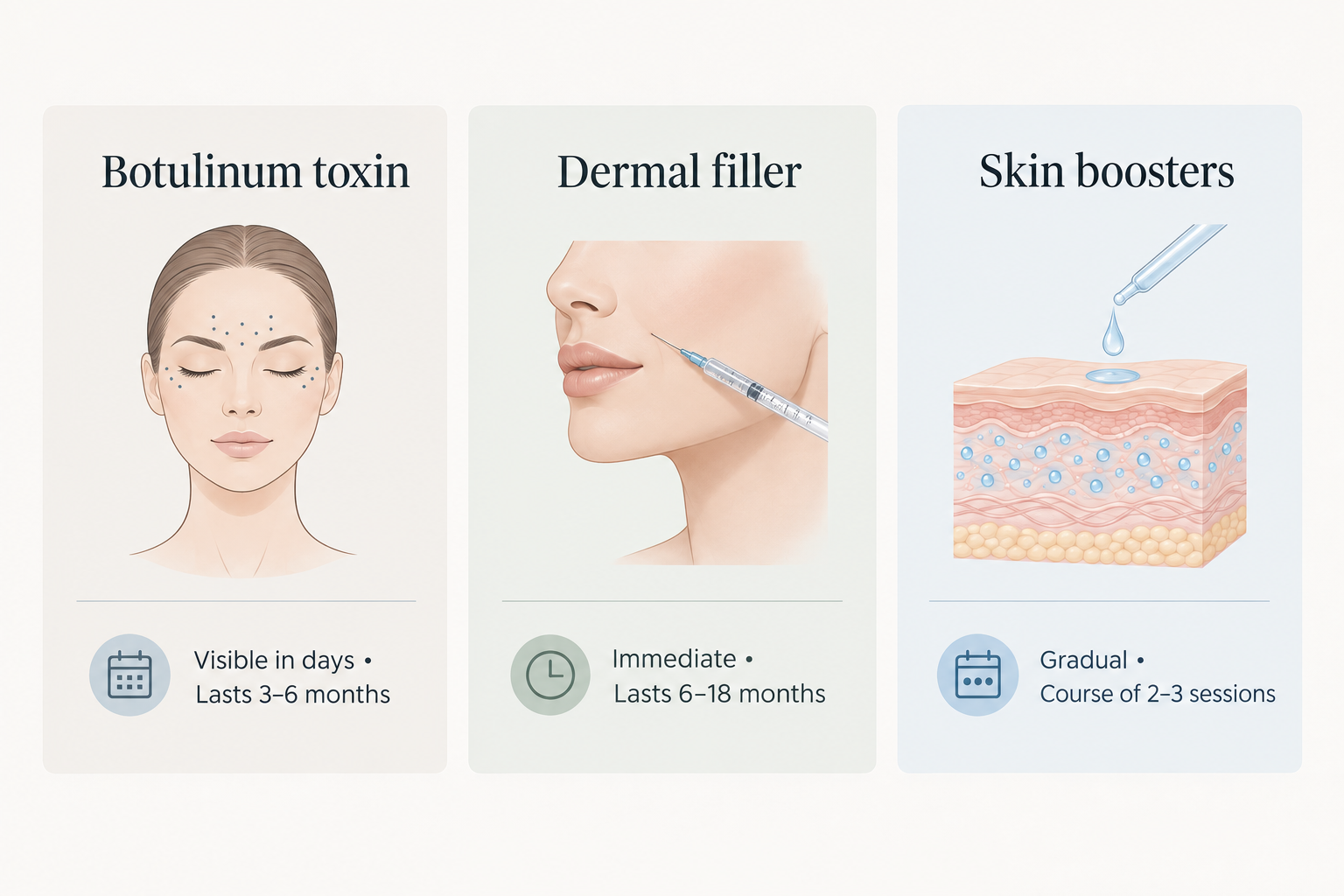
Injectable treatments include botulinum toxin (commonly known by brand names such as Botox, Dysport, or Azzalure), dermal fillers, skin boosters such as polynucleotides and hyaluronic acid-based hydrators, and fat-dissolving injections such as Aqualyx. Each injectable has a specific mechanism, appropriate treatment area, expected duration of effect, and risk profile. Botulinum toxin works by temporarily reducing muscle activity and is most commonly used for dynamic lines such as forehead lines, frown lines, and crow’s feet. Dermal fillers add volume or structure using substances such as hyaluronic acid. Skin boosters aim to improve skin quality and hydration rather than add volume. A practitioner should explain clearly which injectable is being proposed and why it is appropriate for your specific concern.
Energy-Based and Device Treatments
This category includes laser treatments, intense pulsed light (IPL), radiofrequency, HIFU, and microneedling with or without radiofrequency. These treatments use different forms of energy to target specific skin structures — for example, pigment, blood vessels, collagen fibres, or fat cells. The appropriate device depends on your skin type, concern, and treatment goal. Some energy-based treatments carry a higher risk of adverse effects in darker skin tones, and a practitioner should assess Fitzpatrick skin type before recommending any light or laser-based procedure.
Body Contouring Treatments
Some aesthetic clinics also offer body contouring treatments such as cryolipolysis (fat freezing), radiofrequency body treatments, or muscle stimulation devices such as Emsculpt. It is important to understand that body contouring treatments are not weight loss treatments. They are designed to address localised areas of fat or to improve muscle definition in patients who are already close to a healthy body weight. A practitioner should be clear about what these treatments can realistically achieve and for whom they may be suitable.
How to Prepare for Your First Visit
Arriving prepared helps you get more from your consultation and makes it easier for the practitioner to assess your suitability accurately.

- Arrive with clean skin where possible. Heavy makeup can make skin assessment more difficult, though this is not always essential depending on the clinic’s assessment tools.
- Bring a list of your current medications and supplements. Some medications — including blood thinners, certain antidepressants, and high-dose vitamin E — can affect treatment suitability or increase the risk of bruising with injectables.
- Note any known allergies, particularly to anaesthetic agents, latex, or previous cosmetic products.
- Think about your goals in advance. Being specific about what bothers you and what outcome you are hoping for helps the practitioner tailor their recommendations. Bringing reference photographs can be useful, though a practitioner should always assess your individual anatomy rather than simply replicating another person’s appearance.
- Consider your budget and availability for follow-up. Many aesthetic treatments require more than one session, and some require maintenance appointments. Understanding the likely time and financial commitment before you begin helps avoid surprises.
Questions Worth Asking at Your Consultation
A reputable aesthetic skin clinic will welcome questions and take time to answer them clearly. The following questions are worth raising before agreeing to any treatment.
- What qualifications and training does the practitioner have, and are they registered with a relevant regulatory body?
- Why is this specific treatment being recommended for my concern, and what is the evidence that it works?
- What results can I realistically expect, and over what timeframe?
- What are the possible risks and side effects, and how common are they?
- What is the expected recovery or downtime?
- How many sessions are likely to be needed, and how often?
- Are there alternative treatments that might achieve a similar outcome?
- What happens if I am not satisfied with the result?
- What aftercare will I need to follow?
If a practitioner is reluctant to answer these questions, or if the answers feel vague or dismissive, it is reasonable to seek a second opinion before proceeding.
Understanding Realistic Expectations
One of the most important conversations at a first aesthetic skin clinic visit is about what treatment can and cannot achieve. Aesthetic medicine can produce meaningful improvements in skin quality, facial harmony, and confidence for many patients, but it does not stop the ageing process, and results are rarely permanent or guaranteed.
Most non-surgical treatments produce gradual, subtle changes rather than dramatic transformations. Botulinum toxin results typically become visible within a few days to two weeks and last approximately three to six months, depending on the individual and the area treated. Dermal filler results are more immediate but also temporary, generally lasting between six and eighteen months depending on the product used and the treatment area. Skin quality treatments such as polynucleotides or profhilo usually require a course of two to three sessions before results become apparent, with improvements in hydration and skin texture developing over several weeks.
Energy-based treatments such as laser resurfacing or radiofrequency may require multiple sessions and a recovery period, and results can continue to develop for several months after treatment as collagen remodelling takes place. Individual response varies considerably, and factors such as age, skin type, lifestyle, sun exposure, and smoking status all influence outcomes.
A practitioner who promises guaranteed results, describes a treatment as completely safe, or suggests that a single session will produce dramatic and permanent change is not setting realistic expectations. Honest communication about likely outcomes — including the possibility that a treatment may not produce the result you are hoping for — is a sign of clinical integrity.
Risks, Side Effects, and When to Seek Advice
Every aesthetic treatment carries some degree of risk, and a responsible practitioner will explain the relevant risks before you consent to any procedure. The nature and likelihood of side effects vary considerably between treatment types.
Common and generally temporary side effects across many aesthetic treatments include redness, swelling, bruising, and mild discomfort at the treatment site. These typically resolve within hours to a few days. More significant risks — such as infection, allergic reaction, asymmetry, nerve effects, or vascular complications with injectables — are less common but are important to understand before treatment. Certain treatments carry specific risks: for example, dermal filler carries a small but serious risk of vascular occlusion if injected near a blood vessel, which requires immediate treatment by an experienced practitioner.
After any aesthetic treatment, you should receive clear written aftercare instructions and know how to contact the clinic if you experience unexpected symptoms. Signs that warrant prompt contact with your practitioner include increasing pain, significant swelling, skin colour changes, blistering, or any symptom that feels unusual or is worsening rather than improving.
How to Evaluate an Aesthetic Skin Clinic
Choosing where to have aesthetic treatment is as important as choosing which treatment to have. The following factors are worth considering when evaluating a clinic.
- Practitioner qualifications. In many countries, aesthetic treatments — particularly injectables — should be performed by or under the supervision of a qualified medical professional such as a doctor, dentist, or nurse prescriber. Regulatory requirements vary by country, so it is worth checking what applies in your region.
- Consultation quality. A clinic that offers a thorough, unhurried consultation and takes a full medical history before recommending treatment is demonstrating appropriate clinical practice.
- Transparency about products and devices. A reputable clinic should be able to tell you which specific product or device will be used, why it has been chosen, and what its regulatory status is.
- Aftercare and follow-up. Good clinics provide clear aftercare guidance and offer a follow-up appointment to assess results and address any concerns.
- Pressure-free environment. You should never feel pressured to book treatment on the day of your consultation or to purchase packages before you have had time to consider the recommendation.
Frequently Asked Questions
Do I need to have treatment at my first appointment?
No. A first visit to an aesthetic skin clinic is primarily a consultation and assessment. You are under no obligation to proceed with any treatment on the day. Taking time to consider the information you receive before making a decision is entirely reasonable, and a reputable clinic will support this.
How long does a first consultation usually take?
A thorough initial consultation at an aesthetic skin clinic typically takes between 30 and 60 minutes, depending on the complexity of your concerns and the number of treatments being discussed. Some clinics offer shorter introductory appointments followed by a more detailed assessment before treatment.
Will the practitioner recommend multiple treatments at once?
It is not unusual for a practitioner to suggest a combination approach, as different treatments can address different aspects of a concern. However, a responsible practitioner will explain the rationale for each recommendation and should not suggest more treatments than are genuinely relevant to your goals. If a treatment plan feels excessive or unclear, ask for clarification or a second opinion.
Is it normal to feel nervous before a first aesthetic appointment?
Yes, and a good practitioner will acknowledge this. Feeling uncertain about what to expect is common, particularly if you have not had aesthetic treatment before. Asking questions, taking notes, and requesting time to think before committing to treatment are all appropriate responses to that uncertainty.
What if I have a skin condition such as rosacea or eczema?
Active skin conditions such as rosacea, eczema, or psoriasis may affect which treatments are suitable for you and may require management before certain procedures can be performed safely. A practitioner should ask about your skin history and may recommend that you see a dermatologist before proceeding with some treatments. Disclosing any known skin conditions at your consultation is important for your safety.
Can I wear makeup to my appointment?
For a consultation, wearing makeup is generally fine, though arriving with clean skin makes it easier for the practitioner to assess your skin directly. If you are having treatment on the same day as your consultation, the practitioner will advise you on skin preparation beforehand.
Making an Informed Decision About Your First Aesthetic Skin Clinic Visit
A first visit to an aesthetic skin clinic is most valuable when it is approached as an information-gathering exercise rather than a commitment to treatment. The consultation gives you the opportunity to understand your skin concerns more clearly, learn which treatments may be relevant, and assess whether the clinic and practitioner are the right fit for you.
Aesthetic medicine offers a genuinely broad range of options for improving skin quality, addressing signs of ageing, and managing specific concerns — but no treatment is universally suitable, and results depend on individual factors that a qualified practitioner needs to assess in person. The most useful outcome of a first appointment is a clear, honest picture of what treatment may realistically achieve for you, what the process involves, and what the risks are.
If you leave a consultation feeling well-informed, unhurried, and confident that your questions were answered honestly, that is a strong indicator that you are in the right place. If something feels unclear or you are unsure about a recommendation, seeking a second opinion before proceeding is always a reasonable step.


