
Chemical Peel Types: A Guide to Superficial, Medium and Deep Peels
Chemical peel treatment uses carefully selected acids or other exfoliating agents to remove damaged outer layers of skin, encouraging cell renewal and improving the appearance of a range of skin concerns. The results and recovery you can expect depend heavily on which type of peel is used, how deeply it penetrates, and whether your skin is well suited to the treatment. This article explains the main categories of chemical peels, what each one involves, realistic outcomes, and the factors that influence whether a particular peel may be appropriate for you.
Key Takeaways
- Chemical peels are classified by depth: superficial, medium, and deep, with each level targeting different skin concerns and carrying different recovery requirements.
- Superficial peels cause minimal downtime and are suitable for mild texture and tone concerns; medium and deep peels address more significant damage but require longer recovery.
- The right peel type depends on your skin concern, skin tone, medical history, and a clinical assessment by a qualified practitioner.
- All chemical peels carry risks including redness, irritation, post-inflammatory hyperpigmentation, and, at deeper levels, scarring — these risks vary by peel depth and patient factors.
- Multiple sessions are often needed for superficial peels; medium and deep peels may produce more significant change from fewer treatments but with greater downtime.
What Is a Chemical Peel?
A chemical peel is a skin resurfacing treatment in which a chemical solution is applied to the skin surface to cause controlled exfoliation of the outer layers. As the treated skin sheds, newer skin cells are revealed beneath, which can appear smoother, more evenly toned, and with improved texture. Chemical peels have been used in dermatology and aesthetic medicine for decades and remain one of the most studied non-surgical skin treatments available.
The depth of a chemical peel — how far into the skin layers the solution penetrates — determines both the potential benefit and the degree of recovery involved. Peels are broadly divided into three categories: superficial (also called light peels), medium-depth peels, and deep peels. Within each category, different chemical agents are used, and practitioners may combine agents or adjust concentrations to tailor the treatment to an individual’s skin type and concern.
How Chemical Peels Work
The skin is structured in layers. The outermost layer, the epidermis, contains the stratum corneum — a protective barrier of dead skin cells — and the living cells beneath it. Below the epidermis lies the dermis, which contains collagen, elastin, and other structural proteins responsible for skin firmness and elasticity. Chemical peel solutions work by disrupting the bonds between skin cells, causing controlled damage that triggers the skin’s natural repair response.
Superficial peels act primarily on the stratum corneum and the upper epidermis. Medium-depth peels reach into the papillary dermis — the upper portion of the dermis. Deep peels penetrate into the mid-reticular dermis. The deeper the peel, the more significant the collagen remodelling response, but also the greater the risk of side effects and the longer the recovery period. This relationship between depth, benefit, and risk is central to understanding which peel type may be appropriate for a given patient.
Superficial Chemical Peels
Superficial peels are the mildest category of chemical peel treatment and are designed to exfoliate only the outermost layers of the epidermis. They are the most widely performed type and are generally considered suitable for a broad range of skin tones, including darker skin types, where the risk of post-inflammatory hyperpigmentation from deeper peels is higher.
Common Agents Used in Superficial Peels
Alpha-hydroxy acids (AHAs) are among the most frequently used agents in superficial peels. Glycolic acid, derived from sugar cane, is one of the most studied AHAs and is used at concentrations typically ranging from around 20% to 70% in clinical settings, depending on the intended depth and the patient’s skin tolerance. Lactic acid, another AHA, is considered gentler and may be better tolerated by sensitive skin types. Mandelic acid, derived from bitter almonds, has a larger molecular size than glycolic acid, which means it penetrates more slowly and may be a useful option for reactive or darker skin tones.
Beta-hydroxy acids (BHAs), particularly salicylic acid, are lipid-soluble, meaning they can penetrate into pores more effectively than water-soluble AHAs. Salicylic acid peels are commonly used for acne-prone skin and oily skin types, as the agent helps to clear congestion within the follicle as well as exfoliating the skin surface. Jessner’s solution — a combination of salicylic acid, lactic acid, and resorcinol — is another superficial peel option that can be layered to achieve a slightly deeper effect.
Trichloroacetic acid (TCA) at low concentrations, typically 10–15%, can also be used as a superficial peel, though higher concentrations of TCA are associated with medium-depth effects.
What Superficial Peels May Address
Superficial chemical peels are generally used to improve mild skin texture irregularities, dullness, uneven skin tone, fine surface lines, and mild acne or post-acne marks. They are not typically effective for deeper wrinkles, significant sun damage, or pronounced scarring. Results from a single superficial peel are usually subtle; a course of treatments — often four to six sessions spaced two to four weeks apart — is commonly recommended to achieve a more noticeable improvement.
Downtime and Recovery from Superficial Peels
Superficial peels typically cause mild redness and some flaking or peeling for two to five days following treatment. Many patients are able to return to normal activities the same day or the following day, which is why superficial peels are sometimes referred to as lunchtime peels. Sun protection is essential after any chemical peel, and this is particularly important in the days immediately following treatment when the skin barrier is temporarily compromised.
Medium-Depth Chemical Peels
Medium-depth peels penetrate through the full epidermis and into the upper dermis, producing a more significant resurfacing effect than superficial peels. This deeper action means they can address a wider range of skin concerns, but recovery is more involved and the risk profile is higher.
Common Agents Used in Medium-Depth Peels
TCA at concentrations of approximately 20–35% is the most widely used agent for medium-depth chemical peel treatment. TCA peels at this strength cause visible frosting of the skin — a white precipitate that forms as proteins in the skin coagulate — which practitioners use as a clinical endpoint to assess the depth of penetration. The degree of frosting guides the practitioner in determining when to neutralize or stop the application.
Combination approaches are also used for medium-depth peeling. The Jessner’s solution plus TCA combination and the glycolic acid plus TCA combination are established protocols that allow practitioners to achieve medium-depth penetration with potentially more even results than TCA alone. These combination methods are described in the dermatological literature and are used in clinical practice, though individual practitioner training and experience significantly influence outcomes.
What Medium-Depth Peels May Address
Medium-depth peels are generally considered appropriate for moderate photoageing, including fine to moderate lines, uneven pigmentation, actinic keratoses (rough, scaly patches caused by sun damage), and superficial acne scarring. They may produce more noticeable improvement in skin tone and texture than superficial peels, and some patients achieve meaningful results from a single treatment, though this varies considerably between individuals.
Downtime and Recovery from Medium-Depth Peels
Recovery from a medium-depth peel is more significant than from a superficial peel. The skin typically becomes red and swollen in the first day or two, followed by crusting and peeling that may last seven to fourteen days. Patients are generally advised to avoid sun exposure, strenuous activity, and certain skincare products during the healing period. Social downtime of one to two weeks is a realistic expectation for most patients undergoing a medium-depth peel. The skin may remain pink or sensitive for several weeks after the visible peeling has resolved.
Deep Chemical Peels
Deep chemical peels penetrate into the mid-reticular dermis and produce the most significant resurfacing effect of the three categories. They are associated with the most dramatic potential improvement in skin quality but also carry the highest risk and the longest recovery period. Deep peels are typically performed by medical practitioners with specific training in this procedure.
Phenol-Based Peels
Phenol, often formulated as the Baker-Gordon peel, is the primary agent used for deep chemical peeling. Phenol penetrates deeply into the dermis and triggers substantial collagen remodelling, which can produce significant improvement in deep wrinkles, severe photoageing, and coarse skin texture. Because phenol is absorbed systemically, deep phenol peels require careful patient selection, cardiac monitoring during the procedure, and are typically performed under sedation or anaesthesia in a clinical setting.
Deep peels are generally not recommended for darker skin tones due to a high risk of permanent hypopigmentation — a lightening of the skin that can result in a noticeable colour difference between treated and untreated areas. This is a significant and potentially irreversible side effect that must be discussed thoroughly during consultation.
What Deep Peels May Address
Deep chemical peels may be considered for severe photoageing, deep wrinkles, significant acne scarring, and coarse skin texture that has not responded adequately to less aggressive treatments. The potential improvement can be substantial, but the treatment is not appropriate for everyone, and the risks and recovery demands are considerable. Alternatives such as laser resurfacing are often compared with deep peels when discussing treatment options for significant skin ageing or scarring.
Downtime and Recovery from Deep Peels
Recovery from a deep phenol peel is lengthy and demanding. The skin will be raw, swollen, and crusted for the first one to two weeks, and significant redness can persist for several months. Full recovery, including resolution of redness and stabilisation of skin colour, may take three to six months or longer. Patients require close follow-up during this period. The extended recovery and risk profile mean that deep peels are performed less frequently than superficial or medium-depth peels, and they are typically reserved for patients with significant skin concerns who have been thoroughly assessed and counselled.
Comparing Chemical Peel Depths at a Glance
| Feature | Superficial Peel | Medium-Depth Peel | Deep Peel |
|---|---|---|---|
| Depth of penetration | Epidermis (stratum corneum to upper epidermis) | Full epidermis to papillary dermis | Mid-reticular dermis |
| Common agents | Glycolic acid, lactic acid, salicylic acid, low-concentration TCA | TCA 20–35%, Jessner’s + TCA, glycolic + TCA | Phenol (Baker-Gordon formula) |
| Skin concerns addressed | Mild texture, dullness, mild pigmentation, acne | Moderate lines, pigmentation, actinic keratoses, superficial scarring | Deep wrinkles, severe photoageing, significant scarring |
| Downtime | 2–5 days | 7–14 days | Several weeks to months |
| Sessions typically needed | Course of 4–6 sessions | 1–3 sessions | Usually 1 session |
| Suitability for darker skin tones | Generally suitable with appropriate agent selection | Requires careful assessment; higher pigmentation risk | Generally not recommended |
| Risk level | Low to mild | Moderate | Higher; systemic considerations with phenol |
Risks and Side Effects of Chemical Peel Treatment
All chemical peels carry some degree of risk, and the likelihood and severity of side effects generally increase with peel depth. Understanding these risks is an important part of making an informed decision before proceeding with treatment.
Common side effects across all peel types include temporary redness, skin sensitivity, dryness, and peeling. These are expected parts of the healing process and typically resolve within the anticipated recovery window. However, more significant adverse effects can occur.
Post-inflammatory hyperpigmentation (PIH) — darkening of the skin in response to inflammation — is one of the most clinically relevant risks, particularly for patients with medium to darker skin tones (Fitzpatrick skin types III–VI). PIH can develop even after superficial peels and may take weeks to months to resolve. Pre-treatment with topical agents such as hydroquinone or retinoids is sometimes recommended to reduce this risk, though this should be guided by a qualified practitioner.
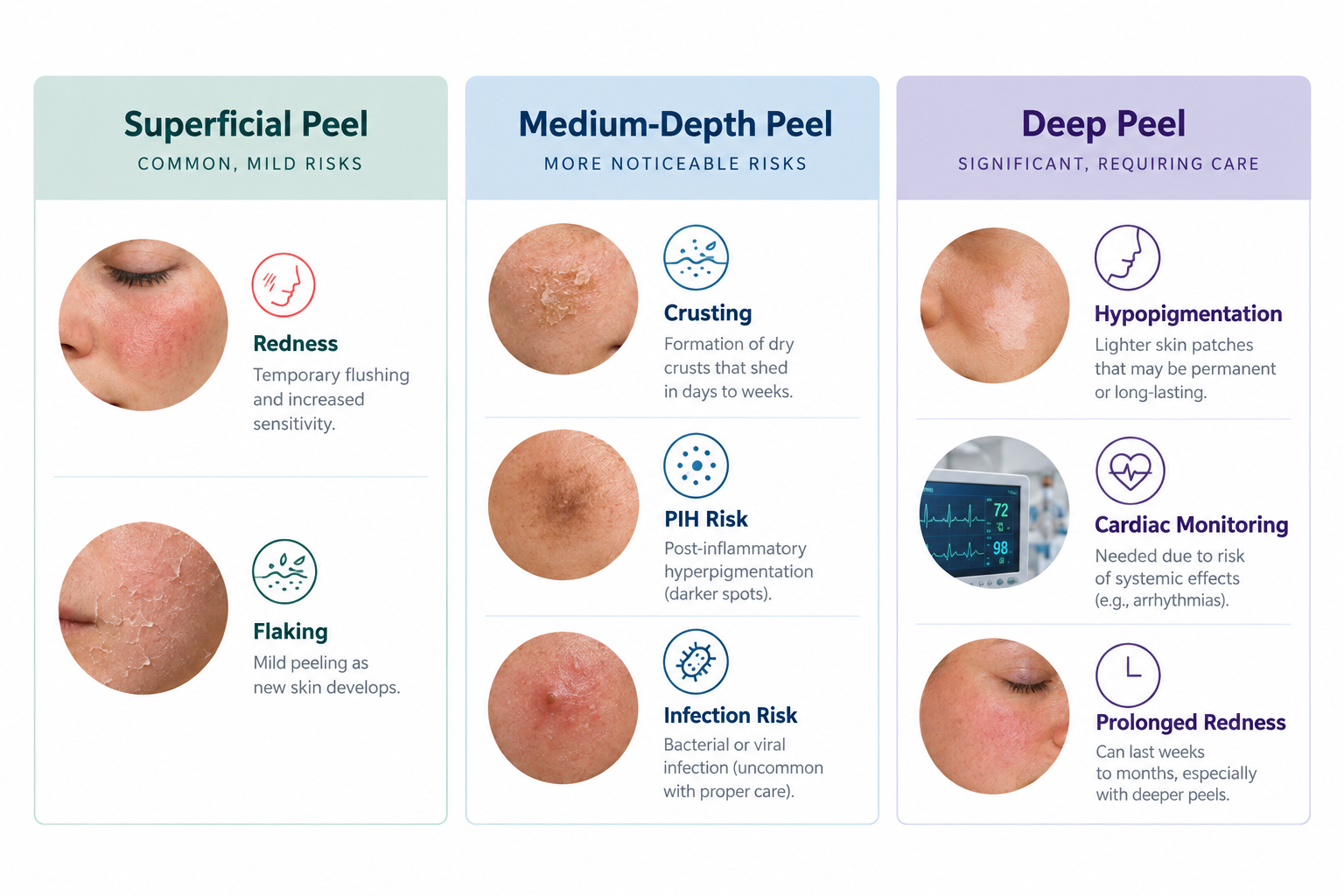
Infection is a risk with any peel that disrupts the skin barrier, particularly medium and deep peels. Bacterial, viral (including herpes simplex reactivation), and fungal infections can occur. Patients with a history of cold sores may be prescribed antiviral prophylaxis before medium or deep peel treatment.
Scarring is a rare but serious potential complication, more commonly associated with deeper peels or with superficial peels applied to skin that is not well prepared or that has been over-treated. Permanent hypopigmentation is a particular concern with deep phenol peels. Cardiac arrhythmias have been reported with phenol peels due to systemic absorption, which is why cardiac monitoring is required during deep peel procedures.
Allergic reactions to peel agents, though uncommon, can occur. A thorough medical history and, where appropriate, patch testing can help identify patients at higher risk.
Who May Be Suitable for a Chemical Peel
Suitability for chemical peel treatment depends on a range of individual factors that should be assessed during a consultation with a qualified practitioner. Patients who may benefit from superficial peels include those with mild skin texture concerns, early signs of photoageing, acne-prone skin, or mild pigmentation irregularities. Medium-depth peels may be considered for patients with moderate photoageing, more pronounced pigmentation, or superficial acne scarring who are prepared for the associated downtime. Deep peels are generally reserved for patients with significant skin ageing or scarring who have lighter skin tones and who have been thoroughly counselled about the risks and recovery.
Factors that may affect suitability or require careful consideration include a history of keloid scarring, active skin infections or inflammatory skin conditions such as eczema or rosacea, recent use of isotretinoin (a medication for acne that affects skin healing), pregnancy or breastfeeding, and certain medications that increase photosensitivity. Patients with darker skin tones require particularly careful assessment and agent selection to minimise the risk of pigmentation complications.
Preparing for a Chemical Peel
Pre-treatment preparation can influence both the outcome and the risk profile of a chemical peel. Practitioners commonly recommend a period of skin preparation before medium or deep peels, which may include the use of topical retinoids to improve cell turnover, hydroquinone or other brightening agents to reduce pigmentation risk, and broad-spectrum sun protection to minimise baseline photodamage and reduce the risk of PIH.
Patients are typically advised to avoid certain products — including retinoids, exfoliating acids, and waxing — in the days immediately before a peel appointment. A thorough consultation should cover the patient’s skincare history, medical history, current medications, and any previous skin treatments, as these can all influence the choice of peel and the preparation protocol.
Alternatives to Chemical Peels
Chemical peels are one of several approaches to skin resurfacing and rejuvenation, and they may not be the most appropriate option for every patient or every concern. Understanding the alternatives can help patients have a more informed conversation with their practitioner.
Laser resurfacing — including ablative lasers such as CO2 and erbium lasers, and non-ablative fractional lasers — can address similar concerns to medium and deep chemical peels. Ablative laser resurfacing offers precise depth control and may be preferred for certain indications, though it also carries significant downtime and risk. Non-ablative fractional lasers offer a more gradual improvement with less downtime and may be suitable for patients who cannot accommodate the recovery associated with deeper peels or ablative laser treatment.
Microneedling is another resurfacing option that stimulates collagen production through controlled micro-injuries to the skin. It is generally associated with less risk of pigmentation complications than chemical peels and may be a useful alternative for patients with darker skin tones. Microneedling with radiofrequency (RF microneedling) adds a thermal component that may enhance skin tightening effects.
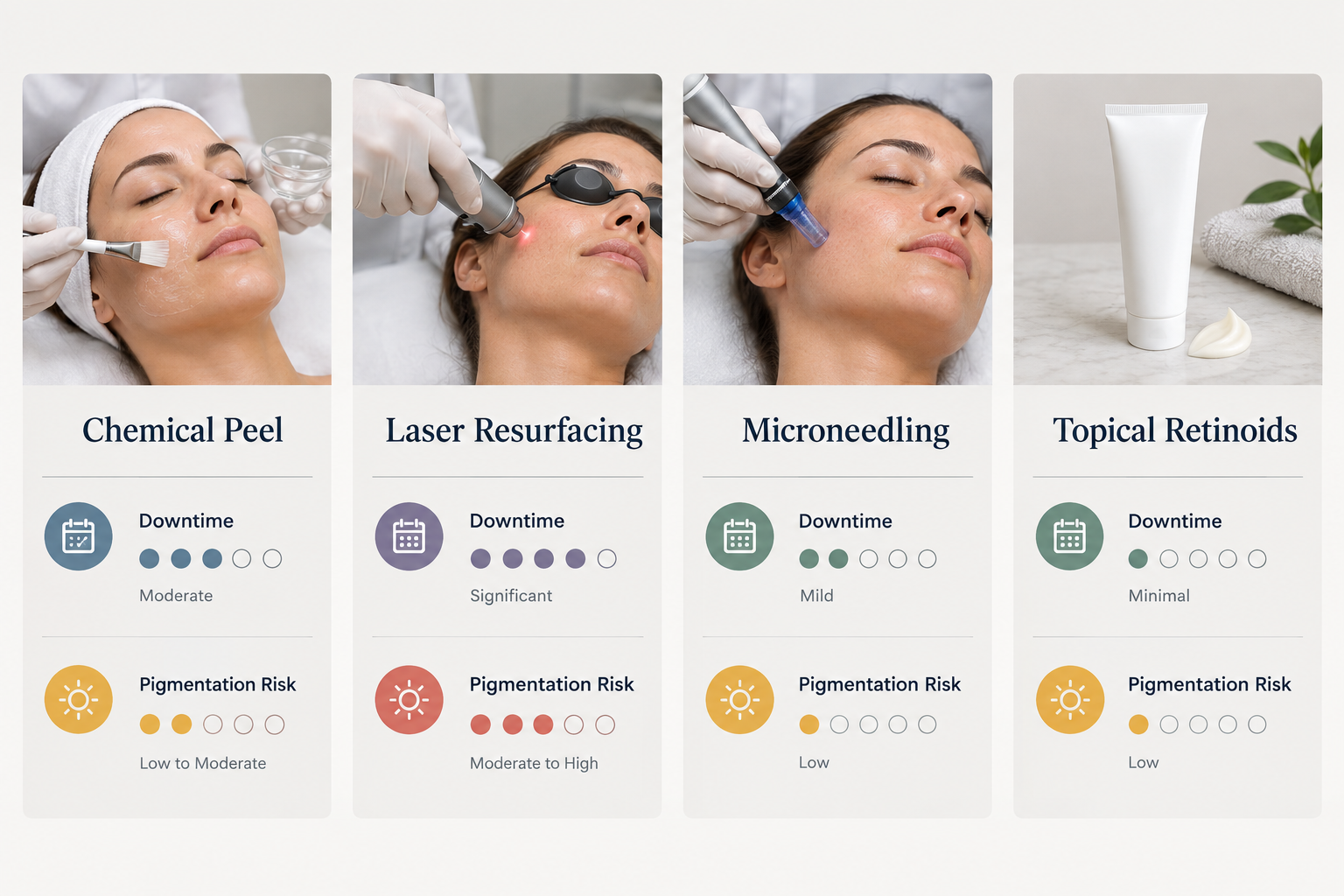
Topical prescription treatments, including retinoids and azelaic acid, can address some of the same concerns as superficial peels — such as mild pigmentation, acne, and early photoageing — with a lower risk profile, though results develop more gradually. HydraFacial and other medical-grade facial treatments offer gentle exfoliation and hydration with minimal downtime, though they are not equivalent to clinical chemical peels in terms of resurfacing depth or clinical evidence for specific indications.
Frequently Asked Questions
How many chemical peel sessions will I need?
The number of sessions depends on the peel type and the concern being treated. Superficial peels are typically performed as a course of four to six treatments, spaced two to four weeks apart. Medium-depth peels may produce meaningful results from one to three sessions. Deep peels are usually a single treatment. Your practitioner will recommend a treatment plan based on your individual assessment.
Can chemical peels be used on all skin tones?
Superficial peels, particularly those using salicylic acid, lactic acid, or mandelic acid, can generally be used across a range of skin tones with appropriate agent selection and concentration. Medium-depth peels require careful assessment for patients with medium to darker skin tones due to the increased risk of post-inflammatory hyperpigmentation. Deep phenol peels are generally not recommended for darker skin tones due to the risk of permanent hypopigmentation. A thorough consultation with a practitioner experienced in treating diverse skin tones is essential.
Will a chemical peel remove my acne scars?
Chemical peels may improve the appearance of certain types of acne scarring, particularly superficial or pigmented post-acne marks. Deeper atrophic scars — such as ice-pick or boxcar scars — are less likely to respond significantly to chemical peels alone, and other treatments such as microneedling, subcision, or laser resurfacing may be more appropriate. A clinical assessment is needed to determine which approach may be most suitable for your specific scar type.
Is a chemical peel painful?
Superficial peels typically cause a mild tingling or stinging sensation during application, which usually subsides quickly. Medium-depth peels can cause more significant discomfort, and practitioners may use a fan, cold compresses, or topical anaesthetic to manage this. Deep phenol peels are generally performed with sedation or anaesthesia due to the intensity of the procedure. Post-treatment discomfort varies by peel depth and is typically managed with appropriate aftercare guidance from your practitioner.
How long do the results of a chemical peel last?
Results from superficial peels are generally temporary and require ongoing maintenance treatments to sustain. Medium-depth peel results may last one to several years depending on the concern treated and the patient’s sun protection habits and skincare routine. Deep peel results can be long-lasting, particularly for deep wrinkles, but the skin continues to age naturally after treatment. Sun protection and a consistent skincare routine are important for maintaining results from any peel type.
Can I wear makeup after a chemical peel?
After a superficial peel, many patients can apply makeup within a day or two once initial redness has settled, though mineral-based products are often recommended during the early healing phase. After a medium or deep peel, makeup should generally be avoided until the skin has healed sufficiently, which may take one to two weeks or longer. Your practitioner will provide specific aftercare guidance based on the peel performed.
What is the difference between a clinic chemical peel and an at-home peel?
At-home peel products typically contain lower concentrations of active acids than those used in clinical settings and are designed for consumer use without professional supervision. Clinical chemical peels use higher concentrations, may involve stronger agents, and are applied by trained practitioners who can monitor the skin’s response and manage any adverse reactions. The potential benefit and the risk profile of clinical peels are both greater than those of at-home products. At-home peels are not a substitute for clinical treatment when addressing significant skin concerns.
Choosing the Right Chemical Peel for Your Skin
Selecting the most appropriate chemical peel type is not a decision that can be made from a product label or a general article alone. The right choice depends on your specific skin concern, skin tone, medical history, tolerance for downtime, and realistic expectations — all of which require an individual clinical assessment. A superficial peel may be a sensible starting point for someone new to chemical peel treatment or with mild concerns, while a patient with moderate photoageing and the ability to accommodate recovery may benefit from a medium-depth approach. Deep peels, with their significant risk and recovery demands, are appropriate only for a carefully selected group of patients.
Whichever peel type is under consideration, consistent sun protection before and after treatment is one of the most important factors in both achieving and maintaining results. Discussing your goals, concerns, and medical history openly with a qualified practitioner will help ensure that the peel type, agent, and concentration chosen are appropriate for your individual skin — and that you have a clear and realistic understanding of what to expect before, during, and after treatment.


