
Brazilian Laser Hair Removal: What to Expect, How It Works, and Whether It’s Right for You
Brazilian laser hair removal targets the entire pubic region, including the labia, perineum, and perianal area, using concentrated light energy to reduce hair growth over a course of sessions. For many people, it offers a longer-lasting alternative to waxing, shaving, or threading in one of the most sensitive areas of the body. This article explains how the treatment works, what the experience involves, realistic results, potential risks, and the factors that determine whether it may be a suitable option for you.
Key Takeaways
- Brazilian laser hair removal uses targeted light energy to damage hair follicles in the entire intimate area, reducing regrowth over multiple sessions rather than eliminating hair permanently in a single treatment.
- Most people require between six and eight sessions spaced several weeks apart to achieve a meaningful reduction in hair density, with maintenance sessions sometimes needed thereafter.
- Results depend significantly on hair colour, skin tone, hormonal status, and the laser technology used — a thorough consultation is essential before beginning treatment.
- The intimate area is more sensitive than other body regions, so temporary redness, swelling, and discomfort are common after each session, though serious complications are uncommon when treatment is performed by a trained practitioner.
- Laser hair removal is not suitable for everyone; active skin infections, certain medications, pregnancy, and very light or grey hair are among the factors that may affect eligibility.
What Is Brazilian Laser Hair Removal?
Brazilian laser hair removal is a cosmetic procedure that uses laser or intense pulsed light (IPL) technology to reduce hair in the full pubic region. Unlike a standard bikini laser treatment, which targets only the hair visible outside a swimsuit, a Brazilian treatment covers the labia majora, the perineal strip between the genitals and anus, and the perianal area. Some clinics offer a variation that leaves a small strip or triangle of hair, sometimes called a French bikini laser treatment, while a full Brazilian removes all hair in the region.
The procedure is performed in a clinical setting by a trained laser technician or medical professional. It is not a permanent hair removal method in the strict regulatory sense — most professional bodies describe it as a method of long-term hair reduction, meaning that a significant proportion of treated follicles may stop producing hair, but some regrowth is possible over time, particularly if hormonal changes occur.
How Does Laser Hair Removal Work in the Intimate Area?
Laser hair removal works through a principle called selective photothermolysis. The laser emits a specific wavelength of light that is preferentially absorbed by melanin, the pigment found in hair. This light energy converts to heat within the hair shaft and follicle, damaging the follicle’s ability to produce new hair. Because the laser targets melanin, the treatment is most effective when there is a clear contrast between the colour of the hair and the surrounding skin — typically darker hair against lighter skin.
Modern laser platforms have expanded the range of treatable skin tones. Devices such as the Nd:YAG laser use longer wavelengths that penetrate more deeply and are absorbed less aggressively by surface melanin, making them more appropriate for medium to darker skin tones. Diode lasers and alexandrite lasers are commonly used for lighter to medium skin tones. The choice of device matters considerably in the intimate area, where skin tone can differ from the rest of the body and where the risk of pigmentation changes is higher if an inappropriate wavelength is used.
Hair follicles are only vulnerable to laser energy during the active growth phase of the hair cycle, known as the anagen phase. Because not all follicles are in anagen simultaneously, multiple treatment sessions are required to target follicles across different growth cycles. This is why a single session does not produce complete results, and why consistent spacing between appointments is important.
How Many Sessions Are Typically Needed?
Most people undergoing Brazilian laser hair removal require between six and eight sessions to achieve a noticeable and lasting reduction in hair density. Sessions are typically spaced four to six weeks apart in the pubic region, reflecting the hair growth cycle in that area. After completing an initial course, some individuals find that occasional maintenance sessions — perhaps once or twice a year — help sustain results, particularly if hormonal fluctuations stimulate new follicle activity.
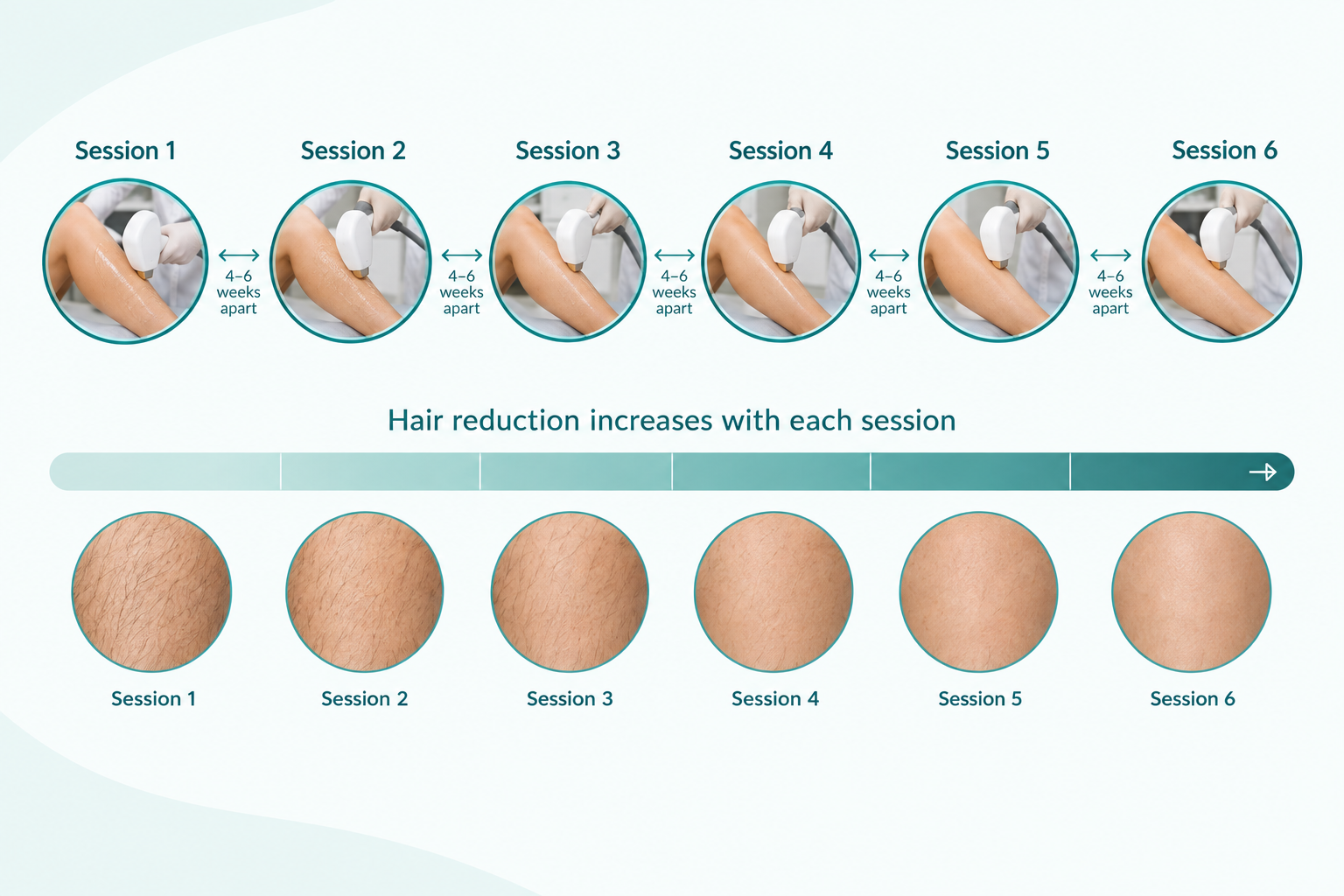
The number of sessions needed varies between individuals. Factors that may increase the number of sessions required include coarser or denser hair, hormonal conditions such as polycystic ovary syndrome (PCOS), and skin or hair combinations that are less responsive to the chosen laser wavelength. A practitioner should assess these factors during a consultation and provide a realistic estimate rather than a guaranteed outcome.
What Happens During a Brazilian Laser Hair Removal Session?
Before the first session, a reputable clinic will conduct a consultation to assess skin tone, hair colour, medical history, and any medications that might affect treatment safety. A patch test on a small area of skin is often recommended to check for adverse reactions before treating the full region.
On the day of treatment, the area should be freshly shaved — typically the day before or on the day of the appointment. Waxing, plucking, or epilating should be avoided for several weeks beforehand, as these methods remove the hair shaft that the laser needs to target. The practitioner will apply a cooling gel or use a device with an integrated cooling tip to protect the surface skin and reduce discomfort. Protective eyewear is provided, and the practitioner will wear appropriate eye protection as well.
The laser handpiece is moved systematically across the treatment area. Each pulse delivers a brief burst of energy, often described as a sensation similar to a rubber band snapping against the skin. The intimate area tends to be more sensitive than the legs or underarms, and some people find certain zones — particularly the labia and perianal area — more uncomfortable than others. Sessions for a full Brazilian typically last between 20 and 45 minutes depending on the area covered and the device used.
Immediately after treatment, the skin may appear red and feel warm, similar to mild sunburn. A soothing gel or cooling compress is usually applied before the patient leaves the clinic.
Results: What Can You Realistically Expect?
After completing a full course of Brazilian laser hair removal, many people experience a substantial reduction in hair density — commonly described as 70 to 90 percent reduction in clinical literature, though individual outcomes vary and these figures should not be taken as a guarantee. Hair that does regrow is often finer and lighter than before treatment. The skin in the treated area may feel smoother between sessions compared with the stubble that follows shaving or the irritation that can accompany repeated waxing.
Results are not instantaneous. After each session, treated hairs enter a shedding phase and fall out gradually over one to three weeks. It is normal for hair to appear to grow for a short period after treatment before shedding — this is the treated hair being expelled from the follicle, not new growth. Visible improvement typically becomes more apparent after the third or fourth session.
Long-term results depend on hormonal stability. People who experience significant hormonal changes — for example, during pregnancy, after stopping hormonal contraception, or as a result of a condition such as PCOS — may notice more regrowth over time. This does not mean the treatment has failed; it reflects the influence of hormones on follicle activity.
Skin Tone, Hair Colour, and Suitability
The effectiveness of Brazilian laser hair removal is closely linked to the contrast between hair pigment and skin pigment. People with dark hair and light to medium skin tones have historically achieved the most consistent results with standard laser devices. Advances in laser technology, particularly the Nd:YAG platform, have made treatment more accessible for people with darker skin tones, though the risk of post-inflammatory hyperpigmentation — darkening of the skin after treatment — remains a relevant consideration that should be discussed with a practitioner.
Laser hair removal is generally not effective on white, grey, blonde, or very light red hair, because these hair types contain little or no melanin for the laser to target. People with these hair colours may be better served by alternative methods such as electrolysis, which destroys individual follicles using electrical current and does not rely on pigment contrast. A practitioner should be transparent about this limitation during consultation rather than proceeding with treatment that is unlikely to produce meaningful results.
Risks and Side Effects
Brazilian laser hair removal carries a range of possible side effects, most of which are temporary and mild when treatment is performed correctly. Understanding these risks helps set realistic expectations and supports informed decision-making.
Common and Expected Side Effects
- Redness and swelling: The treated area typically becomes red and slightly swollen immediately after a session. This usually resolves within a few hours to 24 hours.
- Skin sensitivity: The intimate area may feel tender or sensitive for one to two days after treatment. Loose-fitting clothing and avoiding friction can help manage this.
- Temporary pigmentation changes: Mild darkening or lightening of the skin in the treated area can occur, particularly in people with medium to darker skin tones. This is usually temporary but may persist for several weeks.
- Folliculitis: Inflammation of hair follicles, appearing as small red bumps, can develop after treatment. This is generally self-limiting but should be assessed by a practitioner if it persists or worsens.
Less Common but Serious Risks
- Burns and blistering: Incorrect laser settings, inappropriate device selection for the skin tone, or inadequate cooling can cause burns. This risk underscores the importance of choosing a qualified and experienced practitioner.
- Persistent pigmentation changes: Post-inflammatory hyperpigmentation or hypopigmentation (lightening) can occasionally be long-lasting, particularly if the skin is not adequately protected from sun exposure during the treatment course.
- Scarring: Rare but possible, particularly if burns are not managed appropriately.
- Infection: Any break in the skin barrier carries a small risk of infection. Practitioners should follow appropriate hygiene protocols, and patients should follow aftercare instructions carefully.
The intimate area presents specific considerations because the skin is thinner and more vascular than many other body regions, and because the area is prone to friction and moisture. These factors make careful practitioner assessment and appropriate device selection particularly important for Brazilian laser treatments compared with hair removal on less sensitive areas.
Who May Be Suitable for Brazilian Laser Hair Removal?
Brazilian laser hair removal may be suitable for adults who have dark or medium-coloured hair in the pubic region and who are looking for a longer-lasting alternative to regular shaving or waxing. Suitable candidates are generally in good general health, are not pregnant or breastfeeding, and do not have active skin infections, open wounds, or inflammatory skin conditions such as active eczema or psoriasis in the treatment area.
People who experience frequent ingrown hairs, folliculitis, or skin irritation from repeated waxing or shaving may find that laser hair removal reduces these issues over time, as the reduction in hair density decreases the likelihood of hairs curling back into the skin.
Who May Not Be Suitable
Certain factors may make Brazilian laser hair removal inadvisable or require additional caution:
- Pregnancy and breastfeeding: Laser hair removal is generally not recommended during pregnancy or breastfeeding due to the absence of safety data for these groups.
- Photosensitising medications: Some antibiotics, retinoids, and other medications increase skin sensitivity to light and may raise the risk of adverse reactions. A full medication review is essential before treatment.
- Active infections or skin conditions: Herpes simplex virus (HSV) infections in the genital area, active folliculitis, or inflammatory skin conditions in the treatment zone may need to be resolved before laser treatment can proceed safely.
- Recent sun exposure or tanning: Tanned skin — whether from sun exposure or self-tanning products — increases the risk of pigmentation changes and burns. Most practitioners advise avoiding sun exposure and tanning products for several weeks before and during a treatment course.
- Very light, grey, or white hair: As noted above, laser hair removal is unlikely to be effective on hair with minimal melanin content.
- Certain medical conditions: Conditions affecting skin healing, immune function, or light sensitivity may affect suitability. A thorough medical history review is necessary.
Aftercare and Recovery
Recovery after each Brazilian laser hair removal session is generally straightforward, though the intimate area may require a little more care than other body regions. Most people can return to their usual daily activities immediately after treatment, with some practical precautions for the first 24 to 48 hours.
Recommended aftercare typically includes avoiding hot baths, saunas, steam rooms, and vigorous exercise for 24 to 48 hours after each session, as heat can exacerbate redness and increase the risk of irritation. Sexual activity should generally be avoided for at least 24 hours to reduce friction and the risk of introducing bacteria to sensitised skin. Tight synthetic clothing should be replaced with loose, breathable fabrics during the recovery period.
Sun protection is important throughout the treatment course. The treated area should be kept out of direct sunlight where possible, and a broad-spectrum sunscreen should be applied to any exposed skin. Avoiding sun exposure helps reduce the risk of post-inflammatory pigmentation changes between sessions.
Patients should not wax, pluck, or use depilatory creams between sessions, as these methods remove the hair shaft needed for laser targeting. Shaving between appointments is generally acceptable and is the recommended method for managing hair growth during the treatment course.
Alternatives to Brazilian Laser Hair Removal
Brazilian laser hair removal is one of several options for managing intimate area hair. Understanding the alternatives helps in making an informed choice based on individual priorities, budget, and hair and skin characteristics.
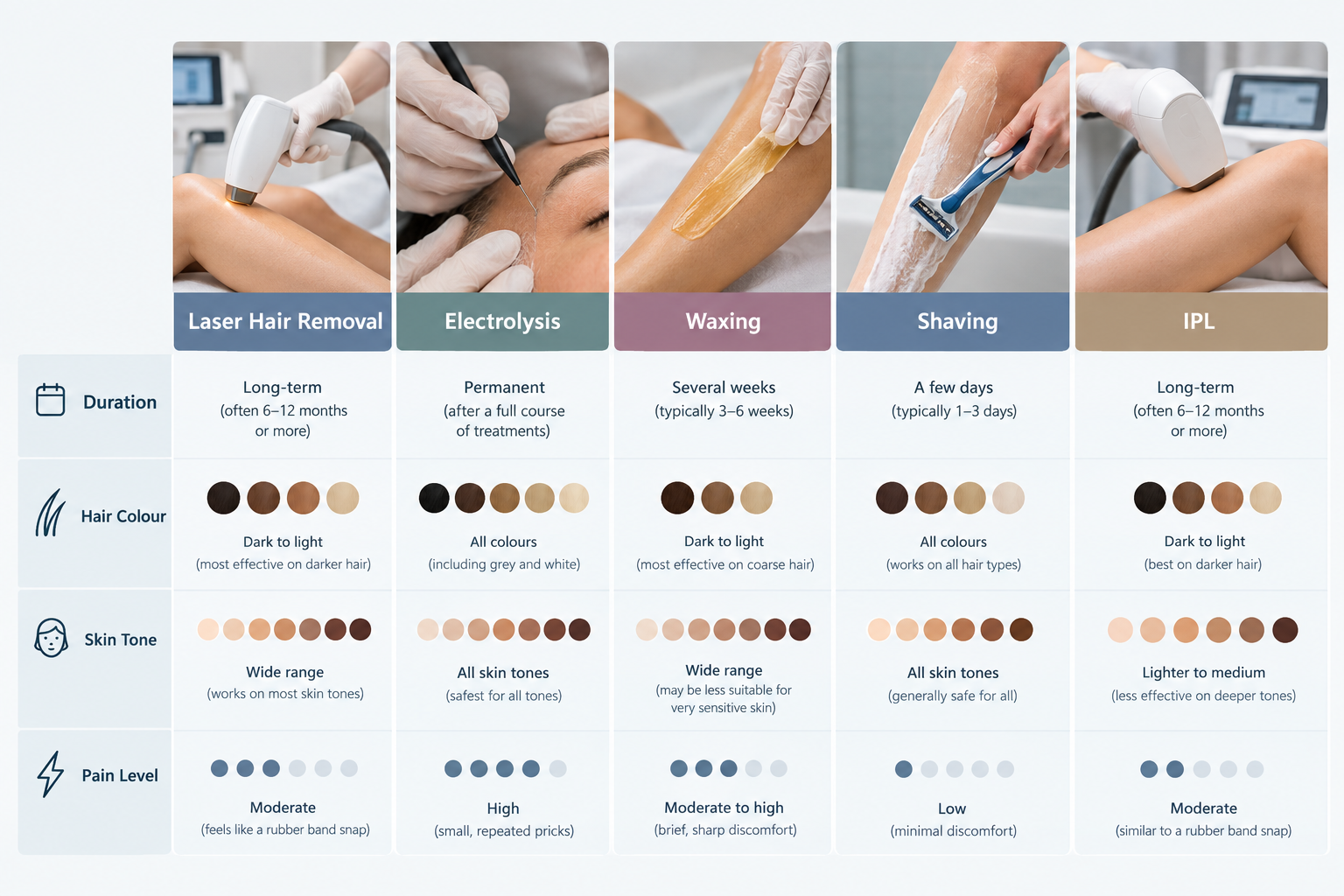
- Electrolysis: The only method currently recognised as achieving permanent hair removal by regulatory bodies such as the FDA. Electrolysis uses a fine probe inserted into each follicle to deliver electrical current, destroying the follicle individually. It is effective on all hair colours and skin tones but is time-consuming and may be impractical for large areas such as the full pubic region.
- Waxing: Removes hair from the root and provides smooth skin for two to six weeks. It does not reduce future hair growth and requires repeated appointments. Repeated waxing in the intimate area can cause skin irritation, ingrown hairs, and folliculitis in some individuals.
- Shaving: Quick and inexpensive but provides only short-term results, often with regrowth visible within one to three days. Shaving can cause razor burn, ingrown hairs, and skin irritation in the pubic region.
- Depilatory creams: Chemical hair removal products that dissolve the hair shaft. They are not recommended for use on the intimate area by most manufacturers due to the risk of chemical irritation on sensitive skin.
- IPL (Intense Pulsed Light): Uses broad-spectrum light rather than a single laser wavelength. IPL devices are available for home use as well as in clinics. Clinical IPL treatments can be effective for suitable candidates, though they are generally considered less precise than dedicated laser devices and may be less effective on darker skin tones.
Choosing a Practitioner and Clinic
The safety and effectiveness of Brazilian laser hair removal depend significantly on the qualifications and experience of the practitioner and the quality of the equipment used. The intimate area is a sensitive and anatomically complex region, and treatment should only be performed by a trained professional using a medically appropriate laser device.
When selecting a clinic, it is reasonable to ask about the practitioner’s training and qualifications, the specific laser technology used and why it is appropriate for your skin and hair type, whether a patch test is offered before the full treatment course begins, and what the clinic’s protocol is for managing adverse reactions. A reputable clinic will conduct a thorough consultation, explain realistic expectations, and not pressure you into committing to a package before you have had the opportunity to ask questions.
Regulations governing who can perform laser hair removal vary by country and region. In some jurisdictions, laser treatments are restricted to medically qualified practitioners; in others, trained technicians may perform treatments under appropriate supervision. Understanding the regulatory framework in your area can help you assess the credentials of a clinic you are considering.
Frequently Asked Questions
Is Brazilian laser hair removal painful?
Discomfort varies between individuals and across different zones of the treatment area. Most people describe the sensation as similar to a rubber band snapping against the skin. The labia and perianal areas tend to be more sensitive than the mons pubis. Modern devices with integrated cooling systems help reduce discomfort, and some clinics offer topical anaesthetic cream for particularly sensitive patients. Discomfort generally decreases as hair becomes finer and sparser over the course of treatment.
How long do results from Brazilian laser hair removal last?
After completing a full course of sessions, many people experience a significant reduction in hair density that can last for years. However, laser hair removal is described as long-term hair reduction rather than permanent removal. Hormonal changes, such as those associated with pregnancy, menopause, or conditions like PCOS, can stimulate new follicle activity over time. Occasional maintenance sessions may help sustain results.
Can I have Brazilian laser hair removal if I have darker skin?
Yes, treatment may be possible for people with darker skin tones, but the choice of laser technology is critical. The Nd:YAG laser is generally considered the most appropriate option for darker skin because its longer wavelength reduces the risk of surface melanin absorption and associated pigmentation changes. A thorough consultation with an experienced practitioner who has specific experience treating darker skin tones is essential.
How should I prepare for a Brazilian laser hair removal session?
The area should be shaved one to two days before the appointment. Waxing, plucking, and epilating should be avoided for at least four weeks before treatment. Sun exposure and self-tanning products should be avoided for several weeks before each session. Arrive at the appointment with clean skin, free from lotions, oils, or perfumes in the treatment area.
Can I have laser hair removal during my period?
Treatment can generally proceed during menstruation, though some people find the area more sensitive at this time. It is advisable to wear a tampon or menstrual cup during the appointment. If you are uncomfortable with the idea, rescheduling is a reasonable option.
Is there a risk of ingrown hairs after laser hair removal?
Laser hair removal may actually reduce the occurrence of ingrown hairs over time, as the reduction in hair density decreases the likelihood of hairs curling back into the skin. In the short term, some people experience temporary folliculitis or minor ingrown hairs as treated hairs shed, but this typically resolves without intervention.
How much does Brazilian laser hair removal cost?
Costs vary considerably depending on the clinic, location, laser technology, and the number of sessions included. A full course of six to eight sessions typically represents a higher upfront investment than repeated waxing appointments, though many people find the long-term cost comparable or lower when maintenance sessions are factored in. Price should not be the sole deciding factor — the qualifications of the practitioner and the quality of the equipment are equally important considerations.
Is Brazilian Laser Hair Removal Worth Considering for You?
Brazilian laser hair removal can offer a meaningful reduction in intimate area hair over a course of sessions, with results that may last for years when maintained appropriately. For people who experience frequent skin irritation, ingrown hairs, or the ongoing inconvenience of regular waxing or shaving, the treatment may represent a practical long-term solution. It is not a one-session fix, and it is not suitable for everyone — hair colour, skin tone, hormonal factors, and medical history all influence both eligibility and likely outcomes.
The intimate area requires particular care in terms of practitioner selection and device choice. Choosing a qualified, experienced practitioner who uses appropriate laser technology for your skin and hair type, conducts a thorough consultation, and offers a patch test before beginning treatment is the most important step in ensuring a safe and effective experience. If you are considering Brazilian laser hair removal, a detailed consultation with a trained professional will help you understand whether the treatment is appropriate for your individual circumstances and what results you can realistically expect.


