
Cheek Fillers Before and After: What Results Can You Realistically Expect?
Cheek filler treatment is one of the most commonly requested dermal filler procedures, sought by patients who want to restore lost volume, improve facial contour, or achieve a more defined midface appearance. Understanding what cheek fillers can and cannot do — and what the before and after journey actually involves — is essential before committing to any injectable treatment. This article explains the realistic outcomes, the treatment process, recovery, risks, and the factors that influence individual results.
Key Takeaways
- Cheek fillers use hyaluronic acid or other injectable materials to add volume, lift, and definition to the midface area, with results that vary significantly between individuals.
- Visible changes are usually apparent immediately after treatment, though final results are typically assessed after swelling and any bruising have resolved, usually within two weeks.
- Results from hyaluronic acid cheek fillers generally last between 12 and 24 months depending on the product used, the volume injected, individual metabolism, and lifestyle factors.
- Cheek filler treatment carries real risks including bruising, swelling, asymmetry, and rare but serious vascular complications; choosing a qualified, experienced practitioner is critical.
- A thorough consultation and facial assessment are necessary to determine whether cheek fillers are appropriate for your anatomy, concerns, and goals.
What Are Cheek Fillers?
Cheek fillers are injectable treatments placed into or around the malar (cheekbone) region, the submalar area beneath the cheekbone, or the midface more broadly. The most widely used filler materials are hyaluronic acid (HA) gels, a substance naturally present in skin and connective tissue. Hyaluronic acid fillers attract and retain water, adding physical volume and creating a lifting effect in the treated area. Other filler materials, such as calcium hydroxylapatite or poly-L-lactic acid, are also used in the cheek region by some practitioners, though hyaluronic acid remains the most common choice partly because it can be dissolved with an enzyme called hyaluronidase if correction is needed.
The specific product selected, the injection depth, and the placement technique all influence the aesthetic outcome. Thicker, more cohesive hyaluronic acid gels are generally preferred for cheek augmentation because they provide structural support and resist migration. Practitioners may inject into the deep fat compartments, the supraperiosteal plane (just above the bone), or the subcutaneous layer depending on the patient’s anatomy and the intended result. These technical decisions are made during the consultation and assessment, not by the patient.
What Changes Are Visible Before and After Cheek Filler Treatment?
The before and after changes from cheek filler treatment depend heavily on the patient’s starting anatomy, the volume of filler used, and the injection technique. In patients with significant age-related volume loss in the midface, results can appear quite pronounced — restoring a fuller, more youthful contour to an area that has become flat or hollow. In younger patients seeking definition rather than volume restoration, the changes are typically more subtle, adding projection to the cheekbones or improving the transition between the cheek and the lower face.
Common visible changes reported after cheek filler treatment include:
- Increased projection and definition of the cheekbone area
- Improved midface volume in patients who have experienced age-related fat loss
- A mild lifting effect on the lower face and nasolabial folds as a secondary result of midface support
- Improved facial symmetry where one side was noticeably flatter than the other
- A smoother transition between the under-eye area and the cheek in some patients
- A more balanced facial proportion when viewed from the front and in profile
It is important to understand that cheek fillers do not tighten loose skin, address surface texture concerns, or correct deep wrinkles directly. The primary effect is volumetric. Any improvement in the appearance of nasolabial folds or the lower face is an indirect consequence of restoring midface support, not a direct treatment of those areas.
Immediately After Treatment: What to Expect
Immediately after cheek filler injections, most patients notice some degree of swelling, redness at the injection sites, and occasionally bruising. The cheeks may appear fuller than the intended final result during this early phase because post-procedural swelling adds to the volume of the filler itself. This is a normal part of the process and does not indicate that too much filler has been placed.
Bruising is common and can range from minor pinpoint marks to more visible discolouration depending on the patient’s skin, the injection technique, and whether blood-thinning medications or supplements were taken before the appointment. Most bruising resolves within five to ten days. Swelling typically peaks within the first 24 to 48 hours and then gradually subsides over the following one to two weeks.
Tenderness around the treated area is expected for several days. The cheeks may feel firm or slightly uneven to the touch during the initial healing period as the filler integrates with surrounding tissue. Practitioners generally advise patients to avoid strenuous exercise, excessive heat, alcohol, and facial massage for at least 24 to 48 hours after treatment to minimise swelling and reduce the risk of filler displacement.
When Do Final Cheek Filler Results Appear?
Most practitioners advise patients to assess their results at the two-week mark, once swelling has fully resolved and the hyaluronic acid filler has settled into the tissue. At this point, the cheeks should reflect a more accurate representation of the intended outcome. Some patients find that the result looks slightly less dramatic at two weeks than it did immediately after treatment, which is a normal consequence of swelling subsiding rather than filler being lost.
If asymmetry, undercorrection, or an undesired contour is still apparent at two weeks, a follow-up appointment with the treating practitioner is appropriate. Minor adjustments may be possible with a small additional volume of filler, or in the case of hyaluronic acid products, partial dissolution with hyaluronidase can be considered if the result is significantly different from what was planned.
How Long Do Cheek Filler Results Last?
The longevity of cheek filler results varies between patients and depends on several factors. Hyaluronic acid cheek fillers typically last between 12 and 24 months in most patients, with some products and placements lasting toward the longer end of this range. The cheek area tends to retain filler longer than more mobile areas such as the lips, partly because the midface experiences less repetitive movement.
Factors that may influence how long cheek filler results last include:
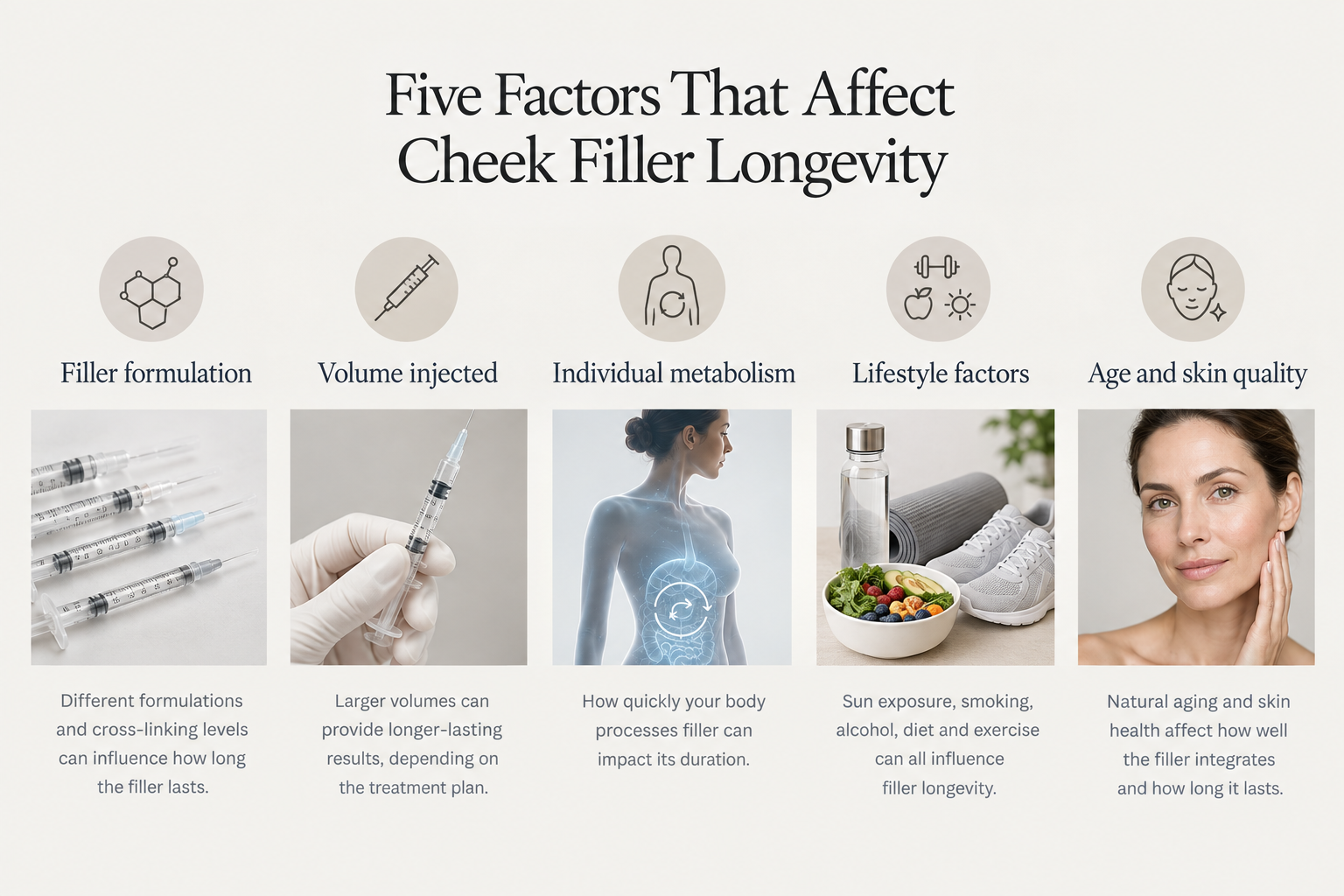
- Filler product and formulation: Denser, more cross-linked hyaluronic acid gels generally last longer than softer formulations.
- Volume injected: Larger volumes may maintain a visible effect for longer, though this must be balanced against the risk of overfilling.
- Individual metabolism: Some patients metabolise hyaluronic acid more quickly than others, leading to shorter-lasting results.
- Lifestyle factors: High levels of physical activity, significant sun exposure, and smoking may accelerate filler breakdown.
- Age and skin quality: Older patients with greater volume loss may notice results fading differently than younger patients seeking definition.
Non-hyaluronic acid fillers such as calcium hydroxylapatite may last longer in some patients, but they cannot be dissolved if correction is needed, which is an important consideration when discussing options with a practitioner.
Who May Be a Suitable Candidate for Cheek Fillers?
Cheek filler treatment may be appropriate for adults who have realistic expectations and a specific, assessable concern that injectable volume can address. Common reasons patients seek cheek filler treatment include age-related midface volume loss, naturally flat or undefined cheekbones, mild facial asymmetry, or a desire to improve facial balance and proportion.
A thorough clinical assessment is necessary before treatment. The practitioner will evaluate facial anatomy, skin quality, the degree and distribution of volume loss, and the patient’s overall facial structure to determine whether cheek fillers are likely to achieve the desired result. Not every patient who wants cheek fillers will be a suitable candidate, and a responsible practitioner will decline to treat patients for whom the procedure is unlikely to be beneficial or safe.
Factors that may affect suitability include:
- Active skin infection or inflammation in the treatment area
- Known allergy to filler components or lidocaine (a local anaesthetic often included in filler products)
- Pregnancy or breastfeeding
- Certain autoimmune conditions or medications that affect healing or clotting
- Unrealistic expectations about the degree of change achievable
- Previous filler treatments in the area that have not fully resolved
Patients with significant skin laxity or sagging may find that cheek fillers alone provide limited improvement, and a discussion about complementary or alternative treatments may be more appropriate.
Risks and Side Effects of Cheek Fillers
Cheek filler treatment carries a range of possible side effects and risks that every prospective patient should understand before proceeding. Common, expected side effects include temporary swelling, bruising, redness, and tenderness at the injection sites. These typically resolve within one to two weeks and are considered a normal part of the treatment process.
Less common but more significant risks include:
- Asymmetry: Uneven placement or differing tissue responses on each side can result in visible asymmetry that may require correction.
- Nodules or lumps: Filler can occasionally form palpable lumps beneath the skin, particularly if placed superficially or if the product is not well-suited to the area.
- Tyndall effect: Superficially placed hyaluronic acid filler can create a bluish discolouration visible through the skin.
- Infection: Although uncommon with proper technique and sterile equipment, infection is a possible complication of any injectable procedure.
- Delayed hypersensitivity reactions: Some patients experience inflammatory reactions to filler material, which can occur weeks or months after treatment.
- Vascular occlusion: This is a rare but serious complication in which filler material enters or compresses a blood vessel, potentially compromising blood supply to surrounding tissue. In the cheek region, this can have significant consequences if not recognised and treated promptly. This risk underscores the importance of treatment by a qualified practitioner with appropriate training and access to hyaluronidase.
Patients should be given clear information about warning signs that require urgent attention, such as sudden severe pain, skin colour changes, or vision disturbances, and should know how to contact their practitioner if concerns arise after treatment.
The Treatment Experience: What Happens During a Cheek Filler Appointment
A cheek filler appointment typically begins with a consultation or review of the treatment plan agreed at a prior consultation. The practitioner will assess the face, discuss the intended outcome, and confirm that the patient is suitable and consenting to proceed. Photographs are usually taken before treatment for clinical records and comparison.
The skin is cleaned and a topical anaesthetic cream may be applied to reduce discomfort, though many hyaluronic acid filler products contain lidocaine within the formulation itself, which helps manage pain during injection. The injections are administered using a fine needle or a blunt-tipped cannula, depending on the practitioner’s technique and the specific area being treated. Cannulas are sometimes preferred in the cheek region because they may reduce the risk of bruising and vascular injury compared with needles, though both approaches are used by experienced practitioners.
The appointment itself usually takes between 30 and 60 minutes including preparation and aftercare discussion. Patients are generally able to return to most normal activities the same day, though strenuous exercise and certain activities are typically avoided for 24 to 48 hours.
Cheek Fillers vs Alternative Treatments
Cheek fillers are not the only option for patients seeking midface improvement. Understanding the alternatives helps prospective patients have a more informed conversation with their practitioner.
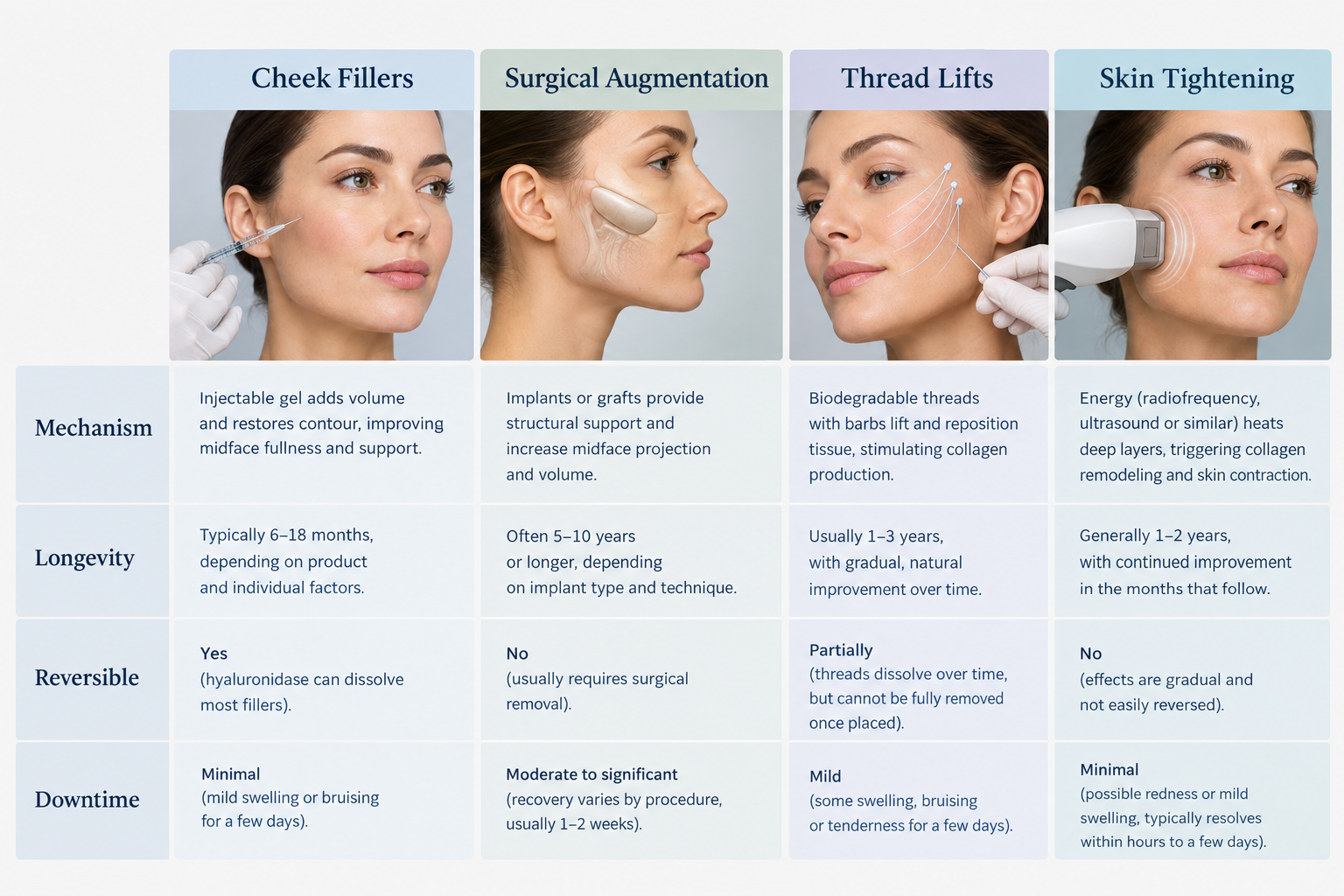
Surgical cheek augmentation using implants or fat transfer offers more permanent results but involves surgical risks, general or local anaesthesia, a longer recovery period, and greater cost. Fat transfer uses the patient’s own tissue, which some patients prefer, but results can be less predictable due to variable fat survival rates.
Thread lifts use dissolvable sutures placed beneath the skin to create a mechanical lifting effect in the midface. Results are generally more modest than surgical lifting and typically last 12 to 18 months. Thread lifts may suit patients with mild to moderate laxity who are not ready for surgery, but they carry their own risks including thread visibility, puckering, and infection.
Skin tightening devices such as radiofrequency or ultrasound-based treatments (for example, high-intensity focused ultrasound) can improve skin firmness and provide a degree of lifting in the midface, but they do not add volume. These treatments may complement cheek fillers in patients where both volume loss and skin laxity are present.
Collagen-stimulating injectables such as poly-L-lactic acid work differently from hyaluronic acid fillers by stimulating the body’s own collagen production over time rather than providing immediate volume. Results develop gradually over several months and may last longer, but the approach requires multiple treatment sessions and does not allow for immediate correction.
The most appropriate option depends on the individual patient’s anatomy, degree of concern, goals, medical history, and tolerance for downtime and risk. A qualified practitioner can help identify which approach, or combination of approaches, is most likely to be beneficial.
Frequently Asked Questions
How much filler is typically used in the cheeks?
The volume of filler used varies considerably between patients and depends on the degree of volume loss, the desired outcome, and the practitioner’s assessment. Treatments commonly range from 1 ml to 4 ml across both cheeks, though some patients require more or less. A conservative approach is generally recommended for first-time patients, with the option to add more at a follow-up if needed.
Will cheek fillers make my face look unnatural?
When performed by an experienced practitioner using an appropriate volume and technique, cheek fillers are intended to enhance natural facial contours rather than create an artificial appearance. Overfilling or incorrect placement can lead to an unnatural result, which is one reason why practitioner selection and a thorough pre-treatment assessment are important. Reviewing a practitioner’s portfolio of previous work and discussing your goals clearly during consultation can help align expectations.
Can cheek fillers be reversed?
Hyaluronic acid cheek fillers can be partially or fully dissolved using an enzyme called hyaluronidase, which breaks down hyaluronic acid. This provides an important safety option if the result is unsatisfactory or if a complication occurs. Non-hyaluronic acid fillers cannot be dissolved in the same way, which is a relevant consideration when choosing a filler type.
Is there a best age to have cheek fillers?
There is no universally defined age at which cheek fillers are most appropriate. Younger patients may seek treatment for structural definition, while older patients more commonly seek volume restoration. Suitability is determined by individual anatomy, concerns, and goals rather than age alone. Treatment is generally not recommended for patients under 18 years of age.
How painful is cheek filler treatment?
Most patients describe cheek filler injections as mildly uncomfortable rather than significantly painful. Topical anaesthetic cream and the lidocaine contained within many filler products help manage discomfort during the procedure. Individual pain tolerance varies, and some patients find certain injection sites more sensitive than others.
Can cheek fillers help with under-eye hollows?
Cheek filler placed in the upper cheek or tear trough adjacent area can sometimes improve the appearance of the transition between the lower eyelid and the cheek, which may reduce the appearance of under-eye hollowing in some patients. However, the tear trough area is technically distinct from the cheek, carries specific risks, and requires careful assessment. Not all under-eye concerns are caused by volume loss, and cheek filler is not a universal solution for this area.
What should I look for when choosing a practitioner for cheek fillers?
Prospective patients should seek a practitioner with recognised medical qualifications, specific training in facial anatomy and injectable treatments, and a verifiable portfolio of clinical work. The practitioner should conduct a thorough consultation, explain the risks clearly, and not pressure the patient into proceeding. Access to hyaluronidase and a clear protocol for managing complications are also important safety considerations.
Making an Informed Decision About Cheek Filler Treatment
Cheek fillers can produce meaningful, visible improvements in midface volume, contour, and facial balance for suitable patients, but the results depend on realistic expectations, appropriate patient selection, and skilled injection technique. The before and after changes that are achievable vary considerably between individuals — what works well for one patient may not be the right approach for another with different anatomy or goals.
The most important step before any cheek filler treatment is a thorough, unhurried consultation with a qualified practitioner who can assess your facial structure, discuss your concerns honestly, explain the realistic range of outcomes, and outline the risks relevant to your specific situation. If you are considering cheek fillers, use that consultation to ask questions, review the practitioner’s previous work, and ensure you feel confident in both the plan and the person carrying it out. A responsible practitioner will support an informed decision rather than rush you toward treatment.


