Tear Trough Filler Gone Wrong: Complications, Causes, and What to Do
Tear trough filler is one of the most technically demanding injectable treatments available. When performed well by an experienced practitioner, hyaluronic acid filler placed beneath the eyes can soften hollowness and reduce the appearance of under-eye shadows. When things go wrong, however, the consequences can range from temporary swelling to serious vascular complications. Understanding what can go wrong, why it happens, and what options exist for correction is essential for anyone considering this treatment or dealing with an unsatisfactory outcome.
Key Takeaways
- Tear trough filler complications range from mild and temporary, such as bruising and swelling, to serious and potentially permanent, such as vascular occlusion or vision changes.
- The Tyndall effect — a bluish discolouration caused by superficially placed filler — is one of the most common reasons patients seek correction after tear trough treatment.
- Hyaluronic acid filler complications can often be reversed using hyaluronidase, an enzyme that dissolves the filler, but timing and technique matter significantly.
- Practitioner experience, appropriate product selection, and thorough patient assessment are the most important factors in reducing complication risk.
- Not everyone is a suitable candidate for tear trough filler; alternatives such as polynucleotides, skin-quality treatments, or surgical options may be more appropriate depending on the underlying concern.
Why the Tear Trough Area Is High Risk
The tear trough is the groove that runs from the inner corner of the eye diagonally towards the cheek. This area is anatomically complex and unforgiving. The skin beneath the eye is among the thinnest on the face, averaging around 0.5 mm in thickness, which means any filler placed too superficially becomes immediately visible. Beneath this thin skin lies a network of small blood vessels, lymphatic channels, and the orbicularis oculi muscle. The proximity to the eye itself, including the ophthalmic artery and its branches, makes this one of the highest-risk zones for injectable treatments.
Because the tissue in this area has limited capacity to accommodate excess volume, even a small amount of filler placed incorrectly can produce visible lumps, persistent swelling, or discolouration. The lymphatic drainage in the periorbital region is also easily disrupted, which can contribute to prolonged oedema after treatment. These anatomical realities explain why tear trough filler requires a level of skill and knowledge that goes well beyond general dermal filler experience.
Common Tear Trough Filler Complications
Complications after tear trough filler exist on a spectrum from expected and self-resolving to rare but serious. Understanding the difference helps patients respond appropriately and seek timely care when needed.

Bruising and Swelling
Bruising and swelling are the most frequently reported side effects after tear trough filler and are generally considered expected rather than complications in the strict sense. The periorbital area has a rich blood supply, and even careful needle or cannula placement can cause some degree of bruising. Swelling typically peaks within 24 to 72 hours and usually resolves within one to two weeks. Persistent swelling beyond two weeks, however, may indicate a different issue such as filler-related oedema or an inflammatory response and warrants review by the treating practitioner.
The Tyndall Effect
The Tyndall effect is a bluish or greyish discolouration that appears when hyaluronic acid filler is placed too close to the skin surface. Light scatters differently through the superficially placed gel, producing a visible tint that can look like a bruise that never fully resolves. This is one of the most common reasons patients describe their tear trough filler as having gone wrong. The Tyndall effect does not resolve on its own and typically requires treatment with hyaluronidase to dissolve the misplaced filler. In some cases, the discolouration can persist for months if left untreated, and repeated sun exposure may worsen the appearance.
Lumps, Nodules, and Irregularities
Visible or palpable lumps beneath the eye can develop when filler is placed unevenly, when too much product is used in a single session, or when the filler migrates from its original placement. The under-eye skin is too thin to conceal irregularities that would be undetectable in thicker-skinned areas. Some lumps may soften over time as the filler integrates with surrounding tissue, but persistent nodules often require hyaluronidase dissolution. Inflammatory nodules, which are less common, may represent a delayed hypersensitivity reaction and can require a different treatment approach including corticosteroids or antibiotics depending on the clinical picture.
Filler Migration
Hyaluronic acid filler can shift from its original placement, particularly if a high-viscosity product not suited to the tear trough area is used, or if the volume injected exceeds what the tissue can support. Migrated filler may create puffiness or fullness in an unintended area, sometimes making the under-eye region appear heavier or more swollen than before treatment. This is a recognised reason why product selection matters as much as technique: softer, more hydrophilic fillers designed for delicate areas are generally preferred in the tear trough over denser volumising products intended for deeper facial structures.
Persistent Oedema
Some patients develop prolonged fluid retention in the under-eye area following tear trough filler. This can occur because hyaluronic acid is hygroscopic, meaning it attracts and holds water. When a product with high water-binding capacity is placed in an area with limited lymphatic drainage, the result can be persistent puffiness that is difficult to distinguish from the original concern the patient sought to treat. Persistent oedema may worsen in the morning or after alcohol consumption and can be exacerbated by sleeping position. In some cases, dissolving the filler with hyaluronidase is the most effective resolution.
Vascular Occlusion
Vascular occlusion is the most serious complication associated with tear trough filler and occurs when filler is inadvertently injected into or compresses a blood vessel, blocking blood flow to surrounding tissue. In the periorbital region, this can affect branches of the ophthalmic artery. Symptoms may include immediate blanching of the skin, pain, mottled discolouration, or in the most severe cases, visual disturbance or vision loss. Vascular occlusion is a medical emergency. Any practitioner administering tear trough filler should have hyaluronidase immediately available and a clear emergency protocol. Prompt dissolution of hyaluronic acid filler with hyaluronidase is the primary intervention, and urgent medical referral is required if visual symptoms develop. Although rare, vision loss following periorbital filler injection has been reported in the medical literature and represents the most catastrophic possible outcome of this treatment.
Infection and Biofilm
Infection following dermal filler is uncommon but possible. Bacterial biofilm — a community of bacteria that adheres to the filler surface and is resistant to standard antibiotic treatment — can present as delayed-onset nodules or recurrent swelling appearing weeks to months after treatment. Biofilm-related complications are notoriously difficult to treat and may require a combination of hyaluronidase, prolonged antibiotic courses, and in some cases surgical drainage. Any new swelling, redness, or tenderness appearing after the initial recovery period should be assessed promptly by a medical professional.
Why Tear Trough Filler Goes Wrong
Understanding the causes of complications helps prospective patients ask better questions and make more informed choices about where and with whom they seek treatment.
Inappropriate Patient Selection
Not every patient presenting with under-eye concerns is a suitable candidate for tear trough filler. Under-eye shadows and hollowness can result from true volume loss, but they can also be caused by skin pigmentation, prominent blood vessels visible through thin skin, fat pad herniation producing bags, or generalised skin laxity. Filler is most appropriate for genuine volume deficit. Injecting filler into an area where the primary concern is pigmentation, vascular visibility, or fat prolapse is unlikely to produce a satisfactory result and may worsen the appearance. A thorough assessment by an experienced practitioner should identify the underlying cause before any treatment is recommended.
Incorrect Product Selection
The tear trough requires a soft, low-viscosity hyaluronic acid filler that integrates smoothly with delicate tissue. Using a denser, more cohesive product — the type better suited to cheek augmentation or jawline definition — in the tear trough significantly increases the risk of visible lumps, migration, and persistent swelling. Product selection is a clinical decision that should be based on the specific anatomy and concern being treated, not on product availability or cost.
Excessive Volume
The tear trough area typically requires very small amounts of filler. Overcorrection is a common error, particularly when practitioners attempt to achieve dramatic results in a single session or when patients request more product than the anatomy can support. Placing too much filler in this region increases the risk of puffiness, migration, and a heavy or swollen appearance that can be difficult to correct without dissolving the filler entirely.
Incorrect Depth of Placement
Filler placed too superficially in the tear trough produces the Tyndall effect and visible lumps. Filler placed too deeply risks vascular injury. The correct plane of injection — typically deep to the orbicularis oculi muscle or in the immediate subdermal plane depending on the technique used — requires precise anatomical knowledge and significant practical experience. This is not a treatment where general filler competence is sufficient.
Lack of Emergency Preparedness
Any practitioner performing tear trough filler should have hyaluronidase immediately available, be trained in its emergency use, and have a clear protocol for managing vascular occlusion. Clinics that do not stock hyaluronidase or lack a vascular emergency protocol should not be offering periorbital filler treatments.
What to Do If Your Tear Trough Filler Has Gone Wrong
If you are unhappy with the results of tear trough filler or experiencing symptoms that concern you, the appropriate response depends on the nature and timing of the problem.
In the First 24 to 72 Hours
Bruising, swelling, and tenderness in the first few days after treatment are generally expected. Applying a cold compress gently to the area, keeping the head elevated, and avoiding alcohol and strenuous exercise can help manage early swelling. If you experience any blanching of the skin, severe pain, visual changes, or symptoms that feel disproportionate to a normal recovery, contact your treating practitioner or seek urgent medical attention immediately. These symptoms may indicate vascular compromise and require prompt intervention.
After the Initial Recovery Period
If you are still unhappy with the appearance of your tear trough filler after two to four weeks — once initial swelling has fully resolved — contact your treating practitioner for a review appointment. Concerns such as the Tyndall effect, visible lumps, persistent puffiness, or asymmetry are best assessed in person. In many cases, hyaluronidase can be used to dissolve some or all of the filler and allow the area to return closer to its pre-treatment state.
Hyaluronidase Dissolution
Hyaluronidase is an enzyme that breaks down hyaluronic acid filler. It is the primary tool for correcting most tear trough filler complications, including the Tyndall effect, lumps, migration, and persistent oedema. Hyaluronidase works relatively quickly, with visible improvement often apparent within 24 to 48 hours, though the full effect may take up to two weeks to assess. Multiple treatment sessions may be needed to fully dissolve filler, particularly if a significant volume was originally placed or if the filler has been present for a long time. It is worth noting that hyaluronidase can also affect the body’s own naturally occurring hyaluronic acid, which means some temporary hollowness may appear after dissolution before the tissue settles.
Seeking a Second Opinion
If your original practitioner is unable to address your concerns, or if you do not feel confident in their assessment, seeking a second opinion from a practitioner with specific experience in filler complications and periorbital anatomy is a reasonable step. Medical professionals with backgrounds in oculoplastic surgery, dermatology, or aesthetic medicine with documented complication management experience are well placed to assess complex under-eye filler issues.
Reducing Your Risk Before Treatment
The single most effective way to reduce the risk of tear trough filler complications is careful practitioner selection. This means looking beyond marketing and before-and-after photographs to understand the practitioner’s medical background, specific training in periorbital anatomy, and their approach to patient assessment and emergency preparedness.
Questions worth asking before proceeding with tear trough filler include: What is your medical qualification and specific training in this area? Do you stock hyaluronidase on-site and are you trained in its emergency use? How do you assess whether a patient is suitable for tear trough filler versus an alternative treatment? What product will you use and why is it appropriate for this area? What is your protocol if a complication occurs? A practitioner who answers these questions clearly and without defensiveness is demonstrating the kind of transparency that reflects genuine clinical competence.

Patients should also be cautious of very low-cost tear trough filler offers, treatments performed in non-clinical settings, and practitioners who do not conduct a thorough consultation before recommending treatment. The tear trough is not an area where cost should be the primary decision factor.
Alternatives to Tear Trough Filler
For patients who have experienced complications, are not suitable candidates for filler, or are simply looking for lower-risk options, several alternatives may be worth discussing with a qualified practitioner.
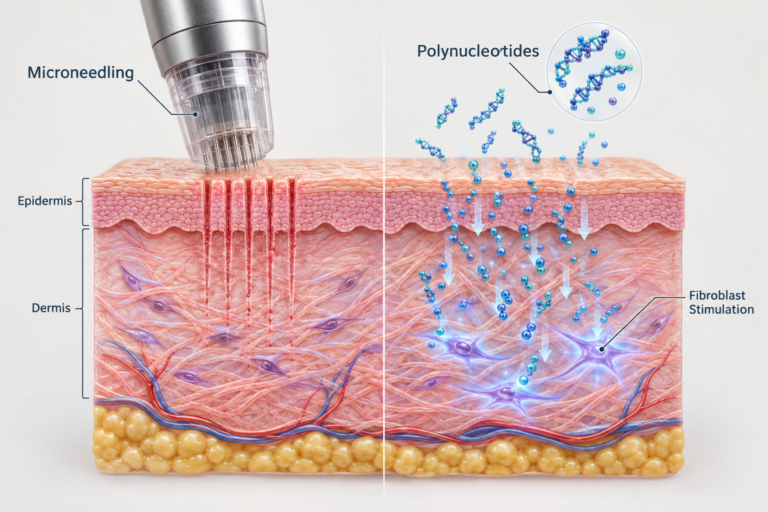
Polynucleotides are an emerging injectable treatment derived from purified DNA fragments. When injected into the periorbital area, polynucleotides are thought to stimulate collagen production, improve skin hydration, and support tissue quality over time. They do not add volume in the same way as hyaluronic acid filler, making them more appropriate for patients whose primary concern is skin quality, fine lines, or mild discolouration rather than significant hollowness. Evidence for polynucleotides in the under-eye area is still developing, but the treatment is generally considered lower risk than volumising filler in this region.
Skin-quality treatments such as medical-grade skincare, chemical peels, and laser or light-based therapies may be appropriate when the primary concern is pigmentation, skin texture, or vascular visibility rather than volume loss. These approaches address the skin itself rather than adding material beneath it.
Profhilo and other bioremodelling injectables work by stimulating collagen and elastin production and improving skin hydration. They are not volumising treatments but may improve the overall quality and laxity of periorbital skin in some patients.
Surgical options such as lower blepharoplasty may be more appropriate for patients with significant fat pad herniation, skin excess, or structural changes that cannot be meaningfully improved with injectable treatments. A surgical consultation with an oculoplastic surgeon or plastic surgeon can help determine whether a non-surgical approach is realistic for a given patient’s anatomy.
Frequently Asked Questions
Can tear trough filler complications be permanent?
Most tear trough filler complications are reversible, particularly when hyaluronic acid filler is used, because hyaluronidase can dissolve the product. However, vascular occlusion leading to tissue necrosis or vision loss represents a rare but potentially permanent complication. Delayed inflammatory nodules and biofilm-related complications can also be persistent and difficult to treat. Prompt assessment and treatment of any concerning symptoms significantly improves outcomes.
How long does the Tyndall effect last if untreated?
The Tyndall effect does not resolve spontaneously in most cases. The bluish discolouration caused by superficially placed hyaluronic acid filler can persist for as long as the filler remains in the tissue, which may be a year or longer. Treatment with hyaluronidase to dissolve the misplaced filler is the standard approach and typically produces visible improvement within days.
Is it safe to have more filler added to correct a poor result?
Adding more filler to correct an unsatisfactory tear trough result is generally not recommended without first assessing and addressing the underlying cause of the problem. In many cases, dissolving existing filler with hyaluronidase and allowing the area to settle before considering any further treatment is the more appropriate approach. Adding volume on top of an existing complication can worsen the outcome.
How do I know if my swelling is normal or a complication?
Some degree of swelling in the first few days after tear trough filler is expected. Swelling that is severe, worsening after 72 hours, accompanied by significant pain, warmth, or redness, or that persists beyond two to three weeks without improvement should be reviewed by a medical professional. Any visual disturbance, blanching, or mottled skin discolouration after injection requires immediate medical attention.
Can I dissolve tear trough filler if I simply do not like the result?
Yes. Hyaluronidase can be used to dissolve hyaluronic acid filler even when there is no medical complication — for example, if a patient is unhappy with the aesthetic outcome. The decision to dissolve filler should be made after the initial swelling has fully resolved, typically at least two to four weeks after treatment, so that the true result can be properly assessed.
Does the type of filler used affect complication risk?
Yes, significantly. Softer, lower-viscosity hyaluronic acid fillers designed for delicate areas carry a lower risk of visible lumps, migration, and persistent swelling in the tear trough compared with denser volumising products. Non-hyaluronic acid fillers such as calcium hydroxylapatite or poly-L-lactic acid are generally not recommended in the tear trough because they cannot be dissolved if a complication occurs.
Making an Informed Decision About Tear Trough Treatment
Tear trough filler, when performed by a suitably experienced practitioner using an appropriate product and technique, can produce meaningful improvement in under-eye hollowness. However, the periorbital area carries a higher inherent risk than most other facial injection sites, and the consequences of things going wrong can be significant and distressing. The decision to proceed should be based on a thorough understanding of both the realistic benefits and the genuine risks, not on social media results or promotional pricing.
If you have already experienced a complication or an unsatisfactory outcome, the most important step is to seek assessment from a qualified medical professional with specific experience in filler complications. Most hyaluronic acid filler complications can be addressed effectively with hyaluronidase when identified and treated promptly. For those who have not yet had treatment, investing time in finding a practitioner with the right qualifications, anatomical knowledge, and emergency preparedness is the most meaningful risk-reduction strategy available. A thorough consultation that includes an honest assessment of whether tear trough filler is actually the right treatment for your specific concern is the foundation of a safe and satisfactory outcome.