
PRP Treatment for Face: What to Expect, How It Works, and Whether It May Be Right for You
PRP treatment for the face uses a concentration of your own blood’s growth factors to stimulate skin renewal from within. It has attracted significant clinical and patient interest as a non-surgical option for improving skin texture, tone, and early signs of ageing — but the evidence base is still developing, results vary considerably between individuals, and it is not the right choice for everyone. This article explains how platelet-rich plasma facial treatment works, what the procedure involves, what realistic outcomes look like, and what limitations and alternatives you should understand before making a decision.
Key Takeaways
- PRP facial treatment uses growth factors derived from your own blood to support collagen production and skin regeneration, making allergic reactions uncommon but not impossible.
- Results are gradual and typically require a course of sessions; visible improvement in skin quality, fine lines, and texture may take several weeks to become apparent.
- Clinical evidence supports modest improvements in skin texture and early signs of ageing, but study quality varies and outcomes depend heavily on individual factors.
- PRP is generally considered a skin quality treatment rather than a solution for significant volume loss, deep structural changes, or pronounced pigmentation.
- A thorough consultation with a qualified practitioner is essential to assess suitability, set realistic expectations, and rule out contraindications.
What Is PRP and How Does It Work?
Platelet-rich plasma, commonly referred to as PRP, is a concentration of platelets derived from a small sample of the patient’s own blood. Platelets are best known for their role in clotting, but they also contain a range of growth factors — including platelet-derived growth factor (PDGF), vascular endothelial growth factor (VEGF), and transforming growth factor-beta (TGF-β) — that play a role in tissue repair and regeneration. When PRP is introduced into the skin, these growth factors are thought to stimulate fibroblast activity, encourage new collagen and elastin synthesis, and support the formation of new blood vessels, a process known as angiogenesis.
The preparation process begins with a blood draw, typically around 10–20 ml depending on the protocol used. The blood sample is then placed in a centrifuge, which spins at high speed to separate its components by density. The resulting platelet-rich layer is extracted and may be further processed depending on the system used. The final PRP preparation contains a higher concentration of platelets than whole blood, though the exact concentration varies between systems and practitioners. This variability in preparation is one reason why comparing results across different studies and clinics can be difficult.
When applied to facial skin — either through microinjections, microneedling channels, or a combination of both — PRP is intended to trigger a controlled healing response. The theory is that this response encourages the skin to produce new structural proteins, improving firmness, hydration, and overall skin quality over time. Because PRP is derived from the patient’s own blood, it is classified as an autologous treatment, which reduces but does not eliminate the risk of adverse reactions.
What Can PRP Facial Treatment Be Used For?
PRP treatment for the face is most commonly used to address concerns related to skin quality and early signs of ageing rather than structural or volumetric changes. Practitioners may recommend it for patients who want to improve skin texture, reduce the appearance of fine lines, address mild skin laxity, or achieve a more even and refreshed complexion. It is also used in some clinics as a complementary treatment alongside other procedures, such as microneedling or laser resurfacing, to support recovery and potentially enhance outcomes.
Some clinicians use PRP injections in the under-eye area to address concerns such as fine lines, crepey skin texture, and mild hollowness. However, it is important to understand that under-eye concerns have multiple causes — including pigmentation, vascular visibility, volume loss, and structural anatomy — and PRP is unlikely to address all of these equally. A practitioner should assess the specific cause of under-eye concerns before recommending any treatment.
PRP has also been explored for acne scarring, with some studies suggesting it may help improve the appearance of atrophic scars when used alongside microneedling. Evidence in this area is growing but remains mixed, and results depend on scar type, depth, and individual skin response. PRP is not considered a primary treatment for active acne, significant pigmentation disorders, or deep structural facial changes.
What Does the Evidence Say?
The clinical evidence for PRP facial treatment is genuinely promising in some areas but should be interpreted with appropriate caution. A number of published studies and systematic reviews have reported improvements in skin texture, fine lines, and overall skin quality following PRP treatment, particularly when combined with microneedling. However, many studies in this field involve small patient numbers, lack control groups, use different PRP preparation methods, and measure outcomes in different ways — all of which make it difficult to draw firm conclusions about effectiveness.
Research into PRP for acne scarring has produced some of the more consistent findings, with several controlled studies suggesting that combining PRP with microneedling may produce better outcomes for atrophic acne scars than microneedling alone. For general facial rejuvenation and fine line reduction, the evidence is more variable, and the degree of improvement reported tends to be modest rather than dramatic.
It is also worth noting that PRP preparation is not standardised across clinics or countries. The concentration of platelets, the activation method used, and the delivery technique all influence the biological activity of the final product — and therefore the potential outcome. This lack of standardisation is a recognised limitation in the research literature and means that results from one study or clinic may not be directly applicable to another setting.
What Happens During a PRP Facial Treatment Appointment?
A typical PRP facial treatment appointment begins with a consultation or pre-treatment assessment to confirm suitability and discuss the patient’s goals. A topical anaesthetic cream is usually applied to the treatment area and left for a period of time to reduce discomfort during the procedure. A small blood sample is then taken from the patient’s arm, processed in a centrifuge to produce the PRP, and prepared for application.
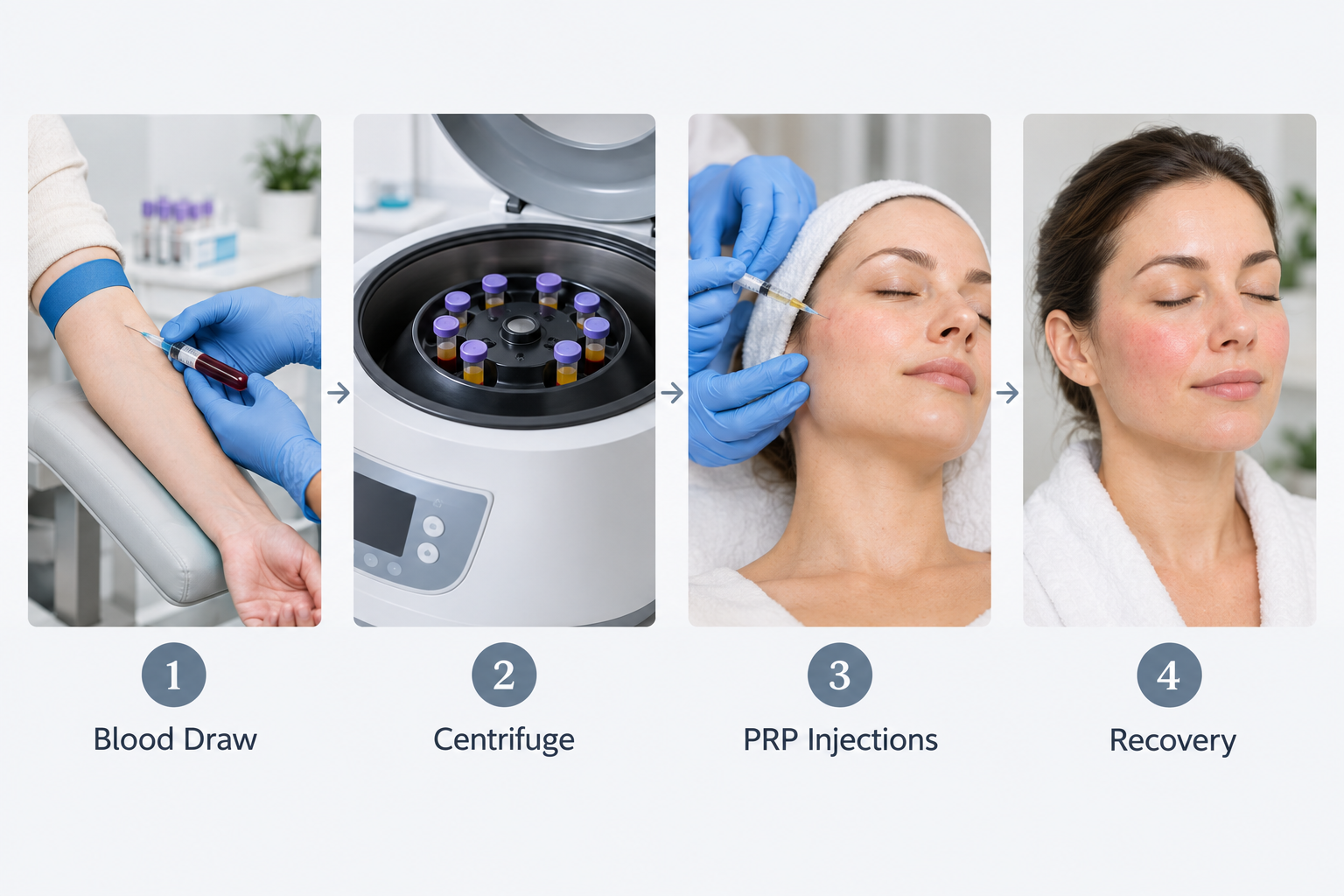
PRP can be delivered to the facial skin in several ways. The most common approaches include intradermal microinjections, where small amounts of PRP are injected directly into the skin at multiple points across the treatment area, and topical application combined with microneedling, where the PRP is spread across the skin surface and driven into the dermis using a microneedling device. Some practitioners use a combination of both techniques. The choice of delivery method may influence the depth of penetration and the areas that can be effectively treated.
The appointment typically takes between 45 minutes and 90 minutes in total, including preparation time. Most patients describe the procedure as mildly uncomfortable rather than significantly painful, particularly with adequate topical anaesthesia. The level of discomfort varies depending on the delivery method used, the treatment area, and individual pain tolerance.
Recovery and Downtime After PRP Treatment
PRP facial treatment generally involves relatively modest downtime compared with more invasive procedures, but it is not entirely without a recovery period. Immediately after treatment, most patients experience redness, mild swelling, and a sensation similar to mild sunburn across the treated area. These effects are a normal part of the skin’s initial response and typically resolve within 24 to 72 hours, though this varies between individuals and depends on the delivery method used.
Bruising is possible, particularly around injection sites or in areas with thinner skin such as the under-eye region. Pinpoint marks from microneedling or injection sites may be visible for a short period. Most patients are able to return to their normal daily activities within one to two days, though strenuous exercise, direct sun exposure, swimming, and the use of active skincare ingredients such as retinoids or acids are generally advised against for several days following treatment.
Practitioners typically advise patients to keep the skin clean and well moisturised during the initial recovery period and to apply a broad-spectrum sunscreen consistently. Specific aftercare instructions will vary depending on the clinic and the technique used, and patients should follow the guidance provided by their treating practitioner rather than general online advice.
When Do Results Appear and How Long Do They Last?
PRP facial treatment does not produce immediate visible results in the way that some injectable treatments do. Because the mechanism relies on stimulating the skin’s own regenerative processes, improvements develop gradually over a period of weeks. Most patients begin to notice changes in skin texture and quality around four to six weeks after treatment, with more noticeable improvements often becoming apparent at the two to three month mark as collagen remodelling progresses.
The longevity of results from PRP treatment for the face is variable and not well established in long-term studies. Many practitioners suggest that results may last between six and eighteen months, depending on the individual’s skin condition, age, lifestyle factors, and the number of sessions completed. Maintenance treatments are commonly recommended to sustain improvements over time, though the optimal interval between maintenance sessions has not been definitively established by clinical research.
It is important to set realistic expectations before undergoing PRP facial treatment. The improvements achievable are generally described as a natural enhancement of skin quality rather than a dramatic transformation. Patients seeking significant volumetric changes, deep wrinkle correction, or pronounced skin tightening are unlikely to achieve those goals with PRP alone and may be better served by alternative or complementary treatments.
How Many Sessions Are Typically Needed?
A single PRP facial treatment session may produce some improvement, but most practitioners recommend a course of treatments to achieve meaningful and lasting results. A typical initial course consists of three sessions spaced approximately four to six weeks apart, though the recommended protocol varies between clinics and is influenced by the patient’s skin concerns, age, and treatment goals. Some patients with more significant skin concerns may be advised to complete more sessions before reassessing.
After completing an initial course, many patients choose to have maintenance treatments at intervals of six to twelve months to help sustain the improvements achieved. The decision about whether to continue with maintenance sessions should be based on the individual’s response to treatment and their ongoing goals, discussed with their practitioner at follow-up appointments.
Risks and Side Effects of PRP Facial Treatment
Because PRP is derived from the patient’s own blood, the risk of allergic reaction or immune rejection is lower than with some other injectable treatments. However, PRP facial treatment is not without risk, and patients should be aware of the possible side effects and complications before proceeding.
Common side effects include temporary redness, swelling, bruising, and tenderness at the treatment site. These typically resolve within a few days. Less common but possible complications include infection at injection or microneedling sites, which underlines the importance of treatment being performed in a clean clinical environment by a trained practitioner using sterile equipment. Skin irritation, prolonged redness, or an uneven skin response are also possible.
Rare but more serious complications can include vascular injury if PRP is inadvertently injected into or near a blood vessel, though this risk is generally considered lower with PRP than with some other facial injectables. Post-inflammatory hyperpigmentation — darkening of the skin following inflammation — is a risk particularly relevant for patients with darker skin tones, and this should be discussed with a practitioner during the consultation.
Patients with certain medical conditions, blood disorders, active skin infections, a history of keloid scarring, or those taking blood-thinning medications may not be suitable candidates for PRP treatment. Pregnancy and breastfeeding are generally considered contraindications. A thorough medical history review is an essential part of the pre-treatment assessment.
Who May Be Suitable for PRP Facial Treatment?
PRP facial treatment may be worth discussing with a qualified practitioner if you are experiencing early to moderate signs of skin ageing, including fine lines, mild skin laxity, uneven skin texture, or a general loss of skin radiance. It may also be considered for patients with atrophic acne scarring who have not achieved satisfactory results with topical treatments alone. Patients who prefer treatments that use the body’s own biological material, rather than synthetic fillers or toxins, sometimes find PRP an appealing option.
Good candidates are generally in reasonable overall health, have realistic expectations about the degree of improvement achievable, and are willing to commit to a course of sessions rather than expecting significant results from a single treatment. Skin type, age, lifestyle factors such as smoking and sun exposure, and the specific concerns being addressed all influence how well an individual is likely to respond.
PRP is less likely to be the most appropriate choice for patients seeking significant volume restoration, deep wrinkle correction, or pronounced skin tightening. In these cases, a practitioner may recommend alternative treatments or a combination approach.
Alternatives to PRP Facial Treatment
Several other non-surgical treatments address similar skin quality concerns and may be worth considering alongside or instead of PRP, depending on individual goals and suitability.
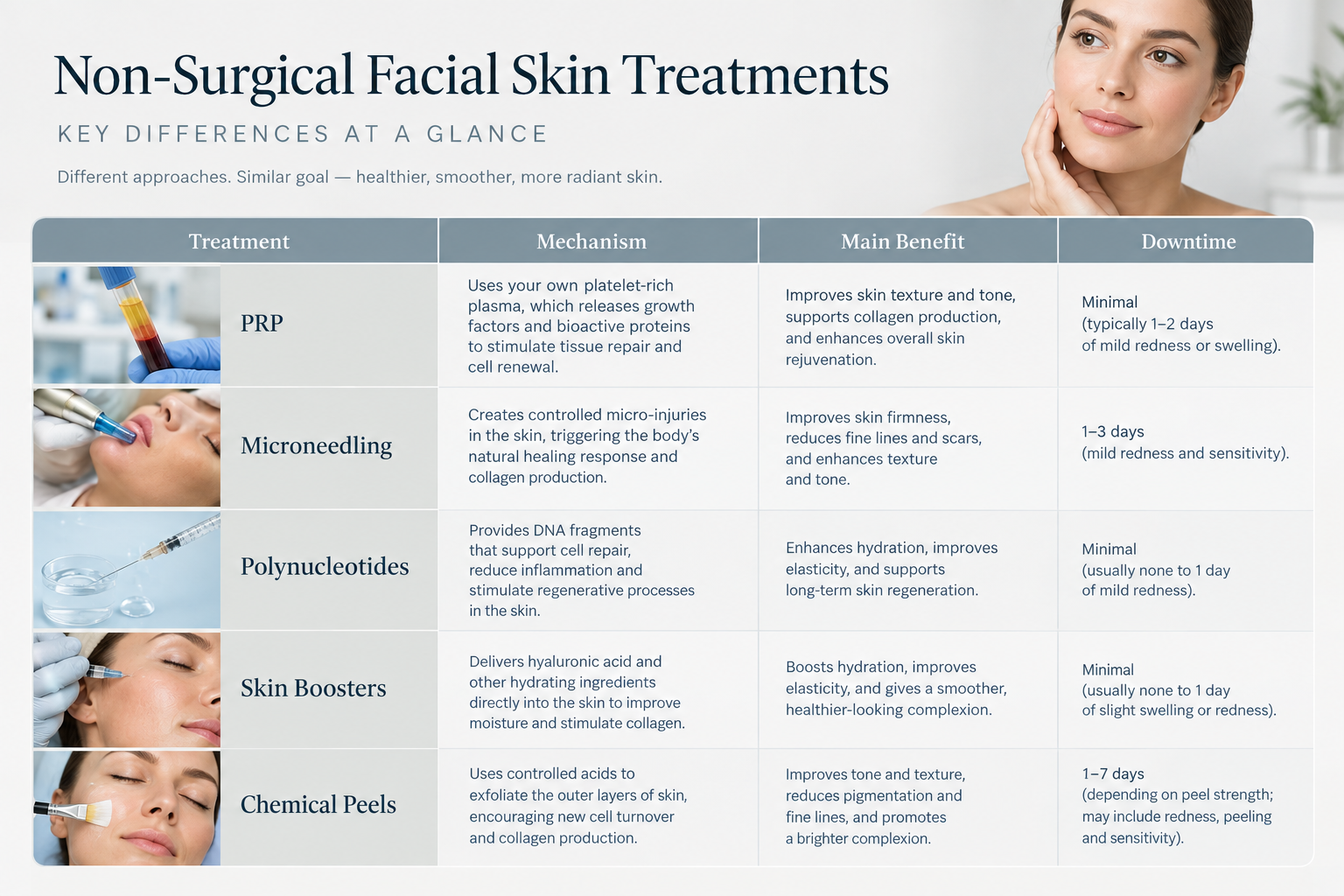
- Microneedling alone: Collagen induction therapy using a microneedling device stimulates skin renewal through controlled micro-injury without the addition of PRP. It is a well-established treatment for skin texture and mild scarring, and some studies suggest that adding PRP may enhance outcomes, though this is not universally agreed upon.
- Polynucleotides (PDRN): Injectable polynucleotide treatments, derived from purified DNA fragments, are used to improve skin hydration, texture, and quality. They work through a different mechanism to PRP and may be suitable for patients who are not good candidates for blood-based treatments.
- Skin boosters: Hyaluronic acid-based skin booster injections, such as those using highly diluted hyaluronic acid formulations, are used to improve skin hydration and quality. They do not stimulate collagen in the same way as PRP but may produce more immediate visible improvements in skin plumpness and radiance.
- Chemical peels: Medium-depth chemical peels can improve skin texture, tone, and mild pigmentation concerns. They involve a different mechanism and recovery profile compared with PRP and may be more appropriate for certain skin concerns.
- Laser and energy-based treatments: Fractional laser resurfacing and radiofrequency treatments can address skin texture, laxity, and scarring with varying degrees of evidence and downtime. These may be considered for patients who have not responded adequately to PRP or who have more significant concerns.
- Dermal fillers: For patients whose primary concern is volume loss or deep static lines, hyaluronic acid dermal fillers may be more appropriate than PRP, as they provide structural support that PRP cannot replicate.
The most appropriate treatment — or combination of treatments — depends on the individual’s specific concerns, skin condition, medical history, and goals. A qualified practitioner can help assess which options are most likely to be beneficial in a given case.
Frequently Asked Questions
Is PRP facial treatment painful?
Most patients describe PRP facial treatment as mildly uncomfortable rather than significantly painful. A topical anaesthetic cream is typically applied before the procedure to reduce discomfort. The level of sensation experienced varies depending on the delivery method, the treatment area, and individual pain tolerance. Patients who are particularly sensitive to discomfort should discuss this with their practitioner before treatment.
How soon will I see results from PRP treatment for my face?
PRP facial treatment produces gradual results rather than immediate visible changes. Most patients begin to notice improvements in skin texture and quality around four to six weeks after treatment, with more noticeable changes often becoming apparent at the two to three month mark. Results continue to develop as collagen remodelling progresses over the weeks following each session.
Can PRP treatment be combined with other facial treatments?
PRP is frequently used in combination with microneedling, and some practitioners combine it with other treatments such as laser resurfacing or skin boosters as part of a broader treatment plan. Whether combination treatment is appropriate depends on the individual’s skin concerns, the treatments being considered, and the practitioner’s clinical judgement. Not all treatments are suitable for use together, and timing between procedures matters.
Are there any people who should not have PRP facial treatment?
PRP facial treatment is not suitable for everyone. People with active skin infections, blood disorders, certain autoimmune conditions, a history of keloid scarring, or those taking anticoagulant medications may not be appropriate candidates. Pregnancy and breastfeeding are generally considered contraindications. A thorough medical history review during the consultation is essential to identify any factors that may affect suitability or safety.
How does PRP differ from dermal fillers?
PRP and dermal fillers work through entirely different mechanisms and address different concerns. PRP uses growth factors from the patient’s own blood to stimulate the skin’s natural regenerative processes, producing gradual improvements in skin quality over time. Dermal fillers use injectable substances — most commonly hyaluronic acid — to add volume, smooth lines, or restore structural support immediately. PRP is not a substitute for dermal fillers in patients whose primary concern is volume loss or deep structural changes.
How long do the results of PRP facial treatment last?
The duration of results from PRP facial treatment varies between individuals and is not definitively established in long-term clinical studies. Many practitioners suggest that improvements may last between six and eighteen months, with maintenance sessions recommended to sustain results. Factors such as age, skin condition, lifestyle, and the number of initial sessions completed all influence how long improvements are maintained.
Is PRP Facial Treatment Worth Considering for Your Skin Goals?
PRP treatment for the face occupies a genuinely useful but clearly defined space within non-surgical aesthetics. It may offer meaningful improvements in skin texture, fine lines, and overall skin quality for suitable patients who approach it with realistic expectations and commit to a proper course of treatment. The use of the patient’s own biological material is an appealing aspect for many people, and the side effect profile is generally manageable when treatment is performed by a trained practitioner in an appropriate clinical setting.
At the same time, PRP is not a transformative procedure, and it is not the right solution for every skin concern. The evidence base, while growing, remains variable in quality, and outcomes differ considerably between individuals. Patients seeking significant volume restoration, pronounced skin tightening, or rapid visible results are likely to be better served by other treatments or a combination approach.
The most important step before committing to PRP facial treatment is a thorough consultation with a qualified and experienced practitioner who can assess your specific skin concerns, review your medical history, explain what is realistically achievable in your case, and discuss whether PRP, an alternative, or a combination of treatments is most likely to help you reach your goals. Informed decision-making, grounded in an honest assessment of both the potential benefits and the limitations, is the foundation of a good outcome.


