
Chemical Peel Before and After: What Results Can You Realistically Expect?
Chemical peels are one of the most established skin resurfacing treatments available, used by dermatologists and aesthetic practitioners for decades to address concerns ranging from uneven skin tone to acne scarring. If you are researching chemical peel before and after results, you likely want to understand what kind of skin changes are genuinely achievable, how long recovery takes, and whether the treatment is appropriate for your skin type and concerns. This article explains what happens to the skin during and after a chemical peel, what realistic improvements look like across different peel depths, and what factors influence individual outcomes.
Key Takeaways
- Chemical peels vary significantly in depth — superficial, medium, and deep — and the depth largely determines both the results and the recovery period.
- Visible improvements in skin texture, tone, and clarity are possible, but results depend on skin type, concern severity, peel formulation, and aftercare.
- Superficial peels typically require little to no downtime, while medium and deep peels involve several days to weeks of recovery.
- Multiple sessions are often needed for superficial peels to achieve meaningful cumulative results; deeper peels may produce more dramatic change from a single treatment.
- Chemical peels carry real risks including post-inflammatory hyperpigmentation, scarring, and infection, particularly in darker skin tones or when aftercare is not followed carefully.
What Is a Chemical Peel?
A chemical peel is a skin resurfacing procedure in which a chemical solution — typically an acid or combination of acids — is applied to the skin to cause controlled exfoliation of the outer layers. As the treated skin sheds, newer skin cells are revealed beneath. Depending on the depth of the peel, this process can improve surface texture, reduce pigmentation irregularities, soften fine lines, and stimulate collagen production in the deeper dermis.
Chemical peels are broadly categorized by the depth of skin penetration they achieve. Superficial peels affect only the outermost layer of skin, the epidermis. Medium-depth peels reach into the upper dermis. Deep peels penetrate further into the mid-dermis and produce the most significant structural changes, but also carry the greatest risk and the longest recovery. The specific acid used, its concentration, the number of layers applied, and how long it remains on the skin all influence how deeply the peel works.
Common chemical agents used in peels include alpha-hydroxy acids such as glycolic acid and lactic acid, beta-hydroxy acids such as salicylic acid, trichloroacetic acid (TCA) at varying concentrations, and phenol for deep resurfacing. Some formulations combine multiple agents to target specific concerns such as acne, melasma, or photoageing.
Chemical Peel Before and After: What Changes Are Possible?
Understanding what a chemical peel can and cannot change is essential before committing to treatment. The skin improvements that are most consistently reported in clinical literature include reductions in surface pigmentation, smoother skin texture, a more even skin tone, and in some cases a visible reduction in fine lines and mild acne scarring. The degree of change depends heavily on the depth of the peel chosen and the nature of the skin concern being treated.
Superficial Peel Results
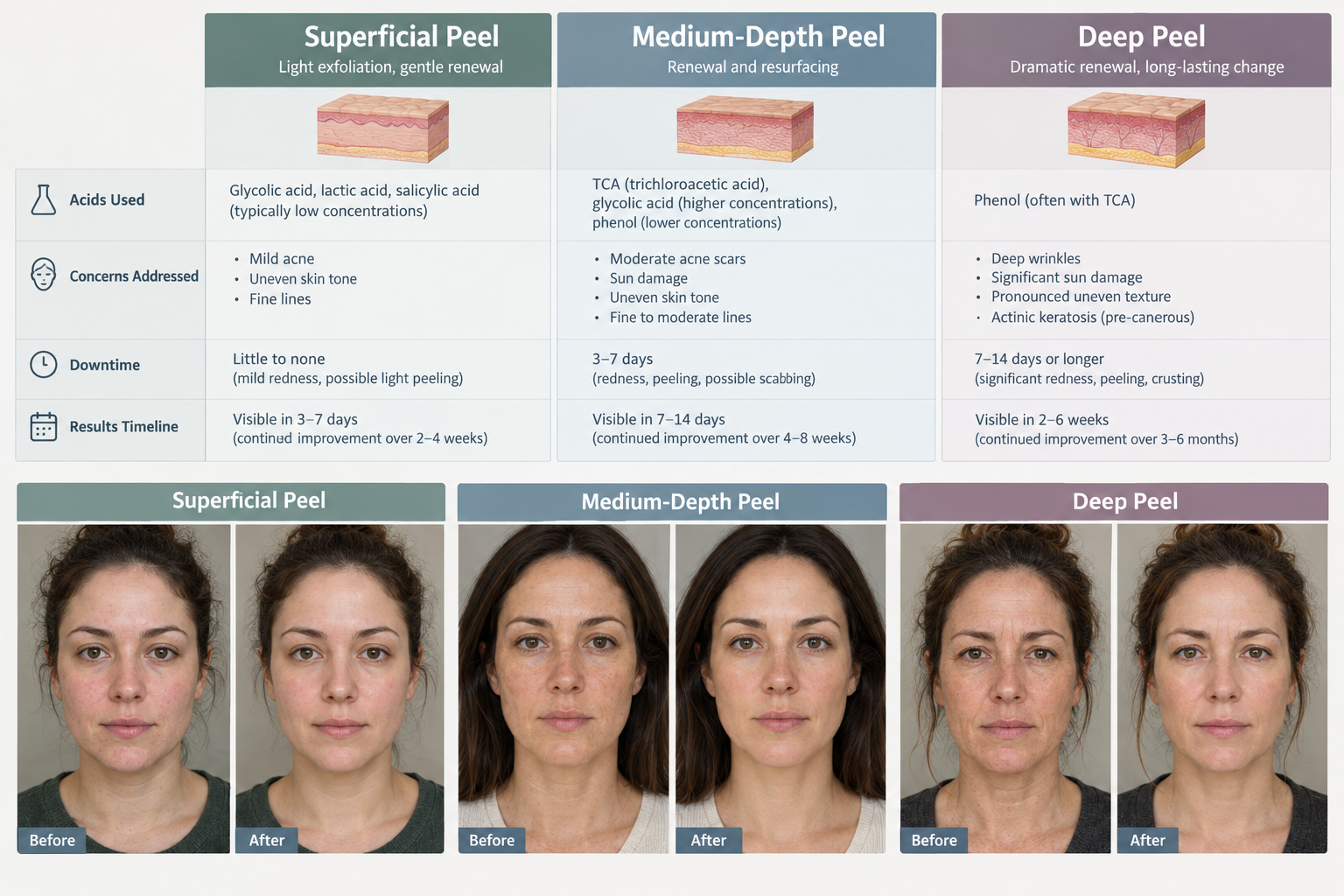
Superficial chemical peels — often using low-concentration glycolic acid, lactic acid, or salicylic acid — produce relatively modest but noticeable improvements over a course of treatments. Before and after comparisons following a series of superficial peels typically show brighter, more even-toned skin, reduced appearance of mild hyperpigmentation, and improved skin texture. These peels are particularly useful for maintaining skin clarity, managing mild acne, and addressing early signs of photoageing. Because they do not penetrate deeply, a single session produces limited visible change; most practitioners recommend a course of four to six treatments spaced two to four weeks apart for meaningful cumulative results.
Medium-Depth Peel Results
Medium-depth peels, commonly using TCA at concentrations between 20% and 35%, or combination approaches such as Jessner’s solution followed by TCA, produce more pronounced skin changes. Before and after photographs following medium-depth peels often show meaningful reductions in moderate pigmentation irregularities, improved skin texture, softening of fine to moderate lines, and visible improvement in mild to moderate acne scarring. These results are typically visible after a single treatment, though the skin goes through a more significant recovery process involving peeling, redness, and temporary sensitivity lasting approximately one to two weeks.
Deep Peel Results
Deep chemical peels, most commonly performed using high-concentration phenol or high-percentage TCA, produce the most dramatic skin resurfacing results. Before and after outcomes can include significant reduction in deep wrinkles, substantial improvement in moderate to severe acne scarring, and marked correction of severe photoageing and pigmentation. However, deep peels carry the highest risk profile, require the longest recovery — often two to four weeks of visible healing — and are not appropriate for all skin types. Phenol peels in particular carry risks of permanent skin lightening, cardiac arrhythmia during application, and prolonged sensitivity, and should only be performed by experienced medical practitioners in appropriate clinical settings.
How the Skin Heals After a Chemical Peel
The healing process after a chemical peel follows a predictable sequence, though the timeline varies with peel depth. Understanding this process helps set realistic expectations for what the skin looks like during recovery, and why the final result is not visible immediately after treatment.
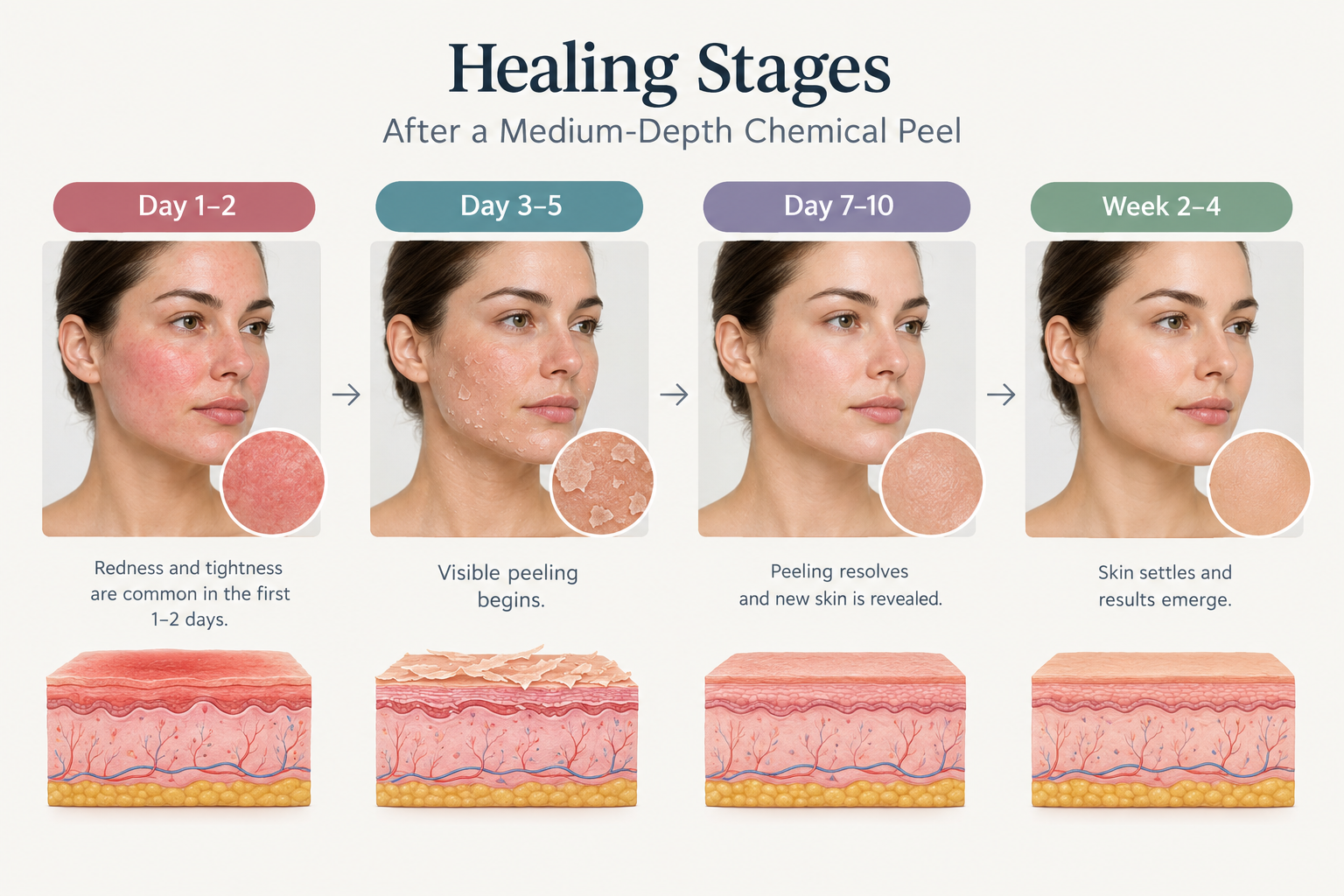
In the first 24 to 48 hours after a superficial peel, the skin may appear slightly pink or flushed, with mild tightness. Flaking or light peeling typically begins within two to three days and resolves within a week. With medium-depth peels, the skin initially appears red and may swell, particularly around the eyes. Visible peeling begins around day three and can be quite pronounced, with sheets of skin shedding over five to ten days. The new skin beneath is initially pink and sensitive. With deep peels, the healing process is more intensive, involving crusting, significant peeling, and prolonged redness that may persist for several weeks to months as the skin remodels.
Post-peel skin is temporarily more vulnerable to sun damage, infection, and irritation. Strict sun protection, gentle skincare, and avoidance of active ingredients such as retinoids and exfoliants during the healing phase are essential. Failure to follow aftercare instructions is one of the most common reasons for complications such as post-inflammatory hyperpigmentation or prolonged redness.
Skin Concerns That Chemical Peels May Address
Chemical peels are used across a range of skin concerns, though the evidence base and expected degree of improvement vary by condition and peel type.
- Hyperpigmentation and melasma: Superficial and medium-depth peels containing glycolic acid, kojic acid, or TCA may help reduce surface pigmentation. Melasma in particular can be challenging to treat and may recur, especially with sun exposure. Results are often partial rather than complete, and maintenance treatments are typically needed.
- Acne and post-acne marks: Salicylic acid peels are well-suited to acne-prone skin due to their oil-soluble nature and ability to penetrate pores. Glycolic acid peels may also help reduce comedones and post-inflammatory erythema. Deeper peels may improve atrophic acne scarring, though results vary with scar type and depth.
- Fine lines and skin laxity: Medium and deep peels stimulate collagen remodelling in the dermis, which can soften fine to moderate lines over time. Deep peels produce the most significant anti-ageing results, but superficial peels have limited effect on established wrinkles.
- Uneven skin texture: Peels of all depths can improve surface texture by removing dead skin cells and encouraging cell turnover, resulting in smoother-feeling skin.
- Sun damage and photoageing: Chemical peels can reduce the appearance of sunspots, rough texture, and sallowness associated with cumulative UV exposure, particularly when medium or deep peels are used.
Who May Be Suitable for a Chemical Peel?
Chemical peels may be appropriate for adults with specific skin concerns that have not responded adequately to topical skincare alone. Suitability depends on skin type, skin tone, medical history, current medications, and the nature of the concern being treated. A thorough consultation with a qualified practitioner is necessary before any peel is performed.
Individuals with lighter skin tones (Fitzpatrick skin types I to III) are generally considered lower-risk candidates for medium and deep peels, as the risk of post-inflammatory hyperpigmentation is lower. People with darker skin tones (Fitzpatrick types IV to VI) can benefit from chemical peels, but the choice of peel formulation and depth requires careful consideration to minimize the risk of pigmentation changes. Superficial peels using salicylic acid or low-concentration lactic acid are often better tolerated across a wider range of skin tones.
Factors that may affect suitability or require discussion with a practitioner include:
- Active skin infections, cold sores, or open wounds in the treatment area
- Use of isotretinoin (roaccutane) within the past six to twelve months
- History of keloid scarring or abnormal wound healing
- Pregnancy or breastfeeding
- Recent facial surgery or cosmetic procedures
- Certain autoimmune conditions or medications that affect skin healing
- History of radiation therapy to the face
Risks and Side Effects
Chemical peels are medical procedures with a real risk profile that should be understood before treatment. The likelihood and severity of side effects increase with peel depth.
Common and expected effects include temporary redness, peeling, dryness, and sensitivity, which are part of the normal healing process. These typically resolve within the expected recovery window for the peel depth used.
More significant risks include:
- Post-inflammatory hyperpigmentation (PIH): Darkening of the skin in the treated area, more common in darker skin tones or when sun protection is inadequate after treatment. PIH can take months to fade and may require additional treatment.
- Hypopigmentation: Permanent lightening of the skin, more commonly associated with deep phenol peels. This can result in a noticeable contrast with untreated skin.
- Scarring: Uncommon but possible, particularly if the skin is picked during healing, if the peel is applied incorrectly, or if the patient has a predisposition to abnormal scarring.
- Infection: Bacterial, viral (including herpes simplex reactivation), or fungal infections can occur if the skin barrier is disrupted and aftercare is not followed. Prophylactic antiviral medication is sometimes prescribed before medium or deep peels in patients with a history of cold sores.
- Prolonged redness: Some patients experience persistent erythema beyond the expected recovery period, particularly after deeper peels.
- Systemic effects: Phenol deep peels carry a risk of cardiac arrhythmia and require cardiac monitoring during application, limiting their use to specific clinical settings.
Choosing a qualified and experienced practitioner, following pre- and post-treatment instructions carefully, and using appropriate sun protection are the most important factors in minimizing complications.
How Long Do Chemical Peel Results Last?
The longevity of chemical peel results depends on the depth of the peel, the skin concern treated, and how well the skin is maintained afterwards. Superficial peel results are generally temporary and require ongoing maintenance treatments to sustain improvements. The skin continues to age and accumulate environmental damage, so regular sessions — often monthly or every few months — are typically recommended to maintain the benefits.
Medium-depth peel results can last one to two years or longer for concerns such as pigmentation and texture, though sun exposure, hormonal changes, and ageing will gradually affect the skin over time. Deep peel results, particularly for wrinkles and severe photoageing, may last several years, but the skin continues to age naturally and the procedure cannot be repeated indefinitely due to cumulative effects on skin structure.
Maintaining results from any chemical peel requires consistent use of broad-spectrum sun protection, a suitable skincare routine, and in many cases periodic maintenance treatments. Practitioners often recommend incorporating retinoids, antioxidants, and hydrating ingredients into a daily routine to support skin health between peel sessions.
Alternatives to Chemical Peels
Chemical peels are one of several skin resurfacing and rejuvenation options available. Depending on the skin concern and individual circumstances, alternatives may be worth discussing with a practitioner.
- Microdermabrasion: A mechanical exfoliation technique that removes the outermost skin cells. It is gentler than most chemical peels and suitable for mild texture concerns, but produces more limited results for pigmentation or scarring.
- Laser resurfacing: Ablative lasers such as CO2 and erbium lasers can achieve results comparable to or exceeding medium and deep chemical peels for wrinkles, scarring, and photoageing. Non-ablative and fractional laser options offer a middle ground with less downtime. Laser treatments may be more precisely controlled than chemical peels in some respects, but also carry their own risk profile and cost considerations.
- Microneedling: Creates controlled micro-injuries in the skin to stimulate collagen production. May be suitable for acne scarring, skin texture, and mild laxity. Can be combined with topical agents for enhanced effect. Generally well-tolerated across skin tones.
- Topical retinoids: Prescription-strength retinoids such as tretinoin are evidence-based treatments for photoageing, acne, and pigmentation. They work more gradually than peels but with a lower risk of acute side effects when used correctly.
- Intense pulsed light (IPL): A light-based treatment that may help with pigmentation, redness, and early photoageing. Not a resurfacing treatment in the same sense as a chemical peel, but may be appropriate for certain concerns.
- HydraFacial: A multi-step treatment combining cleansing, exfoliation, extraction, and hydration. Suitable for skin maintenance and mild concerns, but does not produce the depth of resurfacing achievable with medium or deep chemical peels.
The most appropriate option depends on the specific concern, skin type, tolerance for downtime, and individual goals. A qualified practitioner can help determine which approach or combination of approaches is most likely to be beneficial.
Frequently Asked Questions
How many chemical peel sessions are needed to see results?
For superficial peels, a course of four to six sessions is typically recommended to achieve meaningful cumulative improvement, with sessions spaced two to four weeks apart. Medium-depth peels often produce visible results after a single treatment. The number of sessions needed depends on the skin concern, its severity, and the peel type used. A practitioner will advise on an appropriate treatment plan following assessment.
Can chemical peels be used on darker skin tones?
Chemical peels can be used on darker skin tones, but the choice of peel formulation and depth requires careful consideration. Darker skin tones carry a higher risk of post-inflammatory hyperpigmentation following medium and deep peels. Superficial peels using salicylic acid or low-concentration lactic acid are generally better tolerated. A practitioner experienced in treating diverse skin tones should be consulted to minimize the risk of pigmentation complications.
Is the peeling process painful?
Superficial peels typically cause mild tingling or a brief stinging sensation during application, which usually subsides quickly. Medium-depth peels may cause more noticeable discomfort during application, often described as a burning sensation, which practitioners manage with cooling or topical anaesthesia where appropriate. Deep peels typically require sedation or anaesthesia. The peeling phase itself is not usually painful, though the skin may feel tight and sensitive.
When will I see the final result after a chemical peel?
After a superficial peel, skin may look brighter within a few days once initial flaking resolves. After a medium-depth peel, the skin typically looks noticeably improved once the peeling phase is complete, usually around ten to fourteen days, though redness may persist for several weeks. After a deep peel, the final result may not be fully apparent for two to three months as the skin continues to remodel and residual redness fades.
Can a chemical peel remove acne scars completely?
Chemical peels can improve the appearance of certain types of acne scarring, particularly superficial post-inflammatory marks and mild textural irregularities. Deeper atrophic scars — such as ice-pick or boxcar scars — are less likely to be fully resolved by chemical peels alone. Medium and deep peels may produce partial improvement in these cases, but complete removal of established acne scars is generally not achievable with any single treatment. A combination approach, potentially including microneedling or laser resurfacing, may be discussed with a practitioner.
How should I prepare my skin before a chemical peel?
Preparation typically involves avoiding certain active ingredients such as retinoids, exfoliating acids, and waxing in the days before treatment. Some practitioners recommend a pre-treatment skincare regimen using retinoids or hydroquinone for several weeks beforehand to prime the skin and reduce the risk of post-inflammatory hyperpigmentation. Sun protection in the weeks leading up to treatment is also important. Specific preparation instructions will be provided by the treating practitioner based on the peel type and individual skin assessment.
Are chemical peels safe during pregnancy?
Most chemical peels are not recommended during pregnancy. Certain acids used in peels, particularly salicylic acid at higher concentrations and phenol, are generally avoided due to potential systemic absorption. Glycolic acid at low concentrations is sometimes considered lower risk, but the guidance varies and a medical opinion should always be sought. Pregnant individuals should inform their practitioner and discuss any skincare treatments with their obstetric care provider.
Making an Informed Decision About Chemical Peel Treatment
Chemical peels can produce meaningful improvements in skin texture, tone, pigmentation, and in some cases fine lines and acne scarring, but the results are not uniform across all patients or all skin concerns. The depth of the peel, the formulation used, the practitioner’s experience, and the quality of aftercare all play significant roles in determining what before and after changes are achievable for any individual.
Superficial peels offer a lower-risk entry point with gradual, cumulative benefits and minimal downtime, making them suitable for skin maintenance and mild concerns. Medium-depth peels offer a meaningful step up in results for moderate pigmentation, texture, and early ageing, with a recovery period of approximately one to two weeks. Deep peels produce the most dramatic resurfacing outcomes but carry the highest risk and the most demanding recovery, and are appropriate only for specific candidates under careful medical supervision.
If you are considering a chemical peel, a consultation with a qualified aesthetic practitioner or dermatologist is the appropriate starting point. A thorough skin assessment, discussion of your specific concerns and goals, and an honest conversation about realistic outcomes, risks, and alternatives will help you determine whether a chemical peel is the right approach for your skin — and if so, which type is most likely to be beneficial and safe for you.


