
Sunken Eyes: Causes, Contributing Factors, and What You Can Do
Sunken eyes — sometimes described as a hollowed, shadowed, or gaunt appearance around the eye area — are one of the most common aesthetic concerns that patients raise during facial consultations. The appearance can make a person look older, more tired, or unwell, even when they feel perfectly healthy. Understanding what actually causes sunken eyes is the first step toward knowing whether the concern can be addressed, and if so, how.
Key Takeaways
- Sunken eyes are most commonly caused by age-related volume loss in the periorbital area, but genetics, body composition, and lifestyle factors also play a significant role.
- The hollow appearance results from a combination of fat pad reduction, bone resorption, skin thinning, and ligament laxity — not a single cause.
- Medical conditions and certain medications can contribute to or worsen the appearance of sunken eyes and should be considered before pursuing aesthetic treatment.
- Effective management depends on identifying the underlying cause; no single treatment addresses every type of periorbital hollowing.
- A qualified clinical assessment is essential before considering any intervention, as the anatomy of the eye area is complex and individual variation is significant.
What Do Sunken Eyes Actually Look Like?
The term sunken eyes refers to a visible hollowing or deepening of the space beneath and sometimes around the upper eyelid, creating a shadowed or recessed appearance. Clinically, this area is called the periorbital region, and the specific hollow beneath the lower eyelid is known as the tear trough. When the tissues in this region lose volume or structural support, the eye socket appears more prominent, the skin may look darker due to shadowing, and the transition between the lower eyelid and the cheek becomes more abrupt and visible.
It is worth distinguishing sunken eyes from other under-eye concerns. Dark circles, for example, can result from pigmentation, visible blood vessels through thin skin, or shadowing caused by hollowness — and these have different causes and different solutions. Puffiness or under-eye bags are caused by fluid accumulation or fat prolapse, which is essentially the opposite of hollowing. Sunken eyes specifically refer to a loss of fullness and projection in the periorbital area, creating that characteristic deep-set or skeletal look.
The Anatomy Behind the Hollow Appearance
To understand why sunken eyes develop, it helps to understand the layers of tissue that normally give the periorbital area its smooth, youthful contour. The area around the eye is supported by several distinct fat compartments — small pockets of fat that sit beneath the skin and above the underlying muscle and bone. These fat pads provide volume and cushioning, and they are what give a young face its soft, full appearance around the eyes.
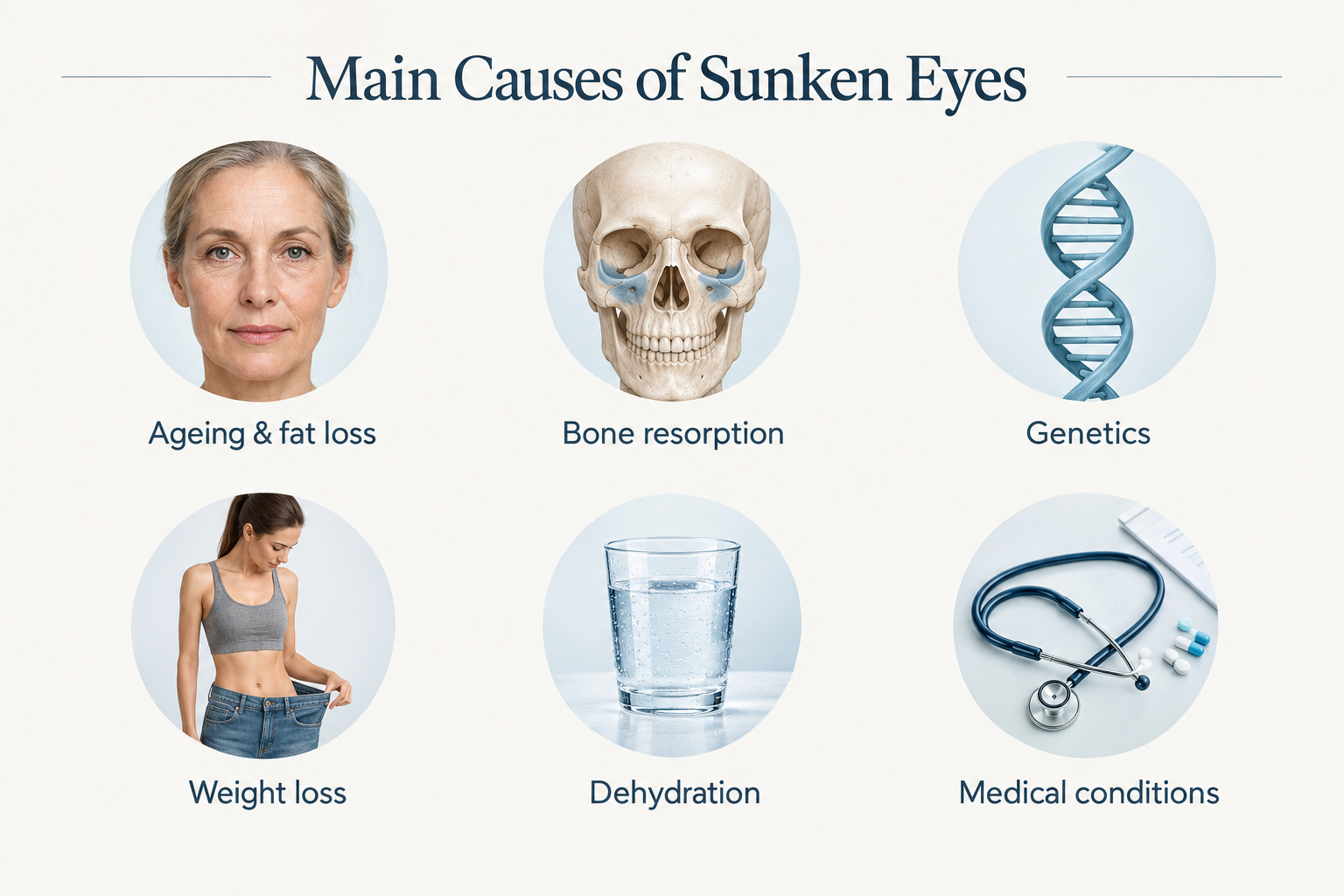
Beneath the fat pads lies the orbital bone — the bony rim of the eye socket. As a person ages, the orbital bone itself undergoes resorption, meaning it gradually loses density and changes shape. The rim of the socket widens and the bone recedes slightly, which reduces the structural foundation that the overlying soft tissues rest upon. This skeletal change is a significant but often overlooked contributor to the sunken eye appearance.
The skin of the eyelid and periorbital area is among the thinnest on the entire body, typically measuring less than one millimetre in thickness. This means that even modest changes in the underlying fat and bone become visible relatively quickly. Retaining ligaments — fibrous bands that anchor the skin to deeper structures — also play a role. As these ligaments loosen with age, the soft tissues shift downward, further altering the contour of the eye area.
Age-Related Volume Loss: The Primary Cause
Natural ageing is the most common reason people develop sunken eyes. The periorbital fat pads begin to reduce in volume from the mid-twenties onward, though the visible effect typically becomes noticeable in the thirties and forties and becomes more pronounced with each subsequent decade. This process is gradual and cumulative, which is why sunken eyes often seem to appear suddenly when in reality the change has been occurring slowly over many years.
Age-related volume loss in the periorbital region is compounded by changes in the midface. As the cheeks lose volume and descend, the support beneath the lower eyelid diminishes, making the tear trough area appear deeper and the transition from eyelid to cheek more abrupt. This is why addressing sunken eyes often requires considering the midface as well as the immediate eye area — the two regions are anatomically and aesthetically connected.
Collagen and elastin production also declines with age, reducing the skin’s ability to maintain firmness and resilience. Thinner, less elastic skin drapes less smoothly over the reduced underlying volume, which can accentuate the hollow appearance and contribute to fine lines and crepiness in the periorbital area.
Genetic and Structural Factors
Not all cases of sunken eyes are age-related. Some people are born with a naturally deep-set eye socket or a prominent orbital rim, which creates the appearance of hollowing even in youth. This is a structural characteristic determined largely by genetics and bone anatomy rather than tissue loss. In these cases, the concern is present from early adulthood and does not worsen significantly with age in the same way that age-related hollowing does.
Ethnicity and facial bone structure influence the likelihood and appearance of periorbital hollowing. Individuals with a naturally narrower or more recessed infraorbital rim — the bony ledge beneath the eye — may have less structural support for the overlying soft tissues, making the tear trough and periorbital hollow more visible regardless of age or body composition.
Family history is therefore a relevant factor when assessing sunken eyes. If a parent or sibling has a similar appearance, the concern may be primarily structural rather than the result of ageing or lifestyle. This distinction matters because structural hollowing and age-related volume loss may respond differently to the same treatments.
Body Weight and Fat Distribution
Body weight has a direct effect on facial fat volume, including the periorbital fat pads. Significant or rapid weight loss is a well-recognised cause of sunken eyes, as the face loses fat proportionally alongside the rest of the body. The periorbital area is particularly susceptible because the fat pads there are small and the overlying skin is thin, meaning even modest reductions in fat volume become visible relatively quickly.
People who maintain a very low body weight over a prolonged period may develop a persistently hollow appearance around the eyes, even if they are otherwise healthy. This is not a medical problem in itself, but it does mean that the appearance may be difficult to address without some degree of weight restoration or aesthetic intervention to replace the lost volume.
Conversely, significant weight gain does not reliably improve periorbital hollowing, as fat distribution in the face is not uniform and the periorbital fat pads do not necessarily respond proportionally to overall weight changes. The relationship between body weight and facial fat is complex and varies considerably between individuals.
Dehydration and Sleep Deprivation
Dehydration is a commonly cited cause of a tired or sunken appearance around the eyes, and there is a physiological basis for this. The skin and soft tissues rely on adequate hydration to maintain their volume and turgor. When the body is significantly dehydrated, the skin loses some of its plumpness and the periorbital area can appear more hollow and shadowed than usual. This effect is generally temporary and resolves with adequate fluid intake.
Chronic or repeated dehydration, however, may contribute to longer-term changes in skin quality in the periorbital area, as the skin in this region is particularly sensitive to environmental and physiological stressors. Maintaining consistent hydration is therefore a reasonable and evidence-supported lifestyle measure for supporting overall skin health, though it is unlikely to reverse established structural hollowing on its own.
Sleep deprivation affects the periorbital area through several mechanisms. Poor sleep is associated with increased fluid retention in some areas and reduced tissue repair overall. The characteristic tired appearance after a poor night’s sleep — including darkening and hollowing around the eyes — reflects changes in circulation, fluid distribution, and skin tone rather than permanent structural change. Persistent sleep deprivation, however, may contribute to cumulative skin quality decline over time.
Sun Exposure and Lifestyle Factors
Chronic ultraviolet exposure accelerates the breakdown of collagen and elastin in the skin, a process known as photoageing. In the periorbital area, where the skin is already thin and delicate, photoageing can hasten the thinning and laxity that contribute to a hollow appearance. People with a history of significant sun exposure without adequate protection may notice periorbital hollowing developing earlier or more prominently than their peers.
Smoking is another lifestyle factor with a well-documented negative effect on skin quality. Tobacco smoke reduces blood flow to the skin, impairs collagen synthesis, and accelerates oxidative damage. These effects are visible across the face but may be particularly noticeable in the periorbital area due to the thinness of the skin. Smokers tend to show signs of periorbital ageing earlier than non-smokers of the same age.
Alcohol consumption, when excessive and prolonged, can contribute to dehydration, nutritional deficiencies, and systemic inflammation — all of which may affect skin quality and facial volume over time. The effect of moderate alcohol consumption on periorbital appearance is less clear and likely varies between individuals.
Medical Conditions That Can Cause Sunken Eyes
Several medical conditions can cause or significantly worsen the appearance of sunken eyes, and it is important to consider these before attributing the concern solely to ageing or lifestyle. Identifying an underlying medical cause is clinically important because treating the aesthetic appearance without addressing the root cause is unlikely to produce lasting results.
Significant unintentional weight loss — whether from malnutrition, malabsorption, chronic illness, or eating disorders — can cause pronounced facial fat loss including periorbital hollowing. In these cases, the sunken eye appearance is a sign of systemic change rather than a cosmetic concern, and medical assessment is the appropriate first step.
Thyroid disorders, particularly hypothyroidism and hyperthyroidism, can affect the periorbital area in different ways. Hyperthyroidism is associated with proptosis — a forward protrusion of the eyeball — which can paradoxically create a sunken or shadowed appearance around the orbital rim. Thyroid eye disease, a condition associated with Graves’ disease, causes inflammation and changes in the orbital tissues that can significantly alter the appearance of the eye area.
Allergic conditions, including allergic rhinitis and chronic sinusitis, are associated with a phenomenon sometimes called allergic shiners — a darkened, hollow appearance beneath the eyes caused by venous congestion and inflammation in the periorbital tissues. This is distinct from structural hollowing but can contribute to a similar visual appearance.
Anaemia, particularly iron-deficiency anaemia, can cause pallor and a generally fatigued appearance that makes periorbital shadowing more visible. Addressing the underlying anaemia may improve the overall appearance of the eye area, though it is unlikely to reverse established structural hollowing.
Certain medications, including some used for glaucoma, HIV, and long-term corticosteroid use, have been associated with periorbital fat changes. Anyone who notices a change in the appearance of their eye area after starting a new medication should discuss this with their prescribing clinician.
The Role of Bone Resorption in Periorbital Ageing
Bone resorption in the facial skeleton is a less widely discussed but clinically significant contributor to sunken eyes. Research using three-dimensional imaging has demonstrated that the orbital aperture — the opening of the eye socket — enlarges with age, and the infraorbital rim recedes. This means the bony support beneath the eye gradually diminishes, allowing the overlying soft tissues to descend and the periorbital hollow to deepen.
This skeletal change is largely irreversible through non-surgical means, which is one reason why periorbital hollowing can be challenging to address comprehensively with soft tissue treatments alone. Aesthetic practitioners who understand facial anatomy will consider the contribution of bone resorption when planning treatment, as restoring soft tissue volume without accounting for the underlying skeletal change may produce suboptimal or unnatural results.
Sunken Eyes After Filler or Previous Treatment
In some cases, patients present with a sunken or irregular appearance around the eyes following previous aesthetic treatment, most commonly dermal filler. Tear trough filler, when placed incorrectly or in excessive amounts, can migrate, cause the Tyndall effect (a bluish discolouration visible through thin skin), or create an uneven contour that paradoxically worsens the appearance it was intended to improve. Hyaluronidase — an enzyme that dissolves hyaluronic acid filler — can be used to address these complications, but this requires careful assessment by an experienced practitioner.
Patients who have had previous periorbital surgery, including blepharoplasty (eyelid surgery), may also develop a hollowed appearance if too much fat was removed during the procedure. This is a recognised complication of over-aggressive fat removal and may require specialist assessment to manage appropriately.
Treatment Approaches: Matching the Cause to the Solution
Because sunken eyes can result from several different underlying causes, effective management requires identifying which factors are most relevant for the individual patient. There is no single treatment that addresses every type of periorbital hollowing, and a thorough clinical assessment is essential before any intervention is considered.
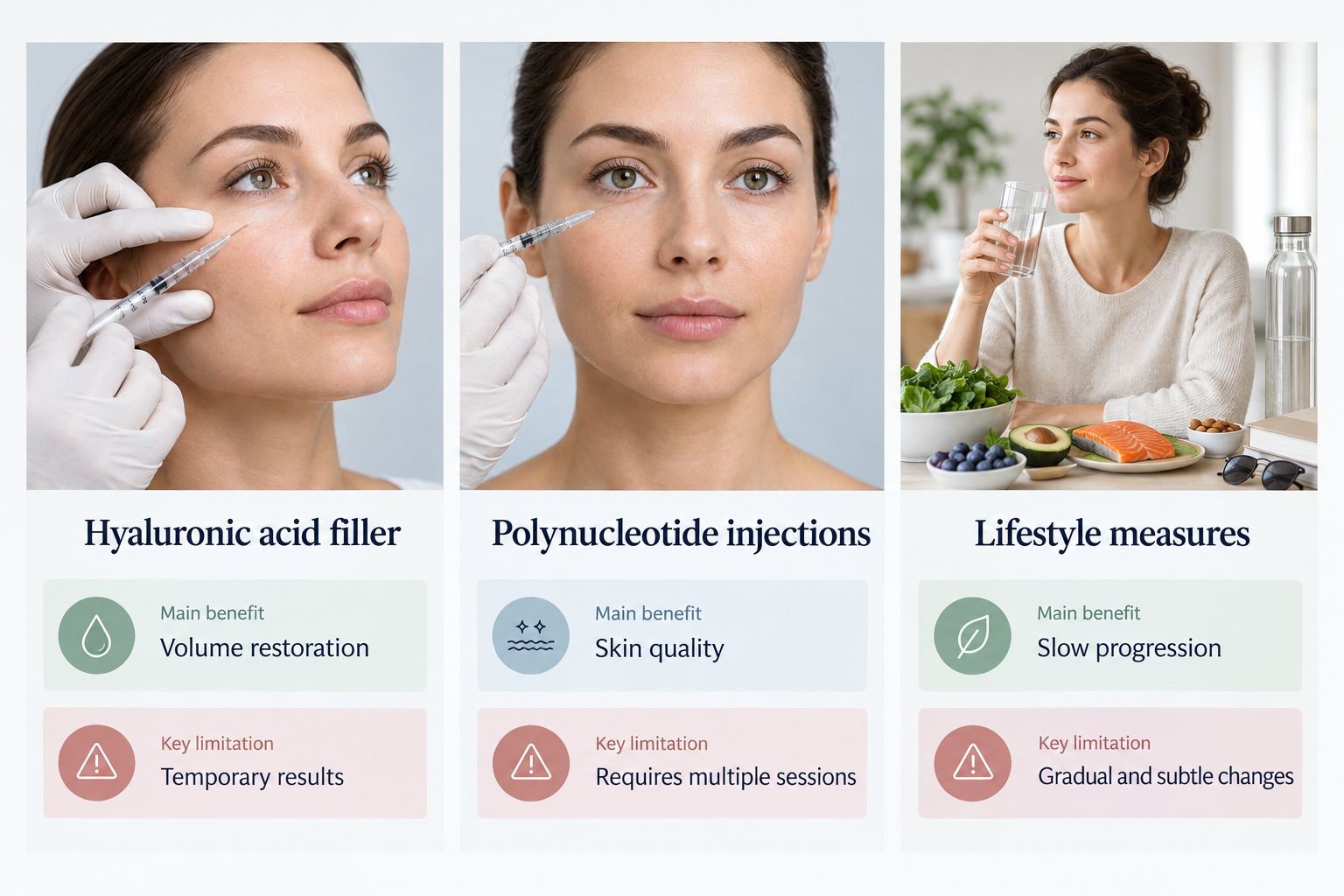
For age-related volume loss, hyaluronic acid dermal filler placed in the tear trough or periorbital area is one of the most commonly used approaches. When performed by an experienced practitioner with a thorough understanding of periorbital anatomy, filler can restore volume and soften the hollow appearance. However, the tear trough is a technically demanding area with a meaningful risk of complications including bruising, swelling, migration, and vascular injury, and it is not suitable for every patient.
Polynucleotide injections — a treatment using purified DNA fragments derived from salmon or trout — have gained interest as an option for improving skin quality and hydration in the periorbital area. Polynucleotides are thought to stimulate fibroblast activity and support collagen production, which may improve skin texture and reduce the appearance of fine lines. Evidence for polynucleotides in the periorbital area is still developing, and they are generally considered more useful for skin quality improvement than for restoring significant structural volume.
Profhilo and similar injectable skin boosters containing highly concentrated hyaluronic acid may improve skin hydration and quality in the periorbital area, though again these are not volume-replacement treatments and are unlikely to address pronounced structural hollowing on their own.
For patients with significant structural hollowing related to bone resorption or deep fat pad loss, surgical options including fat transfer (autologous fat grafting) or implant-based approaches may be discussed with a specialist. These carry greater risks and recovery requirements than non-surgical options and are typically considered when non-surgical approaches have been insufficient or are not appropriate.
Lifestyle modifications — including consistent sun protection, adequate hydration, smoking cessation, and optimising sleep — are unlikely to reverse established hollowing but may slow its progression and support overall skin health. These measures are appropriate for all patients regardless of whether they pursue aesthetic treatment.
Who Should Be Assessed Before Seeking Treatment
Anyone considering treatment for sunken eyes should undergo a thorough consultation with a qualified practitioner who has specific experience in periorbital anatomy and aesthetics. The eye area is one of the most anatomically complex regions of the face, and the proximity of important structures — including blood vessels supplying the eye — means that the risk of serious complications, though rare, is higher here than in many other treatment areas.
Patients with a history of thyroid eye disease, previous periorbital surgery, significant dry eye, or active skin conditions in the periorbital area should discuss these factors with their practitioner before any treatment is considered. Patients who are pregnant or breastfeeding should defer elective aesthetic treatment. Those taking blood-thinning medications should inform their practitioner, as the risk of bruising in the periorbital area is significant.
Frequently Asked Questions
Can sunken eyes be caused by stress?
Stress itself does not directly cause structural hollowing, but chronic stress is associated with poor sleep, weight changes, and elevated cortisol levels — all of which can affect skin quality and facial appearance over time. The tired, drawn look associated with prolonged stress may make periorbital hollowing appear more pronounced, even if the underlying structure has not changed significantly.
Are sunken eyes always a sign of ageing?
No. While age-related volume loss is the most common cause, sunken eyes can also result from genetics, low body weight, dehydration, medical conditions, or previous treatment. Some people have a naturally deep-set eye socket from early adulthood. A clinical assessment helps identify which factors are most relevant in an individual case.
Can diet affect the appearance of sunken eyes?
Significant nutritional deficiencies or very low calorie intake can contribute to facial fat loss, including in the periorbital area. A balanced diet that supports a healthy body weight and provides adequate micronutrients is beneficial for overall skin health, but dietary changes alone are unlikely to reverse established structural hollowing.
Is it safe to have filler in the tear trough area?
Tear trough filler can be effective when performed by an experienced practitioner with thorough knowledge of periorbital anatomy. However, it is one of the more technically demanding areas for filler treatment, with a higher risk of complications than many other facial areas. Not every patient is a suitable candidate, and a careful assessment is essential. Risks include bruising, swelling, the Tyndall effect, filler migration, and, rarely, vascular complications.
Will losing weight make sunken eyes worse?
Significant weight loss can reduce facial fat volume, including in the periorbital area, and may worsen the appearance of sunken eyes. This is a recognised consequence of rapid or substantial weight loss. The effect varies between individuals depending on their baseline facial fat distribution and bone structure.
At what age do sunken eyes typically become noticeable?
This varies considerably between individuals. For many people, periorbital hollowing becomes more noticeable in the mid-thirties to forties as age-related fat pad reduction and bone resorption accumulate. Those with a genetic predisposition or low body weight may notice it earlier. Sun damage and smoking can accelerate the timeline.
Can sunken eyes be a sign of a medical problem?
In most cases, sunken eyes are a cosmetic concern related to ageing, genetics, or lifestyle. However, sudden or significant changes in the periorbital area — particularly if accompanied by other symptoms such as unintentional weight loss, eye discomfort, or vision changes — warrant medical assessment to rule out an underlying condition.
Understanding Your Options for Sunken Eyes
Sunken eyes are a multifactorial concern, and the most appropriate response depends on accurately identifying the contributing causes in each individual. For many patients, the appearance reflects a combination of age-related fat pad reduction, bone resorption, skin thinning, and possibly lifestyle factors — all of which develop gradually and interact with one another. For others, the concern is primarily structural or related to an underlying medical factor that should be addressed first.
Non-surgical options such as hyaluronic acid filler, polynucleotide injections, and skin-quality treatments may offer meaningful improvement for suitable candidates, but they work best when the treatment is matched carefully to the cause. The periorbital area requires particular caution, and the quality of the clinical assessment matters as much as the treatment itself. If you are concerned about the appearance of sunken eyes, a consultation with a practitioner who has specific experience in periorbital aesthetics and facial anatomy is the most useful starting point for understanding what may be achievable in your individual case.


