
How to Get Rid of Back Acne: Treatments, Causes and What Actually Works
Back acne — sometimes called bacne — is one of the most common yet least discussed skin concerns, affecting teenagers and adults alike. Because the back is difficult to see and reach, many people struggle to manage it effectively with standard skincare routines. This article explains what causes back acne, which treatments have the strongest evidence, when professional intervention may be appropriate, and what realistic results look like at each stage of care.
Key Takeaways
- Back acne shares the same underlying mechanisms as facial acne — excess sebum, clogged follicles, bacterial involvement, and inflammation — but the thicker skin and larger pores on the back can make it more persistent.
- Mild to moderate back acne often responds to consistent topical treatments containing benzoyl peroxide, salicylic acid, or retinoids, though results typically take several weeks to become visible.
- Moderate to severe or scarring back acne may benefit from prescription options including topical or oral antibiotics, hormonal therapy, or isotretinoin, assessed by a qualified clinician.
- Professional clinic treatments such as chemical peels, laser therapy, and light-based devices may help with active breakouts and post-acne marks, but are not a substitute for addressing the underlying cause.
- Acne scarring on the back can be treated separately once active acne is controlled, using resurfacing procedures tailored to scar type and skin tone.
Why Back Acne Develops
Back acne forms through the same biological process as acne elsewhere on the body. Sebaceous glands in the skin produce sebum, an oily substance that normally lubricates the skin and hair follicles. When excess sebum combines with dead skin cells, the follicle opening can become blocked, forming a comedone — the starting point for most acne lesions. The bacterium Cutibacterium acnes (formerly known as Propionibacterium acnes) thrives in this environment and triggers an inflammatory response, producing the red papules, pustules, nodules, and cysts that characterise inflammatory acne.
The back has a particularly high density of sebaceous glands, and the skin there is thicker than on the face. This combination means pores can become deeply blocked, and inflammatory lesions on the back are often larger and slower to resolve than those on the face. Friction from clothing, backpacks, and sports equipment — a phenomenon sometimes called acne mechanica — can worsen existing breakouts or trigger new ones by repeatedly irritating follicles. Sweat trapped against the skin after exercise is another contributing factor, as it creates a warm, moist environment that encourages bacterial growth.
Hormonal fluctuations play a significant role, particularly during puberty, the menstrual cycle, pregnancy, and periods of high stress. Androgens stimulate sebaceous glands to produce more sebum, which is why back acne is especially common during adolescence and why some adults experience flares linked to hormonal changes. Certain medications — including anabolic steroids, some antidepressants, and lithium — are also associated with acne as a side effect. Diet may contribute in some individuals, with higher-glycaemic foods and dairy products implicated in some studies, though the evidence remains mixed and individual responses vary considerably.
Classifying Back Acne: Why Severity Matters
Choosing the right treatment approach depends on accurately assessing the type and severity of back acne. Dermatologists typically classify acne into mild, moderate, and severe categories based on the number and type of lesions present.
- Mild back acne involves mainly non-inflammatory lesions — open comedones (blackheads) and closed comedones (whiteheads) — with few or no inflamed spots. This grade often responds well to over-the-counter topical treatments used consistently.
- Moderate back acne includes a mix of comedones and inflammatory papules or pustules. Topical prescription treatments or a combination approach may be needed.
- Severe back acne involves numerous inflamed papules and pustules, or deeper nodules and cysts that extend into the lower layers of the skin. Severe acne carries a higher risk of scarring and usually requires medical management, which may include systemic (oral) treatments.
Attempting to treat severe nodular or cystic back acne with over-the-counter products alone is unlikely to produce meaningful improvement and may delay appropriate care. A consultation with a dermatologist or qualified aesthetic clinician is advisable when acne is severe, persistent, or already causing scarring.
At-Home and Over-the-Counter Treatments
For mild to moderate back acne, a structured at-home routine using evidence-supported active ingredients is a reasonable first step. Consistency matters more than product variety — using one or two well-chosen actives correctly over several weeks is more effective than switching products frequently.
Benzoyl Peroxide
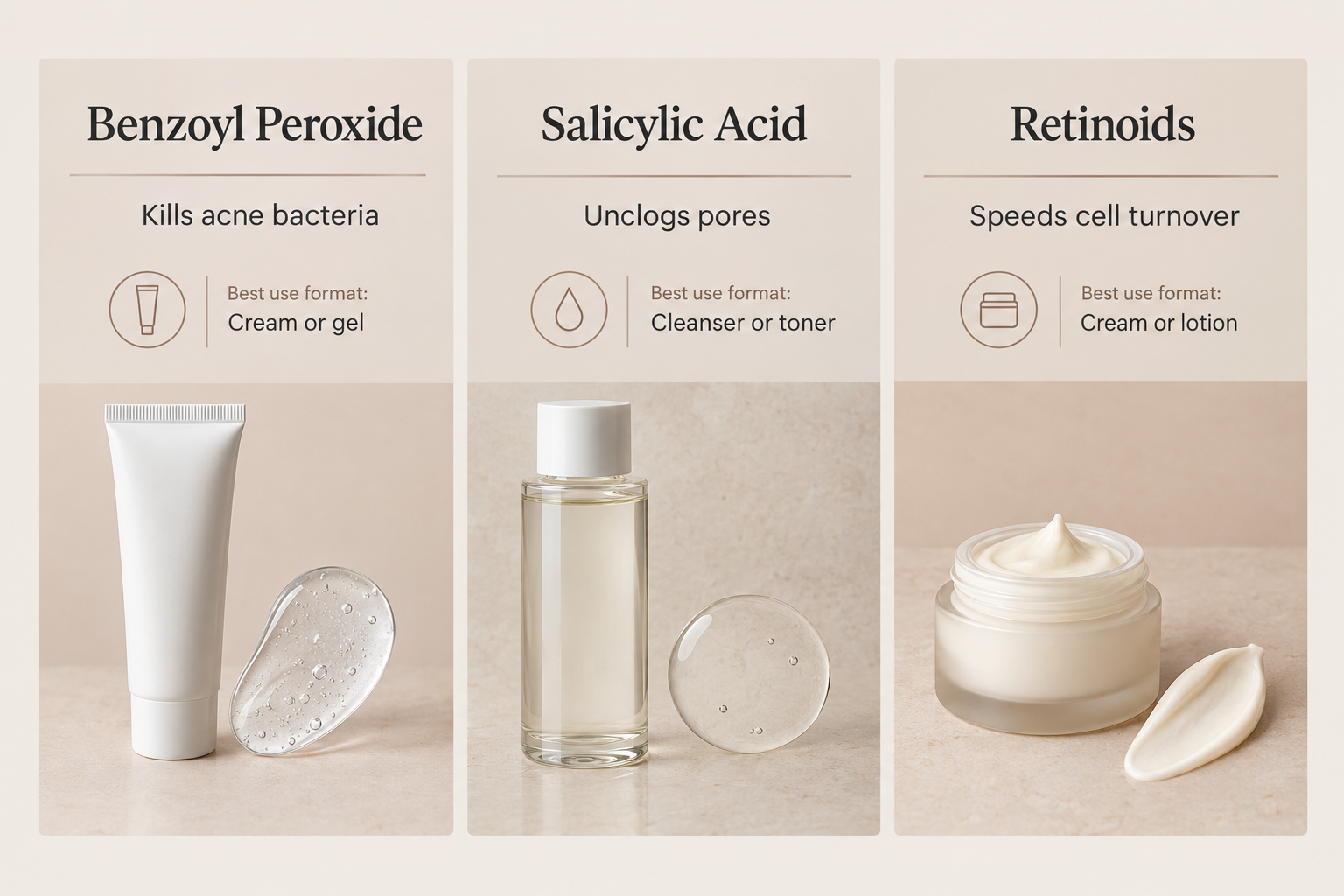
Benzoyl peroxide is one of the most well-evidenced topical treatments for inflammatory acne. It works by releasing oxygen into the follicle, which kills Cutibacterium acnes directly. Unlike antibiotics, benzoyl peroxide does not contribute to bacterial resistance, which makes it a valuable long-term option. For back acne, wash-off formulations such as cleansing washes containing 5–10% benzoyl peroxide are practical because they can be applied to a large surface area in the shower. Leave-on formulations at lower concentrations (2.5–5%) may be used on specific areas. Benzoyl peroxide can bleach fabric, so allowing it to rinse or dry fully before contact with clothing or bedding is important.
Salicylic Acid
Salicylic acid is a beta-hydroxy acid (BHA) that penetrates into the pore lining and helps dissolve the mixture of sebum and dead skin cells that causes blockages. It also has mild anti-inflammatory properties. Salicylic acid body washes and sprays are widely available and are particularly useful for comedonal back acne — blackheads and whiteheads — as well as for preventing new blockages from forming. Concentrations of 1–2% are typical in over-the-counter products.
Topical Retinoids
Retinoids — derivatives of vitamin A — accelerate skin cell turnover, which helps prevent follicles from becoming blocked and encourages existing comedones to clear. Over-the-counter adapalene 0.1% gel is now available without prescription in many countries and has a reasonable evidence base for acne treatment. Retinoids can cause initial dryness, peeling, and increased sensitivity to sunlight, so starting with a lower frequency of application and building up gradually is advisable. Applying retinoids to the back can be logistically challenging without assistance or a long-handled applicator.
Practical Hygiene and Lifestyle Adjustments
Showering promptly after exercise to remove sweat and bacteria from the skin surface is one of the most practical steps for reducing back acne triggered by physical activity. Wearing loose, breathable fabrics — particularly during exercise — reduces friction and allows sweat to evaporate rather than accumulate against the skin. Washing gym clothing and bedding regularly removes sebum and bacteria that can be redeposited onto the skin. Avoiding heavy, occlusive body lotions or oils on acne-prone areas of the back may also help, as these can contribute to follicle blockage.
Prescription Treatments for Back Acne
When over-the-counter approaches have not produced adequate improvement after two to three months of consistent use, or when back acne is moderate to severe from the outset, prescription treatments assessed and prescribed by a qualified clinician offer more targeted options.
Topical Prescription Antibiotics and Combination Products
Topical clindamycin and erythromycin reduce Cutibacterium acnes populations and have anti-inflammatory effects. Because using topical antibiotics alone can contribute to antibiotic resistance, clinical guidelines generally recommend combining them with benzoyl peroxide rather than using them as monotherapy. Combination products containing both agents are available on prescription. Topical prescription-strength retinoids such as tretinoin or adapalene 0.3% may also be prescribed for more resistant cases.
Oral Antibiotics
Oral antibiotics — most commonly doxycycline or limeycycline in the UK — are frequently prescribed for moderate to severe inflammatory back acne because they can reach the deeper follicles that topical treatments may not penetrate effectively on the back. They are typically used for a defined course of three to six months alongside a topical benzoyl peroxide to reduce the risk of resistance developing. Oral antibiotics are not intended as indefinite treatment, and their use should be reviewed regularly by the prescribing clinician.
Hormonal Treatments
For individuals whose back acne is linked to hormonal fluctuations — particularly those who notice flares around the menstrual cycle or who have other signs of androgen excess — hormonal treatments may be appropriate. Combined oral contraceptive pills with anti-androgenic properties, or the medication spironolactone, can reduce sebum production by modulating androgen activity. These options are only suitable for certain patients and require a thorough medical assessment before prescribing.
Isotretinoin
Oral isotretinoin (commonly known by the brand name Roaccutane in the UK) is the most effective systemic treatment currently available for severe, nodular, or scarring acne. It works by dramatically reducing sebaceous gland activity, normalising skin cell shedding within follicles, and reducing inflammation. A standard course typically lasts four to six months, and many patients experience long-term remission after completing treatment. Isotretinoin carries significant potential side effects — including dryness of the skin, lips, and eyes, elevated liver enzymes, and changes in mood — and is strictly contraindicated in pregnancy due to the risk of serious foetal harm. It is only prescribed under specialist supervision with appropriate monitoring and, in the UK, through a shared care arrangement between a dermatologist and GP. Isotretinoin is not a first-line treatment and is reserved for cases where other approaches have failed or where the severity of acne justifies its use.
Professional Clinic Treatments for Back Acne
Aesthetic clinics and dermatology practices offer a range of professional treatments that may complement medical management or address concerns that topical and oral treatments do not fully resolve, such as post-inflammatory hyperpigmentation and acne scarring.
Chemical Peels
Chemical peels applied to the back use acids — such as salicylic acid, glycolic acid, or trichloroacetic acid (TCA) — to exfoliate the outer layers of skin, reduce follicular blockages, and improve skin texture. Superficial peels using salicylic acid are particularly well-suited to acne-prone skin because salicylic acid is oil-soluble and penetrates into the pore. A course of treatments spaced several weeks apart is typically recommended rather than a single session. Chemical peels can help with active comedonal and mild inflammatory acne, as well as with the post-inflammatory marks left after spots resolve. Deeper peels carry a greater risk of side effects including prolonged redness, hyperpigmentation (particularly in darker skin tones), and scarring, and require careful patient selection.
Light-Based and Laser Treatments
Several light-based devices are used in the management of acne. Blue light therapy targets Cutibacterium acnes by activating naturally occurring porphyrins within the bacteria, producing a toxic reaction that reduces bacterial populations. Intense pulsed light (IPL) and certain laser wavelengths can reduce inflammation and improve post-acne redness. For acne scarring on the back, ablative fractional laser resurfacing — using devices such as fractional CO2 or erbium lasers — can stimulate collagen remodelling and improve the texture of atrophic (depressed) scars. Results from laser treatments for scarring are gradual and typically require multiple sessions. The suitability of laser treatments depends on skin tone, scar type, and active acne status; treating active inflamed acne with ablative lasers is generally not appropriate.
Microneedling
Microneedling uses fine needles to create controlled micro-injuries in the skin, stimulating collagen and elastin production. It is primarily used for acne scarring rather than active acne, and may be combined with radiofrequency energy (RF microneedling) to enhance the depth of collagen remodelling. On the back, microneedling may help improve the appearance of rolling and boxcar scars. Multiple sessions are usually required, and results develop gradually over several months as new collagen matures.
Extraction and Professional Cleansing
Manual extraction of comedones by a trained aesthetician or clinician can provide immediate improvement in the appearance of blackheads and whiteheads on the back. This is typically performed as part of a professional facial or back treatment and may be combined with steam, enzyme exfoliation, or a superficial peel. Extraction should only be performed by a trained professional; attempting to squeeze or pick back acne at home increases the risk of infection, deeper inflammation, and scarring.
Treating Back Acne Scars
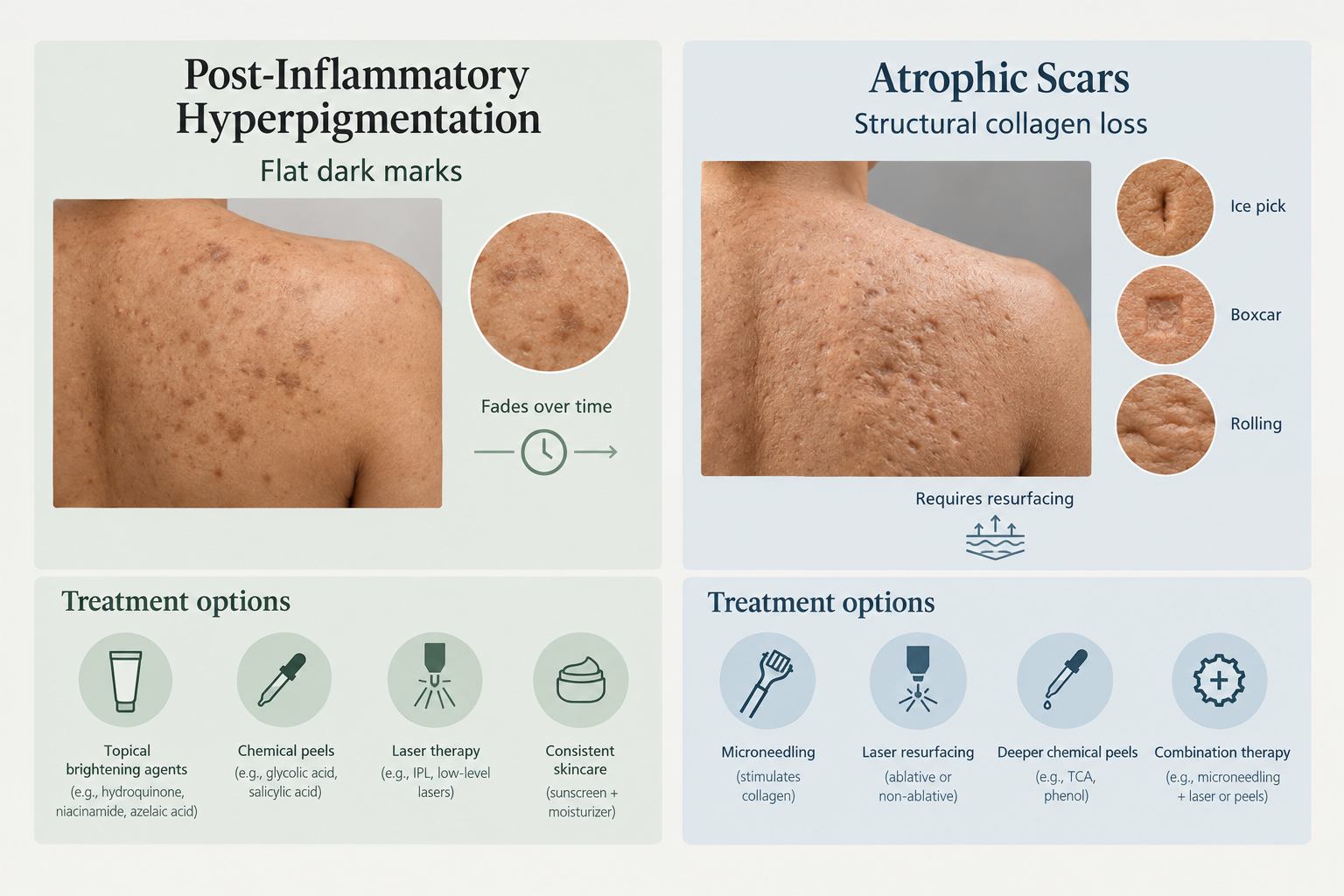
Acne scarring on the back is a separate concern from active acne and requires its own treatment approach. It is important to distinguish between post-inflammatory hyperpigmentation (PIH) — flat dark marks left after a spot heals — and true acne scars, which involve a structural change in the skin tissue.
Post-inflammatory hyperpigmentation on the back often fades gradually over months with consistent sun protection and the use of ingredients such as niacinamide, azelaic acid, or vitamin C. Professional treatments including superficial chemical peels and IPL may accelerate fading. True atrophic scars — including ice pick, boxcar, and rolling scars — involve a loss of collagen and do not resolve on their own. These respond to collagen-stimulating treatments such as fractional laser resurfacing, RF microneedling, and, in some cases, subcision (a minor procedure that releases tethered scar tissue). Hypertrophic or keloid scars, which are raised rather than depressed, require a different approach and may be treated with intralesional corticosteroid injections, silicone-based products, or laser therapy. Keloid scarring is more common in certain skin tones and on the back and chest, and should be assessed by a clinician experienced in managing this type of scarring.
Who May Be Suitable for Professional Back Acne Treatment
Professional clinic treatments for back acne may be appropriate for individuals who have not achieved adequate results with over-the-counter products, who have moderate to severe acne, or who are dealing with post-acne marks and scarring. A thorough consultation should assess the type and severity of acne, skin tone, medical history, current medications, and any previous treatments. Certain treatments — particularly chemical peels and laser procedures — require careful consideration in individuals with darker skin tones due to the increased risk of post-inflammatory hyperpigmentation. Active, inflamed acne should generally be brought under control before undertaking resurfacing treatments for scarring. Individuals who are pregnant, breastfeeding, or taking photosensitising medications may not be suitable for certain procedures.
Frequently Asked Questions
How long does it take for back acne treatments to work?
Most topical treatments require at least six to eight weeks of consistent use before meaningful improvement becomes visible, because the skin’s natural renewal cycle takes approximately four weeks. Oral antibiotics may produce noticeable improvement within four to six weeks. Isotretinoin typically shows significant results within two to three months, with the full course lasting four to six months. Professional treatments such as chemical peels and laser sessions produce cumulative results over a course of appointments. Patience and consistency are essential regardless of the treatment chosen.
Can back acne leave permanent scars?
Inflammatory back acne — particularly nodules and cysts — carries a meaningful risk of scarring if left untreated or if lesions are picked or squeezed. Post-inflammatory hyperpigmentation (dark marks) is common and usually fades over time, but true structural scars involving collagen loss or excess collagen formation can be permanent without treatment. Addressing active acne promptly and avoiding manipulation of lesions reduces the risk of scarring.
Is back acne different from facial acne?
Back acne and facial acne share the same underlying mechanisms, but the back has thicker skin, larger pores, and a higher density of sebaceous glands. Lesions on the back tend to be deeper and slower to resolve. The back is also more prone to acne mechanica from friction and pressure, and is harder to treat topically because of its size and limited accessibility.
Does diet affect back acne?
Some research suggests that high-glycaemic diets and dairy consumption may worsen acne in susceptible individuals by influencing insulin-like growth factor 1 (IGF-1) and androgen levels. However, the evidence is not conclusive, and dietary changes alone are unlikely to clear moderate or severe back acne. Diet may be worth considering as a complementary measure alongside established treatments, particularly if a clear personal pattern of dietary triggers has been noticed.
Can I treat back acne myself, or do I need to see a clinician?
Mild back acne with mainly comedones and few inflamed spots can reasonably be managed at home with appropriate over-the-counter products used consistently. Moderate to severe acne, acne that has not improved after two to three months of self-treatment, or acne that is causing scarring warrants a consultation with a dermatologist or qualified aesthetic clinician who can assess the situation and recommend prescription or professional options.
Are professional back acne treatments painful?
Discomfort varies by treatment type. Chemical peels typically cause a mild tingling or stinging sensation during application. Laser treatments may feel like a warm snapping sensation, and topical anaesthetic cream can be applied beforehand to reduce discomfort. Microneedling on the back is generally well tolerated with topical anaesthetic. Most professional treatments involve minimal downtime, though some redness, sensitivity, or peeling may occur in the days following a session.
Making an Informed Decision About Back Acne Treatment
Getting rid of back acne is achievable for most people, but the right approach depends on the severity of the acne, the presence of scarring, individual skin characteristics, and how the skin has responded to previous treatments. Mild back acne often responds to a consistent at-home routine built around evidence-supported ingredients such as benzoyl peroxide and salicylic acid. Moderate to severe acne, or acne that has persisted despite self-treatment, is more likely to benefit from prescription options or professional clinic treatments assessed by a qualified clinician.
It is worth approaching back acne treatment as a process rather than a quick fix. Most treatments require weeks to months to produce visible results, and combining approaches — for example, using a topical treatment alongside lifestyle adjustments — is often more effective than relying on a single product or procedure. For those dealing with post-acne marks or scarring, separate targeted treatments are available once active breakouts are under control. A consultation with a dermatologist or experienced aesthetic clinician can help identify the most appropriate treatment pathway based on your specific skin concerns, medical history, and goals.


