
Safe Milia Removal: Methods, Risks, and What to Expect
Milia are small, white or yellowish cysts that form just beneath the skin’s surface when keratin becomes trapped in a hair follicle or sweat gland. They are harmless, but many people find them cosmetically bothersome, particularly when they appear around the eyes, on the nose, or across the cheeks. Understanding which removal methods are genuinely safe, what each approach involves, and when professional treatment is necessary can help you make a well-informed decision before booking an appointment.
Key Takeaways
- Milia are benign keratin-filled cysts that do not resolve on their own as reliably as other skin concerns; professional removal is often the most effective approach.
- Several safe removal methods exist, including manual extraction, laser ablation, chemical peels, and topical retinoids, each with different suitability profiles and recovery expectations.
- Attempting to squeeze or pop milia at home carries a real risk of scarring, infection, and post-inflammatory hyperpigmentation.
- A qualified practitioner should assess milia before treatment to confirm the diagnosis and rule out other skin conditions that can look similar.
- Results from professional removal are generally immediate for extraction-based methods, though preventing new milia from forming may require longer-term skincare adjustments.
What Are Milia and Why Do They Form?
Milia (singular: milium) are tiny epidermal inclusion cysts, typically 1–2 millimetres in diameter, filled with keratin — the same protein that makes up hair and nails. Unlike whiteheads or pustules, milia have no visible pore opening, which is why they cannot simply be squeezed out without risk of skin damage. They appear as firm, pearly white or pale yellow bumps that sit just below the skin’s surface and do not feel inflamed or tender.
Primary milia develop spontaneously when dead skin cells become trapped rather than shedding normally. They are particularly common in newborns, where they resolve without treatment within a few weeks, but they also occur frequently in adults. Secondary milia form in response to skin trauma, blistering conditions, prolonged use of heavy occlusive skincare products, or certain medications such as topical corticosteroids. Understanding whether milia are primary or secondary is clinically relevant because secondary milia may require addressing the underlying cause alongside the cysts themselves.
Common sites in adults include the periorbital area (around the eyes), the nose, cheeks, forehead, and upper lip. The delicate skin around the eyes is particularly prone to milia formation, partly because this area has fewer active sebaceous glands and the skin is thinner, making normal desquamation (skin cell shedding) less efficient.
Can Milia Go Away on Their Own?
In newborns, milia almost always resolve spontaneously within four to six weeks without any intervention. In adults, primary milia occasionally resolve without treatment over several weeks to months, but many persist indefinitely. Secondary milia are less likely to disappear on their own, particularly if the triggering factor — such as an occlusive product or repeated skin trauma — has not been removed. If milia have been present for several months without change, spontaneous resolution becomes less likely, and professional removal may be worth considering.
Why Home Removal Is Not Recommended
The absence of a pore opening means that milia cannot be extracted safely without creating a small incision or puncture in the overlying skin. Attempting to squeeze, pick, or use a needle at home without proper technique, sterile equipment, and adequate lighting significantly increases the risk of introducing bacteria, causing a skin infection, or creating a scar. Post-inflammatory hyperpigmentation — a darkening of the skin following injury — is another common consequence of unsupervised attempts, particularly in people with medium to darker skin tones. These risks are disproportionate given that professional milia removal is a straightforward, low-risk procedure when performed by a trained practitioner in a clinical setting.
Professional Milia Removal Methods
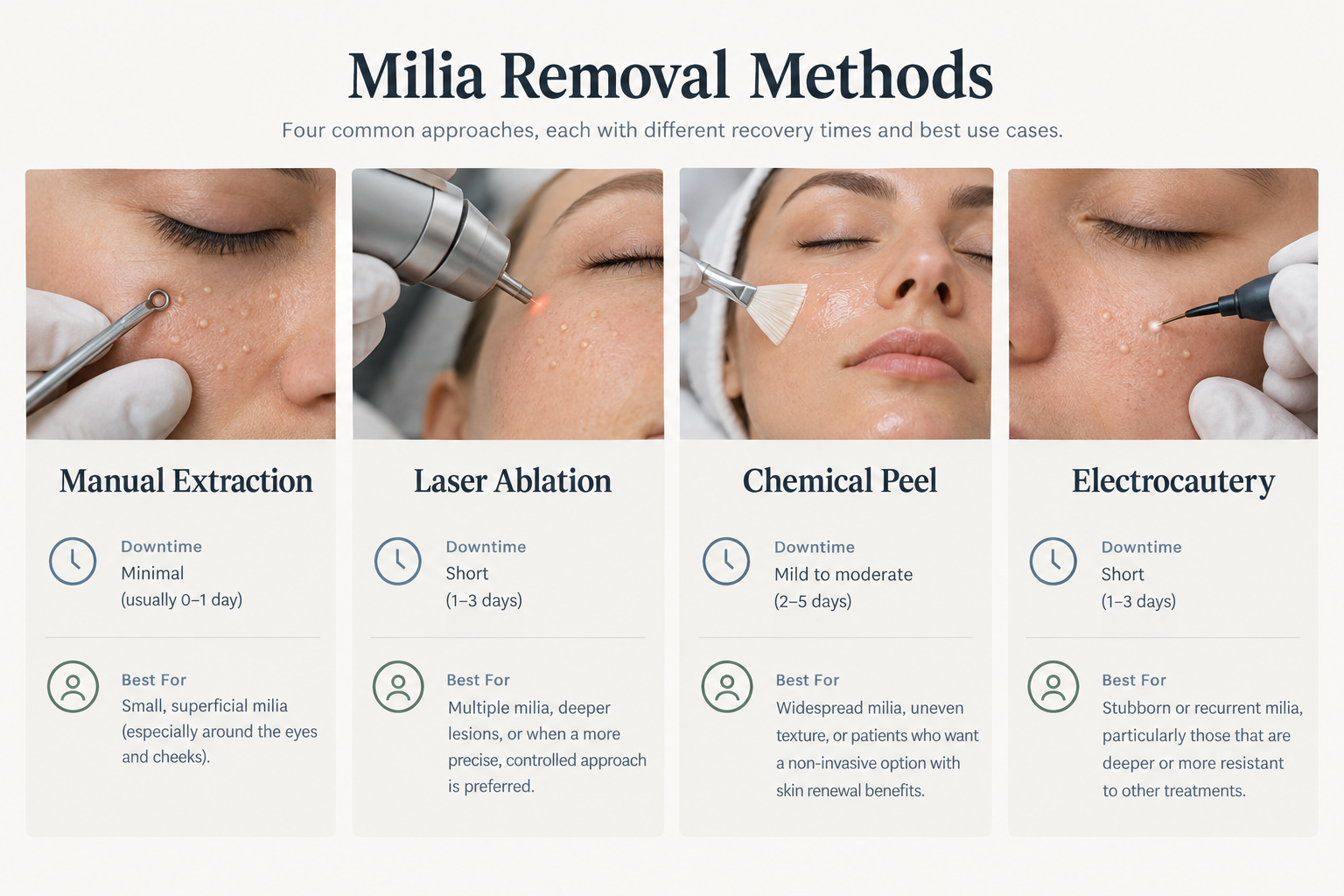
Several evidence-supported approaches are used in clinical practice. The most appropriate method depends on the number of milia, their location, the patient’s skin type, and any relevant medical history. A practitioner should assess the skin before recommending a specific technique.
Manual Extraction
Manual extraction is the most widely used method for milia removal and is considered the standard approach for isolated or small clusters of milia. The practitioner uses a sterile lancet or fine needle to create a tiny opening in the skin overlying the cyst, then gently expresses the keratin contents using a comedone extractor or light manual pressure. The procedure is typically quick — individual milia can often be removed in seconds — and results are immediate. Mild redness or a small mark at the extraction site usually settles within a day or two. When performed correctly by a trained professional, the risk of scarring is low, though it is not entirely absent, particularly in areas of thin or sensitive skin.
Manual extraction is suitable for most skin types and locations, including the periorbital area, though the proximity to the eye requires particular care and experience. It is not appropriate for milia overlying active infection, inflamed skin, or areas with compromised skin integrity.
Laser Ablation
Laser treatment for milia uses focused light energy to ablate (vaporise) the cyst contents and the overlying skin. Carbon dioxide (CO2) lasers and erbium lasers are the types most commonly used for this purpose. Laser ablation may be preferred when milia are numerous, located in areas where manual extraction is technically difficult, or when a patient has a history of poor healing from incision-based techniques. The precision of laser energy allows treatment of very small lesions with minimal disruption to surrounding tissue.
Recovery after laser milia removal typically involves a few days of redness, mild crusting, or sensitivity at the treated sites. The risk of post-inflammatory hyperpigmentation is a meaningful consideration, particularly for patients with Fitzpatrick skin types IV–VI (medium-brown to dark skin), and this should be discussed thoroughly during consultation. Laser treatment generally requires a trained aesthetic practitioner or dermatologist and is not suitable for all patients or all clinical settings.
Electrocautery and Diathermy
Electrocautery uses a fine electrical current to cauterise and destroy the milia. This method can be effective for small numbers of milia and is sometimes used when laser equipment is not available. Like laser ablation, electrocautery carries a small risk of scarring and pigmentation changes, and the treated area may appear slightly red or crusted for several days afterwards. Patient selection and practitioner experience are important factors in achieving a good outcome with this technique.
Chemical Peels
Chemical peels use exfoliating acids — such as glycolic acid, salicylic acid, or trichloroacetic acid (TCA) — to accelerate skin cell turnover and encourage the natural shedding of the outer skin layers. For milia, chemical peels are generally more useful as a preventive or adjunctive treatment rather than a primary removal method. A course of peels may help reduce the formation of new milia by improving desquamation, and they can be a reasonable option for patients with multiple milia across a larger area of skin. However, peels are unlikely to resolve established, firm milia as effectively as direct extraction or laser treatment.
The depth of the peel, the acid concentration, and the number of sessions required will depend on individual skin assessment. Superficial peels carry minimal downtime, while medium-depth peels may involve several days of peeling and redness. Chemical peels are not appropriate for all skin types without careful assessment, and the risk of irritation or pigmentation changes is higher in sensitive or darker skin tones.
Topical Retinoids
Topical retinoids — derivatives of vitamin A such as tretinoin or adapalene — promote skin cell turnover and can help prevent the accumulation of keratin that leads to milia formation. Retinoids are not a rapid removal solution; they work gradually over weeks to months and are better suited to preventing new milia or managing a tendency toward recurrence rather than eliminating existing cysts quickly. They may be recommended as part of a longer-term skincare strategy following professional removal of existing milia.
Retinoids can cause initial skin irritation, dryness, and increased photosensitivity, particularly when first introduced. Prescription-strength retinoids should be used under medical supervision. They are generally not recommended during pregnancy.
What Happens During a Milia Removal Appointment?
A professional milia removal appointment typically begins with a skin assessment to confirm the diagnosis and identify the most appropriate removal method. The practitioner will review relevant medical history, current skincare products, and any medications that could affect skin healing or increase sensitivity.
For manual extraction, the skin is usually cleansed and may be prepared with a mild topical antiseptic. A sterile lancet creates a small opening over each milium, and the contents are carefully expressed. The procedure involves minimal discomfort for most patients — often described as a brief sharp sensation — and no anaesthetic is usually required, though a topical numbing cream may occasionally be offered for sensitive areas or larger treatment sessions. The appointment duration depends on the number of milia being treated; a small cluster may take only ten to fifteen minutes.
After treatment, the practitioner will typically advise on aftercare, which usually includes keeping the area clean, avoiding heavy occlusive products on the treated skin for a short period, and applying sun protection. Makeup is generally best avoided on treated sites for at least twenty-four hours.
Recovery and Downtime
Recovery after manual milia extraction is minimal for most patients. Small red marks or very slight crusting at extraction sites typically resolve within one to three days. Bruising is uncommon but possible, particularly around the delicate periorbital area. Most people can return to normal activities immediately after the appointment.
Laser ablation and electrocautery involve slightly more recovery time. Treated areas may appear pink or red, feel mildly sensitive, and develop small crusts that shed over approximately three to seven days. It is important not to pick at these crusts, as doing so increases the risk of scarring or pigmentation changes. Sun protection is particularly important during the healing period regardless of the removal method used.
Risks and Side Effects of Milia Removal
When performed by a qualified practitioner, milia removal carries a low overall risk profile, but no procedure is entirely without potential side effects. Understanding these before treatment allows for realistic expectations and informed consent.
- Temporary redness and sensitivity: Common after all removal methods; usually resolves within a few days.
- Small marks or crusting: Expected after extraction, laser, or electrocautery; generally heals without lasting marks when aftercare is followed.
- Post-inflammatory hyperpigmentation (PIH): Darkening of the skin at treated sites, more likely in medium to darker skin tones or if the area is exposed to UV light during healing. Usually temporary but can persist for weeks to months.
- Scarring: Uncommon when treatment is performed correctly, but a small risk exists, particularly with laser or electrocautery in susceptible individuals.
- Infection: Rare when sterile technique is used; signs include increasing redness, warmth, swelling, or discharge after the procedure.
- Recurrence: Milia can reform, particularly if the underlying cause — such as heavy skincare products or a tendency toward poor skin cell shedding — is not addressed.
Patients with a history of keloid scarring, active skin infections, eczema, rosacea, or other inflammatory skin conditions should discuss these factors with their practitioner before proceeding, as they may affect method selection or require additional precautions.
Who May Be Suitable for Professional Milia Removal?
Most adults with confirmed milia who find them cosmetically bothersome are reasonable candidates for professional removal. Suitability for a specific method depends on several factors, including skin type, the number and location of milia, medical history, and current medications. A clinical assessment is necessary before treatment.
Patients who may need additional consideration or a modified approach include those with very sensitive skin, a history of abnormal scarring, active inflammatory skin conditions in the treatment area, or those taking medications that affect skin healing or photosensitivity. Laser-based treatments require particular care in patients with darker skin tones due to the higher risk of pigmentation changes, and a practitioner experienced in treating diverse skin types should be consulted.
Milia removal is generally not performed on actively infected or inflamed skin, and treatment is typically deferred during pregnancy when certain methods or topical preparations are involved. A thorough consultation will identify whether any of these factors apply.
Preventing Milia from Returning
Preventing recurrence is an important part of managing milia, particularly for people who develop them repeatedly. Several practical measures may help reduce the likelihood of new milia forming after professional removal.
- Review and simplify your skincare routine, avoiding very heavy, occlusive creams or oils around milia-prone areas such as the eye contour.
- Use non-comedogenic moisturisers and sunscreens, particularly around the periorbital area.
- Incorporate a gentle exfoliant — such as a low-concentration AHA (alpha hydroxy acid) product — into your routine if appropriate for your skin type, to support normal skin cell turnover.
- Consider a topical retinoid as part of a maintenance skincare plan, under practitioner guidance.
- Protect the skin from UV exposure consistently, as sun damage can impair normal desquamation and contribute to milia formation over time.

It is worth noting that even with good skincare habits, some individuals have a natural tendency to form milia and may benefit from periodic professional maintenance rather than expecting a single treatment to be permanently curative.
Alternatives to Professional Milia Removal
For patients who prefer a non-procedural approach or who have very mild milia, some alternatives may be worth discussing with a practitioner, though their effectiveness for established milia is generally more limited than direct removal methods.
Consistent use of topical retinoids over several months may gradually improve skin cell turnover and reduce milia formation, though this approach requires patience and is better suited to prevention than rapid resolution. A course of superficial chemical peels can complement this strategy. For secondary milia caused by a specific trigger — such as a heavy skincare product or a topical medication — simply removing the causative factor may allow some milia to resolve over time, though this is not guaranteed.
Microdermabrasion, which uses mechanical exfoliation to remove the outermost skin layer, is sometimes discussed in the context of milia, but evidence for its effectiveness as a primary milia treatment is limited. It may have a role as part of a broader skin maintenance programme rather than as a standalone milia removal solution.
Frequently Asked Questions
Is milia removal painful?
Manual extraction typically causes only brief, mild discomfort — most patients describe it as a small sharp sensation lasting a second or two per milium. Laser and electrocautery treatments may involve slightly more sensation, and a topical anaesthetic cream can be applied beforehand if needed. The periorbital area can be more sensitive than other sites.
How many sessions will I need?
Existing milia can usually be removed in a single session using manual extraction or laser treatment. However, if new milia continue to form, follow-up appointments may be needed. Preventive treatments such as retinoids or chemical peels are typically used over a longer period to reduce recurrence.
Can milia be removed at home safely?
Home removal is not recommended. Without sterile equipment, proper technique, and adequate lighting, attempting to extract milia at home significantly increases the risk of infection, scarring, and post-inflammatory hyperpigmentation. Professional removal is safer and more effective.
Will milia removal leave a scar?
When performed correctly by a trained practitioner, the risk of permanent scarring is low. Small temporary marks may be visible for a few days after extraction. Laser and electrocautery carry a slightly higher scarring risk than manual extraction, particularly in individuals with a history of keloid or hypertrophic scarring.
Are milia the same as whiteheads?
No. Milia and whiteheads (closed comedones) are different conditions. Whiteheads are a form of acne involving a blocked pore filled with sebum and dead skin cells, and they have a visible pore opening. Milia are keratin-filled cysts with no pore opening and are not related to acne. They require different treatment approaches.
Can children or teenagers have milia removed?
Milia in newborns resolve on their own and do not require treatment. In older children and teenagers, persistent milia can be assessed and removed professionally if appropriate, though the method and suitability should be discussed with a qualified practitioner who has experience treating younger patients.
How soon can I wear makeup after milia removal?
Most practitioners advise avoiding makeup on treated sites for at least twenty-four hours after manual extraction, and longer after laser or electrocautery treatment. This reduces the risk of irritation and infection while the skin heals. Your practitioner will give specific aftercare guidance based on the method used.
Making an Informed Decision About Milia Removal
Milia removal is a well-established, generally low-risk area of aesthetic dermatology when carried out by a qualified and experienced practitioner. For most adults with persistent milia, professional extraction offers a straightforward, effective solution with minimal downtime and immediate visible results. More extensive approaches such as laser ablation or a course of chemical peels may be appropriate for patients with numerous milia, recurrent formation, or specific skin concerns that make manual extraction less suitable.
The most important first step is a proper clinical assessment to confirm that the lesions are indeed milia rather than another skin condition — such as syringomas, sebaceous hyperplasia, or closed comedones — that may require a different treatment approach. A practitioner who takes time to assess your skin, discuss your medical history, and explain the available options clearly is better placed to recommend a method that is both safe and appropriate for your individual circumstances.
If you are considering milia removal, booking a consultation with a qualified aesthetic practitioner or dermatologist allows you to discuss your specific concerns, understand the realistic outcomes for your skin type, and make a decision that is genuinely right for you.


