
Lip Shapes and Enhancement: A Patient Guide to Fuller, More Defined Lips
Lip shapes vary considerably from person to person, and what someone considers an ideal lip appearance is equally personal. Whether the goal is to restore volume lost with age, improve symmetry, define the cupid’s bow, or simply achieve a more balanced proportion between the upper and lower lip, there are now several aesthetic approaches available. This guide explains the most relevant options, how they work, what results may realistically look like, and what to consider before booking a consultation.
Key Takeaways
- Lip shape enhancement most commonly involves hyaluronic acid dermal fillers, which are temporary, adjustable, and reversible with an enzyme called hyaluronidase.
- Results depend heavily on the individual’s natural lip anatomy, skin quality, age-related changes, and the technique used by the practitioner.
- Enhancement does not mean simply adding volume — defining the lip border, improving symmetry, and balancing upper-to-lower lip ratio are equally important goals.
- Risks exist with all injectable treatments and should be discussed thoroughly during a clinical consultation before proceeding.
- Alternatives to fillers include lip flip procedures using botulinum toxin, semi-permanent makeup for border definition, and surgical lip lift for more structural changes.
Understanding Natural Lip Shapes
Before considering any enhancement, it helps to understand the anatomical features that define lip shape. The upper lip contains the philtrum columns — the two vertical ridges running from the base of the nose to the lip — and the cupid’s bow, the double-curved peak at the top of the upper lip. The lower lip is typically fuller and rounder. The vermilion border is the defined edge separating the lip from the surrounding skin, and the oral commissures are the corners where the upper and lower lips meet.
Common natural lip shape categories include thin lips with minimal volume, lips with a flat or poorly defined cupid’s bow, asymmetric lips where one side differs from the other, lips with downturned corners, and lips that have lost definition or volume due to ageing. Each of these characteristics responds differently to enhancement techniques, which is why a thorough assessment of the individual’s lip anatomy is essential before any treatment plan is formed.
Ageing also changes lip shape over time. The lip border tends to flatten, vertical lines may develop above the upper lip, the philtrum elongates, and overall volume decreases. Enhancement approaches for age-related lip changes often focus on restoring structure and definition rather than simply adding bulk.
Dermal Fillers for Lip Shape Enhancement
Hyaluronic acid dermal fillers are the most widely used treatment for lip shape enhancement. Hyaluronic acid is a naturally occurring substance found in the body’s connective tissues, and when formulated as a gel and injected into the lips, it adds volume, improves contour, and can refine specific features such as the cupid’s bow or vermilion border. Different filler products vary in their consistency, cross-linking density, and intended application, meaning that a practitioner may select different formulations depending on whether the goal is subtle definition or more noticeable volume.
Lip filler treatments are typically performed in a clinic setting and take between 30 and 60 minutes, including consultation and aftercare discussion. A topical anaesthetic cream is usually applied beforehand to reduce discomfort, and many lip filler products also contain lidocaine, a local anaesthetic, within the formulation. The injections are placed at specific points along the lip border, within the body of the lip, or at the philtrum columns, depending on the individual’s goals and anatomy.
Results from hyaluronic acid lip fillers are not permanent. Most patients find that effects last between six and twelve months, though this varies depending on the product used, the volume injected, the individual’s metabolism, and lifestyle factors. One significant advantage of hyaluronic acid fillers is that they can be partially or fully dissolved using an enzyme called hyaluronidase if the result is unsatisfactory or if a complication arises.
What Lip Filler Can and Cannot Do
Lip filler can increase overall lip volume, improve the definition of the vermilion border, enhance the projection of the cupid’s bow, add subtle lift to downturned corners, and improve symmetry between the left and right sides of the lip. It can also help smooth fine lines immediately above the upper lip when placed carefully along the border.
However, lip filler cannot fundamentally alter the underlying bone structure or muscle anatomy of the mouth. It cannot replicate the results of a surgical lip lift, which physically shortens the philtrum and raises the upper lip. It also cannot permanently correct significant asymmetry caused by structural differences, and repeated overfilling over time can lead to an unnatural appearance. Realistic expectations are essential, and a skilled practitioner will discuss what is achievable for a specific individual’s anatomy rather than applying a one-size-fits-all approach.
Lip Shape Goals and Treatment Planning
Effective lip enhancement begins with identifying the specific goal. Different lip shape concerns call for different injection techniques and product choices. A practitioner experienced in lip aesthetics will assess the natural lip shape, the ratio of upper to lower lip volume, the position and definition of the cupid’s bow, the length of the philtrum, the condition of the vermilion border, and the overall facial proportions before recommending a treatment approach.
Common enhancement goals include achieving a more defined cupid’s bow, increasing the projection of the upper lip, adding volume to a thin lower lip, improving symmetry, softening downturned corners, and restoring definition to a lip border that has become less distinct with age. Each of these goals may require a different technique, a different filler product, or a combination of approaches.
The concept of the golden ratio — a mathematical proportion often referenced in aesthetic medicine — is sometimes used as a reference point for lip proportions, with the lower lip ideally appearing slightly fuller than the upper. However, individual facial anatomy, ethnicity, and personal preference all influence what looks natural and balanced for a specific person, and rigid adherence to any single proportion formula is not appropriate for every patient.
The Lip Flip: A Botulinum Toxin Alternative
The lip flip is a non-filler technique that uses small amounts of botulinum toxin injected into the orbicularis oris muscle — the circular muscle surrounding the mouth. By relaxing the upper portion of this muscle, the upper lip rolls slightly outward and upward, creating the appearance of a fuller upper lip without adding volume through filler. The lip flip is particularly useful for patients who want a subtle enhancement of the upper lip shape, those who feel their upper lip disappears when they smile, or those who are not yet ready for filler.
The lip flip is a temporary treatment, with effects typically lasting between six and twelve weeks before the botulinum toxin is metabolised. It does not add physical volume to the lip, so it is not suitable for patients whose primary concern is thinness or significant volume loss. Some patients find that the lip flip temporarily affects their ability to form certain sounds or use a straw, which should be discussed before treatment. As with all botulinum toxin treatments, results vary between individuals and depend on the practitioner’s technique and the product used.
Risks and Side Effects of Lip Enhancement
All injectable lip treatments carry risks, and patients should receive a thorough explanation of these before consenting to any procedure. Common and expected side effects following lip filler include swelling, bruising, tenderness, and redness at the injection sites. These effects are usually temporary and resolve within a few days to two weeks, though bruising can occasionally persist longer.
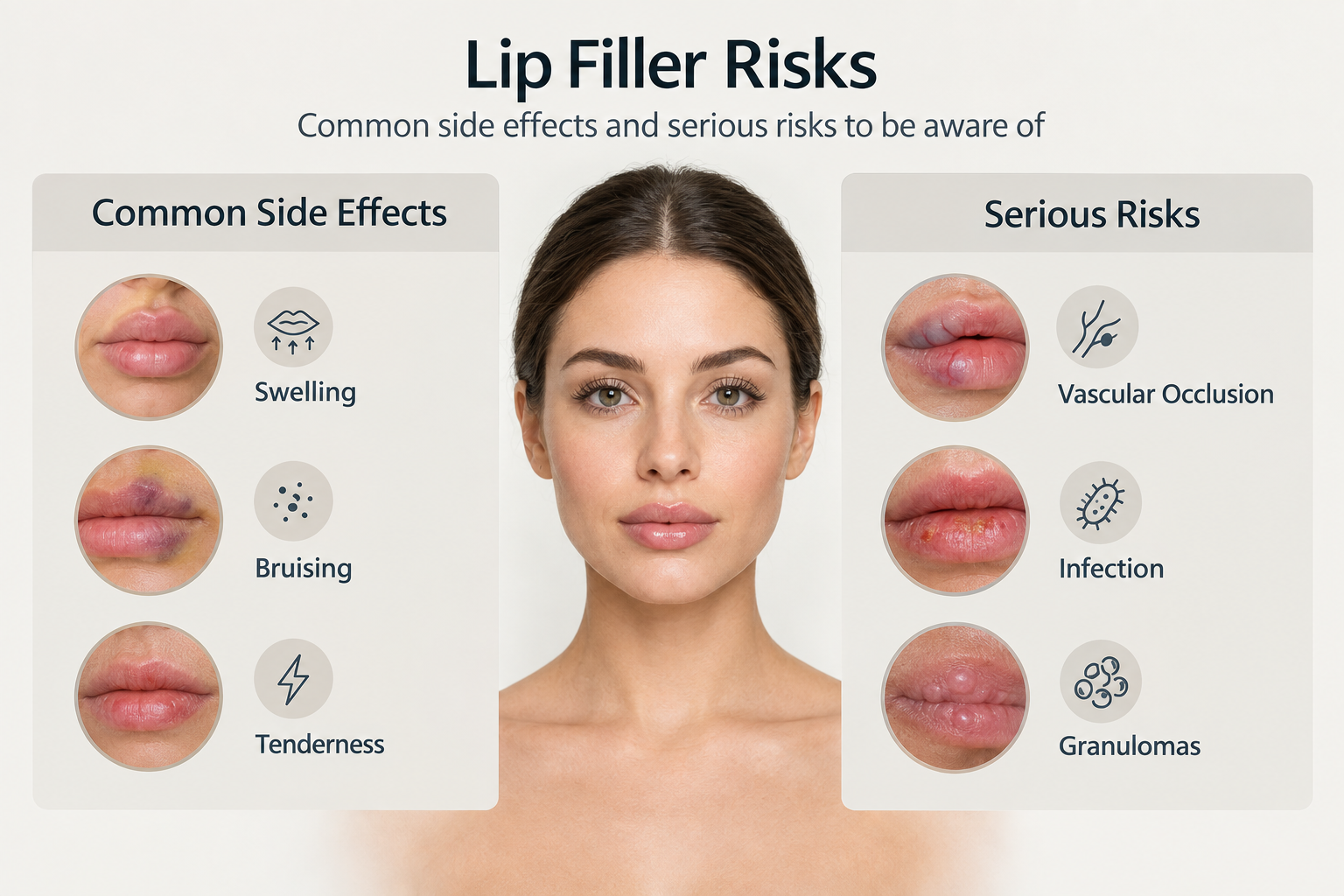
More significant risks associated with lip dermal fillers include asymmetry, lumps or irregularities within the lip tissue, prolonged swelling, infection, and allergic or hypersensitivity reactions. Cold sore reactivation is a recognised risk for patients with a history of herpes simplex virus, and antiviral prophylaxis is sometimes recommended before treatment in these cases.
The most serious risk associated with any facial filler injection is vascular occlusion — a situation in which filler material enters or compresses a blood vessel, potentially restricting blood flow to surrounding tissue. In the lip and perioral area, this is rare but can have serious consequences if not recognised and treated promptly. Choosing a qualified and experienced practitioner who is trained to recognise and manage vascular complications is therefore essential. Patients should also be aware of the signs of a vascular event, which include severe pain, blanching of the skin, or skin colour changes, and should seek immediate medical attention if these occur after treatment.
Delayed complications can include the formation of granulomas — small inflammatory nodules — particularly with certain filler types, and migration of filler material over time, especially with repeated treatments or large volumes. This is one reason why conservative treatment with gradual enhancement over multiple sessions is generally preferred over large-volume injections in a single appointment.
Who May Be Suitable for Lip Enhancement
Lip enhancement with dermal fillers or botulinum toxin may be suitable for adults who are in good general health, have realistic expectations about what treatment can achieve, and have no active infection or inflammation in the treatment area. Patients who are pregnant or breastfeeding are generally advised to postpone elective aesthetic treatments. Those with certain autoimmune conditions, bleeding disorders, or known allergies to filler components should discuss their medical history in detail with a practitioner before proceeding.
Patients with a history of cold sores should inform their practitioner, as lip injections can trigger a recurrence. Those taking blood-thinning medications such as aspirin, warfarin, or certain supplements may experience more pronounced bruising and should discuss this with their practitioner in advance.
Age is also a relevant factor. Younger patients seeking enhancement of naturally thin lips have different needs and expectations compared with older patients seeking to restore age-related volume loss and definition. A thorough consultation should address the individual’s specific concerns, anatomy, and goals rather than applying a standard protocol.
Alternatives to Injectable Lip Enhancement
For patients who prefer non-injectable options or who are seeking more structural changes, several alternatives exist. Surgical lip augmentation using implants or fat transfer can provide longer-lasting volume, though these procedures carry greater risks, longer recovery periods, and higher costs than injectable treatments. A surgical lip lift — which involves removing a small strip of skin beneath the nose to shorten the philtrum and raise the upper lip — can create a more permanent change in lip shape and is particularly relevant for patients with a long philtrum or significant age-related lip descent.
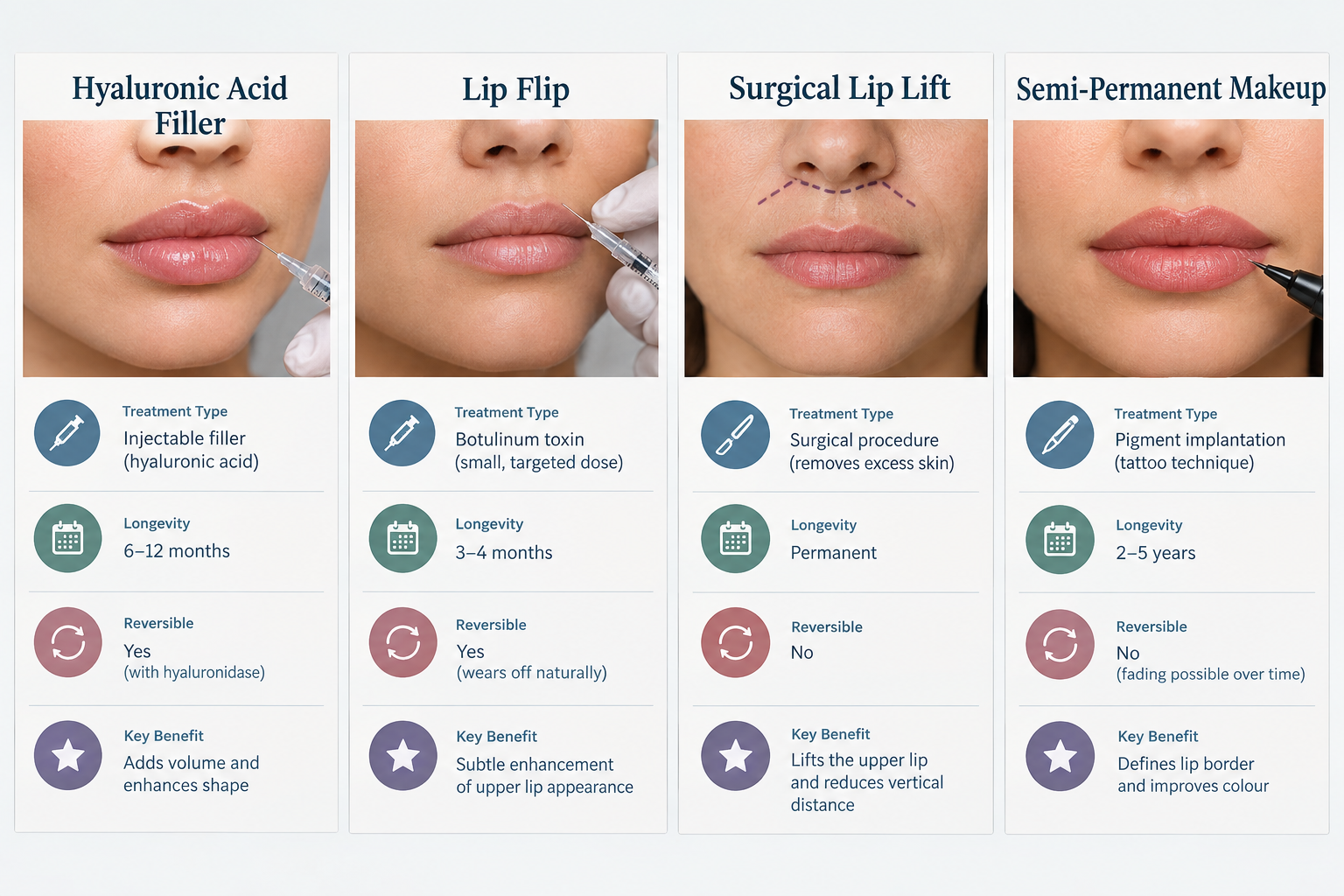
Semi-permanent makeup, also known as lip blush or lip liner tattooing, can improve the appearance of the lip border and add the impression of definition and colour without altering the physical structure of the lip. This approach does not add volume but can be useful for patients whose primary concern is a poorly defined or uneven lip border.
Topical lip-plumping products containing ingredients such as hyaluronic acid, peptides, or mild irritants like cinnamon or capsaicin are widely available but produce only temporary and modest effects. These products are not a substitute for clinical treatment but may be suitable for patients seeking very subtle, non-invasive improvement.
What to Expect Before, During, and After Treatment
Before a lip enhancement appointment, a reputable clinic will conduct a consultation to assess the patient’s medical history, discuss goals and expectations, explain the treatment options and their limitations, and obtain informed consent. Photographs are often taken for reference and comparison. Patients are usually advised to avoid alcohol, aspirin, and certain supplements in the days before treatment to reduce the risk of bruising.
During the appointment, a topical anaesthetic cream is applied to the lips and surrounding area and left for approximately 15 to 30 minutes before the injections begin. The practitioner will then carefully place the filler or botulinum toxin according to the agreed treatment plan. The injection process itself typically takes 15 to 30 minutes. Mild discomfort is common but is usually manageable with the topical anaesthetic and the lidocaine present in most filler formulations.
Immediately after treatment, the lips will appear swollen and may feel tender. This is a normal response and does not reflect the final result. Swelling typically peaks within the first 24 to 48 hours and then gradually subsides over the following week to ten days. Bruising, if it occurs, usually resolves within one to two weeks. Patients are generally advised to avoid strenuous exercise, alcohol, and excessive heat — such as saunas or hot baths — for 24 to 48 hours after treatment. Applying ice gently to the lips can help manage swelling in the immediate post-treatment period.
The final result of lip filler becomes visible once the swelling has fully resolved, which may take up to two weeks. A follow-up appointment is often recommended at this point to assess the result and determine whether any minor adjustments are needed.
Frequently Asked Questions
How long do lip fillers last?
Most hyaluronic acid lip fillers last between six and twelve months, though individual results vary. Factors that influence longevity include the specific product used, the volume injected, the individual’s metabolism, and lifestyle factors such as sun exposure and smoking. Some patients find that results last longer after repeated treatments as the filler integrates with surrounding tissue.
Can lip filler correct an asymmetric lip shape?
Lip filler can improve the appearance of mild to moderate lip asymmetry by adding volume or definition to the less prominent side. However, significant structural asymmetry caused by differences in underlying bone or muscle anatomy may not be fully correctable with filler alone, and a practitioner should discuss realistic expectations during the consultation.
Will lip filler make my lips look unnatural?
When performed by an experienced practitioner using an appropriate volume for the individual’s anatomy, lip filler can produce natural-looking results. Unnatural appearances are most commonly associated with excessive volume, inappropriate product selection, or poor injection technique. Starting with a conservative amount and building gradually over multiple sessions is generally considered the safer approach.
Is the lip flip a good alternative to lip filler?
The lip flip using botulinum toxin is a useful option for patients who want a subtle enhancement of the upper lip shape without adding physical volume. It is not suitable for patients whose primary concern is significant thinness or volume loss. The effects are temporary, lasting approximately six to twelve weeks, and some patients experience temporary difficulty with certain mouth movements.
Can lip enhancement be reversed?
Hyaluronic acid lip fillers can be dissolved using an enzyme called hyaluronidase, which breaks down the filler material relatively quickly. This makes hyaluronic acid fillers a reversible option, which is one reason they are preferred over permanent or semi-permanent filler materials. Botulinum toxin effects from a lip flip cannot be reversed but will wear off naturally within weeks.
How do I choose a practitioner for lip enhancement?
Choosing a qualified and experienced practitioner is one of the most important decisions in the lip enhancement process. Look for a practitioner with recognised medical or dental qualifications, specific training in facial aesthetics and injectable treatments, and a clear approach to consultation, consent, and complication management. Reviewing before-and-after photographs and reading verified patient reviews can also be helpful, though individual results will always vary.
Is Lip Shape Enhancement the Right Choice for You?
Lip shape enhancement can offer meaningful improvements in lip definition, symmetry, and volume when approached with realistic expectations and carried out by a qualified practitioner. The most commonly used treatments — hyaluronic acid dermal fillers and botulinum toxin lip flip procedures — are temporary, which means results require maintenance but also that any unsatisfactory outcome can be addressed. The reversibility of hyaluronic acid fillers in particular makes them a relatively flexible option for patients who are uncertain about committing to a permanent change.
The most important factors in achieving a satisfying result are a thorough pre-treatment consultation, honest communication about goals and concerns, a conservative and gradual approach to enhancement, and the selection of a practitioner with appropriate qualifications and experience in facial anatomy and injectable techniques. Patients who are considering lip enhancement for the first time are encouraged to book a consultation with a qualified aesthetic practitioner to discuss their individual anatomy, realistic outcomes, and the full range of options available to them before making a decision.


