
Salmon Sperm Injections: PDRN Skin Regeneration Explained
Salmon sperm injections — more accurately described as PDRN (polydeoxyribonucleotide) therapy — have attracted growing interest as a skin regeneration treatment. The name is striking, but the science behind it is more straightforward than it sounds: highly purified DNA fragments derived from salmon sperm are injected into the skin to stimulate tissue repair, collagen production, and overall skin quality. This article explains how PDRN therapy works, what it may realistically achieve, who might benefit, and what the current evidence actually supports.
Key Takeaways
- PDRN (polydeoxyribonucleotide) is a purified DNA extract derived from salmon sperm that is used in injectable skin treatments to support tissue regeneration.
- The treatment may help improve skin hydration, texture, fine lines, and overall skin quality, though individual results vary and multiple sessions are typically required.
- Clinical evidence is growing but still developing; most studies are relatively small, and long-term data remain limited.
- PDRN injections are generally considered low-risk when administered by a qualified practitioner, but side effects and contraindications exist and should be discussed at consultation.
- PDRN therapy is often used alongside other aesthetic treatments rather than as a standalone solution for significant skin concerns.
What Are Salmon Sperm Injections?
The term “salmon sperm injections” refers to aesthetic treatments that use polydeoxyribonucleotide, a biological compound extracted and purified from the sperm cells of Pacific salmon (typically Oncorhynchus mykiss or related species). Despite the unusual name, the active ingredient undergoes extensive purification processes to remove proteins and other biological material, leaving only short chains of DNA nucleotides. These nucleotide fragments are the functional component of the treatment.
PDRN has been used in wound healing and tissue repair medicine for several decades, particularly in South Korea and parts of Europe, before gaining wider recognition in aesthetic medicine. In a cosmetic context, PDRN is injected into the dermis — the deeper layer of the skin — where it is thought to interact with specific cellular receptors to promote regeneration. The treatment is sometimes marketed under brand names such as Rejuran, Rejuran Healer, or PDRN-based polynucleotide products, though formulations and concentrations can differ between products.
It is worth distinguishing PDRN from the broader category of polynucleotide (PN) treatments. Both involve nucleotide-based compounds, but PDRN specifically refers to shorter DNA fragment chains, while some polynucleotide products use longer chains. The two terms are sometimes used interchangeably in marketing, which can cause confusion. A qualified practitioner can clarify which specific product is being used and what the available evidence supports for that formulation.
How Does PDRN Work in the Skin?
PDRN exerts its effects primarily through interaction with adenosine A2A receptors on skin cells. When PDRN binds to these receptors, it triggers a signalling cascade that promotes cell growth, tissue repair, and the production of extracellular matrix components including collagen and elastin. This mechanism is sometimes described as a “salvage pathway” — the skin cells essentially recycle the nucleotide building blocks from PDRN to support their own repair and renewal processes.
In addition to stimulating collagen synthesis, PDRN has demonstrated anti-inflammatory properties in laboratory and clinical research. Chronic low-grade inflammation in the skin is associated with accelerated ageing, impaired barrier function, and reduced skin quality. By modulating inflammatory pathways, PDRN may help create a more favourable environment for skin regeneration. Some research also suggests that PDRN can promote angiogenesis — the formation of new small blood vessels — which may improve nutrient and oxygen delivery to skin tissue.
The result of these combined mechanisms, when they occur effectively, is gradual improvement in skin hydration, elasticity, texture, and overall appearance. Because the effects depend on biological processes that take time, visible changes typically develop over several weeks rather than immediately after treatment. This distinguishes PDRN therapy from treatments that produce more immediate volumising or smoothing effects, such as dermal fillers or botulinum toxin injections.
What Can PDRN Skin Regeneration Treat?
PDRN injections are used for a range of skin quality concerns rather than for structural changes such as volume loss or deep static wrinkles. The treatment is most commonly considered for the following:
- Fine lines and early wrinkles: PDRN may help soften superficial lines by improving skin hydration and stimulating collagen remodelling, though it is not a replacement for treatments targeting deeper wrinkles.
- Skin texture and tone: Patients with dull, uneven, or rough skin texture may notice gradual improvement in overall skin quality following a course of treatment.
- Skin hydration and radiance: PDRN’s ability to support the extracellular matrix may contribute to improved moisture retention and a healthier skin appearance.
- Acne scarring: Some clinical studies have examined PDRN for atrophic acne scars, with results suggesting potential benefit, though evidence remains limited and results vary considerably.
- Under-eye skin quality: The periorbital area — around the eyes — is a common treatment site. PDRN may help improve the thin, delicate skin in this region, potentially reducing the appearance of fine lines and crepiness. However, it is important to understand that dark circles under the eyes can result from different causes including pigmentation, vascular visibility, hollowness, or volume loss, and PDRN addresses skin quality rather than all of these factors.
- Post-procedure skin recovery: PDRN has been used to support skin healing after laser treatments, chemical peels, or other procedures that create controlled skin injury.
- Sun-damaged skin: Photoaged skin characterised by loss of elasticity, uneven pigmentation, and reduced collagen density may respond to PDRN therapy, though the degree of improvement depends on the extent of damage and individual response.
PDRN therapy is not a treatment for significant volume loss, deep structural changes, or conditions requiring medical dermatological management. A thorough consultation is necessary to determine whether PDRN is appropriate for a specific concern.
What Does the Evidence Say?
The clinical evidence base for PDRN in aesthetic medicine is growing but should be interpreted with appropriate caution. A number of peer-reviewed studies — many conducted in South Korea, where PDRN-based products have been used for longer — have reported improvements in skin hydration, elasticity, and collagen density following PDRN injections. Some studies have also examined PDRN for wound healing, diabetic ulcers, and post-surgical tissue repair, where the evidence is generally more established.
In aesthetic applications, most published studies involve relatively small patient numbers, short follow-up periods, and varying treatment protocols. This makes it difficult to draw firm conclusions about optimal dosing, treatment frequency, or long-term durability of results. Systematic reviews and large randomised controlled trials specifically examining PDRN for cosmetic skin regeneration remain limited at the time of writing. The evidence is therefore best described as promising but still developing, and practitioners and patients should maintain realistic expectations accordingly.
It is also worth noting that different PDRN and polynucleotide products may have different concentrations, molecular weights, and formulations, which can affect both efficacy and the applicability of existing research to a specific product being used in clinic.
What Happens During a PDRN Treatment Appointment?
A PDRN treatment session typically begins with a consultation or pre-treatment assessment to confirm suitability, discuss goals, and review medical history. The skin is cleansed, and a topical anaesthetic cream may be applied to the treatment area to reduce discomfort, particularly for sensitive areas such as around the eyes.
PDRN is administered using fine needles, often via a technique called mesotherapy — a series of small, shallow injections delivered across the treatment area. Some practitioners use a cannula or a specialised injection device depending on the area being treated and the product being used. The number of injection points and the depth of delivery will vary depending on the treatment area and the practitioner’s technique.
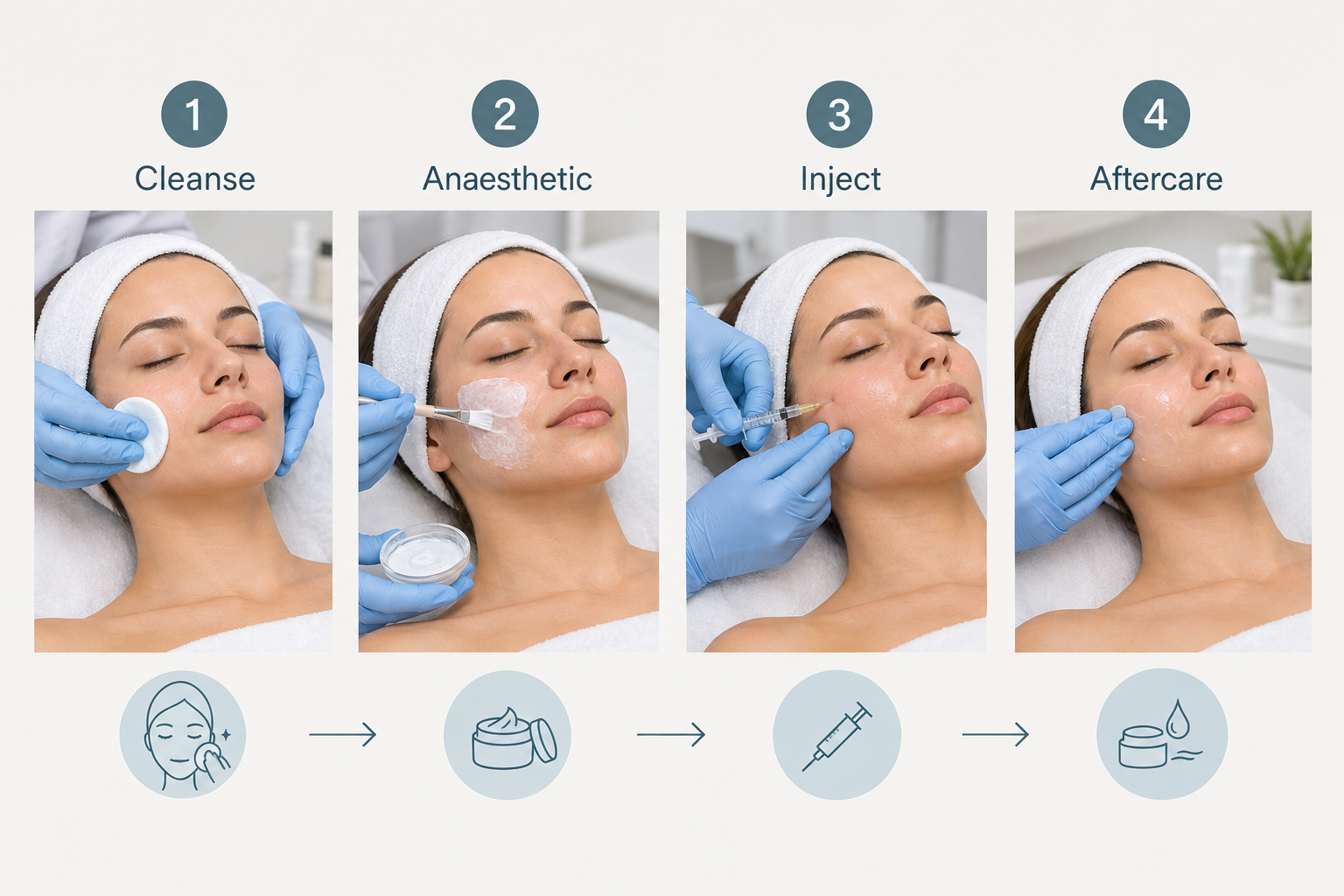
A typical session lasts between 20 and 45 minutes depending on the size of the treatment area. Most patients describe the sensation as mild to moderate discomfort — a series of small pinpricks — which is generally well tolerated, particularly with topical anaesthetic. The face, neck, décolletage, and hands are among the most commonly treated areas.
Recovery and Downtime
PDRN injections are generally associated with minimal downtime compared to more invasive skin treatments. Immediately after the procedure, it is common to experience redness, mild swelling, and small raised bumps at the injection sites. These reactions typically resolve within a few hours to a day or two. Bruising is possible, particularly in delicate areas such as around the eyes, and may take several days to fade.
Most patients are able to return to normal daily activities on the same day or the following day. Strenuous exercise, excessive heat exposure (such as saunas or hot baths), and direct sun exposure are usually advised against for 24 to 48 hours after treatment. Makeup application may be recommended to be avoided for a short period to reduce the risk of introducing bacteria to the injection sites.
Aftercare instructions will vary between practitioners and products, so it is important to follow the specific guidance provided by the treating clinician.
When Do Results Appear and How Long Do They Last?
Because PDRN works by stimulating biological processes rather than providing an immediate physical effect, results develop gradually. Some patients notice an initial improvement in skin hydration and radiance within the first one to two weeks. More meaningful changes in skin texture, fine lines, and overall skin quality typically become more apparent after a course of treatments, often over six to twelve weeks.
The longevity of results from PDRN therapy is not definitively established and varies between individuals. Factors including age, skin condition, lifestyle, sun exposure, and the number of sessions completed all influence how long improvements may last. Maintenance treatments are generally recommended — commonly every three to six months — to sustain results, though the optimal maintenance schedule should be discussed with a qualified practitioner based on individual response.
It is important to have realistic expectations: PDRN therapy supports gradual skin regeneration and quality improvement rather than producing dramatic or immediate transformation.
How Many Sessions Are Typically Needed?
A course of PDRN treatments rather than a single session is typically recommended to achieve meaningful results. Most treatment protocols suggest an initial course of three to four sessions spaced two to four weeks apart, though this varies depending on the product used, the concern being addressed, and the individual’s skin condition and response.
Patients with more significant skin concerns, such as moderate acne scarring or advanced photoageing, may require more sessions before noticing satisfactory improvement. Conversely, younger patients seeking preventative skin quality maintenance may respond well to fewer treatments. A qualified practitioner should outline a realistic treatment plan at consultation based on an individual assessment.
Risks and Side Effects
PDRN injections are generally considered to have a favourable safety profile when administered by a trained and qualified practitioner using an appropriately regulated product. However, as with any injectable treatment, risks and side effects exist and should be understood before proceeding.
Common side effects include temporary redness, swelling, bruising, and tenderness at injection sites. These are typically mild and resolve within a few days.
Less common but possible risks include:
- Infection at injection sites, particularly if aftercare instructions are not followed
- Allergic or hypersensitivity reactions — patients with known fish or seafood allergies should discuss this risk carefully with their practitioner before treatment, as PDRN is derived from salmon
- Nodule formation or uneven distribution of product
- Prolonged bruising or swelling in sensitive areas
- Skin discolouration, though this is uncommon
Serious complications are rare but possible with any injectable procedure, including vascular injury. Choosing a qualified, experienced practitioner working in an appropriate clinical environment significantly reduces procedural risk.
The regulatory status of specific PDRN products varies by country. Not all products available on the market will have the same level of regulatory oversight, and patients should ask their practitioner about the specific product being used and its approval status in the relevant jurisdiction.
Who May Be Suitable for PDRN Therapy?
PDRN skin regeneration treatment may be worth discussing with a qualified practitioner for adults who are experiencing gradual changes in skin quality such as loss of hydration, early fine lines, dullness, or mild textural irregularities. It may also be considered for those seeking to support skin recovery after other aesthetic procedures or to address mild acne scarring.
Suitability depends on individual factors including overall health, skin condition, treatment goals, and medical history. A thorough consultation is essential before proceeding.
Who May Not Be Suitable
PDRN therapy may not be appropriate for everyone. Patients should inform their practitioner of any relevant medical history, including:
- Known allergy to fish or seafood, given the salmon-derived origin of PDRN
- Active skin infection, inflammation, or open wounds in the treatment area
- Pregnancy or breastfeeding — safety data in these groups is insufficient, and treatment is generally not recommended
- Autoimmune conditions or immunosuppressive therapy, which may affect healing and response
- Blood clotting disorders or use of anticoagulant medications, which may increase bruising risk
- History of keloid scarring or abnormal wound healing
- Active cancer or a history of cancer — PDRN’s cell-proliferating properties mean this requires careful clinical consideration
This list is not exhaustive. A qualified practitioner will conduct a full assessment to determine individual suitability.
Alternatives to PDRN Injections
Several other treatments address skin quality, regeneration, and rejuvenation, and may be considered as alternatives or complements to PDRN therapy depending on the specific concern and patient goals.
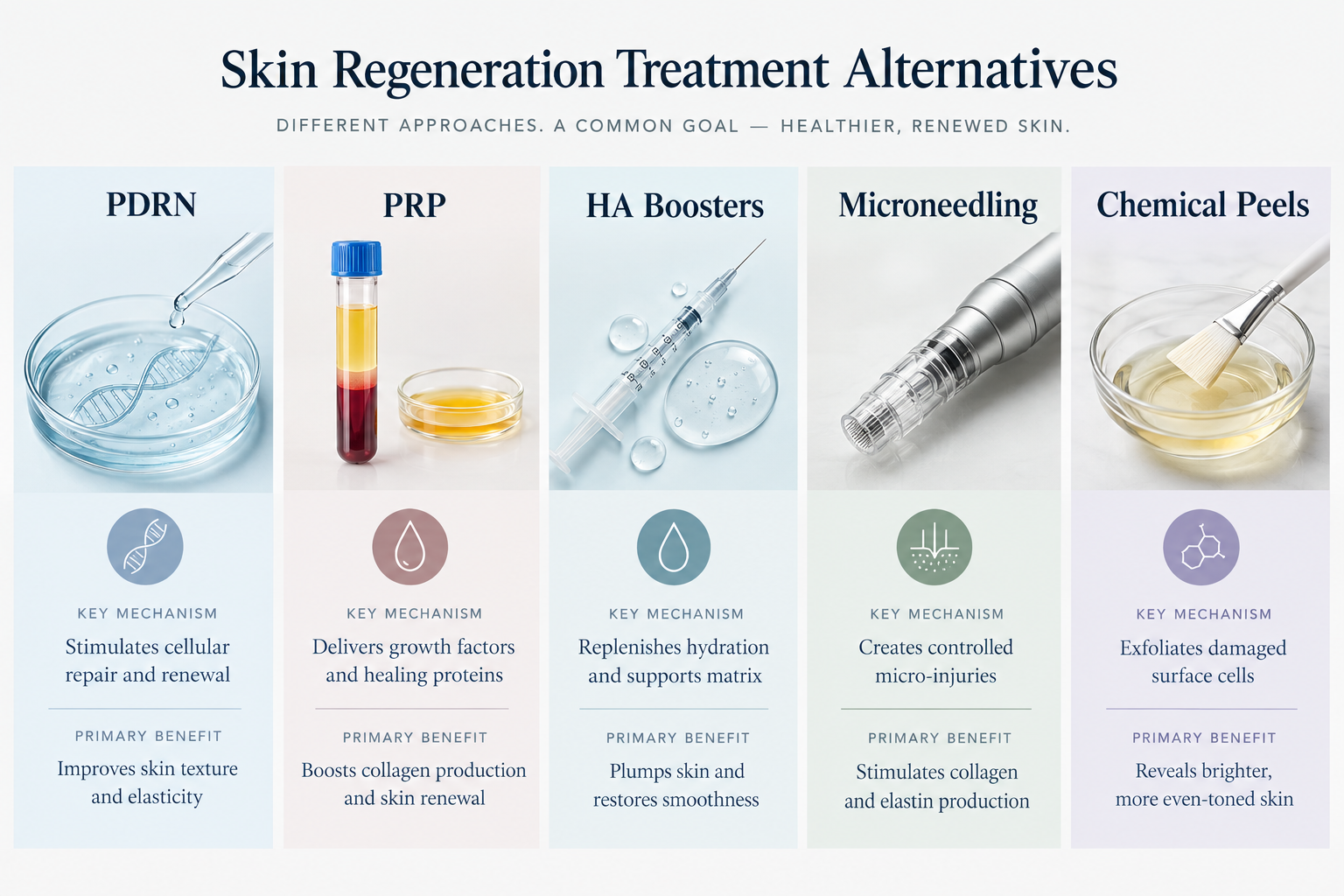
- Hyaluronic acid skin boosters (such as Profhilo or Juvederm Volite): These injectable treatments deliver hyaluronic acid into the skin to improve hydration and stimulate collagen. They work through a different mechanism to PDRN and may be more immediately effective for hydration, though they do not provide the same nucleotide-based regenerative stimulus.
- Platelet-rich plasma (PRP) therapy: PRP uses the patient’s own blood, processed to concentrate growth factors, which are then injected into the skin. Like PDRN, PRP aims to stimulate tissue regeneration, and the two treatments are sometimes combined. Evidence for PRP in aesthetic medicine is also still developing.
- Microneedling: This procedure uses fine needles to create controlled micro-injuries in the skin, stimulating collagen production. It can be performed alone or combined with topical serums or PRP. Microneedling may be suitable for similar concerns to PDRN, including skin texture and mild scarring.
- Radiofrequency skin tightening: Devices that deliver radiofrequency energy to the deeper layers of the skin can stimulate collagen remodelling and improve skin laxity. This may be more appropriate for patients with skin looseness as a primary concern.
- Chemical peels: Superficial to medium-depth chemical peels can improve skin texture, tone, and mild pigmentation. They work by removing the outer layers of the skin to encourage renewal, and may be suitable for some of the same concerns as PDRN.
- Laser skin resurfacing: Fractional laser treatments can address skin texture, fine lines, and pigmentation with varying degrees of downtime depending on the intensity of treatment.
The most appropriate treatment or combination of treatments depends on the individual’s skin concerns, goals, skin type, and medical history. A qualified aesthetic practitioner can help determine which approach is most likely to be beneficial.
Frequently Asked Questions
Is PDRN the same as polynucleotides?
PDRN (polydeoxyribonucleotide) and polynucleotides (PN) are related but not identical. Both are nucleotide-based compounds derived from salmon DNA, but they differ in the length of the DNA chains used. PDRN typically refers to shorter fragments, while some polynucleotide products use longer chains. The terms are sometimes used interchangeably in marketing, which can be misleading. Ask your practitioner specifically which product is being used and what evidence supports it.
Is it safe to have injections derived from salmon sperm?
PDRN undergoes extensive purification to remove proteins and other biological material before use in medical or aesthetic applications. The purified nucleotide fragments are the active component, not the original biological material. For most people, the treatment is well tolerated. However, individuals with known fish or seafood allergies should discuss this with their practitioner before treatment, as a precautionary measure.
How soon will I see results from PDRN treatment?
Results from PDRN therapy develop gradually because the treatment works by stimulating biological regeneration processes. Some improvement in skin hydration and radiance may be noticeable within one to two weeks of the first session, but more meaningful changes in texture and skin quality typically become apparent after completing a course of treatments over six to twelve weeks. Individual response varies.
Can PDRN injections be combined with other treatments?
PDRN is frequently used alongside other aesthetic treatments. It is sometimes combined with PRP, hyaluronic acid skin boosters, or performed as part of a broader skin rejuvenation programme. Whether combination treatment is appropriate depends on individual circumstances and should be discussed with a qualified practitioner who can assess your skin and goals.
How many sessions of PDRN do I need?
Most treatment protocols recommend an initial course of three to four sessions spaced two to four weeks apart, followed by maintenance treatments every three to six months. The exact number of sessions needed depends on the concern being treated, the product used, and individual response. Your practitioner should outline a realistic plan at consultation.
Does PDRN treatment hurt?
Most patients describe PDRN injections as mildly to moderately uncomfortable — similar to a series of small pinpricks. Topical anaesthetic cream is typically applied before treatment to reduce discomfort, and most people find the procedure well tolerated. Sensitivity varies between individuals and treatment areas, with delicate areas such as around the eyes generally being more sensitive.
Is PDRN Skin Regeneration Worth Considering?
PDRN therapy represents a biologically grounded approach to skin regeneration that has attracted genuine clinical interest, particularly for improving skin quality, hydration, and texture over time. The mechanism — stimulating cellular repair pathways through adenosine receptor activation — is scientifically plausible, and a growing body of clinical research supports its use in aesthetic medicine, even if the evidence base is not yet as robust as that for more established treatments.
For patients whose primary concern is gradual improvement in skin quality rather than immediate structural change, PDRN injections may be a reasonable option to explore. The treatment is generally well tolerated, requires minimal downtime, and can be integrated into a broader skin health programme. However, it is not a solution for significant volume loss, deep wrinkles, or structural ageing changes, and results require patience and typically a course of sessions rather than a single appointment.
The most important step before proceeding is a thorough consultation with a qualified and experienced aesthetic practitioner who can assess your skin, discuss your goals honestly, review your medical history, and recommend whether PDRN therapy — alone or in combination with other treatments — is likely to be appropriate and beneficial for your specific situation.


