
Anti-Wrinkle Injections: What They Are, How They Work, and What to Expect
Anti-wrinkle injections are one of the most widely performed non-surgical cosmetic treatments in the world, used to temporarily reduce the appearance of dynamic facial lines caused by repeated muscle movement. If you are considering this treatment for the first time, or want a clearer picture of what it actually involves, this guide covers the mechanism, treatment areas, realistic outcomes, risks, and the key questions worth discussing with a qualified practitioner before you proceed.
Key Takeaways
- Anti-wrinkle injections use a purified form of botulinum toxin to temporarily relax specific facial muscles, reducing the appearance of expression lines such as frown lines, forehead lines, and crow’s feet.
- Results are temporary, typically lasting between three and six months depending on the individual, the area treated, and the dose used.
- The treatment is generally well tolerated, but carries real risks including bruising, asymmetry, and in rare cases unwanted muscle weakness in adjacent areas.
- Suitability depends on individual anatomy, medical history, and treatment goals; a thorough consultation with a qualified practitioner is essential before treatment.
- Anti-wrinkle injections address dynamic wrinkles caused by muscle movement; they do not treat static lines, volume loss, or skin laxity, which may require different approaches.
What Are Anti-Wrinkle Injections?
Anti-wrinkle injections contain botulinum toxin type A, a purified protein derived from the bacterium Clostridium botulinum. When injected in small, controlled amounts into targeted facial muscles, botulinum toxin temporarily blocks the nerve signals that cause those muscles to contract. The result is a reduction in the repetitive movements that create expression lines over time. Several licensed brands of botulinum toxin type A are used in aesthetic practice, including Botox (onabotulinumtoxinA), Dysport (abobotulinumtoxinA), and Azzalure, among others. These products differ in their formulation, unit measurements, and diffusion characteristics, which is why dosing is not directly interchangeable between brands and should always be determined by a trained practitioner.
It is important to distinguish between the active ingredient and the brand name. “Botox” is a registered trademark for one specific product, while “anti-wrinkle injections” is the broader category term covering all licensed botulinum toxin type A treatments used for cosmetic purposes. The underlying mechanism is the same across products, but clinical behaviour can vary, and practitioner experience with a specific product matters.
How Do Anti-Wrinkle Injections Work?
Botulinum toxin type A works by inhibiting the release of acetylcholine at the neuromuscular junction. Acetylcholine is the chemical messenger that triggers muscle contraction. When its release is blocked at the injection site, the targeted muscle is temporarily unable to contract with its usual force. This relaxation reduces the skin folding and creasing that occurs with repeated facial expressions, which is the primary cause of dynamic wrinkles.
The effect is localised to the injected muscle or muscle group. Surrounding tissues are not directly affected when the injection is placed accurately. Over time, as the botulinum toxin is gradually broken down by the body, nerve signalling recovers and muscle activity returns to its previous level. This is why the results are temporary rather than permanent. The treatment does not alter the skin itself, remove tissue, or change underlying facial structure.
Dynamic wrinkles — lines that appear or deepen during facial movement such as smiling, squinting, or frowning — respond most predictably to botulinum toxin treatment. Static wrinkles, which are visible even when the face is at rest, may be less responsive, particularly if they are deeply etched into the skin. In some cases, a combination approach involving dermal fillers or skin resurfacing treatments may be more appropriate for static lines.
Common Treatment Areas
Anti-wrinkle injections are most commonly used on the upper face, where dynamic muscle activity is greatest and the evidence base for botulinum toxin treatment is most established. The three areas with the longest history of clinical use and regulatory approval in many countries are the glabellar lines (the vertical frown lines between the eyebrows), horizontal forehead lines, and lateral canthal lines commonly known as crow’s feet.
Beyond these core areas, practitioners with appropriate training may also use botulinum toxin for a range of other facial and non-facial concerns, including:
- Brow lifting: Small doses placed around the brow can influence brow position and shape by adjusting the balance between muscles that elevate and depress the brow.
- Bunny lines: Diagonal lines that appear on the nose when smiling or scrunching.
- Lip lines: Fine vertical lines around the mouth, sometimes called smoker’s lines, though they occur in non-smokers too.
- Chin dimpling: Irregular texture on the chin caused by the mentalis muscle.
- Neck bands: Prominent vertical platysmal bands in the neck, sometimes addressed with what is referred to as a Nefertiti lift.
- Jaw slimming: Injections into the masseter muscle can reduce its bulk over time, softening a wide or square jawline.
- Hyperhidrosis: Botulinum toxin is also used medically to reduce excessive sweating in areas such as the underarms, palms, and soles.
- Teeth grinding (bruxism): Masseter injections may help reduce the force of jaw clenching.
The suitability of botulinum toxin for any area beyond the most established indications should be discussed carefully with a practitioner who can assess your individual anatomy and explain the evidence relevant to that specific use.
What Happens During the Appointment?
A typical anti-wrinkle injection appointment begins with a consultation or review of your medical history, treatment goals, and any previous cosmetic procedures. The practitioner will assess your facial anatomy, muscle activity, and skin quality, and discuss realistic outcomes for your specific concerns. Photographs are often taken before treatment for reference.
The injections themselves are administered using a very fine needle. Most patients describe the sensation as a brief, mild sting at each injection point. A topical anaesthetic cream is not always necessary for this treatment, though it can be applied beforehand if you prefer. The number of injection points varies depending on the area being treated and the practitioner’s technique. A full upper-face treatment typically takes between ten and twenty minutes.
After the injections, you will usually be advised to remain upright for a few hours, avoid vigorous exercise for the rest of the day, and refrain from rubbing or massaging the treated areas. These aftercare instructions are intended to reduce the small risk of the product migrating to unintended muscle groups. Your practitioner should provide written aftercare guidance.
When Do Results Appear and How Long Do They Last?
Anti-wrinkle injection results do not appear immediately. Most patients begin to notice a reduction in muscle movement within two to four days of treatment, with the full effect typically visible at around ten to fourteen days. A review appointment at two weeks is common practice, allowing the practitioner to assess the outcome and address any asymmetry or areas where the response was less than expected.
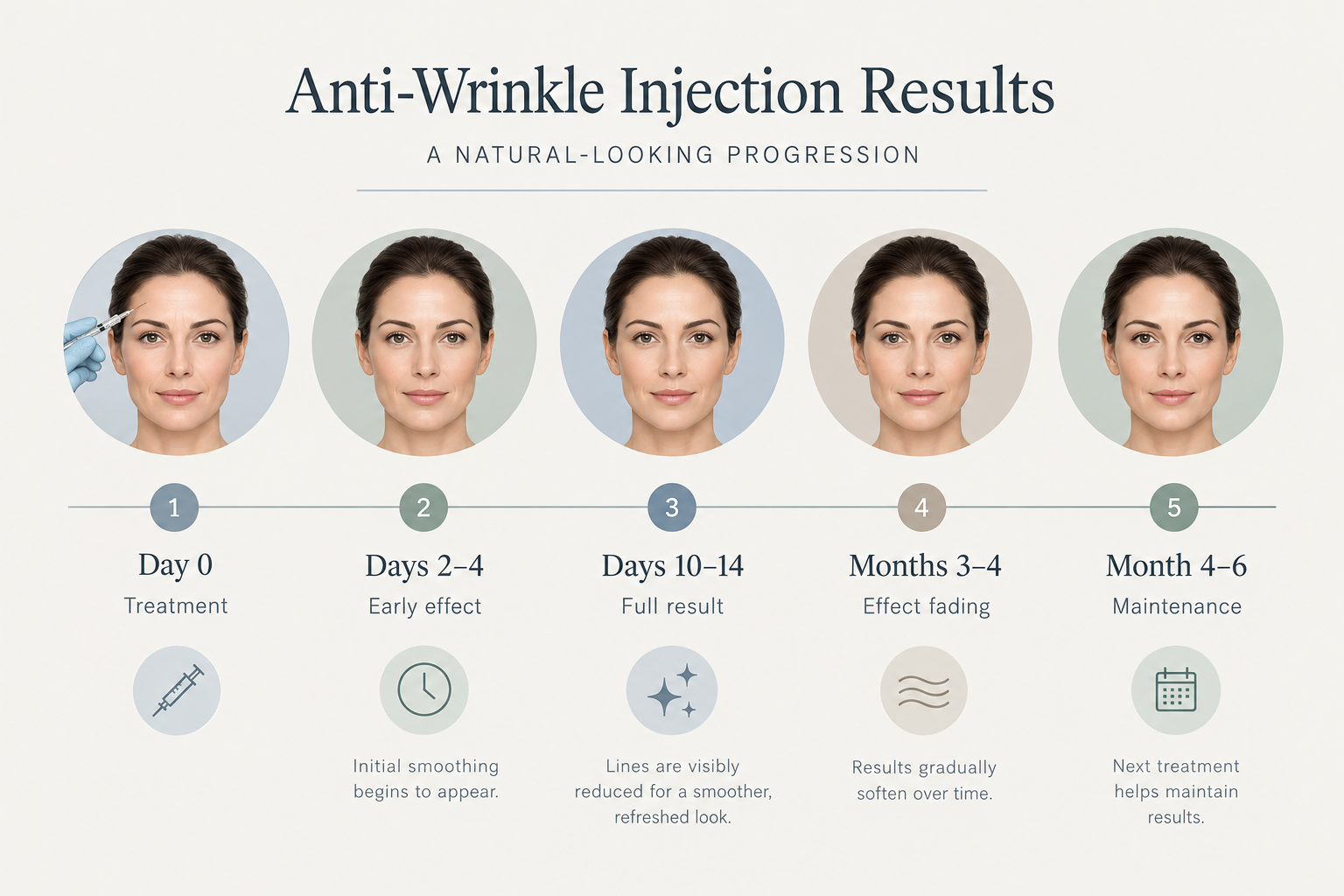
The duration of results varies between individuals and is influenced by several factors, including the area treated, the dose used, individual metabolism, muscle mass, and how frequently the person has been treated previously. For most patients, results from anti-wrinkle injections last approximately three to four months in areas of high muscle activity such as the forehead, and potentially up to five or six months in areas with less movement. Some patients who have been treated regularly over several years report that their results last longer over time, possibly because habitual muscle activity diminishes with repeated treatment, though this varies.
Results are not permanent. When the effect wears off, muscle activity returns and lines will gradually reappear. Maintenance treatments are required to sustain the outcome.
Realistic Benefits of Anti-Wrinkle Injections
When performed by a qualified and experienced practitioner, anti-wrinkle injections can produce a meaningful reduction in the appearance of dynamic facial lines. The treatment is non-surgical, requires no general anaesthesia, and involves minimal downtime for most patients. Results, when well-executed, can appear natural and refreshed rather than frozen or expressionless — an outcome that depends heavily on the practitioner’s skill, the dose used, and the patient’s individual anatomy.
For patients who grind their teeth or clench their jaw, masseter botulinum toxin treatment may offer both aesthetic and functional benefit, though the evidence for functional outcomes varies and this should be discussed with an appropriate clinician. Similarly, botulinum toxin for hyperhidrosis has a well-established evidence base and can significantly improve quality of life for those affected by excessive sweating.
The reversible nature of the treatment is often cited as an advantage: because the effects wear off over months, any outcome that is not to the patient’s liking will resolve without intervention, though this also means that desirable results require ongoing maintenance.
Limitations of Anti-Wrinkle Injections
Anti-wrinkle injections are effective for dynamic wrinkles but have clear limitations that are important to understand before treatment. They do not address volume loss, skin laxity, pigmentation, or deeply static lines that are present at rest. A patient hoping to improve hollowed cheeks, sagging skin, or significant skin texture concerns will not achieve those goals with botulinum toxin alone.
Results are temporary, which means ongoing treatment is required to maintain the effect. Over time, this represents a recurring cost and commitment. Some patients develop a degree of resistance to a particular botulinum toxin product, though this is uncommon with the doses used in aesthetic practice.
The outcome is also highly technique-dependent. Poorly placed injections can result in asymmetry, an unnatural appearance, or unwanted effects such as a heavy brow or altered smile. Choosing a practitioner with appropriate qualifications, training, and experience is one of the most important factors in achieving a safe and satisfactory result.
Risks and Side Effects
Anti-wrinkle injections carry real risks that every prospective patient should understand. Common side effects are generally mild and temporary, and may include:
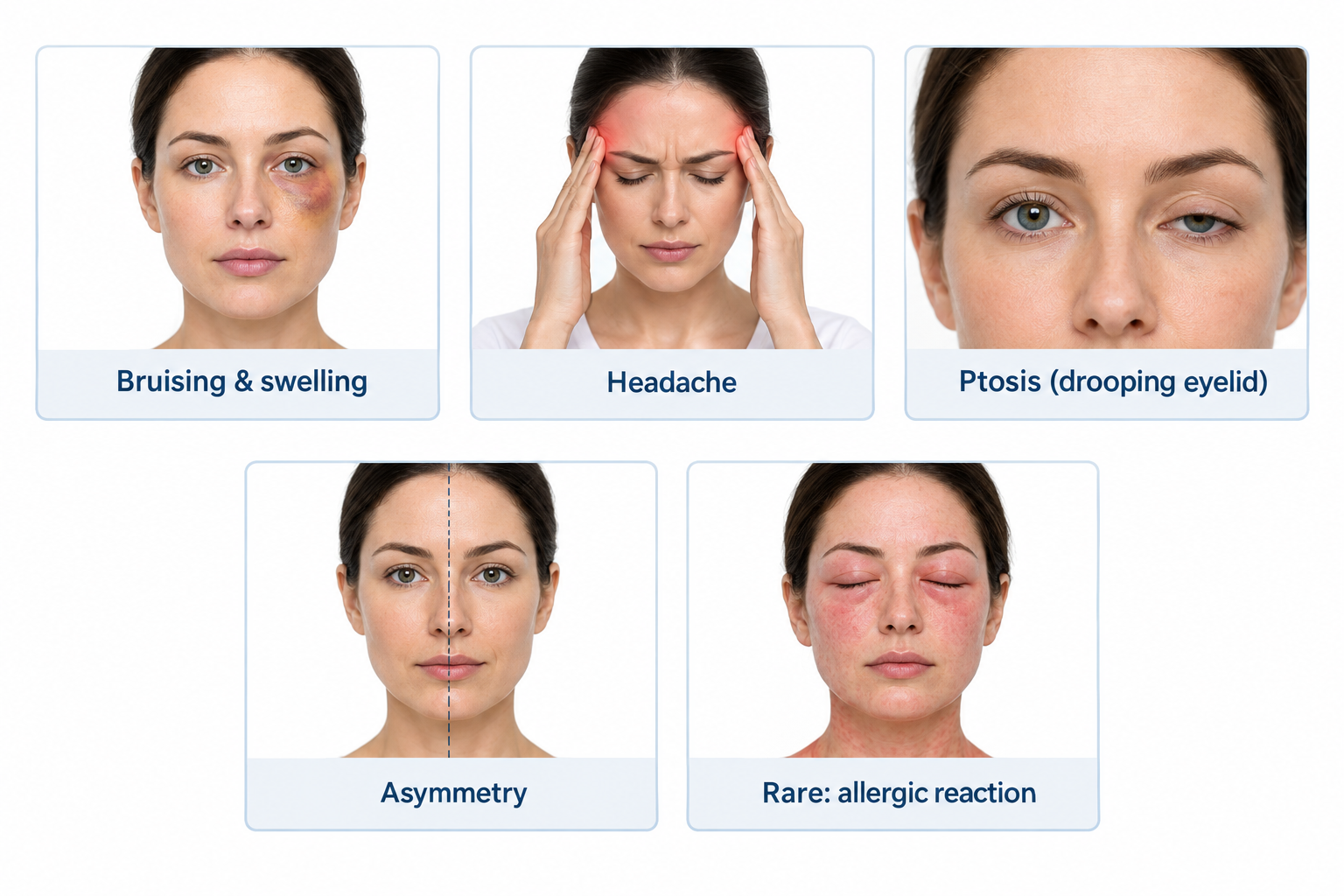
- Bruising and swelling at the injection sites, which typically resolves within a few days.
- Headache, which some patients experience after forehead or glabellar treatment and usually settles within 24 to 48 hours.
- Redness or tenderness at injection points, which is usually short-lived.
Less common but more significant risks include:
- Ptosis (drooping eyelid or brow): If botulinum toxin spreads to the levator palpebrae muscle or the frontalis muscle is over-treated, the eyelid or brow may droop temporarily. This is one of the most frequently discussed complications and can last several weeks.
- Asymmetry: Uneven muscle relaxation can result in facial asymmetry, which may require a corrective dose or may need to resolve naturally over time.
- Altered smile or lip movement: Injections near the mouth carry a risk of affecting the muscles responsible for lip movement if not placed precisely.
- Difficulty swallowing or speaking: Rare with aesthetic doses but possible if product spreads beyond the intended area, particularly with neck treatments.
- Allergic reaction: Rare but possible; patients with known hypersensitivity to any component of the product should not be treated.
Serious systemic complications from botulinum toxin used in aesthetic doses are rare but have been reported. The risk of adverse outcomes is meaningfully reduced when treatment is performed by a qualified medical or dental professional with appropriate training in facial anatomy and the management of complications.
Who May Be Suitable for Anti-Wrinkle Injections?
Anti-wrinkle injections may be suitable for adults who have dynamic facial lines they wish to reduce, are in good general health, have realistic expectations about what the treatment can achieve, and understand that results are temporary. Most patients who seek this treatment are in their late twenties or older, though the appropriate age varies considerably depending on individual concerns and anatomy.
A thorough consultation should assess whether the treatment is appropriate for you. Factors that may affect suitability include your medical history, current medications, and any previous cosmetic procedures in the area.
Who May Not Be Suitable
Anti-wrinkle injections are not appropriate for everyone. Treatment is generally contraindicated or requires careful consideration in the following circumstances:
- Pregnancy and breastfeeding: Botulinum toxin is not recommended during pregnancy or while breastfeeding due to insufficient safety data.
- Neuromuscular conditions: Conditions such as myasthenia gravis, Lambert-Eaton syndrome, or motor neurone disease may increase the risk of serious adverse effects from botulinum toxin.
- Certain medications: Some antibiotics and muscle relaxants can interact with botulinum toxin and may increase its effect. Always disclose all medications and supplements to your practitioner.
- Active infection or skin condition at or near the planned injection site.
- Known allergy to botulinum toxin or any ingredient in the product formulation.
- Unrealistic expectations: Patients who expect permanent results, complete elimination of all lines, or outcomes that botulinum toxin cannot deliver may not be well served by this treatment.
Alternatives to Anti-Wrinkle Injections
For patients who are not suitable candidates for botulinum toxin, or who are looking for complementary or alternative approaches, several other treatments may be relevant depending on the specific concern:
- Dermal fillers: Hyaluronic acid fillers can restore volume, soften static lines, and improve facial contour. They work differently from botulinum toxin and are often used alongside anti-wrinkle injections for a more comprehensive result.
- Skin resurfacing treatments: Chemical peels, laser resurfacing, and microneedling can improve skin texture, tone, and fine surface lines by stimulating collagen production and accelerating skin cell turnover.
- Radiofrequency and ultrasound treatments: Devices using radiofrequency energy or focused ultrasound (such as HIFU) can stimulate collagen and improve skin laxity, addressing concerns that botulinum toxin does not target.
- Polynucleotides and skin boosters: Injectable treatments designed to improve skin hydration, quality, and fine lines through biostimulation, rather than muscle relaxation.
- Topical retinoids: Prescription-strength retinoids have a meaningful evidence base for reducing fine lines and improving skin quality over time, though results develop gradually and require consistent use.
The most appropriate approach depends on the nature of the concern, the patient’s anatomy, and their goals. Many patients benefit from a combination of treatments rather than a single modality.
Frequently Asked Questions
Do anti-wrinkle injections hurt?
Most patients describe the sensation as a brief, mild sting at each injection point. The needles used are very fine, and the treatment is generally well tolerated without anaesthesia. If you are particularly sensitive, a topical numbing cream can be applied beforehand. Discomfort during the procedure is usually minimal and short-lived.
How soon can I return to normal activities?
Most patients return to their usual daily activities immediately after treatment. It is generally advisable to avoid strenuous exercise, alcohol, and lying flat for several hours after the appointment. Visible bruising, if it occurs, can usually be covered with makeup after 24 hours. There is no significant recovery period for most patients.
Will I look frozen or unnatural?
A natural-looking result depends on the dose used and the practitioner’s technique. Overly high doses or poorly placed injections can reduce facial expressiveness. An experienced practitioner will aim to soften lines while preserving natural movement. Discussing your preference for a subtle versus more pronounced effect during the consultation helps guide the approach.
Can anti-wrinkle injections prevent wrinkles from forming?
Some practitioners and patients use botulinum toxin preventatively, with the rationale that reducing repetitive muscle movement may slow the development of permanent lines over time. The evidence for a preventative effect is still developing, and this use is not universally agreed upon. It is a topic worth discussing with a qualified practitioner in the context of your individual situation.
What happens if I stop having treatments?
If you choose not to continue with maintenance treatments, the effects of botulinum toxin will wear off and muscle activity will return to its previous level. Lines will gradually reappear as they were before treatment. There is no evidence that stopping treatment causes lines to worsen beyond their natural progression.
How do I choose a qualified practitioner?
In many countries, regulations around who can administer botulinum toxin vary. It is important to seek treatment from a practitioner with recognised medical, dental, or nursing qualifications, specific training in facial anatomy and injectable treatments, and experience managing complications. Asking about qualifications, training, and what happens if something goes wrong is entirely reasonable before committing to treatment.
Making an Informed Decision About Anti-Wrinkle Injections
Anti-wrinkle injections are a well-established non-surgical option for reducing the appearance of dynamic facial lines, with a substantial body of clinical use supporting their effectiveness for the most common treatment areas. They are not a permanent solution, they do not address every type of facial ageing concern, and they carry real risks that vary depending on the area treated, the dose used, and the practitioner’s skill and experience.
For patients with realistic expectations — understanding that results are temporary, that maintenance is required, and that the treatment works best for expression-related lines rather than volume loss or skin laxity — anti-wrinkle injections can be a practical and effective part of a broader approach to facial aesthetics. For concerns that fall outside what botulinum toxin can address, alternative or complementary treatments may be more appropriate.
If you are considering anti-wrinkle injections, a thorough consultation with a qualified and experienced practitioner is the most important first step. A good consultation will assess your anatomy, discuss your goals honestly, explain what the treatment can and cannot achieve for you specifically, and ensure you have the information needed to make a genuinely informed decision.


