
Marionette Lines: Causes, Contributing Factors and What You Can Do
Marionette lines are the vertical creases that run downward from the corners of the mouth toward the chin, giving the lower face a downturned or aged appearance. They are named after the hinged jaw of a marionette puppet, and while they are a completely natural part of facial ageing, understanding why they form can help you make informed decisions about prevention, skincare, and whether a clinical assessment might be worthwhile.
Key Takeaways
- Marionette lines develop primarily because of age-related volume loss, collagen and elastin breakdown, and the downward repositioning of facial fat compartments.
- Genetics, sun exposure, lifestyle habits, and body weight fluctuations can all accelerate or worsen their appearance.
- The depth and visibility of marionette lines varies considerably between individuals, and multiple overlapping causes are usually involved.
- Non-surgical options such as dermal fillers, skin-tightening treatments, and collagen-stimulating injectables may help soften their appearance, though results vary and no treatment eliminates them permanently.
- A qualified aesthetic practitioner can assess the specific structural causes in your case and recommend an appropriate approach.
What Are Marionette Lines?
Marionette lines are a type of lower-face wrinkle that forms along the melomental fold — the anatomical boundary between the cheek and the chin area. Unlike expression lines such as crow’s feet, which are driven primarily by repeated muscle movement, marionette lines are largely the result of structural changes in the face over time. They tend to deepen gradually, often becoming more noticeable from the mid-thirties onward, though the age at which they first appear and how prominent they become depends on a combination of genetic and environmental factors.
It is worth distinguishing marionette lines from two related but separate concerns. Nasolabial folds — sometimes called smile lines — run from the sides of the nose to the corners of the mouth, sitting above and medial to marionette lines. Jowling, which refers to the sagging of soft tissue along the jawline, often develops alongside marionette lines and can make them appear more pronounced. All three concerns share overlapping causes, but they are anatomically distinct and may respond differently to treatment.
The Primary Cause: Age-Related Structural Change
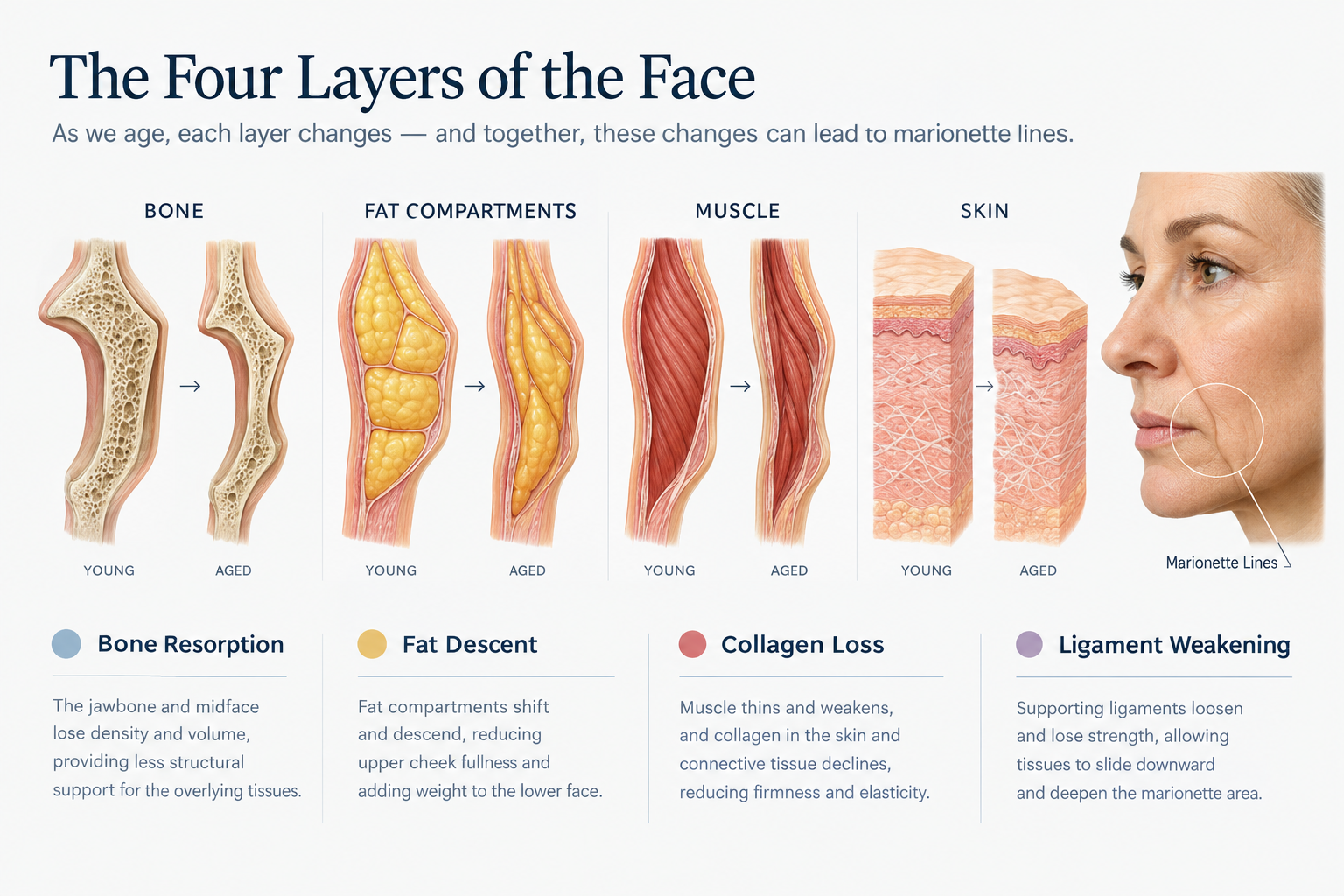
The most fundamental cause of marionette lines is the cumulative structural change that occurs in the face as part of normal ageing. The face is not a flat surface; it is a layered structure of bone, fat compartments, muscle, and skin, and each of these layers changes over time in ways that collectively produce visible lines and folds.
Bone Resorption
The facial skeleton gradually loses volume with age, particularly around the jaw, chin, and mid-face. As the bony scaffold that supports the overlying soft tissue diminishes, the skin and fat above it have less structural support. This contributes to the downward displacement of soft tissue and the deepening of folds in the lower face, including the melomental region where marionette lines form.
Loss of Facial Fat Volume and Repositioning
The face contains multiple discrete fat compartments arranged in both superficial and deep layers. With age, some of these compartments lose volume while others descend due to the weakening of the retaining ligaments that hold them in place. The malar fat pad, which sits in the mid-cheek, is particularly relevant: as it loses volume and descends, it reduces support for the tissue around the mouth and contributes to the formation of both nasolabial folds and marionette lines. The jowl fat compartment, which sits along the lower jaw, can also descend and accumulate in a way that accentuates the lower-face crease.
Collagen and Elastin Degradation
Collagen provides the structural framework of the skin, while elastin allows it to spring back after movement. Both proteins are produced less efficiently as we age, and existing fibres become fragmented and disorganised. The result is skin that is thinner, less resilient, and less able to resist the mechanical forces that create and deepen folds. Reduced collagen density in the dermis is one of the key reasons that lines which were once dynamic — visible only during expression — become static, meaning they are present even when the face is at rest.
Weakening of Retaining Ligaments
The face contains a network of fibrous retaining ligaments that anchor the skin and soft tissue to the underlying bone and muscle. The mandibular ligament, which runs along the jawline, and the masseteric ligaments are particularly relevant to the lower face. As these ligaments weaken and elongate with age, the soft tissue they once held in position descends, contributing to jowling and the deepening of marionette lines.
Muscle Activity
The depressor anguli oris (DAO) is a muscle that pulls the corners of the mouth downward. Repeated contraction of this muscle over many years contributes to the formation and deepening of marionette lines, particularly in individuals with strong or habitually active DAO muscles. This dynamic component means that marionette lines have both a structural cause and a muscular one, which is relevant when considering treatment options.
How Sun Exposure Accelerates Marionette Lines
Ultraviolet radiation is one of the most well-established external causes of accelerated skin ageing, a process known as photoageing. Chronic sun exposure triggers the production of matrix metalloproteinases (MMPs), enzymes that break down collagen and elastin in the dermis. It also generates reactive oxygen species that damage skin cells and impair the skin’s ability to repair itself. The cumulative effect is skin that ages faster than it would through intrinsic ageing alone — thinner, less elastic, and more prone to developing static lines and folds, including marionette lines.
People who have spent significant time outdoors without adequate sun protection, or who have used sunbeds, often develop more pronounced lower-face lines at an earlier age than those who have consistently protected their skin. Daily broad-spectrum SPF use is one of the most evidence-supported preventive measures available for slowing the visible signs of skin ageing.
The Role of Genetics
Genetic factors influence how quickly the face ages and where lines tend to form. Skin type, the density of collagen in the dermis, the distribution and volume of facial fat, and the strength of facial retaining ligaments all have a heritable component. If close relatives developed prominent marionette lines at a relatively young age, there is a reasonable likelihood that you may follow a similar pattern, though lifestyle and environmental factors can modify this trajectory significantly.
Skin tone also plays a role. Melanin provides some degree of natural protection against UV-induced collagen breakdown, which is one reason that individuals with lighter skin phototypes tend to show earlier and more pronounced photoageing. However, intrinsic ageing affects all skin types, and marionette lines can develop in people of any ethnicity or complexion.
Lifestyle Factors That Contribute to Marionette Lines
Several modifiable lifestyle habits are associated with accelerated facial ageing and may worsen the appearance of marionette lines over time.

Smoking
Smoking accelerates skin ageing through multiple mechanisms. Nicotine causes vasoconstriction, reducing blood flow and oxygen delivery to the skin. The chemicals in tobacco smoke generate free radicals that damage collagen and elastin, and the repetitive facial movements involved in smoking — particularly pursing the lips — contribute to perioral lines. Smokers tend to develop more pronounced lower-face lines, including marionette lines, at an earlier age than non-smokers.
Significant Weight Fluctuations
Repeated cycles of weight gain and loss can stretch and then deflate the skin and underlying fat compartments of the face. Over time, this can reduce skin elasticity and contribute to volume loss in the mid-face, which in turn makes marionette lines more visible. Significant weight loss in later life, when skin elasticity is already reduced, can sometimes make lower-face folds more apparent.
Poor Nutrition and Dehydration
Adequate nutrition supports the skin’s ability to produce and maintain collagen. Deficiencies in vitamin C, which is essential for collagen synthesis, and in other antioxidants may contribute to accelerated skin ageing. Chronic dehydration affects skin plumpness and resilience, though the relationship between hydration and permanent structural lines is less direct than is sometimes suggested in popular media.
Sleep Position
Sleeping consistently on one side can create mechanical compression of the face over many years, potentially contributing to asymmetric line formation. This is a less significant factor than the structural and UV-related causes described above, but it is worth noting for completeness.
Alcohol Consumption
Chronic heavy alcohol consumption is associated with dehydration, nutritional deficiencies, and systemic inflammation, all of which can negatively affect skin quality and accelerate the visible signs of ageing.
Body Weight and Facial Volume
The relationship between body weight and marionette lines is not straightforward. People with a naturally lower body fat percentage may have less facial volume, which can make structural folds more visible. Conversely, those who carry more facial fat may find that marionette lines are less apparent when they are heavier, but more noticeable if they lose weight. This is sometimes referred to informally as the trade-off between facial and body appearance with weight loss, and it is a relevant consideration for individuals who are planning significant weight changes.
Why Marionette Lines Vary Between Individuals
The depth, length, and prominence of marionette lines vary considerably from person to person, even among individuals of the same age. This variation reflects the interplay of multiple factors: the inherited structure of the face, the distribution of facial fat, the strength of retaining ligaments, cumulative sun exposure, lifestyle habits, and the activity of the depressor anguli oris muscle. Some people develop noticeable marionette lines in their early thirties, while others may not find them a concern until their fifties or later. Neither pattern is abnormal; both reflect the natural diversity of facial ageing.
The angle and shape of the jawline also influence how marionette lines appear. A well-defined jawline with strong bony support may partially conceal the lower extent of the fold, while a softer or more recessed chin can make the lines appear longer and more prominent.
Treatment Options That May Help
Understanding the causes of marionette lines is directly relevant to choosing an appropriate treatment approach, because different treatments address different underlying mechanisms. No single treatment corrects all contributing factors, and results vary between individuals. A thorough clinical assessment is necessary before any treatment is recommended.
Dermal Fillers
Hyaluronic acid dermal fillers are among the most commonly used treatments for marionette lines. They work by restoring volume to the area, which can lift and soften the fold. Fillers may be placed directly within the marionette line itself, in the prejowl area to support the lower face, or in the mid-face to address the upstream volume loss that contributes to the fold. Results are temporary, typically lasting between nine and eighteen months depending on the product used, the area treated, and individual factors. Risks include bruising, swelling, asymmetry, and, in rare cases, more serious vascular complications, which is why treatment should only be performed by a qualified and experienced practitioner.
Botulinum Toxin Injections
Botulinum toxin injections targeting the depressor anguli oris muscle can reduce the downward pull on the corners of the mouth, which may soften the dynamic component of marionette lines and give the lower face a slightly more lifted appearance. This approach addresses the muscular cause rather than the structural volume deficit, and it is often used in combination with fillers for a more comprehensive result. The effect is temporary, typically lasting three to four months, and requires repeat treatment to maintain.
Collagen-Stimulating Treatments
Treatments that stimulate the skin’s own collagen production — including polynucleotide injections, biostimulator injectables such as those containing poly-L-lactic acid or calcium hydroxylapatite, radiofrequency microneedling, and focused ultrasound — may improve skin quality and provide some degree of tissue tightening over time. These approaches address the collagen and elastin deficit that contributes to marionette lines, though the degree of improvement is generally more gradual and subtle than that achieved with volume replacement. Multiple sessions are usually required, and results vary.
Skin Resurfacing
Laser resurfacing, chemical peels, and microneedling can improve skin texture and stimulate collagen remodelling in the perioral area. These treatments are more likely to be beneficial for superficial skin quality concerns than for deep structural folds, and they are often used as part of a broader treatment plan rather than as a standalone solution for pronounced marionette lines.
Surgical Options
For individuals with significant soft tissue descent and deep marionette lines, surgical options such as a lower face lift or neck lift may provide more substantial and longer-lasting improvement than non-surgical treatments alone. Surgery addresses the underlying structural causes — repositioning descended tissue and tightening retaining ligaments — in a way that injectables cannot fully replicate. Surgical options carry greater risks and require longer recovery, and suitability depends on individual anatomy, health status, and goals.
Prevention and Skin Health
While it is not possible to prevent marionette lines entirely, certain habits may slow their development. Consistent daily use of a broad-spectrum SPF 30 or higher sunscreen is the most evidence-supported preventive measure for slowing photoageing. A skincare routine that includes a retinoid — such as retinol or prescription tretinoin — may support collagen production and improve skin resilience over time, though results require consistent long-term use. Avoiding smoking, maintaining a stable and healthy body weight, eating a balanced diet, and staying adequately hydrated all support general skin health. These measures are unlikely to reverse established marionette lines, but they may slow further progression.
Frequently Asked Questions
At what age do marionette lines typically appear?
Marionette lines can begin to form as early as the mid-thirties, though they are more commonly noticed from the forties onward. The age at which they become visible depends on genetics, sun exposure history, lifestyle factors, and individual facial anatomy. Some people develop noticeable lines earlier; others may not find them a concern until later in life.
Can marionette lines be prevented entirely?
Marionette lines are a natural consequence of facial ageing and cannot be prevented entirely. However, consistent sun protection, avoiding smoking, maintaining skin health with evidence-based skincare, and avoiding significant weight fluctuations may slow their development. Genetics play a significant role that cannot be modified.
Are marionette lines the same as nasolabial folds?
No. Nasolabial folds run from the sides of the nose to the corners of the mouth, while marionette lines run downward from the corners of the mouth toward the chin. They are anatomically distinct, though they share overlapping causes and often develop together as part of lower-face ageing.
Do marionette lines get worse with weight loss?
Significant weight loss, particularly in later life when skin elasticity is reduced, can sometimes make marionette lines more apparent by reducing facial volume. This effect varies between individuals and depends on the degree of weight loss, age, and skin quality.
Can skincare products alone improve marionette lines?
Topical skincare products, particularly those containing retinoids, peptides, and antioxidants, may improve overall skin quality and slow the progression of fine lines over time. However, established marionette lines — particularly deeper structural folds — are unlikely to be significantly improved by topical products alone. Skincare is most useful as a preventive and complementary measure rather than a primary treatment for pronounced lines.
Is one treatment enough to address marionette lines?
Because marionette lines have multiple contributing causes — volume loss, collagen breakdown, muscle activity, and soft tissue descent — a single treatment rarely addresses all of them. Many practitioners take a combination approach, using fillers for volume, botulinum toxin for the muscular component, and collagen-stimulating treatments for skin quality. The most appropriate plan depends on the individual’s anatomy, the severity of the lines, and their goals.
How do I know which treatment is right for me?
A consultation with a qualified aesthetic practitioner is the appropriate starting point. A thorough assessment of your facial anatomy, skin quality, and the specific factors contributing to your marionette lines will inform which treatments are likely to be most beneficial and realistic for your situation.
Understanding Your Marionette Lines Before Seeking Treatment
Marionette lines are the result of several overlapping processes — bone resorption, fat compartment descent, collagen loss, ligament weakening, and muscle activity — rather than a single cause. This complexity is why a one-size-fits-all approach to treatment rarely produces the best outcomes. Understanding which factors are most prominent in your own case, whether that is significant volume loss, skin laxity, a strong depressor anguli oris muscle, or a combination of all three, helps both you and your practitioner identify the most appropriate and realistic treatment strategy.
If marionette lines are a concern for you, a consultation with a qualified aesthetic medicine practitioner or dermatologist is a sensible first step. A thorough clinical assessment can identify the structural and skin-quality factors at play, set realistic expectations, and outline a treatment plan that is proportionate to your goals and circumstances. No treatment eliminates marionette lines permanently, but a well-considered approach can meaningfully soften their appearance and support longer-term skin health.


