Lip Flip vs Filler: Key Differences and Lip Enhancement Guide
When considering mouth enhancement at our central London aesthetic clinic, understanding the distinction between available treatments helps you make informed decisions. Both options address different aesthetic concerns and work through distinct mechanisms to improve your appearance.

Thousands of satisfied customers


Lip Flip vs Filler: Quick Comparison of Popular Treatments
Choosing between these two popular cosmetic procedures depends on your specific goals and anatomy. Each treatment offers unique benefits suited to different aesthetic objectives, from subtle shape refinement to noticeable volume increase.
Primary Goal: Volume vs Shape in Lip Enhancement
The fundamental difference lies in what each treatment achieves. A lip flip primarily refines the shape by creating the appearance of a fuller mouth through muscle relaxation, causing the upper tissue to curl slightly outward. This technique reveals more of the pink vermillion border without actually increasing size.
In contrast, dermal filler physically adds volume to the tissue itself. Practitioners inject hyaluronic acid directly into the lips, creating measurable fullness and definition. This approach suits patients seeking substantial size enhancement rather than subtle refinement.
Feature | Lip Flip | Lip Filler |
Primary Goal | Shape refinement and upper lip eversion | Volume addition and fullness |
Active Ingredient | Botulinum toxin (Botox) | Hyaluronic acid |
Results Timeline | 10-14 days for full effect | Immediate, final after 48-72 hours |
Duration | 2-3 months | 6-12 months |
Cost (London) | £150-£250 | £300-£600 per syringe |
Injection Depth | Superficial (muscle level) | Deep dermal/submucosal |
Downtime | Minimal to none | 3-7 days (swelling/bruising) |
Ideal For | Thin lips, gummy smile, subtle enhancement | Significant volume loss, dramatic results |
Active Ingredients: Botox vs Hyaluronic Acid Dermal Filler
The lip flip uses a small amount of botox injected into the muscle above the upper tissue. This neuromodulator temporarily relaxes the orbicularis oris muscle, reducing its downward pull. The treatment typically requires 4-6 units of botulinum toxin for optimal results.
Filler treatments utilize hyaluronic acid, a naturally occurring substance in the body that attracts and retains moisture. Popular formulations include Juvederm, Restylane, and Belotero. These products come in various consistencies, allowing practitioners to customize volume and projection based on individual anatomy.
Expected Results Timeline for Lip Flip and Lip Filler
A lip flip takes approximately 10-14 days to show full effects as the botox gradually relaxes the upper muscle. Patients notice progressive improvement throughout the first two weeks. The subtle change appears naturally without immediate dramatic transformation.
Filler provides instant results visible immediately after injection. Initial swelling subsides within 48-72 hours, revealing the final appearance. This immediate gratification appeals to those seeking transformation for upcoming events or who prefer not to wait for gradual changes.
Total Investment for Lip Flip vs Filler
Lip flips are less expensive than fillers, typically ranging from £150-£250 in central London clinics. The procedure requires minimal product and takes only 10-15 minutes to complete. However, results last just 2-3 months, requiring more frequent maintenance.
Filler procedures cost between £300-£600 per syringe depending on the brand and amount used. Most patients need 0.5-1ml initially, with some requiring additional volume. Results last 6-12 months, making the cost per month of enhancement often comparable despite higher upfront investment.

Lip Flip Overview: How a Flip Works
This non-surgical cosmetic treatment has gained popularity for its ability to enhance the upper mouth without adding volume. Understanding the mechanism helps set realistic expectations about achievable results and ideal candidates.
Definition: What Is a Lip Flip and Lip Muscle Relaxation?
A lip flip is a non-surgical procedure that uses botulinum toxin to relax the muscles around the upper tissue. Specifically, it targets the orbicularis oris muscle responsible for pulling the mouth inward and downward. When this muscle relaxes, the upper area naturally rolls slightly outward.
This creates the appearance of the upper tissue being fuller and more visible, especially when smiling. The technique doesn’t increase actual volume but rather reveals more of the existing tissue by changing its position and reducing tension.
How Botox Creates the Specific Lip Flip Effect
The practitioner injects small amounts of botox into specific points along the upper border. These strategic injections target the muscle fibers that cause the tissue to tuck under when smiling or at rest. The neuromodulator blocks nerve signals to these muscles.
Within 3-5 days, the muscle begins relaxing, causing the mouth to curl outward rather than inward. This eversion effect becomes most noticeable when smiling, creating a softer, more relaxed appearance. The treatment doesn’t affect speech or eating functions when performed correctly by experienced practitioners.
Ideal Candidates for This Lip Treatment
The lip flip works best for patients with a naturally thin upper mouth that disappears when smiling. Those whose upper tissue rolls inward significantly or shows minimal pink area benefit most from this approach. Individuals with a prominent gummy smile may also find improvement.
Patients seeking subtle enhancement rather than dramatic transformation represent ideal candidates. Those with extremely thin lips lacking any volume may require filler instead, as the flip can only reveal existing tissue. Age-related volume loss typically responds better to hyaluronic acid fillers.
Ideal candidates for lip flips include:
- Individuals with thin upper lips that disappear when smiling
- Patients with naturally “tucked under” upper tissue
- Those seeking subtle, natural-looking enhancement
- People concerned about gummy smile appearance
- First-time treatment seekers wanting to try enhancement
- Anyone preferring lower-cost, temporary results
Preparation and Procedure Steps for Lip Flips
Preparation involves avoiding blood-thinning medications like aspirin, ibuprofen, and vitamin E for one week before treatment. Alcohol consumption should cease 24 hours prior to minimize bruising risk. Arrive with clean skin, free from makeup or lip products.
The procedure itself takes 10 minutes maximum. The practitioner marks injection points, typically 3-5 sites along the upper lip border. Using an ultra-fine needle, they inject 1-2 units of botox per site. Discomfort remains minimal, often described as tiny pinpricks. No numbing cream is typically necessary due to the quick, superficial nature of injections.
Pre-treatment preparation checklist:
- Avoid aspirin, ibuprofen, and NSAIDs for 7 days before
- Stop taking vitamin E and fish oil supplements
- Cease alcohol consumption 24 hours prior
- Arrive with clean, makeup-free skin
- Avoid scheduling during active cold sore outbreaks
- Inform practitioner of any medications or allergies
Lip Flip Overview: How a Flip Works
The sensation of getting lip fillers varies considerably from person to person. Your pain threshold, pain tolerance, and even anxiety levels influence your lip filler experience. However, advances in injectable treatments mean that discomfort is typically brief and manageable.
Modern clinics apply a strong topical numbing cream before treatment, and many dermal fillers contain lidocaine, which provides additional pain relief during the injection process. The combination of these numbing agents ensures that most patients find the procedure quick and manageable rather than genuinely painful.
This non-surgical cosmetic treatment has gained popularity for its ability to enhance the upper mouth without adding volume. Understanding the mechanism helps set realistic expectations about achievable results and ideal candidates.
Definition: What Is a Lip Flip and Lip Muscle Relaxation?
A lip flip is a non-surgical procedure that uses botulinum toxin to relax the muscles around the upper tissue. Specifically, it targets the orbicularis oris muscle responsible for pulling the mouth inward and downward. When this muscle relaxes, the upper area naturally rolls slightly outward.
This creates the appearance of the upper tissue being fuller and more visible, especially when smiling. The technique doesn’t increase actual volume but rather reveals more of the existing tissue by changing its position and reducing tension.
How Botox Creates the Specific Lip Flip Effect
The practitioner injects small amounts of botox into specific points along the upper border. These strategic injections target the muscle fibers that cause the tissue to tuck under when smiling or at rest. The neuromodulator blocks nerve signals to these muscles.
Within 3-5 days, the muscle begins relaxing, causing the mouth to curl outward rather than inward. This eversion effect becomes most noticeable when smiling, creating a softer, more relaxed appearance. The treatment doesn’t affect speech or eating functions when performed correctly by experienced practitioners.
Ideal Candidates for This Lip Treatment
The lip flip works best for patients with a naturally thin upper mouth that disappears when smiling. Those whose upper tissue rolls inward significantly or shows minimal pink area benefit most from this approach. Individuals with a prominent gummy smile may also find improvement.
Patients seeking subtle enhancement rather than dramatic transformation represent ideal candidates. Those with extremely thin lips lacking any volume may require filler instead, as the flip can only reveal existing tissue. Age-related volume loss typically responds better to hyaluronic acid fillers.
Ideal candidates for lip flips include:
- Individuals with thin upper lips that disappear when smiling
- Patients with naturally “tucked under” upper tissue
- Those seeking subtle, natural-looking enhancement
- People concerned about gummy smile appearance
- First-time treatment seekers wanting to try enhancement
- Anyone preferring lower-cost, temporary results
Preparation and Procedure Steps for Lip Flips
Preparation involves avoiding blood-thinning medications like aspirin, ibuprofen, and vitamin E for one week before treatment. Alcohol consumption should cease 24 hours prior to minimize bruising risk. Arrive with clean skin, free from makeup or lip products.
The procedure itself takes 10 minutes maximum. The practitioner marks injection points, typically 3-5 sites along the upper lip border. Using an ultra-fine needle, they inject 1-2 units of botox per site. Discomfort remains minimal, often described as tiny pinpricks. No numbing cream is typically necessary due to the quick, superficial nature of injections.
Pre-treatment preparation checklist:
- Avoid aspirin, ibuprofen, and NSAIDs for 7 days before
- Stop taking vitamin E and fish oil supplements
- Cease alcohol consumption 24 hours prior
- Arrive with clean, makeup-free skin
- Avoid scheduling during active cold sore outbreaks
- Inform practitioner of any medications or allergies

Pros and Cons of Lip Flips
Weighing the advantages against potential drawbacks helps determine whether this treatment aligns with your aesthetic goals and lifestyle. Every cosmetic procedure involves trade-offs between benefits and limitations.
Benefits and Pros of Lip Flips for Subtle Enhancement
The lip flip provides natural-looking enhancement that doesn’t scream “I’ve had work done.” Results appear gradual and subtle, perfect for those wanting refinement rather than dramatic change. The procedure carries minimal downtime, allowing patients to return to normal activities immediately.
Cost-effectiveness for first-time patients represents another advantage. The lower price point allows experimentation with lip enhancement before committing to more expensive filler treatments. Additionally, the temporary nature means if you don’t love results, they fade within three months without requiring reversal.
Key advantages of lip flip treatments:
- Natural, subtle results that develop gradually
- Minimal to no downtime or recovery period
- Lower upfront cost compared to dermal fillers
- Quick 10-minute procedure with minimal discomfort
- Can address gummy smile concerns effectively
- Temporary results allow risk-free experimentation
- No added volume for those who prefer natural size
Drawbacks and Cons of Lip Flips
The temporary duration means more frequent appointments compared to lip filler. Patients need treatments every 2-3 months to maintain results, which can become inconvenient and costly over time. Some individuals find this maintenance schedule demanding, especially with busy lifestyles.
The flip doesn’t add actual volume, which disappoints those expecting fuller lips rather than just shape refinement. Certain patients experience difficulty with specific mouth movements, such as drinking through straws or pursing lips tightly. Whistling may become temporarily challenging while the muscle remains relaxed.
Common drawbacks to consider:
- Short duration requiring treatments every 2-3 months
- No actual volume increase, only shape refinement
- Potential difficulty with straws and pursing lips
- Results may be too subtle for some patients’ goals
- Temporary challenges with whistling or certain movements
- Higher annual cost due to frequent maintenance needs
Side Effects and Recovery Time for Lip Flip and Injections
Common side effects include minor bruising at injection sites, which typically resolves within 2-3 days. Slight asymmetry can occur if muscles respond differently, though this usually self-corrects as effects wear off. Some patients report temporary difficulty controlling saliva or altered sensation around the lip area.
Recovery time is essentially non-existent, with most people resuming normal activities immediately. However, practitioners recommend avoiding intense exercise for 24 hours and remaining upright for 4 hours post-treatment to prevent product migration. The injection sites may feel slightly tender but rarely cause significant discomfort.
Maintenance and Result Longevity for Lip Flips vs Filler
Lip flip results last approximately 2-3 months, notably shorter than filler treatments. The body naturally metabolizes botulinum toxin, gradually restoring full muscle function. Peak results occur around the two-week mark and maintain for 6-8 weeks before beginning to fade.
Maintenance requires scheduling appointments quarterly, which some patients find inconvenient. However, regular treatments don’t require increasing doses, as tolerance doesn’t develop in the same way as with some other cosmetic applications. Consistent treatment may even lead to slight muscle atrophy over time, potentially extending duration between sessions.

Lip Filler Overview: Exploring Dermal Filler Options
Injectable hyaluronic acid represents the gold standard for lip augmentation worldwide. Understanding the composition, technique, and expected outcomes helps patients approach treatment with realistic expectations and confidence.
Definition: What Is Lip Filler and How It Adds Volume?
Lip filler consists of injectable gel containing hyaluronic acid, a substance naturally present in skin tissue. When injected into the lips, it physically occupies space, creating immediate volume increase. The hyaluronic acid molecules also attract water, enhancing plumpness and hydration.
Different formulations offer varying levels of viscosity and lift. Softer fillers integrate seamlessly for natural movement, while firmer products provide more structure and projection. Practitioners select specific products based on individual anatomy and desired outcomes, often combining different consistencies in one treatment session.
Popular Filler Treatments and Trusted Brands
Juvederm remains the most recognized brand, offering several lip-specific formulations including Volbella and Volift. These products contain lidocaine for comfort during injection and utilize Vycross technology for smoother integration. Results typically last 9-12 months depending on individual metabolism.
Restylane Kysse has gained popularity specifically for lip enhancement, designed to move naturally with facial expressions. Teosyal RHA and Belotero Balance represent other trusted options, each with unique characteristics affecting spread, lift, and longevity. Our clinic carries multiple brands to customize treatments for individual anatomy.
Injection Process and Technique for Lip Enhancement
Treatment begins with thorough consultation and mapping, where practitioners mark injection points and discuss proportions. Topical numbing cream applied 20 minutes prior minimizes discomfort, though most modern fillers contain integrated lidocaine. Ice may be used additionally for sensitive patients.
Using ultra-fine needles or cannulas, the practitioner injects small amounts of filler into specific areas. Techniques include linear threading, serial puncture, or cross-hatching depending on goals. The entire procedure takes 15-30 minutes, with results visible immediately despite initial swelling.
Who Can Benefit from Dermal Filler Treatments?
Patients seeking noticeable volume increase represent ideal candidates for this treatment. Those with naturally thin lips, age-related volume loss, or asymmetry achieve significant improvement. Individuals wanting to balance facial proportions or create more defined lip borders benefit substantially.
Realistic expectations prove essential for satisfaction. Patients should seek enhanced versions of their natural lips rather than copying another person’s features. Those with active cold sores should postpone treatment, as injections can trigger outbreaks. Pregnancy and breastfeeding represent contraindications, requiring patients to wait until after these periods.
Ideal candidates for lip filler include:
- Individuals seeking noticeable, immediate volume increase
- Patients with age-related volume loss or thinning
- Those wanting to correct lip asymmetry
- People desiring more defined lip borders and contours
- Patients seeking longer-lasting results (6-12 months)
- Individuals comfortable with higher upfront investment
- Those willing to accept 3-7 days of swelling downtime
Pros and Cons of Fillers
Understanding both advantages and potential drawbacks allows informed decision-making. While filler treatments offer dramatic improvements, they require consideration of various factors including cost, commitment, and possible complications.
Advantages and Pros of Lip Filler for Instant Volume
The immediate transformation represents the most significant advantage. Patients leave the clinic with visibly fuller lips, perfect for those wanting enhancement before special occasions. The ability to customize volume allows precise achievement of desired proportions, whether subtle or dramatic.
Longevity provides another major benefit, with results lasting 6-12 months compared to just 2-3 months for lip flips. This extended duration means fewer appointments and better value over time. Hyaluronic acid fillers can be dissolved if results prove unsatisfactory, offering a safety net that permanent options lack.
Primary benefits of filler treatments:
- Immediate, visible volume increase after treatment
- Customisable results from subtle to dramatic enhancement
- Long-lasting effects for 6-12 months
- Ability to precisely sculpt and shape lips
- Reversible with hyaluronidase if needed
- Addresses multiple concerns: volume, shape, asymmetry
- Natural feel and movement with modern formulations
Potential Risks and Cons of Fillers
Higher cost represents the primary drawback, with treatment ranging from £300-£600 depending on volume needed. Some patients require multiple syringes to achieve goals, further increasing investment. The financial commitment may prove prohibitive for those on limited budgets.
Swelling and bruising occur more commonly than with lip flips, requiring 3-7 days of social downtime for some individuals. Lumps or bumps may develop if product doesn’t integrate smoothly, though these typically resolve with massage. Rare complications include vascular occlusion, emphasizing the importance of choosing experienced practitioners.
Side Effects and Risks Compared to Lip Flip vs Filler
Lip filler carries higher risk of visible side effects due to the nature of volume addition. Swelling peaks at 48 hours post-treatment, sometimes causing significant puffiness that takes days to subside. Bruising affects approximately 30% of patients, occasionally lasting up to two weeks.
Asymmetry can occur if one side swells more than the other or if injection amounts differ slightly. This usually resolves as swelling subsides, but touch-up appointments may be needed. The tyndall effect—a bluish tint under the skin—can develop if filler is placed too superficially, requiring hyaluronidase dissolution.
Aftercare Requirements for Filler and Flip Patients
Post-treatment care significantly impacts results and comfort. Avoid touching or massaging lips for 48 hours unless instructed otherwise. Apply ice intermittently during the first 24 hours to minimize swelling. Sleep with head elevated for the first two nights to reduce fluid accumulation.
Strenuous exercise should be avoided for 24-48 hours, as increased blood flow can worsen swelling. Hot showers, saunas, and alcohol consumption may also exacerbate inflammation during the first 48 hours. Most importantly, avoid dental work or aggressive facial treatments for two weeks to allow proper product integration.
Essential aftercare instructions for both treatments:
- Apply ice for 10-15 minutes every hour during first 24 hours
- Avoid touching, rubbing, or massaging the treated area
- Sleep with head elevated on 2-3 pillows for 48 hours
- Refrain from strenuous exercise for 24-48 hours
- Avoid hot environments (saunas, steam rooms, hot yoga)
- Stay away from alcohol for 24-48 hours post-treatment
- Skip makeup application on lips for 24 hours
- Postpone dental appointments for 2 weeks after filler
- Use arnica cream or tablets to minimize bruising
- Stay hydrated to support healing and filler integration
Key Differences Between a Lip Flip and Filler
Understanding the fundamental distinctions helps clarify which treatment aligns with your aesthetic objectives. These differences extend beyond just the products used, encompassing mechanism of action, visual outcomes, and long-term implications.
Enhancement Mechanism: Upper Lip Rotation vs Internal Plumping
The lip flip works externally by relaxing the orbicularis oris muscle, changing the position and angle of the upper lip without adding substance. This creates the illusion of fullness by revealing more of the existing pink tissue. The mechanism relies on muscle relaxation rather than volume addition.
Conversely, filler operates internally by physically occupying space within the lip tissue. Hyaluronic acid molecules integrate into the dermis, creating measurable fullness from within. This fundamental difference means each treatment addresses different aesthetic concerns—shape versus size.
Average Duration: Lip Flip vs Filler Results
Lip flip results last 2-3 months on average, requiring quarterly maintenance appointments. The body metabolizes botulinum toxin relatively quickly in this area due to constant muscle movement during eating, speaking, and facial expressions. Some patients report results fading after just 6-8 weeks.
Lip filler provides significantly longer duration, typically lasting 6-12 months depending on product selection and individual metabolism. Factors like exercise level, metabolism speed, and the specific filler used all influence longevity. Some patients maintain results for up to 18 months with certain products.
Technique: Superficial Injections vs Deep Dermal Filler
The lip flip technique involves very superficial injections just below the skin surface along the upper border. The practitioner places small amounts of botox at specific points where the muscle attaches, using ultra-fine needles. The procedure requires precise anatomical knowledge but minimal product.
Filler injections penetrate deeper into the dermis and occasionally the submucosal layer. Practitioners use various techniques including linear threading, where the needle or cannula deposits product while withdrawing. Multiple injection points create even distribution and natural-looking enhancement.
Impact on Smile: Lip Flip and Lip Dental Visibility
A lip flip can slightly reduce gummy smile by preventing the upper from retracting upward as much when smiling. This effect appeals to patients self-conscious about excessive gum exposure. However, it may also slightly reduce the natural expressiveness of smiles for some individuals.
Lip filler typically doesn’t significantly affect smile dynamics unless substantial volume is added to the upper lip. The added weight might minimally reduce lip elevation when smiling, though this effect remains subtle with appropriate amounts. Most patients report their smile feels and looks natural after proper integration.
Choosing Which Lip Enhancement Is Best for Your Goals
Selecting the appropriate treatment requires honest assessment of your anatomy, realistic goal-setting, and consideration of practical factors. Personal consultation with experienced practitioners provides individualized guidance, but understanding key decision factors helps you participate actively in planning.
Assessing Your Current Lip Anatomy for Treatment
Examine your lip proportions and identify specific concerns. Do your lips virtually disappear when you smile? A lip flip may prove ideal. If your lips lack volume even at rest, dermal filler provides more appropriate enhancement. Consider whether you want subtle refinement or noticeable transformation.
Evaluate your upper-to-lower lip ratio, as balanced proportions create harmonious results. The golden ratio suggests the lower lip should be slightly fuller than the upper, approximately 1:1.6. Significant asymmetry may require combination treatments or preferential filler placement to achieve balance.
Desired Results: Choosing Flip vs Filler
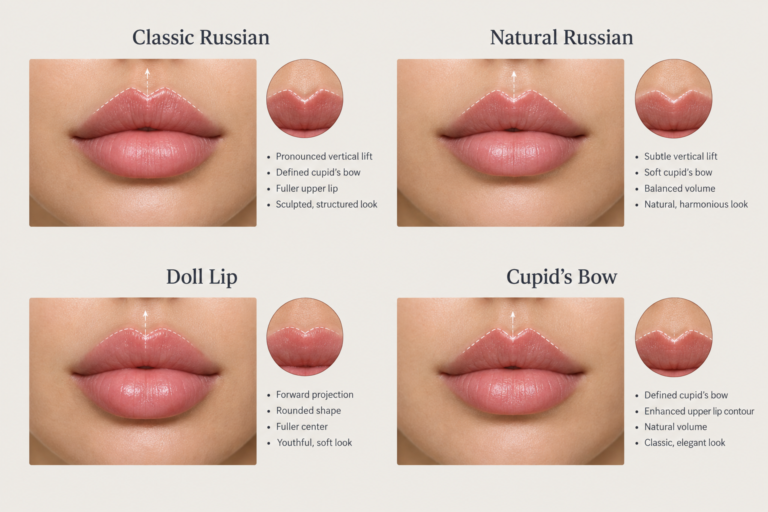
If your goal involves subtle shape refinement and revealing more pink tissue without volume, the flip offers an elegant solution. Those seeking natural enhancement that friends might not immediately notice often prefer this approach. The treatment excels at creating a more defined cupid’s bow and addressing disappearing lips.
Patients wanting noticeable fullness, projection, or correction of significant volume loss require hyaluronic acid lip fillers. Those desiring to change their lip shape substantially—adding height to a flat vermillion border or creating more pronounced borders—need actual volume addition rather than just muscle relaxation.
Lifestyle Factors and Budget for Lip Flip and Lip Filler
Consider your schedule and tolerance for maintenance appointments. If quarterly visits seem manageable and you prefer lower upfront costs, lip flips provide affordable entry into enhancement. Those seeking longer-lasting results with less frequent maintenance lean toward fillers despite higher initial investment.
Budget constraints matter realistically. Calculate annual costs: four lip flip treatments at £200 each equals £800 yearly, while two filler treatments at £400 each equals £800. Despite perception that flips cost less, annual expenditure may be comparable. Factor in time costs of more frequent appointments as well.
Benefits of Combining Lip Filler and Lip Flip
Many patients achieve optimal results by combining both treatments. Filler adds desired volume to the body of the lips, while a lip flip enhances the upper lip shape and prevents gummy smile. This combination addresses multiple aesthetic concerns simultaneously for comprehensive enhancement.
The synergy between treatments creates balanced, natural-looking results that neither achieves alone. Typically, practitioners establish filler volume first, allowing integration before adding the flip 2-3 weeks later. This staged approach allows assessment of proportions before finalizing the treatment plan.
Myths and Facts About Lip Flip and Filler
Misconceptions about lip enhancement persist despite these treatments becoming increasingly common. Separating truth from fiction helps potential patients approach procedures with accurate expectations and reduced anxiety.
Myth: Filler Treatments Always Look Stiff or Unnatural
This outdated belief stems from older filler formulations and overfilling trends from previous decades. Modern hyaluronic acid fillers integrate smoothly and move naturally with facial expressions when injected by skilled practitioners. The key lies in appropriate product selection and conservative volume addition.
Natural-looking results depend heavily on practitioner technique and artistic judgment. Choosing board-certified professionals who prioritize subtle enhancement over dramatic transformation prevents the stiff, overfilled appearance. When properly performed, most people won’t recognize you’ve had work done—they’ll simply think you look refreshed.
Fact: Lip Flips and Lip Filler Serve Different Purposes
These treatments address fundamentally different concerns and shouldn’t be viewed as interchangeable alternatives. The flip refines shape by changing muscle dynamics, while filler physically adds volume. Understanding this distinction prevents disappointment when results don’t match expectations.
Some patients benefit from one treatment exclusively, while others achieve ideal results through combination. Professional assessment during consultation determines which approach—or both—best addresses your specific anatomy and goals. Neither treatment is universally superior; appropriateness depends entirely on individual circumstances.
Myth: Lip Enhancement Is Extremely Painful
Modern techniques and products have dramatically reduced discomfort associated with lip treatment. Topical numbing cream, integrated lidocaine in fillers, and gentle injection methods minimize pain significantly. Most patients describe the sensation as brief pinching or pressure rather than severe pain.
For the lip flip, injections are so quick and superficial that many patients forgo numbing entirely. Filler procedures involve more injections and slightly deeper penetration, but numbing cream provides adequate comfort for most individuals. Pain tolerance varies personally, but current methods accommodate even sensitive patients effectively.
Fact: Duck Lips Are Result of Poor Technique, Not the Product
The exaggerated, protruding appearance colloquially called “duck lips” results from overfilling and poor injection technique rather than inherent product characteristics. This outcome occurs when practitioners add excessive volume, particularly to the upper lip, or inject too superficially causing product to protrude.
Skilled practitioners understand facial proportions and aesthetic balance, carefully customizing treatment to enhance rather than distort natural features. When performed conservatively by experienced professionals who respect anatomical limitations, lip filler creates proportionate, attractive results that complement your face.
FAQ
Addressing frequently asked questions provides clarity on practical concerns patients commonly experience. These answers reflect current best practices and evidence-based recommendations from experienced practitioners.
Can You Combine a Lip Flip and Lip Filler?
Yes, combining these treatments often produces optimal results by addressing both volume and shape simultaneously. Many patients use filler to add fullness to the lip body while employing a flip to enhance upper lip definition and reduce gummy smile. The treatments complement each other when sequenced appropriately, typically placing filler first and adding the flip 2-3 weeks later once swelling resolves. This combination allows comprehensive enhancement that neither treatment achieves independently, creating balanced proportions and refined contours throughout the lip area.
Difference Between Lip Enhancement Results Timelines
Results timelines differ significantly between treatments due to their distinct mechanisms. Lip filler provides immediate volume visible right after injection, though final results emerge once swelling subsides after 48-72 hours. In contrast, lip flip effects develop gradually over 10-14 days as botox progressively relaxes the upper lip muscle. This fundamental difference affects planning for events—filler suits those needing immediate enhancement despite initial swelling, while flips work better when you can wait two weeks for full effects without noticeable swelling.
Is Lip Treatment Safe During Pregnancy?
Medical consensus advises against both lip flip and filler procedures during pregnancy and breastfeeding as a precautionary measure. Although no definitive studies prove harm, insufficient research exists to confirm absolute safety for developing babies or nursing infants. Most practitioners decline to treat pregnant or breastfeeding patients, recommending postponement until after nursing concludes. This conservative approach protects both mother and child, as cosmetic procedures aren’t medically necessary and can safely wait until this life stage completes.
How to Prepare for Your First Lip Flip vs Filler Appointment?
Preparation involves avoiding blood-thinning substances including aspirin, ibuprofen, vitamin E, fish oil, and alcohol for 5-7 days before your appointment to minimize bruising risk. Arrive with clean skin, removing all makeup and lip products beforehand. Schedule treatment when you can allow recovery time—48 hours for lip flips, 3-7 days for fillers depending on social commitments. Discuss medical history, allergies, and goals thoroughly during consultation, bringing reference photos if desired. For filler specifically, avoid scheduling during active cold sore outbreaks and consider taking antiviral medication if you’re prone to them.
Newsletter Updates
Enter your email address below and subscribe to our newsletter