
Tear Trough Filler Cost: What Affects the Price and What to Expect
Tear trough filler is one of the more technically demanding injectable treatments available, and its cost reflects that complexity. Prices vary considerably depending on the type of filler used, the practitioner’s qualifications, the clinic’s location, and how much product is required to achieve a natural result. This article explains the main factors that influence tear trough filler cost, what the treatment involves, what realistic outcomes look like, and what to consider before booking a consultation.
Key Takeaways
- Tear trough filler cost in the UK typically ranges from around £350 to over £800 per session, depending on several clinical and logistical factors.
- The type of hyaluronic acid filler chosen, the volume required, and the practitioner’s level of expertise are among the most significant cost drivers.
- The tear trough is a high-risk anatomical area; choosing a qualified, experienced injector is more important than finding the lowest price.
- Results generally last between nine and eighteen months, though individual variation is common and maintenance treatments are usually needed.
- Not everyone is a suitable candidate; a thorough consultation is essential to assess anatomy, skin quality, and the underlying cause of under-eye hollowing.
What Is Tear Trough Filler?
The tear trough is the groove that runs from the inner corner of the eye toward the cheek. When this area becomes hollow or shadowed — due to volume loss, genetics, or the natural ageing process — it can create a tired or aged appearance that is difficult to address with skincare alone. Tear trough filler treatment involves injecting a small amount of dermal filler, most commonly a hyaluronic acid-based product, into or around this groove to restore volume, soften the shadow, and create a smoother transition between the lower eyelid and the cheek.
Hyaluronic acid is a naturally occurring substance found in the skin and connective tissue. When used as a dermal filler, it attracts water and adds subtle volume to the treated area. Because the skin beneath the eye is exceptionally thin and the anatomy is complex, tear trough filler requires precise placement and a thorough understanding of the local vascular and lymphatic structures. This is why the treatment is generally considered more technically challenging than filler in areas such as the lips or nasolabial folds.
Typical Tear Trough Filler Cost in the UK
Tear trough filler cost in the UK generally falls between approximately £350 and £850 or more per treatment session. Some specialist clinics in London or other major cities may charge above this range, particularly when a highly experienced medical practitioner is performing the procedure. At the lower end of the market, prices may appear more accessible, but it is important to understand what is — and is not — included in that figure.
The quoted price should ideally cover the initial consultation, the filler product itself, the injection procedure, and at least one follow-up appointment to assess the result. Some clinics charge separately for consultations, which can add to the overall cost. When comparing prices between providers, it is worth clarifying exactly what each quote includes before making a decision based on cost alone.
Factors That Influence Tear Trough Filler Cost
Several distinct variables affect how much tear trough filler treatment costs. Understanding these factors helps prospective patients evaluate quotes more accurately and make a more informed decision.

Type and Brand of Filler Used
Not all hyaluronic acid fillers are the same. Different products have different rheological properties — meaning they vary in thickness, elasticity, and how they integrate with surrounding tissue. For the tear trough area, practitioners typically select a softer, more hydrophilic filler that spreads evenly and minimises the risk of the Tyndall effect, a bluish discolouration that can occur when certain fillers are placed too superficially beneath thin skin. Established filler brands used in this area include Juvederm Volbella, Restylane Eyelight, Teosyal Redensity II, and Belotero Balance, among others. These products differ in price at the wholesale level, and that difference is reflected in what clinics charge patients.
Cheaper, less established filler products may carry a lower upfront cost but can carry greater risks of uneven results, swelling, or complications. The choice of filler should be driven by clinical suitability rather than cost alone, and a qualified practitioner will explain which product they recommend and why.
Volume of Filler Required
The amount of filler needed varies between individuals. Some patients require only a small volume — often less than one millilitre across both sides — while others with more pronounced hollowing may need slightly more product to achieve a satisfactory result. Clinics typically price tear trough filler per syringe or per millilitre, so the total volume used directly affects the final cost. Overfilling the tear trough area carries its own risks, including puffiness and an unnatural appearance, so a conservative approach is generally preferred by experienced practitioners.
Practitioner Qualifications and Experience
The tear trough is widely regarded as one of the highest-risk areas for dermal filler injection. The proximity of important blood vessels, the thinness of the overlying skin, and the complexity of the local anatomy mean that this treatment should only be performed by a qualified medical professional with specific training and demonstrable experience in periorbital injections. Practitioners with medical, dental, or nursing qualifications and advanced aesthetic training typically charge more than those with minimal credentials, and this premium reflects both their expertise and the additional safety it provides.
Choosing a practitioner based primarily on price in this area carries meaningful risk. Complications such as vascular occlusion — where filler inadvertently blocks a blood vessel — are rare but serious and require prompt, skilled management. An experienced injector is better placed to minimise this risk and to respond appropriately if a complication does occur.
Clinic Location
Geographic location has a consistent effect on aesthetic treatment pricing. Clinics based in London, particularly in areas such as Harley Street or Chelsea, tend to charge more than equivalent clinics in smaller cities or towns. This reflects higher operating costs including rent, staffing, and overheads rather than necessarily a difference in clinical quality. Patients in major urban centres may find that travelling slightly further from the city centre offers comparable quality at a lower price, though this should always be weighed against the practitioner’s credentials and the clinic’s reputation.
Clinic Setting and Facilities
The clinical environment also contributes to pricing. A medically regulated clinic with appropriate emergency protocols, trained support staff, and access to hyaluronidase — the enzyme used to dissolve hyaluronic acid filler in the event of a complication — will typically have higher operating costs than a less formal setting. These costs are passed on to patients, but they represent a meaningful safety consideration. Patients should confirm that their chosen clinic has hyaluronidase available on-site before proceeding with tear trough filler treatment.
Consultation Fees
Some clinics offer free consultations, while others charge a fee that may or may not be redeemable against the cost of treatment. A thorough consultation for tear trough filler should include an assessment of the patient’s anatomy, skin quality, medical history, and the underlying cause of their under-eye concern. This assessment takes time and clinical skill, so a consultation fee is not unreasonable. Patients should be cautious of clinics that skip a meaningful consultation and proceed directly to treatment without proper assessment.
What the Treatment Involves
During a tear trough filler appointment, the practitioner will first cleanse the treatment area and may apply a topical anaesthetic cream to reduce discomfort. The filler is then injected using either a fine needle or a blunt-tipped cannula. Many experienced practitioners prefer the cannula technique in the tear trough area because it reduces the risk of bruising and allows the product to be placed more precisely with fewer entry points. The procedure itself typically takes between fifteen and thirty minutes, though the overall appointment may be longer when consultation and aftercare advice are included.
Patients may experience mild discomfort during the injection, and some swelling or bruising is common in the days following treatment. The tear trough area is particularly prone to swelling due to the loose connective tissue beneath the eye, so initial results may not be fully representative of the final outcome. Most practitioners advise waiting at least two weeks before assessing the result.
How Long Results May Last
Tear trough filler results are not permanent. Hyaluronic acid fillers are gradually broken down by the body over time, and the longevity of results in the tear trough area typically ranges from around nine to eighteen months. Individual variation is significant and depends on factors including the specific filler product used, the volume injected, the patient’s metabolism, and their lifestyle. Some patients find that results in this area last longer than in more mobile areas such as the lips, while others metabolise the product more quickly.
Maintenance treatments are usually required to sustain the result over time. When planning the overall cost of tear trough filler, it is worth factoring in the likely frequency of repeat treatments rather than considering only the initial session price.
Risks and Limitations to Consider
Tear trough filler carries a range of potential side effects and risks that prospective patients should understand before proceeding. Common and generally temporary side effects include bruising, swelling, tenderness, and mild asymmetry in the days following treatment. These typically resolve within one to two weeks.
More significant risks include the Tyndall effect, where filler placed too superficially creates a visible bluish tint beneath the thin under-eye skin. Overfilling can result in persistent puffiness or an unnatural appearance. In rare but serious cases, filler can enter or compress a blood vessel, potentially compromising blood supply to surrounding tissue. This complication, known as vascular occlusion, requires immediate treatment with hyaluronidase and is one of the reasons why practitioner experience and clinic preparedness are so important in this area.
Hyaluronic acid filler can be dissolved with hyaluronidase if the result is unsatisfactory or if a complication occurs, which is one advantage of this filler type over non-reversible alternatives. However, dissolution is itself a procedure that carries its own considerations and should be performed by a qualified practitioner.
Who May Be Suitable for Tear Trough Filler
Tear trough filler may be appropriate for adults who have noticeable hollowing or shadowing in the under-eye area caused primarily by volume loss rather than other factors. Suitable candidates generally have good skin quality with adequate thickness to conceal the filler, realistic expectations about the degree of improvement achievable, and no contraindications to injectable treatment.
The treatment is less likely to be appropriate for patients whose under-eye concerns are caused primarily by pigmentation, prominent blood vessels visible through thin skin, significant skin laxity, or excess fat in the lower eyelid. In these cases, filler may not address the underlying cause and could potentially worsen the appearance. A thorough clinical assessment is essential to determine whether tear trough filler is the right approach for a given individual.
Tear trough filler is generally not recommended during pregnancy or breastfeeding, for patients with active skin infections or inflammation in the treatment area, or for those with certain autoimmune conditions or bleeding disorders. A full medical history should be taken at consultation.
Alternatives to Tear Trough Filler
For patients who are not suitable candidates for tear trough filler, or who prefer a different approach, several alternatives may be worth discussing with a qualified practitioner.
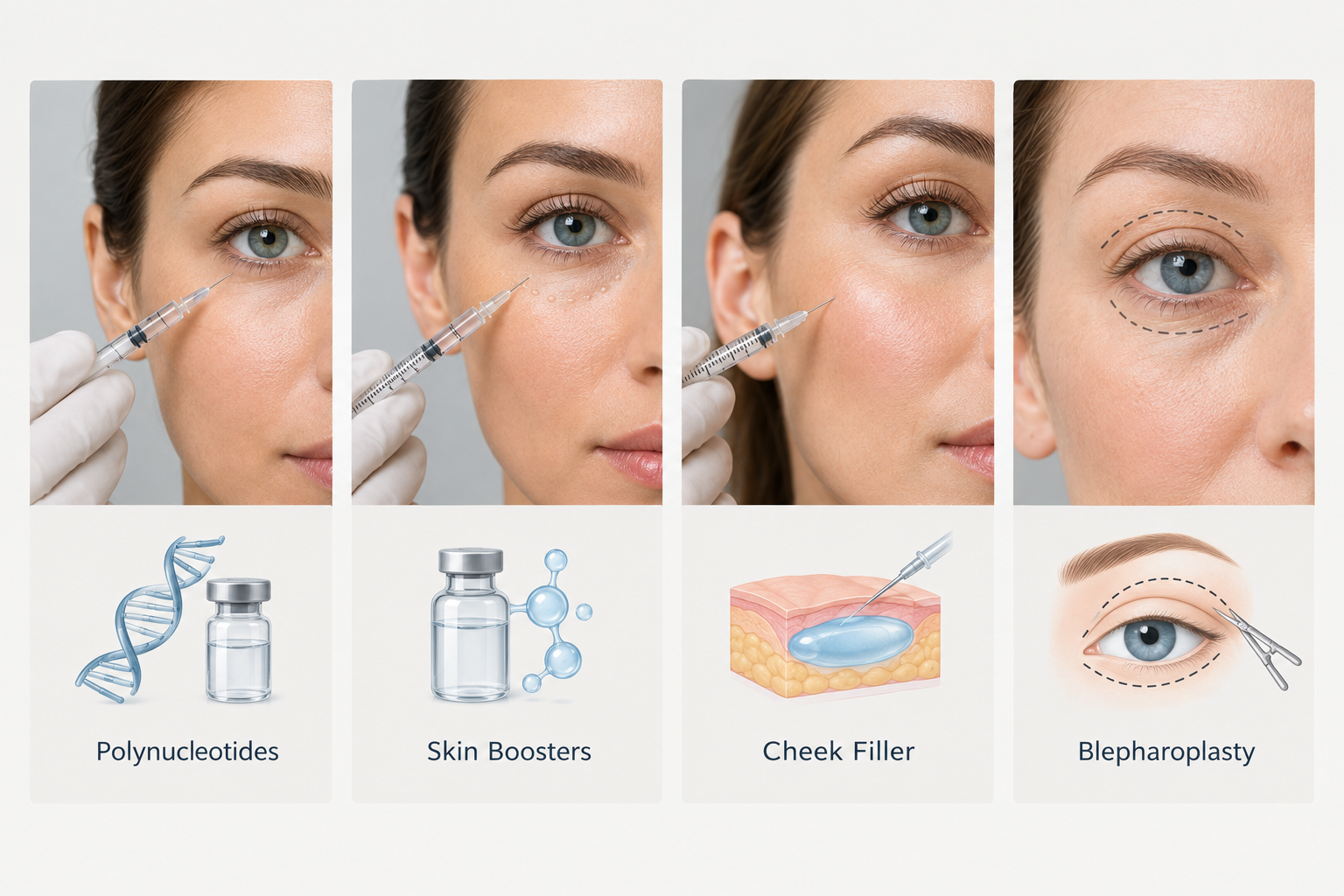
- Polynucleotide injections: Polynucleotides (PDRN or PN) are injectable treatments derived from purified DNA fragments that may help improve skin quality, hydration, and fine lines in the under-eye area. They work differently from volumising fillers and may be more appropriate for patients whose primary concern is skin quality rather than hollowness.
- Profhilo or skin booster treatments: These injectable treatments use highly purified hyaluronic acid to improve skin hydration and elasticity rather than add structural volume. They may complement or, in some cases, partially substitute for tear trough filler depending on the patient’s concerns.
- Cheek filler: In some patients, volume loss in the mid-face or cheek area contributes to the appearance of tear trough hollowing. Restoring volume to the cheeks can indirectly improve the under-eye area without injecting directly into the tear trough.
- Lower eyelid surgery (blepharoplasty): For patients with significant skin laxity, excess fat, or structural changes that cannot be adequately addressed with filler, surgical blepharoplasty may be a more appropriate long-term solution. This is a surgical procedure with its own recovery period, risks, and costs.
- Topical skincare: While topical products cannot replicate the volumising effect of filler, ingredients such as retinoids, vitamin C, caffeine, and peptides may help improve skin quality, reduce puffiness, and address mild pigmentation over time.
Questions to Ask Before Booking
Before committing to tear trough filler treatment, it is worth asking the following questions at your consultation:
- What are your qualifications and how much experience do you have specifically with tear trough filler?
- Which filler product do you recommend for my anatomy, and why?
- Do you have hyaluronidase available on-site in case of a complication?
- What does the quoted price include — consultation, product, follow-up?
- Am I a suitable candidate based on my anatomy and skin quality?
- What results can I realistically expect, and what are the limitations in my case?
- What aftercare will I need, and when should I return for a review?
Frequently Asked Questions
Is tear trough filler worth the cost?
For suitable candidates with genuine volume loss in the tear trough area, filler can produce a meaningful improvement in the appearance of under-eye hollowing and shadowing. Whether it represents good value depends on the individual’s goals, anatomy, and how long results last for them personally. It is not a permanent solution, and maintenance treatments add to the long-term cost. A thorough consultation with a qualified practitioner is the best way to assess whether the likely benefit justifies the investment in your specific case.
Why is tear trough filler more expensive than other filler treatments?
The tear trough area requires a higher level of technical skill and anatomical knowledge than many other injection sites. The risk profile is greater, the margin for error is smaller, and the consequences of a poorly placed injection can be more significant. Practitioners who specialise in this area typically have advanced training and experience, which is reflected in their fees. The cost of appropriate filler products and the clinical infrastructure needed to manage potential complications also contribute to the overall price.
How many syringes of filler are needed for the tear trough?
Most patients require between 0.5 and 1.5 millilitres of filler across both sides, though this varies depending on the degree of hollowing and the individual’s anatomy. A conservative approach is generally preferred to avoid overfilling, which can cause puffiness or an unnatural result. Your practitioner should discuss the likely volume needed during the consultation.
Can tear trough filler be dissolved if I am unhappy with the result?
Hyaluronic acid filler can be dissolved using an enzyme called hyaluronidase. This provides a degree of reversibility that is not available with some other filler types. However, dissolution is itself a procedure that should be performed by a qualified practitioner, and it is not always a straightforward process. Confirming that your chosen clinic has hyaluronidase available before treatment is an important safety consideration.
Does tear trough filler hurt?
Most patients experience mild to moderate discomfort during the procedure. Topical anaesthetic cream is usually applied beforehand to reduce sensitivity, and many filler products also contain lidocaine, a local anaesthetic, within the formulation. The under-eye area can be sensitive, and some patients find the sensation more noticeable than in other treatment areas. Discomfort is generally brief and manageable for most people.
How soon will I see results after tear trough filler?
Some improvement may be visible immediately after treatment, but initial swelling can temporarily distort the result. Most practitioners advise waiting at least two weeks for swelling to fully resolve before assessing the final outcome. If a top-up or adjustment is needed, this is typically done at a follow-up appointment after this settling period.
Making an Informed Decision About Tear Trough Filler Cost
Tear trough filler cost is influenced by a combination of clinical, logistical, and product-related factors, and the lowest available price is rarely the most important consideration in this particular treatment area. The proximity of the tear trough to critical anatomical structures means that practitioner expertise and clinic safety standards carry significant weight in the overall value equation.
Prospective patients are best served by approaching this treatment as a clinical decision rather than a purely cosmetic purchase. A thorough consultation with a qualified medical professional will help determine whether tear trough filler is appropriate for your anatomy and concerns, which product and technique are most suitable, and what realistic results look like in your case. If the assessment suggests that filler is not the right approach, alternatives such as polynucleotide injections, cheek filler, or skin booster treatments may be worth exploring.
When evaluating cost, consider the full picture: the practitioner’s qualifications, the filler product being used, what is included in the quoted price, and the likely need for maintenance treatments over time. A well-performed tear trough filler treatment by an experienced injector can produce a natural, refreshed result — but achieving that outcome depends far more on clinical skill and appropriate patient selection than on finding the most competitive price.


