
Microneedling Aftercare: Step-by-Step Guide to Recovery and Results
Microneedling creates thousands of controlled micro-injuries in the skin to stimulate collagen production and improve skin texture, tone, and firmness. What happens in the hours and days after your appointment has a direct impact on how well your skin heals and how visible your results become. Following the right aftercare steps reduces the risk of complications, shortens downtime, and helps you get the most from each session.
Key Takeaways
- The first 24 to 48 hours after microneedling are the most critical for skin recovery; keeping the skin clean, calm, and hydrated during this window is essential.
- Certain ingredients and activities — including retinoids, active exfoliants, intense exercise, and direct sun exposure — should be avoided for several days post-treatment.
- Redness, mild swelling, and skin sensitivity are normal and typically resolve within two to four days for most patients.
- Sun protection is non-negotiable after microneedling; treated skin is significantly more vulnerable to UV damage and post-inflammatory pigmentation.
- Results from microneedling develop gradually over several weeks as new collagen forms; a single session rarely delivers the full benefit.
What Happens to Your Skin During and After Microneedling
Microneedling uses a device fitted with fine needles to create precise micro-channels in the epidermis and upper dermis. This controlled injury triggers the skin’s natural wound-healing response, which involves three overlapping phases: inflammation, proliferation, and remodelling. During the inflammatory phase — which begins immediately and lasts roughly 24 to 72 hours — the skin releases growth factors and cytokines that initiate repair. This is why redness and warmth are expected immediately after treatment.
The proliferation phase follows, during which fibroblasts produce new collagen and elastin fibres. This phase can continue for several weeks, which is why visible improvements in skin texture and firmness often appear gradually rather than immediately. The remodelling phase, during which collagen matures and organises, may continue for three to six months after a session. Understanding this timeline helps set realistic expectations and explains why aftercare in the early days matters so much — the skin is actively repairing itself and is more vulnerable than usual.
Immediate Aftercare: The First 24 Hours
The first 24 hours after microneedling require the most careful attention. The micro-channels created during treatment remain temporarily open, making the skin more permeable and more reactive to anything applied to it or encountered in the environment.
Keep the skin clean and avoid touching your face
Wash your hands thoroughly before touching your face. Use a gentle, fragrance-free cleanser and lukewarm water to rinse the skin if needed. Avoid rubbing or using a flannel or exfoliating cloth. Pat the skin dry with a clean, soft towel. Introducing bacteria to open micro-channels increases the risk of infection, so hygiene during this period is particularly important.
Apply only practitioner-approved products
Immediately after treatment, your practitioner may apply a soothing serum, hyaluronic acid, or a calming mask. At home, stick to the products your clinic has recommended. Hyaluronic acid serums are commonly suggested because they support hydration without irritating compromised skin. Avoid applying anything not specifically approved by your practitioner during the first 24 hours, as the increased skin permeability means that active ingredients can penetrate more deeply than usual and cause irritation or an adverse reaction.
Do not apply makeup
Makeup — including mineral makeup — should be avoided for at least 24 hours after microneedling, and ideally for 48 hours. Cosmetic products contain preservatives, pigments, and other ingredients that can irritate freshly treated skin or introduce bacteria into the micro-channels. Many practitioners advise waiting until any visible redness or pinpoint bleeding has fully resolved before returning to a normal makeup routine.
Avoid heat and sweating
Hot showers, saunas, steam rooms, hot yoga, and intense exercise should all be avoided for at least 24 to 48 hours. Heat increases blood flow to the skin, which can worsen swelling and redness. Sweat is also mildly acidic and can irritate the skin barrier when it is compromised. Keeping the body temperature moderate during the first day supports a calmer recovery.
Days Two to Five: Supporting the Healing Process
By the second day, most patients notice that the initial redness is beginning to fade. The skin may feel tight, dry, or slightly rough as the surface begins to shed. This phase requires continued gentle care and restraint with skincare products.
Moisturise consistently
Keeping the skin well hydrated during the healing phase supports barrier repair and reduces the sensation of tightness. Choose a simple, fragrance-free moisturiser that does not contain alcohol, retinoids, alpha hydroxy acids, or beta hydroxy acids. Ingredients such as ceramides, niacinamide at low concentrations, and hyaluronic acid are generally well tolerated and can help maintain the skin’s moisture levels while it heals.
Do not pick, peel, or exfoliate
As the skin heals, some flaking or peeling is normal. It is important not to pick at or manually remove any peeling skin, as doing so can disrupt the healing process and increase the risk of scarring or post-inflammatory hyperpigmentation. Allow the skin to shed naturally. Avoid all forms of physical exfoliation — including scrubs, brushes, and exfoliating cloths — and chemical exfoliants such as glycolic acid, lactic acid, and salicylic acid until your practitioner confirms it is safe to reintroduce them.
Avoid retinoids and strong actives
Retinol, tretinoin, and other vitamin A derivatives should be paused for at least five to seven days after microneedling, or until the skin has fully recovered. These ingredients accelerate cell turnover and can cause significant irritation when applied to skin that is already in an active healing state. Similarly, vitamin C serums in high concentrations, benzoyl peroxide, and exfoliating acids should be avoided until the skin barrier has normalised. Your practitioner will advise when it is appropriate to reintroduce these products based on how your skin is responding.
Sun protection is essential
Treated skin is considerably more sensitive to ultraviolet radiation in the days following microneedling. UV exposure during this period increases the risk of post-inflammatory hyperpigmentation, particularly in patients with medium to darker skin tones. Apply a broad-spectrum SPF 30 or higher mineral sunscreen every morning, and reapply throughout the day if you are spending time outdoors. Physical sunscreens containing zinc oxide or titanium dioxide are generally preferred over chemical sunscreens in the immediate post-treatment period, as they sit on the surface of the skin rather than being absorbed. Wearing a wide-brimmed hat and avoiding direct midday sun provides additional protection.
What to Avoid After Microneedling
Certain activities and products carry a meaningful risk of complications when used too soon after microneedling. The following should be avoided for the timeframes indicated, though your practitioner’s specific guidance takes precedence.
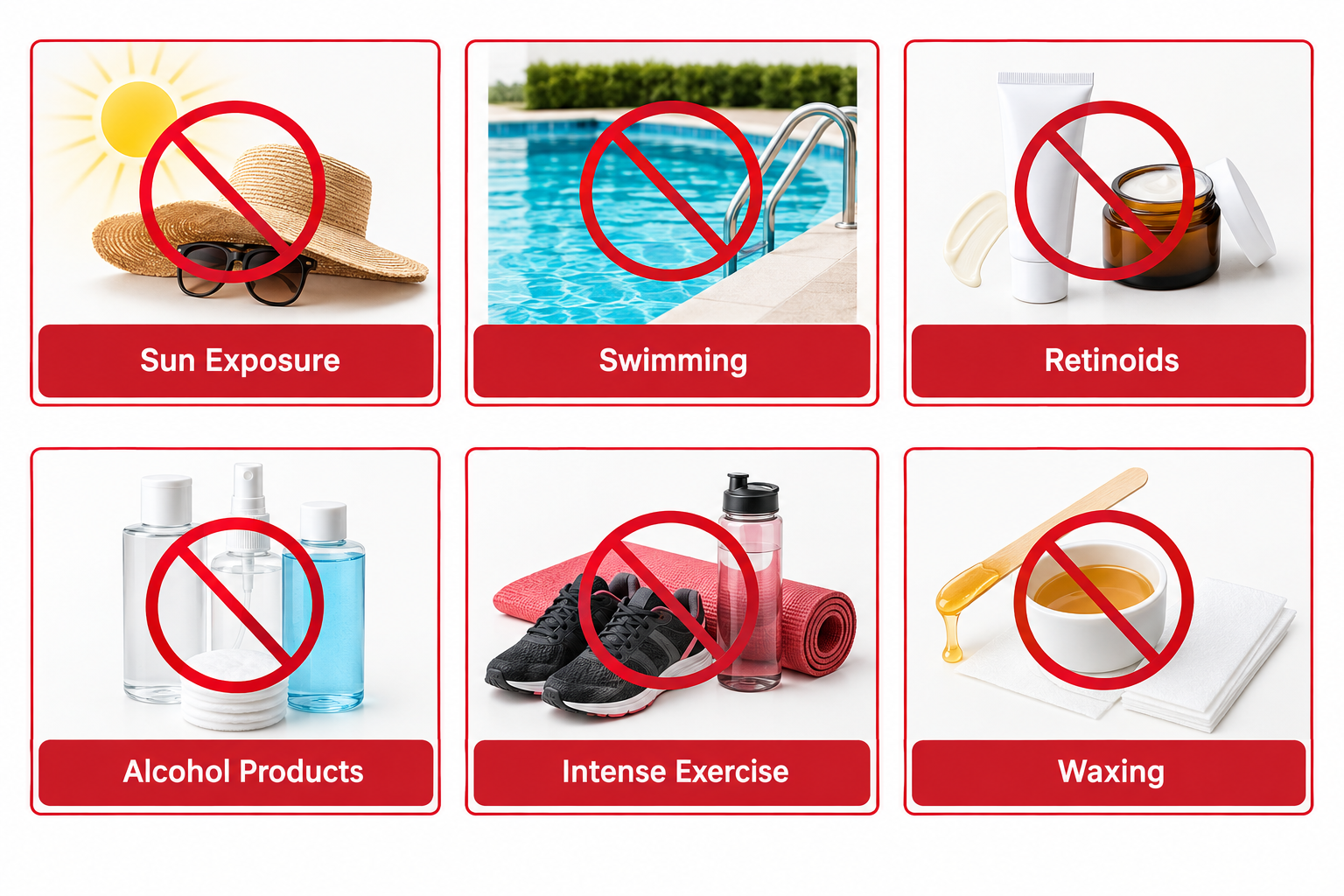
- Sun exposure without protection: Avoid unprotected sun exposure for at least two weeks post-treatment. Sunbeds should be avoided for the same period.
- Swimming pools and open water: Chlorinated water and natural bodies of water can introduce irritants or bacteria to healing skin. Most practitioners advise avoiding swimming for at least 48 to 72 hours, and sometimes longer.
- Alcohol-based skincare products: Toners, astringents, and other products containing high concentrations of alcohol can strip the compromised skin barrier and cause stinging or irritation.
- Waxing and hair removal treatments: Avoid waxing, threading, or depilatory creams on treated areas for at least one to two weeks.
- Other skin treatments: Do not combine microneedling with chemical peels, laser treatments, IPL, or other resurfacing procedures without a suitable recovery interval. Combining treatments too soon can overwhelm the skin’s healing capacity and increase the risk of adverse effects.
- Anti-inflammatory medications (where avoidable): Some practitioners advise avoiding non-steroidal anti-inflammatory drugs such as ibuprofen in the immediate post-treatment period, as the inflammatory response is part of the healing mechanism. Discuss this with your practitioner, particularly if you take these medications regularly for another condition.
Expected Recovery Timeline
Recovery from microneedling varies depending on the needle depth used, the number of passes performed, the treatment area, and individual skin sensitivity. The following timeline reflects what many patients experience after a standard facial microneedling session, but individual experiences differ.
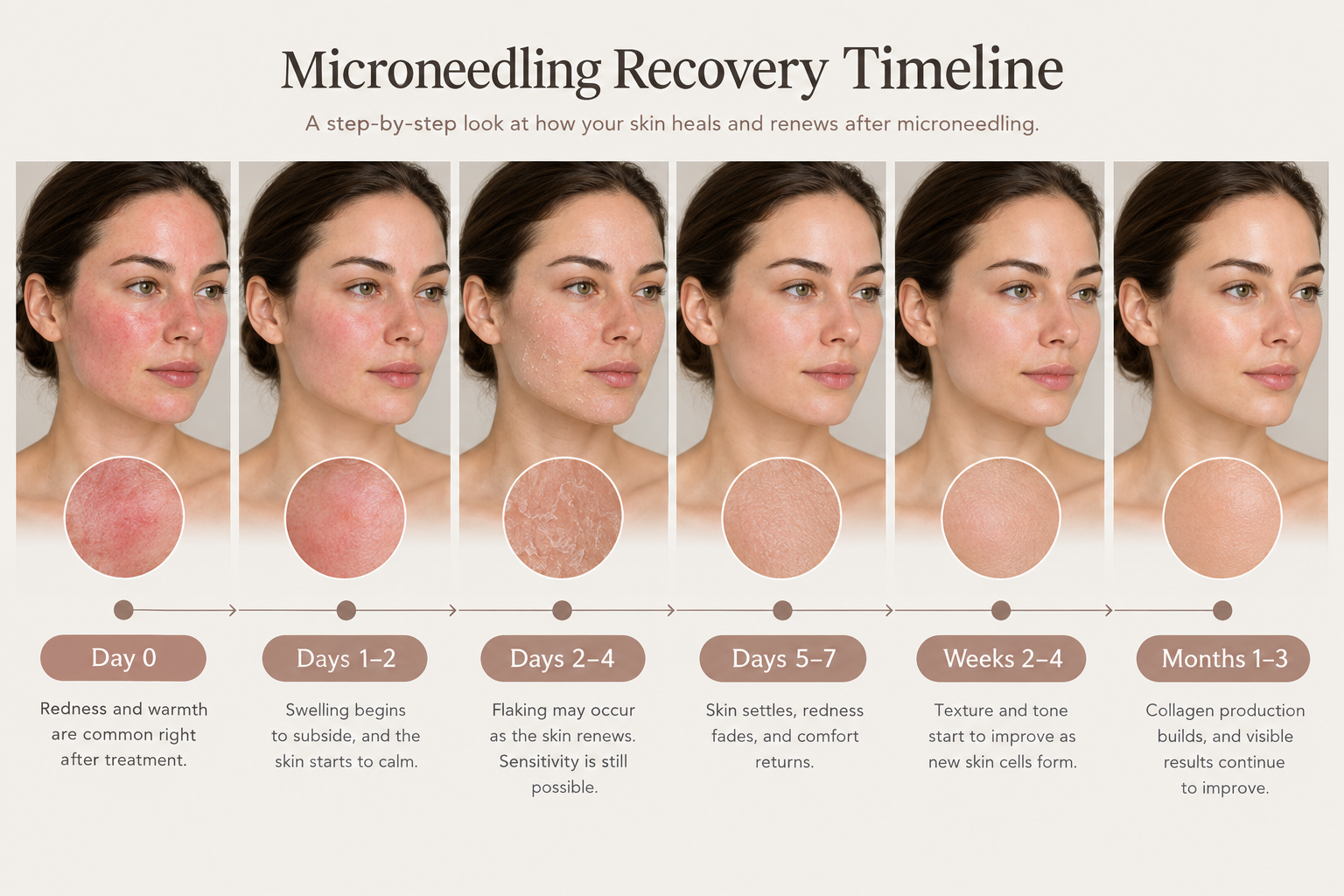
- Immediately after treatment: Redness, warmth, and mild swelling similar in appearance to moderate sunburn. Some patients notice pinpoint bleeding, which is normal at deeper needle depths.
- 24 to 48 hours: Redness typically begins to subside. The skin may feel tight, sensitive, and slightly rough. Some patients experience mild swelling, particularly around the eyes.
- Days two to four: Skin may begin to flake or peel lightly as the surface renews. Redness continues to fade. Sensitivity decreases for most patients.
- Days five to seven: Most patients find that visible redness and peeling have resolved. The skin may appear slightly brighter or smoother, though significant collagen remodelling results take longer to develop.
- Weeks two to four: Gradual improvements in skin texture, tone, and firmness may become more noticeable as collagen synthesis progresses.
- One to three months: More substantial improvements in skin quality, fine lines, and scarring may be visible as collagen matures. Results from a course of treatments accumulate over this period.
Deeper microneedling sessions or treatments targeting concerns such as acne scarring may involve a longer recovery period with more pronounced initial redness and peeling. Your practitioner should give you a realistic expectation of downtime based on the specific parameters used in your session.
Skincare Products Safe to Use During Recovery
Choosing the right products during the healing phase supports recovery and reduces the risk of irritation. The following categories are generally considered appropriate for post-microneedling skin, though individual tolerance varies and practitioner guidance should always be followed.
- Gentle, fragrance-free cleansers: Micellar water or a mild gel or cream cleanser without active ingredients.
- Hyaluronic acid serums: Lightweight hydrating serums that draw moisture into the skin without causing irritation.
- Ceramide-containing moisturisers: Help restore and maintain the skin barrier during healing.
- Mineral sunscreen (SPF 30 or higher): Physical sunscreens are preferred in the immediate post-treatment period.
- Soothing ingredients: Centella asiatica, panthenol, and allantoin are commonly found in post-procedure skincare and are generally well tolerated on healing skin.
Avoid introducing new products during the recovery period. If you are unsure whether a product is appropriate, contact your clinic before applying it.
Risks and When to Contact Your Practitioner
Microneedling is associated with a range of possible side effects, most of which are mild and temporary. However, some reactions require prompt clinical assessment.
Common and expected side effects include redness, mild swelling, skin sensitivity, and light flaking. These typically resolve within a few days. Less common but possible complications include prolonged redness lasting more than a week, post-inflammatory hyperpigmentation — particularly in patients with Fitzpatrick skin types IV to VI — infection, milia formation, and, rarely, scarring. Cold sore outbreaks can be triggered in patients with a history of herpes simplex virus; antiviral prophylaxis may be recommended before treatment in susceptible individuals.
Contact your practitioner if you experience any of the following after microneedling:
- Increasing redness, warmth, or swelling after the first 48 hours rather than improving
- Pus, crusting, or signs of infection at the treatment site
- Blistering or open wounds
- Significant pain that is not improving
- A cold sore outbreak in or near the treated area
- Darkening of the skin that appears to be worsening rather than fading
Early intervention is important if a complication develops. Do not attempt to self-treat a suspected infection or significant skin reaction.
Aftercare for Microneedling on Body Areas
Microneedling is not limited to the face. It is also used on the neck, décolletage, scalp, and body areas such as the abdomen or thighs to address concerns including stretch marks and scarring. Aftercare principles are broadly similar to facial aftercare, but there are some practical differences to consider.
Clothing worn over treated body areas should be loose-fitting and made from soft, breathable fabric to avoid friction against healing skin. Tight waistbands, bra straps, or synthetic fabrics can cause irritation if they rub against a freshly treated area. For scalp microneedling — which is sometimes used to support hair growth — avoid washing the scalp with shampoo for at least 24 hours, and use only gentle, sulphate-free products when you do resume washing. Sun protection for treated body areas is equally important, particularly for areas that may be exposed during outdoor activities.
How Aftercare Affects Your Results
The quality of microneedling aftercare directly influences the outcome of treatment. Patients who follow post-procedure guidance consistently tend to experience a smoother recovery, fewer complications, and results that develop more predictably. Conversely, premature use of active ingredients, unprotected sun exposure, or picking at healing skin can impair collagen synthesis, trigger pigmentation changes, or introduce infection — all of which can compromise the final result.
It is also worth noting that microneedling results are cumulative. A single session may produce a noticeable improvement in skin texture and radiance, but addressing concerns such as acne scarring, deeper wrinkles, or significant skin laxity typically requires a course of treatments spaced four to six weeks apart. Consistent aftercare across each session in a course helps maintain the skin’s capacity to heal efficiently and respond well to subsequent treatments.
Frequently Asked Questions
How long after microneedling can I wear makeup?
Most practitioners recommend waiting at least 24 to 48 hours before applying makeup. If your skin is still visibly red, swollen, or sensitive, it is advisable to wait longer. When you do return to makeup, choose products that are free from fragrance, alcohol, and heavy preservatives, and apply them with clean brushes or sponges.
Can I wash my face the day after microneedling?
Yes, gentle cleansing with a mild, fragrance-free cleanser and lukewarm water is appropriate from the day after treatment. Avoid rubbing the skin or using any exfoliating tools. Pat dry with a clean towel rather than wiping.
When can I return to my normal skincare routine?
Most patients can begin reintroducing their usual skincare products gradually from around day five to seven, once the skin has stopped peeling and sensitivity has reduced. Retinoids and strong active ingredients are typically reintroduced last, often after seven to ten days, and only when the skin has fully settled. Follow your practitioner’s specific guidance, as this varies depending on the depth of treatment and your skin’s response.
Is it normal for my skin to look worse before it looks better?
Yes, this is common. The initial redness, mild swelling, and flaking that occur in the first few days can make the skin appear temporarily worse than before treatment. This is a normal part of the healing process. Visible improvements in skin quality typically emerge from around one to two weeks post-treatment and continue to develop over the following weeks and months.
Can I exercise after microneedling?
Light walking is generally acceptable, but intense exercise that causes significant sweating or raises body temperature should be avoided for at least 24 to 48 hours. Sweat can irritate healing skin, and increased circulation can prolong redness and swelling. Most practitioners advise resuming normal exercise from day two or three, depending on how the skin is recovering.
How do I protect my skin from the sun after microneedling?
Apply a broad-spectrum mineral sunscreen with SPF 30 or higher every morning, starting from the day after treatment. Reapply every two hours if you are outdoors. Wear protective clothing and a wide-brimmed hat when spending time in direct sunlight. Avoid sunbeds for at least two weeks. Sun protection should remain a consistent part of your routine beyond the immediate recovery period to maintain results and prevent pigmentation.
Does aftercare differ for RF microneedling compared to standard microneedling?
Radiofrequency microneedling combines the micro-needling process with radiofrequency energy delivered through the needle tips, which adds a thermal component to the treatment. Recovery after RF microneedling may involve slightly more pronounced redness and swelling compared to standard microneedling, and the recovery period may be a day or two longer. The core aftercare principles — gentle cleansing, hydration, sun protection, and avoiding active ingredients — remain the same, but your practitioner will provide specific guidance based on the device and settings used.
Making the Most of Your Microneedling Recovery
Microneedling aftercare is not a passive process. The steps you take in the days following treatment play a meaningful role in how your skin heals, how comfortable the recovery period is, and how clearly the results of treatment become visible. Keeping the skin clean, calm, and protected from the sun while avoiding irritating ingredients and activities gives the skin the conditions it needs to repair efficiently.
If you are planning a course of microneedling sessions, establishing a consistent post-treatment routine from your first appointment makes subsequent recoveries easier to manage. Discuss your full skincare routine with your practitioner before treatment so that any products that need to be paused are identified in advance. If you have a history of cold sores, keloid scarring, active skin conditions, or are taking medications that affect skin healing, make sure your practitioner is aware, as these factors may influence both the treatment approach and the aftercare recommendations given to you.
A qualified practitioner should provide written aftercare instructions tailored to your specific treatment. If you have questions about your recovery at any point, contact your clinic rather than relying on general online advice, as individual circumstances vary and professional guidance is always more reliable than a generalised recommendation.


