
Facial Hair Removal Methods: Which Option Is Right for You?
Unwanted facial hair is one of the most common cosmetic concerns among both women and men, yet the range of available removal methods can make choosing the right approach genuinely confusing. Some options offer temporary convenience, others promise long-term reduction, and a few carry meaningful risks if performed incorrectly or on unsuitable skin. This article explains the main facial hair removal methods available today, how each one works, what results are realistic, and which factors should guide your decision before booking a treatment.
Key Takeaways
- No single method is universally the best way to remove facial hair — the right choice depends on hair colour, skin tone, treatment area, budget, and how long you want results to last.
- Laser hair removal and intense pulsed light (IPL) offer the most significant long-term hair reduction, but neither guarantees permanent removal for every patient.
- Temporary methods such as threading, waxing, and dermaplaning are widely accessible and carry low risk when performed correctly, but require regular maintenance.
- Electrolysis is the only method currently recognised as capable of permanent hair removal, though it is time-intensive and best suited to smaller areas.
- A consultation with a qualified practitioner is important before starting any energy-based treatment, particularly for patients with darker skin tones or hormonal hair growth conditions.
Why Facial Hair Removal Requires a Different Approach
Facial skin is thinner, more vascular, and more reactive than skin on the body, which means methods that work well on the legs or underarms may not translate directly to the face. The upper lip, chin, jawline, cheeks, and sideburn area each have different hair densities, follicle depths, and sensitivities. Hormonal conditions such as polycystic ovary syndrome (PCOS) can cause persistent or recurrent facial hair growth that no removal method will fully resolve without addressing the underlying cause. Understanding these factors before committing to a treatment helps set realistic expectations and reduces the risk of skin irritation, post-inflammatory hyperpigmentation, or unsatisfactory results.
Facial hair also varies considerably in colour and texture. Fine, vellus hair — sometimes called peach fuzz — behaves very differently from coarser, pigmented terminal hair. Some methods, such as laser hair removal, rely on the contrast between hair pigment and skin tone and are therefore less effective on light, grey, or white hair. Others, such as dermaplaning, remove vellus hair effectively but do not affect the follicle at all. Matching the method to the hair type is one of the most important decisions in this process.
Temporary Facial Hair Removal Methods
Threading
Threading is a technique that uses a twisted cotton thread to trap and pull individual hairs from the follicle. It is widely used for shaping eyebrows and removing upper lip and chin hair. Threading does not involve heat or chemicals, making it suitable for most skin types including sensitive skin and those using topical retinoids or certain prescription skincare. Results typically last two to six weeks depending on individual hair growth cycles. The main limitations are that threading requires a skilled practitioner to avoid skin trauma, and repeated sessions are needed indefinitely. Temporary redness and minor irritation are common immediately after treatment but usually resolve within a few hours.
Waxing
Facial waxing removes hair from the root using warm or cold wax applied to the skin and then pulled away. It can cover larger areas more quickly than threading and is commonly used on the upper lip, chin, and cheeks. Results last approximately three to six weeks. Waxing carries a higher risk of skin irritation than threading, particularly for those using exfoliating skincare ingredients such as retinol, AHAs, or BHAs, which can make the skin more fragile. Waxing is generally not recommended over active acne, broken skin, or areas recently treated with certain prescription medications. Post-waxing redness, minor swelling, and occasional folliculitis (inflammation around the hair follicle) are possible side effects.
Shaving and Dermaplaning
Shaving the face with a razor removes hair at the skin surface and is a quick, painless, and inexpensive option. The common concern that shaving causes hair to grow back thicker or darker is not supported by clinical evidence — the blunt tip of a shaved hair may feel coarser initially, but the hair’s structure and pigmentation are not changed. Results last only a few days before regrowth becomes visible.
Dermaplaning is a professional treatment that uses a sterile surgical scalpel held at a specific angle to remove both vellus facial hair and the outermost layer of dead skin cells simultaneously. Performed by a trained aesthetician or clinician, dermaplaning can improve skin texture and product absorption in addition to removing fine hair. It is not suitable for active acne-prone skin, as the blade can spread bacteria and cause further breakouts. Results for hair removal last approximately three to four weeks. Dermaplaning does not affect terminal hair growth and is not a substitute for laser or electrolysis treatments targeting coarser hair.
Depilatory Creams
Chemical depilatory creams dissolve the hair shaft using alkaline compounds such as thioglycolate. They are available over the counter and can be used at home, though not all formulations are designed for facial use. Depilatory creams remove hair at or just below the skin surface, so results are slightly longer-lasting than shaving but still temporary, typically lasting one to two weeks. The main risks are chemical irritation and allergic contact dermatitis. A patch test at least 24 hours before use is strongly recommended, particularly on facial skin. Depilatory creams should not be used near the eyes, on broken or inflamed skin, or by those with known sensitivity to the active ingredients.
Long-Term Facial Hair Reduction Methods
Laser Hair Removal
Laser hair removal is one of the most widely sought long-term solutions for unwanted facial hair. The treatment uses concentrated light energy at a specific wavelength to target melanin — the pigment — within the hair follicle. The absorbed energy converts to heat, which damages the follicle and inhibits future hair growth. Because the laser targets melanin, it works most effectively on darker hair against lighter skin. Advances in laser technology, including Nd:YAG lasers, have improved safety for patients with medium to darker skin tones, though the risk of pigmentation changes remains higher in these groups and careful practitioner selection is essential.
Facial laser hair removal typically requires a course of six to eight sessions spaced four to eight weeks apart, as the treatment is only effective during the active growth phase of the hair cycle. After a full course, many patients experience a significant and lasting reduction in hair density and thickness, though some maintenance sessions may be needed annually or when hormonal changes trigger new growth. Laser hair removal is not effective on grey, white, red, or very light blonde hair due to insufficient melanin content. Common side effects include temporary redness, swelling, and mild discomfort during treatment. Rare but more serious risks include burns, blistering, and permanent pigmentation changes, which are more likely when treatment is performed on unsuitable skin types or by inadequately trained practitioners.
Intense Pulsed Light (IPL)
Intense pulsed light (IPL) uses broad-spectrum light rather than a single laser wavelength to target hair follicles. IPL devices are widely available in professional clinics and increasingly in at-home consumer devices. Clinically, IPL can achieve meaningful hair reduction on suitable candidates — typically those with fair to medium skin tones and darker hair — but it is generally considered less precise than dedicated laser systems. The broader light spectrum means more energy is scattered across the skin, which can increase the risk of surface skin reactions if settings are not carefully calibrated to the individual’s skin tone and hair colour.
IPL facial hair removal follows a similar treatment schedule to laser, requiring multiple sessions for meaningful results. At-home IPL devices are available but typically operate at lower energy levels than clinical devices, which may limit their effectiveness. Anyone considering at-home IPL should follow manufacturer guidance carefully and avoid use on darker skin tones unless the device is specifically validated for that purpose. As with laser, IPL is not effective on light or unpigmented hair.
Electrolysis
Electrolysis is the only hair removal method currently recognised by regulatory bodies in several countries, including the United States Food and Drug Administration (FDA), as capable of achieving permanent hair removal. The treatment works by inserting a very fine probe into each individual hair follicle and delivering a small electrical current that destroys the follicle’s ability to produce hair. Because each follicle must be treated individually, electrolysis is time-intensive and is most practical for smaller areas such as the upper lip, chin, or eyebrow shaping.
Electrolysis is effective regardless of hair colour or skin tone, which makes it a valuable option for patients with light, grey, or white hair who are not candidates for laser or IPL. A full course of treatment may require many sessions over several months, as follicles in different growth phases must each be targeted. Side effects include temporary redness, swelling, and occasional scabbing at the treatment sites. When performed by a qualified electrologist using sterile equipment, the risk of scarring is low but not absent. Patients with certain implanted medical devices, such as pacemakers, may not be suitable candidates.
Comparing Facial Hair Removal Methods at a Glance
| Method | How It Works | Hair Types | Longevity | Sessions Needed | Key Limitations |
|---|---|---|---|---|---|
| Threading | Mechanical removal from root | All colours and types | 2–6 weeks | Ongoing | Requires skilled practitioner; temporary |
| Waxing | Adhesive removal from root | All colours and types | 3–6 weeks | Ongoing | Skin irritation risk; not suitable with some skincare |
| Dermaplaning | Blade removes surface hair and skin cells | Fine vellus hair | 3–4 weeks | Ongoing | Not suitable for active acne; no follicle effect |
| Depilatory cream | Chemical dissolution of hair shaft | All colours and types | 1–2 weeks | Ongoing | Irritation and allergy risk; patch test required |
| Laser hair removal | Light energy targets follicle melanin | Dark hair; limited on light hair | Long-term reduction | 6–8 sessions; possible maintenance | Less effective on light/grey hair; pigmentation risk on darker skin |
| IPL | Broad-spectrum light targets follicle | Dark hair on fair to medium skin | Long-term reduction | Multiple sessions | Less precise than laser; limited for darker skin tones |
| Electrolysis | Electrical current destroys each follicle | All colours and types | Permanent (recognised) | Many sessions over months | Time-intensive; impractical for large areas |
Factors That Influence Which Method May Suit You
Choosing the most appropriate facial hair removal method involves weighing several personal and clinical factors rather than simply selecting the most popular option. Hair colour and skin tone are the most significant determinants for energy-based treatments. Patients with dark hair and fair to medium skin tend to be the most straightforward candidates for laser and IPL, while those with lighter hair or darker skin tones may find electrolysis a more reliable long-term option.
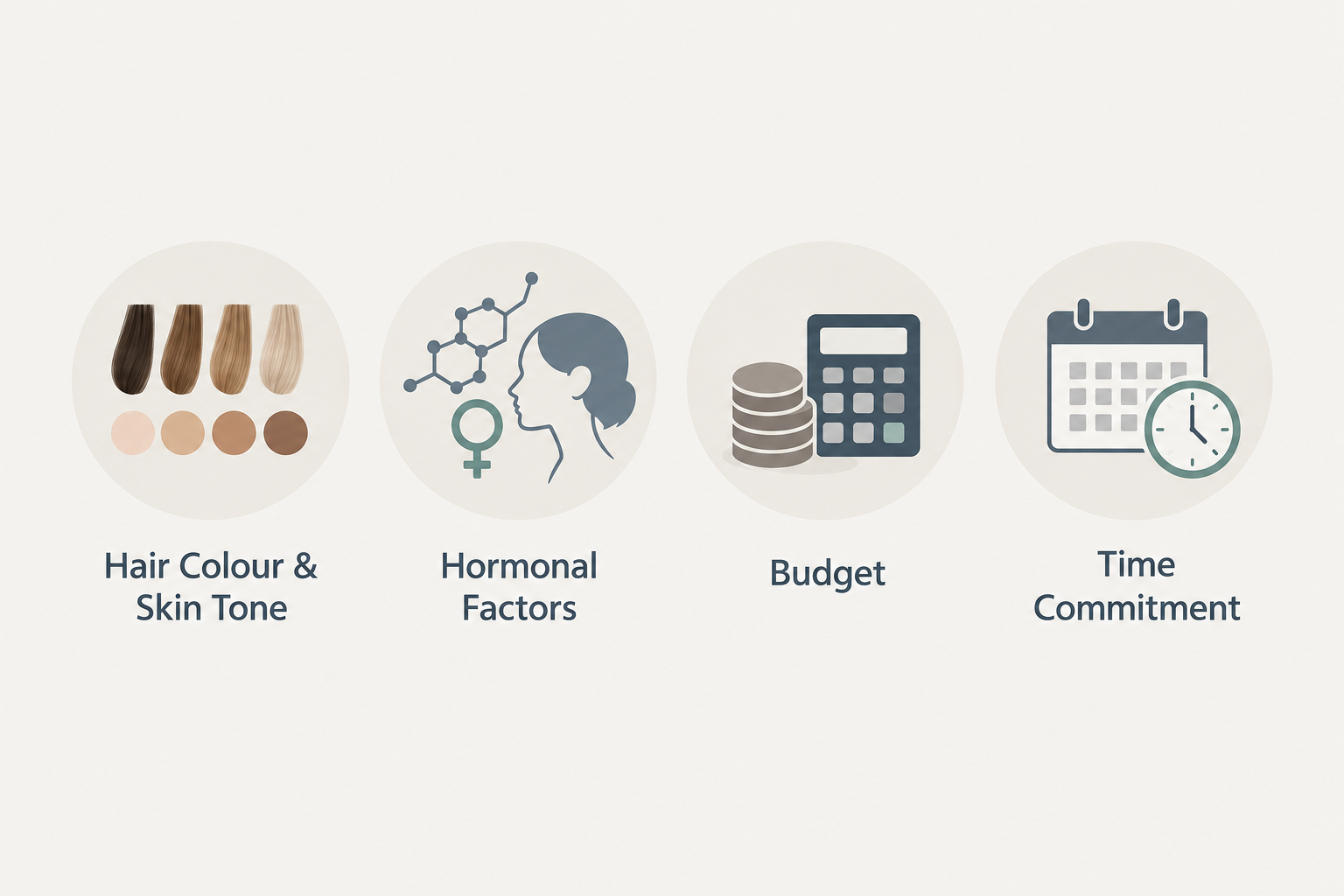
The underlying cause of facial hair growth also matters. Hormonal conditions such as PCOS, adrenal disorders, or medication side effects can drive persistent hair growth that returns despite effective treatment. In these cases, addressing the hormonal cause — often in collaboration with an endocrinologist or GP — alongside a hair removal programme tends to produce better long-term outcomes than hair removal alone. A practitioner who takes a thorough medical history before recommending a treatment plan is better placed to manage these situations appropriately.
Budget and time commitment are practical considerations that should not be overlooked. Temporary methods have lower upfront costs but accumulate expense and time over years of ongoing maintenance. Laser hair removal and electrolysis require a larger initial investment but can reduce or eliminate the need for regular maintenance in suitable candidates. The total cost of a full laser course should be weighed against the cumulative cost of years of waxing or threading appointments.
Risks, Side Effects, and Who May Not Be Suitable
Every facial hair removal method carries some degree of risk, even those that appear straightforward. Skin irritation, redness, and temporary sensitivity are common across most methods and usually resolve quickly. More significant risks are associated with energy-based treatments and include post-inflammatory hyperpigmentation (darkening of the skin following inflammation), hypopigmentation (lightening of the skin), burns, and, rarely, scarring. These risks are substantially higher when treatments are performed by inadequately trained practitioners, when device settings are not calibrated to the individual’s skin type, or when contraindications are not properly assessed.
Patients who may need additional caution or specialist assessment before certain facial hair removal treatments include those who are pregnant or breastfeeding, those with active skin infections or inflammatory skin conditions such as rosacea or eczema in the treatment area, those taking photosensitising medications, those with a history of keloid scarring, and those with implanted electronic devices. Darker skin tones require careful practitioner selection and appropriate device choice to minimise pigmentation risks with laser and IPL. A thorough consultation before any energy-based treatment is not optional — it is a clinical necessity.
What to Expect During and After Treatment
The experience of facial hair removal varies considerably depending on the method chosen. Threading and waxing involve brief, sharp discomfort during hair removal and are typically completed within minutes. Dermaplaning is generally painless and may feel similar to a close shave. Depilatory creams require a waiting period of several minutes and should be removed promptly if any stinging or burning occurs.
Laser hair removal and IPL treatments involve a sensation often described as a rubber band snap or mild heat against the skin. Most modern clinical devices incorporate cooling mechanisms to improve comfort. Topical anaesthetic cream can be applied before treatment for more sensitive areas such as the upper lip. Redness and mild swelling after laser or IPL treatment are expected and typically resolve within 24 to 48 hours. Sun exposure should be avoided before and after energy-based treatments, and broad-spectrum SPF should be applied consistently throughout a treatment course.
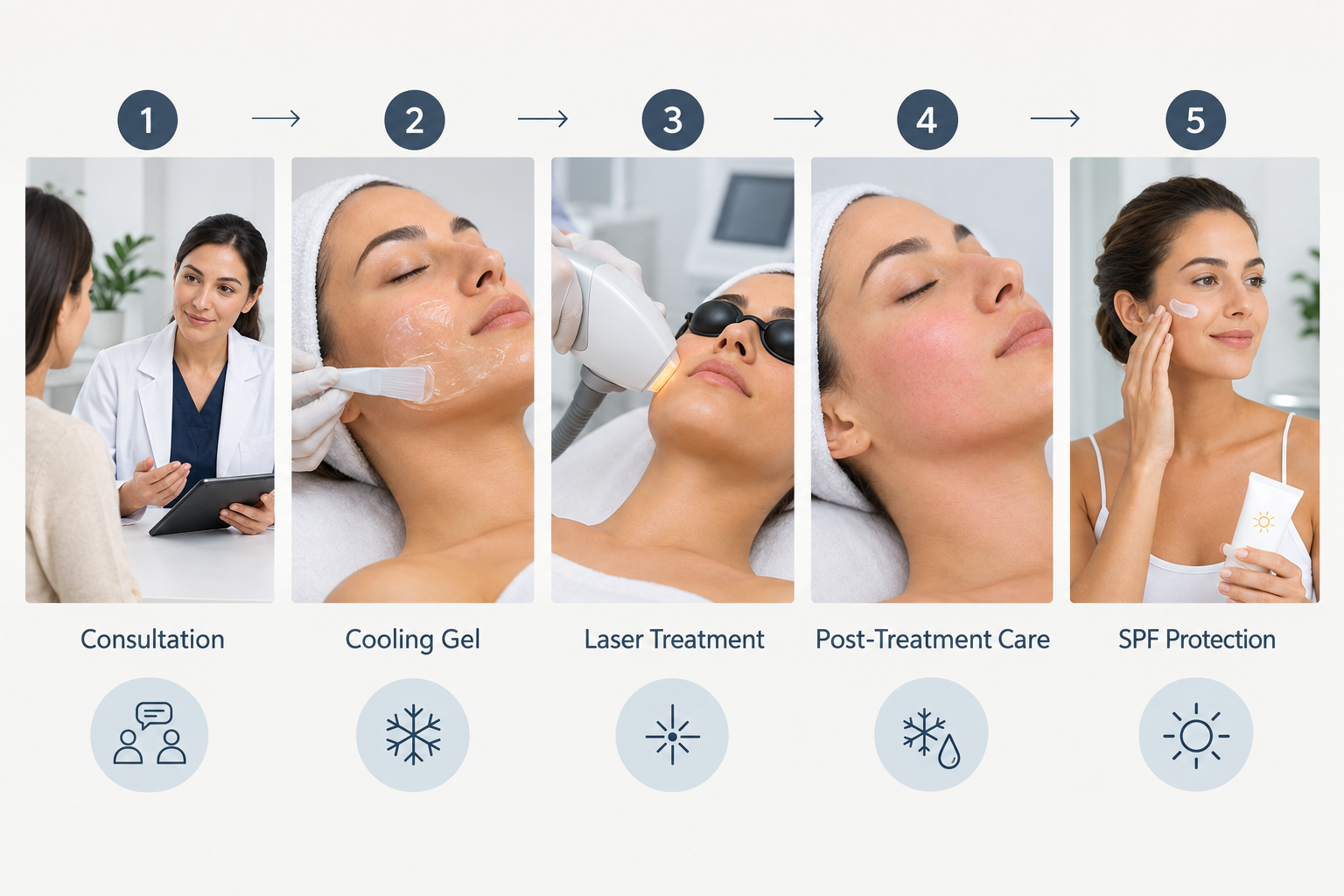
Electrolysis involves the insertion of a fine probe into each follicle, which can cause a stinging or heat sensation. Temporary redness and minor swelling at treated follicles are normal. Treated areas should be kept clean and protected from sun exposure during the healing period. Results from electrolysis accumulate gradually over multiple sessions, and patience is required before the full outcome becomes apparent.
The Role of Hormonal Hair Growth
Hormonal influences on facial hair growth are clinically significant and are often underaddressed in discussions of hair removal. Androgens — male hormones present in both women and men — stimulate the conversion of fine vellus hair into coarser terminal hair in hormonally sensitive follicles. Elevated androgen levels, whether from PCOS, adrenal conditions, or certain medications, can cause new facial hair to develop even after successful treatment of existing hair. This does not mean that hair removal treatments are ineffective; rather, it means that ongoing maintenance may be needed, and that a medical assessment to identify and manage the hormonal cause is a valuable part of a comprehensive approach.
Patients experiencing a sudden or significant increase in facial hair growth, particularly when accompanied by other symptoms such as irregular periods, acne, or scalp hair thinning, should discuss this with their GP before pursuing cosmetic hair removal, as these may indicate an underlying condition that warrants investigation.
Frequently Asked Questions
Is laser hair removal on the face permanent?
Laser hair removal produces long-term hair reduction rather than guaranteed permanent removal for most patients. Many people experience a significant and lasting decrease in hair density and thickness after a full course of treatment, but some hair may regrow over time, particularly if hormonal changes occur. Maintenance sessions may be needed periodically. Electrolysis is the method most widely recognised as capable of permanent removal.
Can facial hair removal cause skin damage?
When performed correctly by a qualified practitioner on a suitable candidate, the risk of lasting skin damage from most facial hair removal methods is low. However, energy-based treatments such as laser and IPL carry a real risk of burns, pigmentation changes, and, rarely, scarring if settings are inappropriate or the practitioner is inadequately trained. Choosing a reputable clinic and ensuring a thorough pre-treatment consultation significantly reduces these risks.
Does dermaplaning make facial hair grow back thicker?
Dermaplaning does not alter the structure, colour, or growth rate of facial hair. The hair follicle is not affected by the blade, so regrowth occurs at the same rate and with the same characteristics as before treatment. The blunt tip of regrown hair may initially feel slightly different to the touch, but this is a tactile effect rather than a change in the hair itself.
Which facial hair removal method is best for sensitive skin?
Threading is generally well tolerated by sensitive skin because it does not involve heat, chemicals, or adhesives. Dermaplaning performed by a trained professional can also be suitable for sensitive skin types. Waxing and depilatory creams carry a higher risk of irritation and are less ideal for reactive skin. Energy-based treatments require careful assessment of skin sensitivity and tone before proceeding.
How many laser sessions are needed for facial hair removal?
Most patients require six to eight laser sessions for meaningful facial hair reduction, spaced approximately four to eight weeks apart to target hair in different growth phases. The exact number varies depending on hair density, colour, the treatment area, and individual response. Some patients may need additional sessions, and periodic maintenance treatments may be recommended after the initial course.
Is IPL or laser better for facial hair removal?
Dedicated laser systems are generally considered more precise than IPL for facial hair removal, particularly for smaller or more defined areas. IPL can be effective for suitable candidates but uses a broader light spectrum that requires careful calibration. The best choice depends on individual skin tone, hair colour, and the specific device and practitioner available. A consultation with a qualified practitioner can help determine which technology is more appropriate for your situation.
Choosing the Right Facial Hair Removal Approach for Your Situation
The best way to remove facial hair is not a single universal answer — it is the method that aligns with your hair type, skin tone, treatment goals, medical history, and realistic expectations. Temporary methods such as threading, waxing, and dermaplaning remain practical and accessible choices for many people, particularly those who prefer to avoid energy-based treatments or who are managing fine vellus hair rather than coarser terminal growth. These methods require ongoing commitment but carry relatively low risk when performed correctly.
For those seeking a more lasting reduction in facial hair, laser hair removal offers meaningful long-term results for suitable candidates — particularly those with darker hair and fair to medium skin tones. IPL can be a viable alternative in the right clinical context. Electrolysis remains the most established option for permanent removal and is the preferred choice for patients with light, grey, or white hair that cannot be targeted by light-based treatments.
If you are considering a long-term or energy-based facial hair removal treatment, a consultation with a qualified and experienced practitioner is an important first step. A thorough assessment of your skin tone, hair characteristics, medical history, and treatment goals will help identify the most appropriate approach and reduce the risk of adverse outcomes. Where hormonal hair growth is a factor, discussing this with your GP alongside any cosmetic treatment plan is advisable.


