Causes, Symptoms, and Solutions for Migrated Lip Filler
Aesthetic treatments have revolutionised facial enhancement, with injectable procedures becoming increasingly sophisticated. However, understanding potential complications ensures informed decision-making and optimal outcomes. This comprehensive guide addresses one of the most discussed concerns in cosmetic medicine, providing evidence-based insights for patients seeking safe, effective results.

Thousands of satisfied customers

Understanding Lip Filler Migration
Filler migration refers to the movement of injected material from its intended placement site to surrounding areas. This phenomenon occurs when the injected filler disperses beyond the vermillion border, creating an unnatural appearance. Clinical studies suggest that migration can happen when product integrity, placement precision, or tissue response factors converge unfavourably.
The process typically involves hyaluronic acid-based filler moving through tissue planes, particularly in areas with high mobility. Research indicates that certain anatomical zones prove more susceptible to displacement, especially where muscle activity remains constant. Understanding this mechanism helps practitioners develop preventative strategies whilst managing patient expectations effectively.
What Migrated Lip Filler Symptoms and Appearance
Recognising migrated filler early allows for timely intervention. Common indicators include:
- Visible puffiness extending beyond the natural lip border, particularly noticeable above the upper lip
- Asymmetry that wasn’t present immediately post-treatment, suggesting uneven distribution
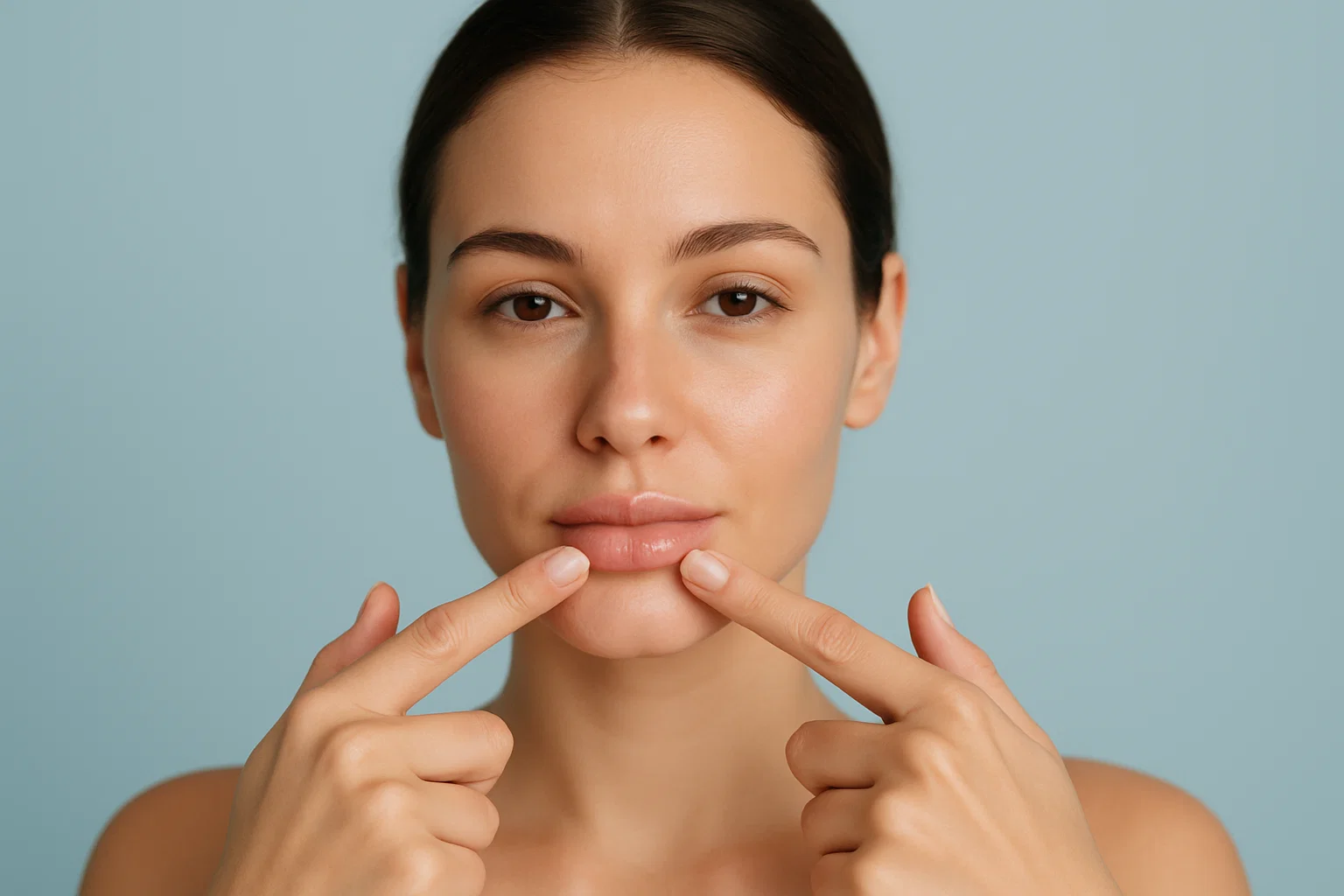
- Duck-like appearance where the lip edge becomes disproportionately prominent
- Lumpy texture detectable through touch or visible in certain lighting conditions
- Unnatural fullness in the philtrum area or perioral region
Clinical observations reveal that migrated lip filler frequently manifests as a subtle ridge or shelf above the lip line. Patients often describe feeling “something isn’t quite right” before visual changes become apparent. In cases where migration remains minor, symptoms may only appear under specific facial expressions or lighting angles.
The appearance differs significantly from normal post-treatment swelling, which typically resolves within 48-72 hours. Migration can occur weeks or months after the initial filler procedure, making ongoing assessment important for maintaining natural results.
Key Causes of Lip Filler Migration
Multiple factors contribute to the filler moving away from its intended location. Evidence suggests that tissue characteristics, product properties, and procedural variables all play significant roles. Areas with thin skin and frequent muscle contraction show increased vulnerability to displacement.
The lip anatomy presents unique challenges due to constant movement during speaking, eating, and facial expressions. This dynamic environment means that even correctly placed material may shift if surrounding conditions aren’t optimal. Recent data indicates that the border of the upper lip proves particularly susceptible due to muscle attachments and tissue density variations.
The Role of Poor Injection Technique
Injection technique represents perhaps the most critical factor determining treatment success. Practitioners must possess comprehensive understanding of facial anatomy and appropriate depth for it placement. Superficial injections increase the risk of filler migration substantially, as the product lacks proper tissue support.
Experienced injectors utilize specific techniques to anchor material within the correct tissue plane. The needle or cannula angle, injection speed, and bolus size all influence how the filler settles. Clinical experience in dermal filler injections demonstrates that precise, methodical placement significantly reduces the likelihood of unwanted movement.
Poor technique may also involve injecting across anatomical danger zones or failing to account for natural facial asymmetries. Studies show that practitioners with extensive training and regular practice achieve more predictable, lasting results whilst minimizing complications.
Overfilling: The Major Risk of Migration
Injecting too much filler during a single session creates excessive pressure within the tissue, forcing material to seek areas of least resistance. This approach to lip enhancement contradicts current best practices, which favour gradual volume building across multiple appointments.
When lip volume exceeds the tissue’s capacity to accommodate product safely, migration becomes increasingly likely. The stretched tissue loses its ability to contain the filler within intended boundaries. Professional guidelines recommend conservative dosing strategies, with many experienced practitioners limiting initial treatments to 0.5-1ml per session.
Much filler in a concentrated area also compromises blood supply and lymphatic drainage, potentially leading to further complications beyond migration alone. The most natural-looking results typically emerge from understated enhancement rather than dramatic transformation.
Choosing the Wrong Type of Dermal Filler
Not all hyaluronic acid products suit lip augmentation equally. The type of filler used significantly impacts migration risk, with consistency, cross-linking density, and cohesivity determining behaviour within tissue.
Highly cohesive formulations designed for deep structural support prove inappropriate for delicate lip tissue. Conversely, products specifically engineered for superficial injection offer better integration and reduced tendency to spread. The type of dermal filler selected should match the anatomical site, desired outcome, and individual tissue characteristics.
Research indicates that newer-generation fillers with optimised rheological properties demonstrate improved safety profiles. These advanced formulations balance spreadability during injection with stability once placed, creating predictable, maintainable results.
How Natural Facial Movement Influences Filler Migration
The lips remain in constant motion, generating forces that can displace material over time. Every smile, word spoken, and meal consumed creates tissue deformation that gradually affects filler position.
Migration may occur more readily in individuals with particularly expressive faces or those whose occupations require extensive talking. Professional singers, public speakers, and actors may experience different longevity and stability compared to others. This doesn’t contraindicate treatment but does warrant discussion during consultation.
Facial massage, certain sleeping positions, and vigorous exercise immediately post-treatment can contribute to filler migration by introducing additional mechanical stress before the product fully integrates. Understanding these lifestyle factors allows patients to modify behaviours during the critical settling period.
Strategies to Prevent Lip Filler Migration
The single most important preventive measure involves choosing a practitioner with appropriate qualifications, training, and experience in dermal injections. Medical professionals specialising in aesthetic medicine understand facial anatomy comprehensively and recognise subtle indicators that might increase migration risk.
When evaluating potential practitioners, consider:
- Professional credentials including medical registration and specialist training in aesthetic procedures
- Portfolio of results demonstrating natural, proportionate outcomes rather than exaggerated appearances
- Complication management experience showing ability to address issues should they arise
- Patient reviews reflecting satisfaction with both results and overall care experience
- Consultation approach that includes thorough assessment, realistic expectations, and comprehensive aftercare guidance
Qualified practitioners also maintain relationships with product manufacturers, ensuring authentic supplies and access to the latest formulation improvements. They participate in continuing education, keeping current with evolving techniques and safety protocols.
Following Proper Injection Protocol to Avoid Lip Migration
Best practices for injection technique centre on precision, appropriate product selection, and anatomical awareness. The correct approach involves:
Depth Considerations: Placing filler at the proper level within tissue layers ensures stability. For lip border definition, superficial placement proves necessary, whilst volume enhancement requires slightly deeper positioning within the vermillion body.
Volume Distribution: Gradual, symmetrical application across multiple injection points creates even distribution without overwhelming tissue capacity. This measured approach allows practitioners to assess response between placements, adjusting technique as needed.
Product Temperature: Bringing the filler to room temperature before injection improves handling characteristics and integration. Cold product demonstrates different flow properties, potentially affecting precision.
Injection Speed: Controlled, steady deposition allows tissue to accommodate material without excessive pressure buildup. Rapid injection increases the likelihood of filler spreading unpredictably.
Crucial Aftercare Tips to Prevent Spreading
The 24-48 hours following the lip filler treatment prove critical for proper settling. Recommended aftercare includes:
- Avoiding excessive lip movement including prolonged talking, chewing hard foods, or wide mouth opening
- Keeping the head elevated during sleep to reduce swelling and pressure
- Refraining from intense exercise for 24-48 hours post-treatment
- Avoiding facial treatments such as massages, facials, or dental work for at least two weeks
- Limiting alcohol consumption which increases inflammation and swelling
- Applying ice carefully if swelling occurs, using gentle pressure rather than rubbing
Patients should avoid lip fillers immediately before significant social events, allowing adequate recovery time. Most practitioners recommend scheduling treatments at least two weeks before important occasions to ensure any swelling has resolved and results have stabilised.
Product Selection Strategy: Choosing the Right Consistency
Modern technology offers varying consistencies tailored to specific anatomical zones and aesthetic goals. For lip enhancement, softer, more flexible formulations generally provide superior results with lower migration risk.
The product is used based on several considerations:
Cohesivity: Products that maintain their structure whilst allowing natural tissue movement suit the dynamic lip area. High cohesivity prevents spreading whilst supporting natural lip shape.
Elasticity: Product that stretch and compress with facial movement integrate more naturally. This characteristic ensures results appear authentic across various expressions rather than frozen or artificial.
Hydrophilicity: Hyaluronic acid lip fillers attract water, contributing to their volumising effect. Products with moderate hydrophilicity balance immediate results with manageable swelling.
Discussing product options during consultation allows patients to make informed choices aligned with their specific anatomy and desired outcomes. Many experienced practitioners favour particular brands based on consistent performance and positive patient feedback.
How to Correct Migrated Lip Filler
When lip filler migration occurs, hyaluronidase enzyme offers the most reliable correction method. This naturally occurring substance breaks down hyaluronic acid-based filler, allowing the body to metabolise and eliminate displaced material.
The dissolution process typically involves:
- Assessment: Identifying the precise location and extent of migration guides treatment planning
- Injection technique: Small amounts of hyaluronidase are strategically placed into areas containing migrated filler
- Monitoring response: Changes become visible within hours to days, with most migration resolving within 48-72 hours
- Follow-up evaluation: Assessing whether additional treatment is needed or if results appear satisfactory
Clinical experience indicates that most cases of lip filler migration respond excellently to hyaluronidase, with the filler has been dissolved completely within a week. The procedure proves generally well-tolerated, though temporary swelling may occur as the product breaks down.
After the filler dissolving process concludes and any inflammation subsides, patients can discuss re-treatment with more appropriate technique or product selection. Many choose to wait several weeks before considering further enhancement, allowing tissues to return fully to baseline.
Can Massage and Redistribution Fix Migrated Filler?
Manual manipulation rarely provides effective correction for established migration. Whilst gentle massage during the immediate post-treatment period might help distribute product evenly, attempting to physically move filler once migration has occurred often proves unsuccessful.
In some cases of very recent, minor displacement, skilled practitioners may attempt careful massage as a first intervention. However, this approach carries risks of worsening the situation by spreading material further. Professional consensus suggests that filler dissolving represents the safer, more predictable option.
Patients should never attempt self-massage to correct migration. The delicate facial anatomy requires expert understanding, and inappropriate manipulation can lead to additional complications including vascular compression, asymmetry, or tissue damage.
Natural Metabolism: Will Migrated Filler Eventually Dissolve?
Hyaluronic acid filler undergoes gradual degradation through natural enzymatic processes. Over time, the body breaks down and absorbs the material, whether correctly placed or migrated. However, this process occurs slowly, typically requiring 6-18 months depending on the type of filler used and individual metabolic factors.
Waiting for natural dissolution means accepting the appearance of migration during this extended period. Most patients prefer active intervention through hyaluronidase rather than prolonged tolerance of unwanted aesthetic outcomes.
Some practitioners note that migrated filler may actually persist longer than correctly placed material, as displaced product may reside in areas with slower metabolic activity. This observation further supports proactive dissolution rather than passive waiting.
Common Questions About Lip Filler Migration
How Quickly Can Filler Migration Occur?
Migration can occur at different timepoints following the lip filler procedure. Immediate migration within hours to days typically indicates technical issues such as incorrect depth or excessive volume. This early movement often reflects the filler settling under tissue pressure before full integration occurs.
Delayed migration developing weeks or months post-treatment suggests different mechanisms, potentially involving gradual displacement through repeated facial movement or changes in tissue characteristics. Clinical data suggests that most migration becomes apparent within the first three months following treatment.
Some cases of lip filler migration happens much later, particularly with certain product types or in individuals with specific anatomical features. Regular follow-up appointments allow practitioners to identify subtle changes early, addressing concerns before they become visually significant.
Is It Possible to Dissolve All Migrated Lip Filler?
Hyaluronidase effectively dissolves hyaluronic acid-based fillers regardless of their location. The enzyme works specifically on hyaluronic acid molecules, breaking the cross-links that give the filler structure and cohesion. Complete dissolution of migrated lip filler typically requires appropriate dosing and precise placement of the enzyme. Experienced practitioners understand the necessary concentrations and injection techniques to achieve thorough removal whilst preserving surrounding tissues. In rare instances where initial hyaluronidase treatment doesn’t completely resolve migration, a second session may be scheduled. The vast majority of cases achieve satisfactory correction with one or two treatments, with the filler moves away completely disappearing.
Is Lip Filler Migration Dangerous or a Health Concern?
Most cases of lip filler migration present aesthetic rather than medical concerns. The primary issue involves appearance—the unnatural distribution of product creating visual asymmetry or distortion. Overall, lip filler migration remains primarily a cosmetic concern with straightforward correction options. Choosing qualified practitioners and following proper aftercare significantly minimize the risk of filler migration occurring.
Can You Dissolve Lip Fillers That Have Migrated?
Yes, hyaluronic acid lip fillers that have migrated can be dissolved using hyaluronidase enzyme. This treatment option provides reliable, predictable correction regardless of how long the migration has been present. The dissolution process works the same way for migrated and correctly placed filler. The enzyme breaks down the hyaluronic acid structure, allowing natural metabolic processes to eliminate the material. Most patients experience visible improvement within 24-48 hours following treatment. Some practitioners recommend complete dissolution of existing filler before considering re-treatment, ensuring a clean slate for optimal placement. This approach prevents the complexity of working around previously migrated material whilst attempting to achieve natural results.
Is Lip Filler Migration Dangerous?
Migration typically poses minimal health risk, though it warrants professional assessment. The condition primarily creates aesthetic concerns rather than medical emergencies. These symptoms, whilst rare, require prompt practitioner evaluation. The vast majority of migration cases involve straightforward aesthetic correction without medical complications. Understanding that effective correction exists often alleviates patient anxiety. The reversibility of hyaluronic acid-based treatments represents one of their significant safety advantages, allowing practitioners to address unexpected outcomes confidently.
Newsletter Updates
Enter your email address below and subscribe to our newsletter