How to Get a Jawline: Defined Jawline Tips, Treatments and Realistic Expectations
A well-defined jawline is one of the most commonly requested aesthetic goals, yet the path to achieving it depends heavily on individual anatomy, skin quality, and the underlying cause of a soft or undefined jaw. Whether the concern is excess submental fat, loose skin, volume loss, or simply the natural shape of the bone structure, different factors call for different approaches. This article explains the realistic options available, from everyday habits to clinical treatments, so you can make an informed decision before seeking a consultation.
Key Takeaways
- A defined jawline can be influenced by body composition, skin laxity, bone structure, and soft tissue volume — identifying the primary cause helps determine the most appropriate approach.
- Lifestyle changes such as reducing body fat and improving posture can make a meaningful difference for some people, but they cannot alter bone structure or significantly tighten loose skin.
- Non-surgical clinical treatments including botulinum toxin, dermal fillers, fat-dissolving injections, and skin-tightening devices may improve jaw definition, but results vary and are not permanent.
- Surgical options such as chin implants or neck liposuction offer more dramatic and longer-lasting changes, but carry greater risks and recovery demands.
- A qualified practitioner assessment is essential before choosing any treatment, as the right option depends on your anatomy, skin condition, and personal goals.
Why Jawline Definition Varies Between Individuals
The appearance of the jawline is shaped by several overlapping factors. Bone structure forms the foundation: a prominent mandible and well-positioned chin naturally create a sharper jaw angle. Overlying this are layers of subcutaneous fat, muscle, and skin, all of which influence how clearly the bone contour is visible. Genetics play a significant role in determining where fat is stored and how the face ages, which is why some people retain a defined jaw well into later decades while others notice softening from their twenties onward.
Ageing progressively affects jaw definition through multiple mechanisms. Bone density in the lower face can reduce over time, fat compartments shift downward, and skin loses collagen and elasticity. The result is often a less distinct jaw border, the appearance of jowls, or a heavier-looking lower face. Understanding which of these factors is most relevant to your own situation is the first step toward choosing an effective approach.
Lifestyle Habits That May Support Jaw Definition
Before considering any clinical treatment, it is worth understanding what lifestyle changes can and cannot realistically achieve. Reducing overall body fat through a calorie-controlled diet and regular cardiovascular exercise may reduce submental fat — the fat beneath the chin — and improve the visibility of the jaw border. For individuals carrying excess weight, this can produce a noticeable improvement in jaw definition without any intervention.
Resistance training that builds the neck and shoulder muscles can improve overall posture and the visual framing of the jaw, though it does not directly sculpt the jawline itself. Staying well hydrated and limiting high-sodium foods may reduce facial puffiness, which can temporarily obscure jaw definition. Chewing firmer foods engages the masseter muscles along the sides of the jaw, and while some proponents suggest this builds jaw muscle over time, the evidence for meaningful aesthetic change through chewing habits alone is limited and results are highly variable.
Posture also matters more than many people realise. Consistently holding the head forward and the chin down can make the jaw appear less defined in photographs and in person. Practising upright posture with the chin slightly elevated can improve the visual appearance of the jaw without any treatment at all.
It is important to be realistic: lifestyle changes cannot alter bone structure, cannot significantly tighten skin that has already lost elasticity, and cannot redistribute fat in a targeted way. For these concerns, clinical options may be worth exploring.
Non-Surgical Clinical Treatments for Jaw Definition
Several non-surgical treatments are used in aesthetic medicine to improve the appearance of the jawline. Each works through a different mechanism and is suited to different underlying concerns. None of these treatments are permanent, and results depend on individual anatomy, skin quality, and the skill of the practitioner.
Botulinum Toxin for Jaw Slimming
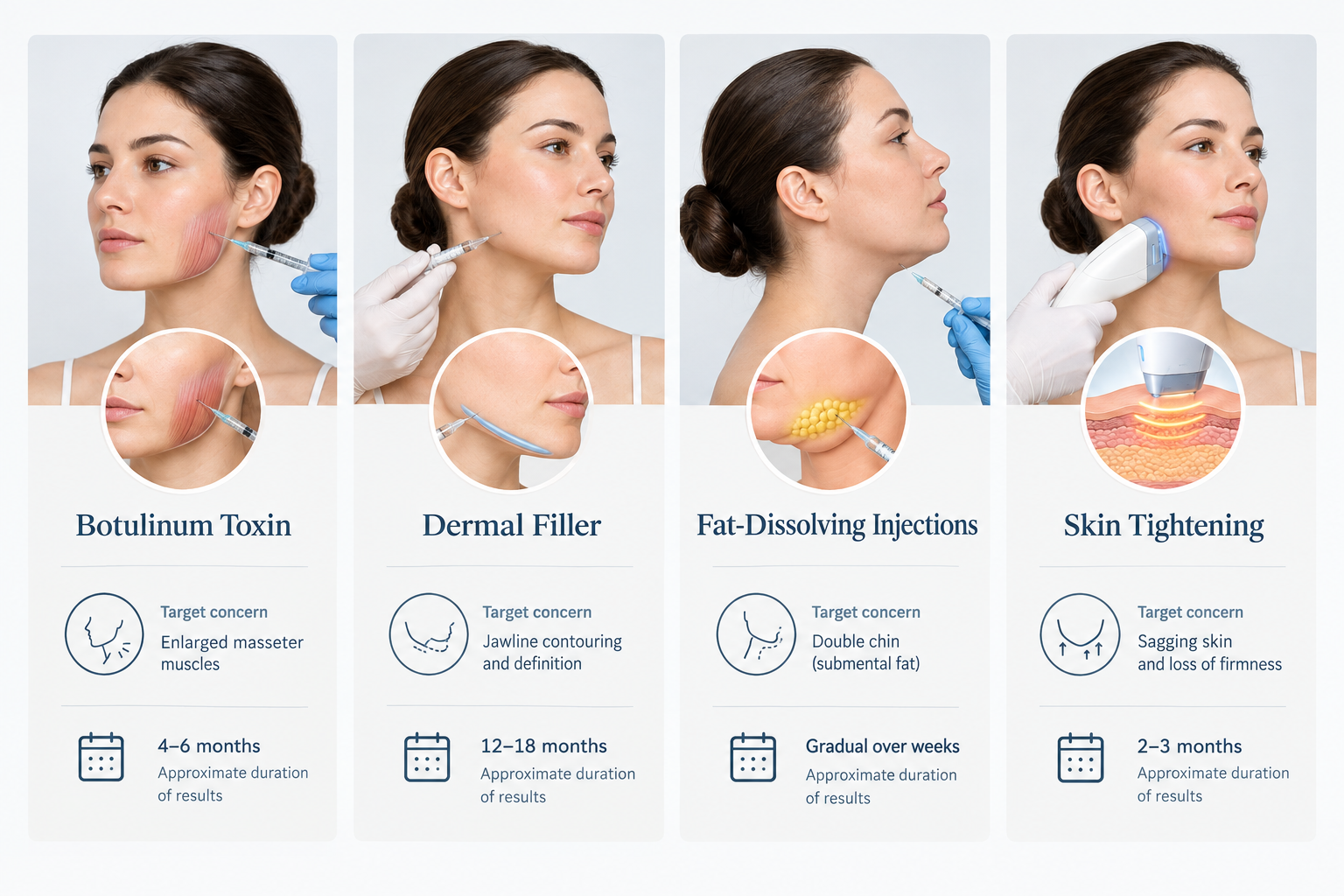
Botulinum toxin injections into the masseter muscles — the large chewing muscles at the sides of the jaw — can reduce their bulk over a series of treatments. When the masseter is enlarged, either due to genetics or habitual teeth grinding (bruxism), it can create a wide, square lower face. Reducing masseter volume through botulinum toxin may create a slimmer, more tapered jaw appearance, particularly when viewed from the front. Results typically become visible within four to six weeks and may last approximately four to six months, though this varies between individuals. Repeated treatments over time may produce longer-lasting reduction in muscle bulk. This approach is most effective when a wide jaw is primarily caused by masseter hypertrophy rather than bone width or fat distribution.
Dermal Fillers for Jaw and Chin Contouring
Hyaluronic acid dermal fillers can be placed along the jawline and at the chin to add structure, improve symmetry, and create a more defined jaw border. Chin filler may lengthen or project the chin, improving the overall balance of the lower face. Jawline filler can sharpen the angle of the jaw and extend the visible jaw border. Results are immediate and typically last between twelve and eighteen months, depending on the product used, the area treated, and individual metabolism. Dermal filler treatment carries risks including bruising, swelling, asymmetry, and in rare cases vascular complications, which is why treatment should only be performed by a qualified and experienced practitioner. Filler is not appropriate for everyone: those with significant skin laxity may not achieve the desired result from filler alone, as adding volume beneath loose skin can sometimes worsen the appearance of jowling.
Fat-Dissolving Injections for the Double Chin
Injectable fat-dissolving treatments, which typically contain deoxycholic acid or a phosphatidylcholine-based formulation, are designed to reduce localised submental fat — the fat pad beneath the chin that contributes to a double chin appearance and obscures the jaw border. These injections work by disrupting fat cell membranes, causing the cells to break down and be gradually cleared by the body over several weeks. Multiple treatment sessions are usually required, typically spaced four to six weeks apart, and results develop gradually rather than immediately. Common side effects include swelling, redness, bruising, and temporary numbness in the treated area. Fat-dissolving injections are not a weight-loss treatment and are most suitable for individuals with a localised pocket of submental fat rather than generalised excess weight. They do not address skin laxity, so patients with loose neck skin may see limited improvement in jaw definition even after fat reduction.
Skin-Tightening Treatments
For individuals whose primary concern is skin laxity along the jaw and neck rather than excess fat or insufficient bone structure, energy-based skin-tightening treatments may be relevant. Technologies including radiofrequency, high-intensity focused ultrasound (HIFU), and radiofrequency microneedling are used to stimulate collagen production in the deeper layers of the skin and soft tissue. The intended effect is a gradual firming and lifting of the skin, which may improve the definition of the jaw border and reduce the appearance of jowls. Results from these treatments are typically modest and develop over two to three months as new collagen forms. Multiple sessions may be needed, and maintenance treatments are often recommended. Evidence for these technologies varies between devices and study designs, and results are generally more noticeable in patients with mild to moderate laxity rather than significant skin looseness.
Kybella and Similar Injectables
Deoxycholic acid (marketed under brand names in various countries) is a clinically studied injectable specifically approved in some markets for the reduction of submental fat. Clinical trials have demonstrated statistically significant reductions in submental fat with repeated treatments compared to placebo, though the degree of improvement varies considerably between patients. It is worth noting that regulatory approval status and licensed indications differ between countries, so it is important to discuss what is available and approved in your region with a qualified practitioner.
Surgical Options for a More Defined Jawline
When non-surgical treatments are unlikely to achieve the desired result — for example, when bone structure is the primary limiting factor, or when there is significant skin excess — surgical options may be considered. These carry greater risks, longer recovery periods, and higher costs, but can produce more dramatic and longer-lasting changes.
Chin implants (genioplasty) add projection and definition to the chin, improving the overall balance of the lower face and the visual sharpness of the jaw profile. Neck liposuction removes submental fat more thoroughly than injectable treatments and can be combined with a neck lift to address skin laxity simultaneously. Jaw implants can widen or define the jaw angle for those seeking a more angular lower face. These procedures require consultation with a qualified plastic or maxillofacial surgeon, and suitability depends on overall health, anatomy, and realistic expectations.
Combining Treatments for Better Results
In practice, many patients benefit from a combination of approaches rather than a single treatment. A common example is combining fat-dissolving injections to reduce submental fat with jawline filler to add structure, or pairing botulinum toxin for masseter reduction with chin filler to improve lower face balance. Skin-tightening treatments may be added where mild laxity is also a concern. A practitioner experienced in facial anatomy can assess which combination is most likely to address your specific concerns effectively and safely.
It is important to approach combination treatments with realistic expectations. Multiple treatments increase both cost and the cumulative risk of side effects. A staged approach — addressing the most significant concern first and reassessing — is often more prudent than attempting to correct everything at once.
Who May Be Suitable for Jaw-Defining Treatments
Suitability for any clinical treatment depends on a thorough assessment of your medical history, current medications, skin condition, and anatomy. As a general guide, non-surgical jaw-defining treatments may be worth discussing with a practitioner if you are in good general health, have realistic expectations, and have a specific concern such as submental fat, masseter bulk, or insufficient chin projection that a particular treatment is designed to address.

Certain factors may affect suitability or require additional caution. These include pregnancy or breastfeeding, active skin infections or inflammation in the treatment area, a history of keloid scarring, autoimmune conditions, use of blood-thinning medications, and previous procedures in the same area. Botulinum toxin is generally not recommended during pregnancy or for individuals with certain neuromuscular conditions. Dermal fillers should be used with caution in individuals with a history of cold sores in the treatment area, and fat-dissolving injections are not appropriate for those with infections or active skin conditions in the submental region.
Risks and Limitations to Consider
Every clinical treatment carries potential risks, and jaw-defining procedures are no exception. Common side effects across non-surgical treatments include temporary bruising, swelling, redness, and tenderness at the injection or treatment site. These typically resolve within days to two weeks depending on the treatment. More significant risks, though less common, include asymmetry, infection, nerve effects, and in the case of dermal fillers, vascular complications that require prompt medical attention.
It is equally important to understand the limitations of non-surgical treatments. They cannot replicate the results of surgery for patients with significant structural concerns. Results are temporary and require maintenance. Individual response varies considerably, meaning that the outcome seen in one patient may not be replicated in another with similar concerns. Photographs of results from other patients should be viewed as examples of what is possible rather than guarantees of what you will achieve.
Questions to Ask at Your Consultation
- What is the primary cause of my undefined jawline — fat, skin laxity, bone structure, or muscle bulk?
- Which treatment or combination of treatments is most appropriate for my specific anatomy and goals?
- What results can I realistically expect, and over what timeframe?
- How many sessions are likely to be needed, and what is the estimated cost over time?
- What are the risks specific to my situation, and how would complications be managed?
- Are there non-clinical changes I could make first that might reduce the need for treatment?
- What qualifications and experience do you have in performing this treatment?
Frequently Asked Questions
Can exercise give me a more defined jawline?
Exercise can reduce overall body fat, which may improve jaw definition if submental fat is a contributing factor. However, targeted facial exercises have limited evidence for producing meaningful structural change, and exercise cannot alter bone structure or tighten significantly loose skin.
How long does jawline filler last?
Hyaluronic acid jawline filler typically lasts between twelve and eighteen months, though this varies depending on the product used, the volume injected, the area treated, and individual metabolism. Maintenance treatments are usually needed to sustain the result.
Is botulinum toxin for the masseter painful?
Most patients describe masseter botulinum toxin injections as mildly uncomfortable rather than painful. A fine needle is used, and the procedure is brief. Topical anaesthetic cream can be applied beforehand if preferred.
How many sessions of fat-dissolving injections are needed for the chin?
Most patients require between two and four treatment sessions spaced four to six weeks apart, though some may need more depending on the volume of fat present and their individual response. Results develop gradually over several weeks after each session.
Will skin-tightening treatments give me a sharp jawline?
Skin-tightening treatments such as HIFU or radiofrequency may improve mild to moderate skin laxity along the jaw and neck, producing a firmer appearance. However, they are unlikely to create a dramatically sharp jaw border, particularly in patients with significant laxity or structural concerns. Realistic expectations are important.
At what age should I consider jaw-defining treatments?
There is no universal age threshold. The appropriate time to consider treatment depends on the nature and degree of your concern, your overall health, and your personal goals. A qualified practitioner can assess whether treatment is appropriate and proportionate at any adult age.
Can I combine jawline filler with fat-dissolving injections?
In some cases, yes. A practitioner may recommend addressing submental fat first and then reassessing whether filler is needed to add structure once the fat has reduced. Combining treatments in the same session is sometimes appropriate but depends on individual assessment. A staged approach is often safer and allows for more accurate evaluation of results.
Choosing the Right Approach for Your Jawline Goals
Getting a more defined jawline is achievable for many people, but the right approach depends entirely on what is causing the lack of definition in the first place. Lifestyle changes are a sensible starting point and may be sufficient for those whose primary concern is submental fat related to body weight. For structural concerns, skin laxity, or localised fat that does not respond to lifestyle changes, clinical treatments offer meaningful options — provided expectations are realistic and the treatment is matched to the underlying cause.
Non-surgical treatments such as botulinum toxin for masseter reduction, dermal fillers for jaw and chin contouring, fat-dissolving injections for submental fat, and energy-based skin-tightening devices each address different aspects of jaw definition. None are permanent, and all require a qualified practitioner to assess suitability and perform the treatment safely. Surgical options remain available for those with more significant structural concerns who are willing to accept greater risk and recovery in exchange for more lasting results.
If you are considering any clinical treatment for jaw definition, a consultation with a qualified aesthetic practitioner or surgeon is the appropriate first step. A thorough assessment of your anatomy, skin condition, and goals will help identify which approach — or combination of approaches — is most likely to produce a result you are satisfied with, safely and realistically.