
How Long Does Cheek Filler Take to Settle?
Cheek filler results are not immediate. Most patients notice visible changes straight after treatment, but the product continues to integrate with surrounding tissue over the following days and weeks. Understanding the settling timeline helps set realistic expectations and reduces unnecessary concern about early swelling, asymmetry, or firmness that typically resolves on its own.
Key Takeaways
- Initial swelling and firmness after cheek filler are normal and usually subside within one to two weeks.
- Hyaluronic acid filler generally reaches its settled appearance between two and four weeks after treatment.
- Early asymmetry is common and often reflects uneven swelling rather than a permanent result.
- Bruising, tenderness, and mild lumpiness in the first week do not necessarily indicate a problem.
- A follow-up appointment at two to four weeks allows your practitioner to assess the true result and discuss any refinements.
What Happens Immediately After Cheek Filler
Immediately after cheek filler injections, the treated area typically appears fuller than the intended final result. This is partly due to the volume of filler placed and partly due to the body’s initial inflammatory response to the injections. Swelling, redness, and mild tenderness at the injection sites are expected in the first 24 to 48 hours and are not signs of a complication. Some patients also experience bruising, which can take several days to fade depending on skin tone, the technique used, and individual factors such as medication use.
The filler itself may feel firm or slightly uneven to the touch in the first few days. This is because hyaluronic acid filler, the most commonly used material for cheek augmentation, has not yet fully integrated with the surrounding tissue. The product absorbs water from the surrounding area in the days following treatment, which can temporarily increase the sense of fullness before it begins to soften. Patients sometimes describe a feeling of tightness or heaviness in the cheeks during this early phase, which generally eases as the product settles.
The Cheek Filler Settling Timeline
The settling process after cheek filler follows a broadly predictable pattern, though individual variation is significant. Factors including the type and brand of filler used, the volume injected, the depth of placement, and the patient’s own tissue characteristics all influence how quickly the final result becomes apparent.
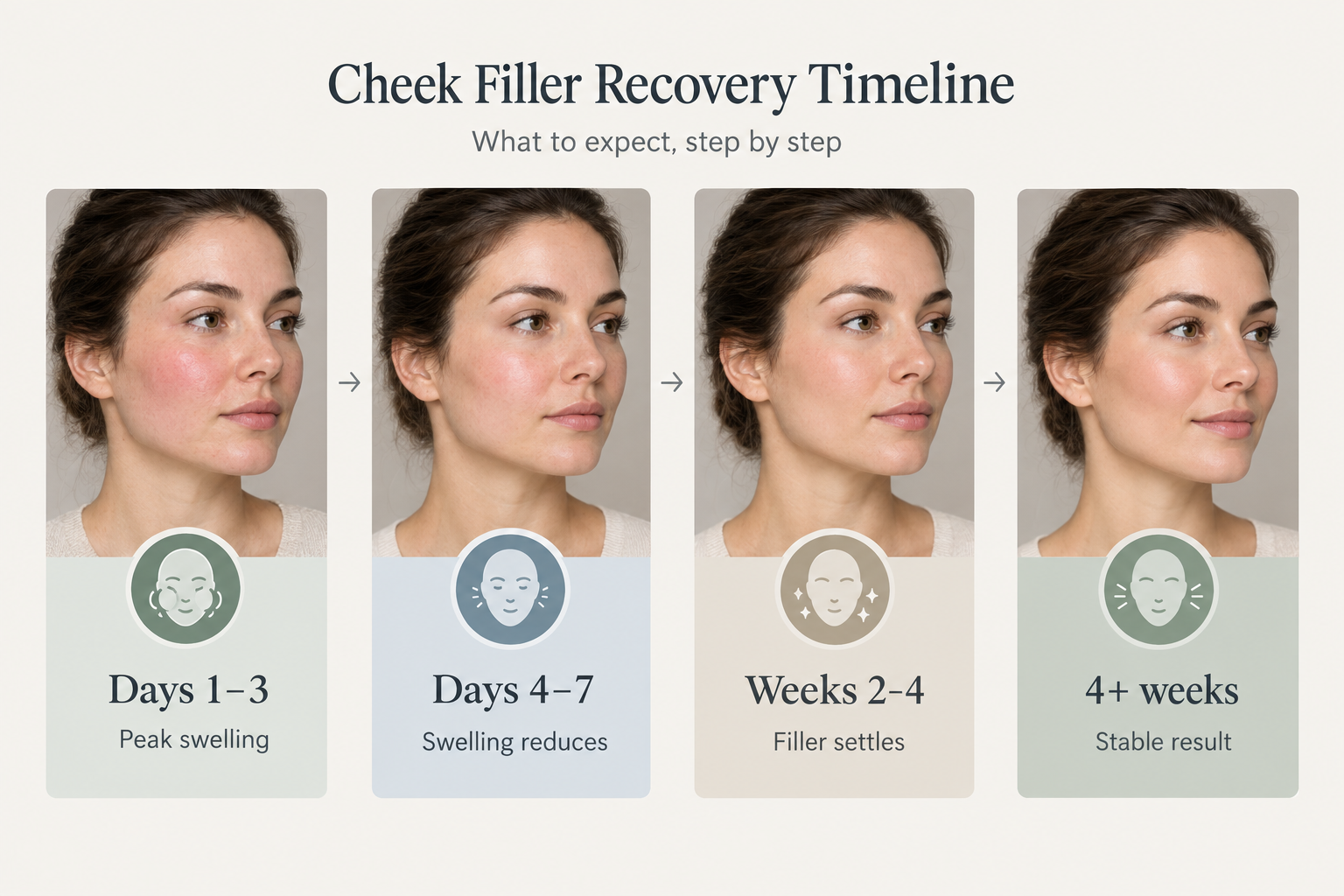
Days 1 to 3
Swelling is typically at its peak during the first two to three days after cheek filler treatment. The cheeks may appear noticeably fuller than intended, and some asymmetry between the two sides is common because swelling rarely develops at exactly the same rate on both sides. Bruising, if present, is usually most visible during this period. Patients are generally advised to avoid strenuous exercise, alcohol, and excessive heat during these early days, as these can worsen swelling and bruising.
Days 4 to 7
By the end of the first week, the majority of acute swelling has usually subsided. The cheeks begin to look closer to the intended result, though some residual puffiness may remain. Bruising typically fades significantly by day five to seven. The filler may still feel slightly firm or lumpy when pressed, which is normal at this stage. Patients who were concerned about looking overfilled during the first few days often find that the result looks considerably more natural by the end of the first week.
Weeks 2 to 4
Between two and four weeks after cheek filler treatment, the product has generally integrated with the surrounding tissue and the result reflects what the filler will look like long term. Residual swelling has resolved, the filler has softened and blended with the natural contours of the face, and any early asymmetry caused by uneven swelling has usually corrected itself. Most practitioners recommend scheduling a review appointment within this window so that the true settled result can be assessed. If minor refinements are needed, this is the appropriate time to discuss them.
Beyond Four Weeks
After the four-week mark, the appearance of cheek filler is generally stable. The product continues to gradually break down over time as the body metabolises the hyaluronic acid, but this process is slow and the visible result remains relatively consistent for several months. The longevity of cheek filler varies depending on the specific product used, the volume placed, the depth of injection, and individual metabolic factors. Many patients find that cheek filler lasts between twelve and eighteen months, though some products and placements may last longer or shorter than this range.
Why Cheek Filler Looks Different Before It Settles
Several biological processes explain why cheek filler does not look like the final result immediately after treatment. Hyaluronic acid is a naturally occurring substance in the body that attracts and binds water molecules. When injected, the filler draws in additional fluid from the surrounding tissue, which temporarily increases the apparent volume in the treated area. As the product integrates and the tissue adapts, this initial water absorption stabilises and the filler softens to a more natural consistency.
The injection process itself also causes localised tissue disruption, triggering a mild inflammatory response. This inflammation contributes to swelling and can make the filler feel firmer than it will once the tissue has healed. Additionally, the placement of filler in the deeper fat compartments of the cheek, which is the typical approach for cheek augmentation, means the product sits within a dynamic tissue environment that continues to shift slightly as swelling resolves and the surrounding structures adapt.
Common Concerns During the Settling Period
Many patients experience concerns during the first two weeks after cheek filler that resolve naturally as the product settles. Understanding which changes are expected can help distinguish normal post-treatment variation from signs that warrant clinical attention.
Asymmetry
Mild asymmetry in the first one to two weeks after cheek filler is almost always a reflection of uneven swelling rather than uneven placement. Because the two sides of the face rarely swell at exactly the same rate or to the same degree, one cheek may appear fuller or higher than the other during the early recovery period. In most cases, this resolves as swelling subsides. Patients are generally advised to wait until the four-week mark before drawing conclusions about symmetry, as assessing the result before swelling has fully resolved can lead to unnecessary concern or premature requests for correction.
Firmness and Lumpiness
Feeling firmness or small lumps in the cheek area during the first week or two after treatment is common and does not necessarily indicate a problem. The filler product itself has a gel-like consistency that can feel more noticeable when pressed in the early days before it has fully integrated. Gentle massage is sometimes recommended by practitioners to help the product distribute evenly, but patients should follow their specific aftercare instructions rather than massaging without guidance, as technique and timing matter.
Bruising and Discolouration
Bruising after cheek filler injections is a common side effect rather than a complication. It occurs when small blood vessels are disrupted during the injection process. The extent of bruising varies considerably between patients and is influenced by factors including the use of blood-thinning medications or supplements, skin fragility, and the specific injection technique used. Most bruising resolves within five to ten days. Arnica gel or cream is sometimes used to help reduce bruising, though evidence for its effectiveness is limited. Concealer makeup can usually be applied after 24 hours if the skin is intact.
Overfilled Appearance
Some patients feel their cheeks look too full or unnatural in the first few days after treatment. This is usually a result of swelling rather than excess filler volume. Waiting for the full settling period before making a judgement about the result is important. If, after four weeks, the result still appears excessive, a discussion with the treating practitioner about dissolving some of the filler with hyaluronidase is appropriate. Hyaluronidase is an enzyme that breaks down hyaluronic acid filler and can be used to reduce or reverse the effect if needed.
Factors That Influence How Quickly Cheek Filler Settles
The settling timeline is not identical for every patient. Several variables affect how quickly swelling resolves and how soon the final result becomes visible.
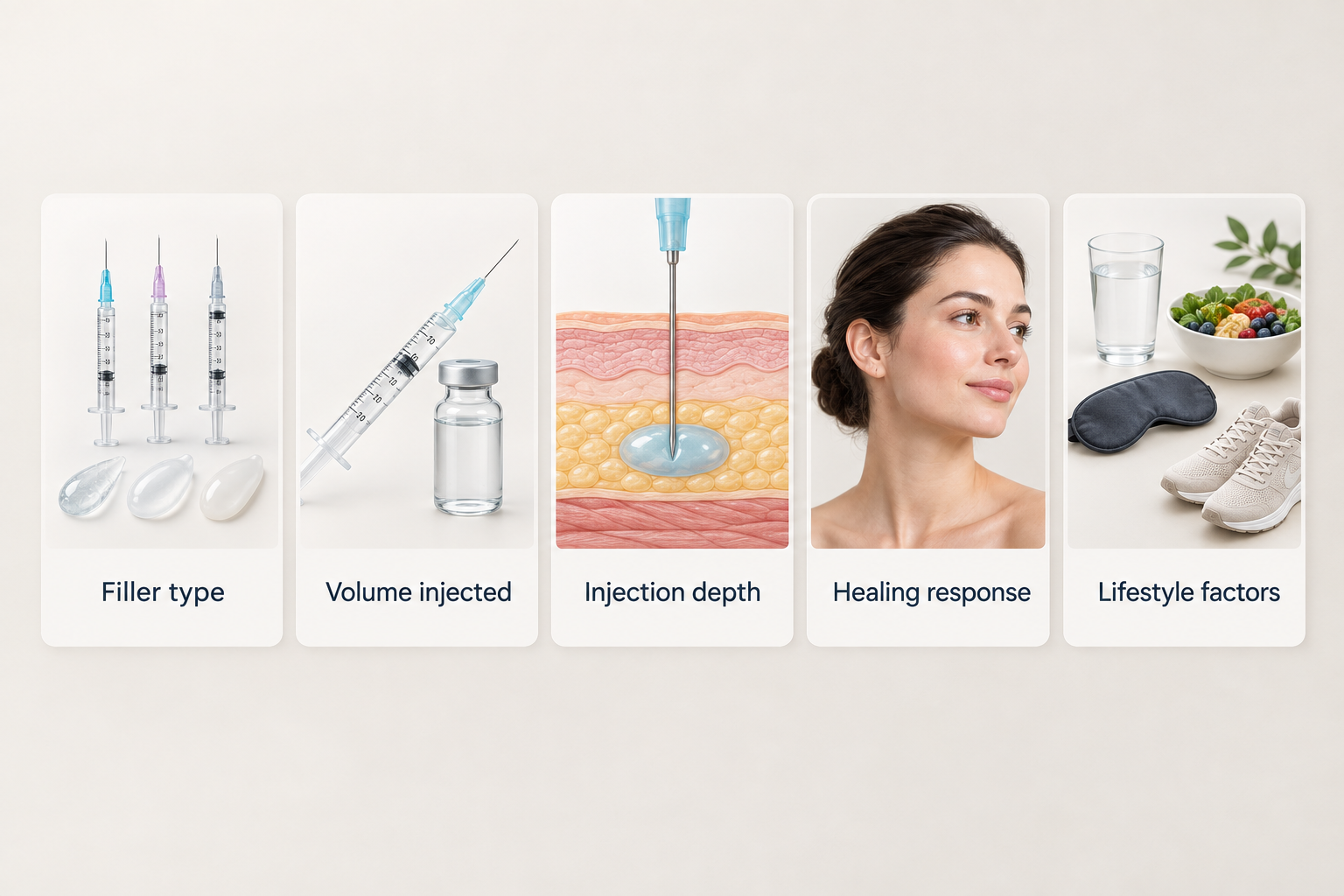
- Filler type and formulation: Different hyaluronic acid fillers have varying degrees of cross-linking, which affects their consistency, water absorption, and how quickly they integrate with tissue. Thicker, more cohesive products used for deep structural support may feel firmer for longer than softer formulations.
- Volume injected: Larger volumes of filler generally produce more initial swelling and may take slightly longer to settle than smaller, more conservative treatments.
- Injection depth and technique: Filler placed in the deep fat compartments or on the periosteum (the surface of the bone) tends to integrate differently than product placed more superficially. Cannula-based techniques may produce less bruising than needle injections in some patients.
- Individual healing response: Patients vary in how their bodies respond to injections. Those who tend to swell or bruise easily may have a longer visible recovery period, while others may see their settled result within a week.
- Lifestyle factors: Alcohol consumption, vigorous exercise, and exposure to heat in the days following treatment can prolong swelling. Adequate hydration and avoiding these triggers during the first 48 hours may support a smoother recovery.
- Medications and supplements: Blood-thinning agents such as aspirin, ibuprofen, fish oil, and vitamin E can increase bruising and may slow the resolution of discolouration.
Aftercare During the Settling Period
Following appropriate aftercare in the days after cheek filler treatment supports a smoother settling process and reduces the risk of complications. Practitioners typically provide written aftercare instructions, and patients should follow the specific guidance given by their treating clinician rather than general advice found online.
Common aftercare recommendations include avoiding strenuous physical activity for 24 to 48 hours, refraining from alcohol for at least 24 hours, staying out of saunas, steam rooms, and direct sun exposure for several days, and avoiding facial massage or pressure on the treated area unless specifically instructed by the practitioner. Sleeping with the head slightly elevated on the first night may help reduce swelling. Applying a cold compress gently to the area in the first few hours can also help minimise initial swelling, though direct ice contact with the skin should be avoided.
When to Contact Your Practitioner
While most post-treatment changes are expected and resolve naturally, certain signs warrant prompt clinical assessment. Patients should contact their practitioner if they experience severe or worsening pain that is disproportionate to what was described as normal, significant swelling that continues to increase after 48 hours rather than improving, skin that appears pale, white, or mottled in or around the treated area, or any changes to vision. These symptoms can, in rare cases, indicate a vascular complication, which requires immediate medical attention. Vascular occlusion, where filler inadvertently compresses or enters a blood vessel, is a rare but serious complication that requires urgent treatment.
Signs of infection, including increasing redness, warmth, swelling, and discharge several days after treatment, should also be assessed promptly. Delayed inflammatory reactions to hyaluronic acid filler can occur weeks or months after treatment and typically present as firm nodules; these should be reported to the treating practitioner for appropriate management.
How Cheek Filler Compares to Other Facial Fillers in Terms of Settling
The cheek area tends to produce more noticeable initial swelling than some other facial filler sites, such as the lips or tear troughs, because the volume of product used is typically larger and the tissue in the mid-face is more vascular. Lip filler, for example, often settles within one to two weeks, while tear trough filler can take a similar timeframe but may show more prolonged discolouration due to the thin skin in that area. Cheek filler, particularly when placed in larger volumes for structural augmentation, may take the full two to four weeks to reach its settled appearance. Patients who have previously had lip or jaw filler should not assume the settling timeline will be identical for cheek treatment.
Frequently Asked Questions
Can I wear makeup after cheek filler?
Most practitioners advise waiting at least 12 to 24 hours before applying makeup to the treated area to reduce the risk of introducing bacteria to the injection sites. After this period, makeup including concealer can generally be used to cover bruising, provided the skin is intact and the products are applied gently without pressing firmly on the cheeks.
Will my cheek filler look natural once it has settled?
When placed by an experienced practitioner using an appropriate product and volume for the individual’s anatomy, cheek filler typically looks natural once it has fully settled. The early post-treatment period, when swelling is present, is not representative of the final result. Results vary between patients depending on anatomy, the amount of filler used, and the technique employed.
Is it normal for one cheek to look higher than the other after filler?
Mild asymmetry in the first one to two weeks is common and usually reflects uneven swelling rather than uneven placement. Waiting until the four-week mark before assessing symmetry is advisable. If asymmetry persists after swelling has fully resolved, a review appointment with the practitioner is appropriate.
Can cheek filler be dissolved if I do not like the result?
Hyaluronic acid cheek filler can be partially or fully dissolved using hyaluronidase, an enzyme that breaks down hyaluronic acid. This provides a degree of reversibility that is not available with some other filler materials. Dissolution is typically considered after the settling period has passed and the true result can be properly assessed.
How long does cheek filler last after it has settled?
Once settled, cheek filler typically lasts between twelve and eighteen months, though this varies depending on the specific product used, the volume placed, the depth of injection, and individual metabolic factors. Some patients metabolise filler more quickly than others. Maintenance treatments are usually needed to sustain the result over time.
Should I be worried if my cheeks feel hard after filler?
Firmness in the first one to two weeks after cheek filler is common and usually resolves as the product integrates with surrounding tissue. If firmness persists beyond four weeks, or if a firm nodule develops weeks or months after treatment, this should be assessed by the treating practitioner to determine whether it represents a delayed inflammatory reaction or another issue requiring management.
When is the best time to have cheek filler before an event?
Allowing at least four weeks between cheek filler treatment and an important event is generally advisable. This gives sufficient time for swelling and bruising to resolve and for the settled result to be assessed. If refinements are needed, a follow-up appointment can be scheduled within this window. Treating closer to an event carries the risk of visible bruising or swelling on the day.
Planning Your Cheek Filler Treatment Realistically
Understanding the settling timeline for cheek filler is an important part of planning treatment and managing expectations. The two to four week period between treatment and the fully settled result is a normal part of the process, not a sign that something has gone wrong. Patients who are aware of this timeline are better placed to interpret early changes accurately and to avoid unnecessary concern or premature requests for correction during the recovery period.
If you are considering cheek filler, a thorough consultation with a qualified and experienced practitioner is the appropriate starting point. A good consultation will include an assessment of your facial anatomy, a discussion of realistic outcomes for your specific goals, an explanation of the products and techniques that may be suitable, and clear information about aftercare, the settling process, and what to do if you have concerns after treatment. Cheek filler can be a well-tolerated treatment with meaningful aesthetic results for suitable candidates, but individual outcomes vary and the decision should be made with accurate information and realistic expectations.


