
How to Choose a Skin Clinic in Leeds: What to Look for Before You Book
Choosing the right skin clinic in Leeds is one of the most important decisions you can make before undergoing any aesthetic or dermatological treatment. The city has a growing number of providers offering everything from medical-grade facials and chemical peels to injectables, laser treatments, and body contouring — but the quality, safety standards, and clinical expertise behind those services vary considerably. This guide explains what to look for, what questions to ask, and how to assess whether a provider is genuinely qualified to treat you safely and effectively.
Key Takeaways
- Practitioner qualifications and regulatory registration matter more than clinic aesthetics or price alone.
- A reputable skin clinic in Leeds will offer a thorough consultation before recommending any treatment.
- Not every treatment is suitable for every patient — a good provider will tell you if something is not right for you.
- Understanding realistic outcomes, potential risks, and aftercare requirements before you commit is essential for patient safety.
- The aesthetic industry in the UK is not uniformly regulated, so knowing how to verify credentials is a practical skill every prospective patient needs.
Why Choosing the Right Provider Matters
Aesthetic treatments — even those described as non-surgical or minimally invasive — carry real clinical risks when performed by an inadequately trained or unregistered practitioner. Complications from dermal fillers, botulinum toxin injections, laser treatments, and chemical peels can range from temporary bruising and swelling to more serious outcomes including infection, scarring, nerve injury, and vascular occlusion. The risk of a serious adverse event is not eliminated by the non-surgical nature of a procedure; it is reduced by the clinical competence of the person performing it and the environment in which it takes place.
Leeds has a competitive aesthetic market, and the volume of providers makes it harder — not easier — to identify who is genuinely qualified. Some clinics are led by doctors, nurses, or dentists with postgraduate training in aesthetics. Others are operated by individuals with minimal formal training who have completed short commercial courses. From the outside, both types of clinic may look equally professional. Understanding the difference before you book protects your health and your investment.
Understanding Practitioner Qualifications in Aesthetic Medicine
In the United Kingdom, the aesthetic industry is not subject to a single unified regulatory framework in the way that, for example, dentistry or surgery is. This means that some treatments — particularly non-prescription injectables — can legally be performed by individuals without a healthcare background, depending on the specific product and procedure involved. However, prescription-only medicines such as botulinum toxin and certain dermal fillers must, by law, be prescribed by a qualified independent prescriber following a face-to-face or remote clinical assessment. This legal requirement creates an important baseline for patient safety.
When evaluating a skin clinic in Leeds, look for practitioners who hold a recognised healthcare qualification — typically a medical degree (MBBS or equivalent), a nursing degree with prescribing qualification, or a dental degree — alongside specific postgraduate training in aesthetic medicine. Relevant professional registrations include the General Medical Council (GMC), the Nursing and Midwifery Council (NMC), and the General Dental Council (GDC). These registers are publicly searchable, which means you can verify a practitioner’s registration status before your appointment.
Membership of professional bodies such as the British College of Aesthetic Medicine (BCAM), the Aesthetic Complications Expert (ACE) Group, or the Joint Council for Cosmetic Practitioners (JCCP) can indicate a commitment to ongoing education and professional standards, though membership alone does not guarantee clinical competence. It is one useful indicator among several.
What a Good Consultation Should Include
A thorough pre-treatment consultation is one of the clearest indicators of a responsible skin clinic. Before any treatment is recommended or agreed upon, a qualified practitioner should take a relevant medical history, ask about current medications, allergies, and previous procedures, and assess whether the proposed treatment is appropriate for your specific concern and anatomy. This process is not a formality — it is a clinical assessment that directly affects your safety and the likelihood of a good outcome.
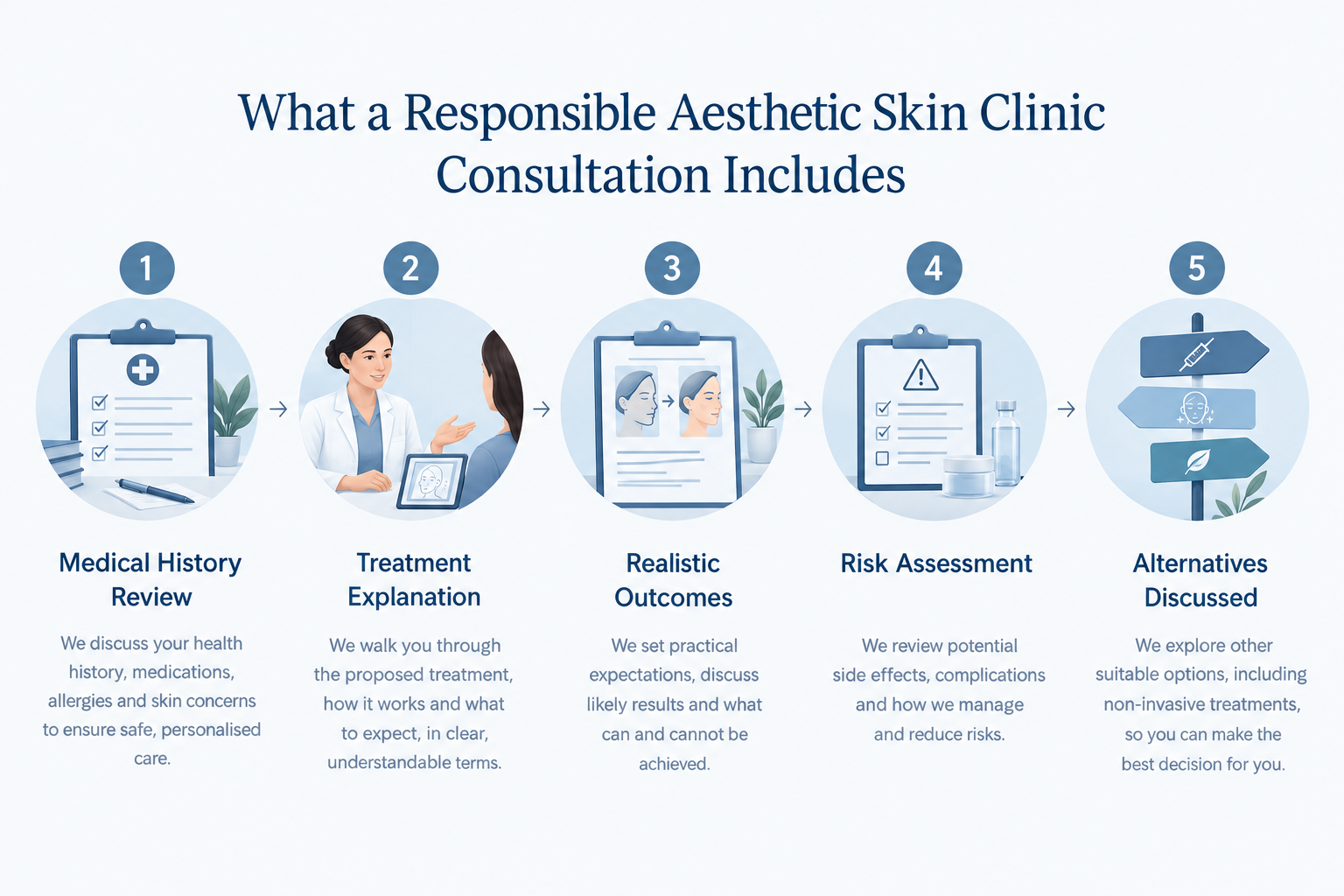
During a consultation at a reputable Leeds skin clinic, you should expect the practitioner to explain the proposed treatment in plain language, including how it works, what it is intended to achieve, what the realistic limitations are, and what the recovery or downtime may involve. You should also be told about the potential risks and side effects relevant to your individual circumstances, not just a generic list. If a practitioner dismisses your questions, rushes through the consultation, or pressures you to book on the same day, these are meaningful warning signs.
A good consultation should also include a discussion of alternatives. If, for example, you are concerned about skin laxity, a qualified practitioner should be able to explain the range of options that may be appropriate — which might include radiofrequency treatments, ultrasound-based devices, polynucleotide therapy, or a referral to a dermatologist — rather than defaulting immediately to the most expensive or most heavily promoted treatment on the menu.
Treatments Commonly Offered at Skin Clinics in Leeds
Leeds skin clinics typically offer a broad range of treatments across several categories. Understanding what these treatments involve — and what they are realistically capable of achieving — helps you assess whether a clinic’s offering is appropriate for your concern.
Injectable Treatments
Botulinum toxin injections (commonly known by brand names such as Botox, Azzalure, or Dysport) are used to temporarily reduce the appearance of dynamic facial lines, including forehead lines, frown lines between the brows, and crow’s feet. Results typically become visible within a few days to two weeks and generally last between three and six months, depending on the individual, the area treated, and the dose used. Botulinum toxin is a prescription-only medicine in the UK, meaning it must be prescribed by a qualified independent prescriber following an appropriate assessment.
Dermal fillers are injectable gels — most commonly based on hyaluronic acid — used to restore volume, soften deeper lines, or enhance facial contours. Common treatment areas include the lips, cheeks, nasolabial folds, and tear troughs. Hyaluronic acid fillers are generally reversible using an enzyme called hyaluronidase, which is an important safety consideration. Not all fillers are reversible, and some products marketed as fillers are not regulated as medical devices. A qualified practitioner should be able to explain exactly which product they are using and why it is appropriate for your concern.
Skin Quality Treatments
Medical-grade facials, chemical peels, microneedling, and polynucleotide injections are among the treatments used to address skin texture, pigmentation, fine lines, and overall skin quality. These treatments vary considerably in their mechanism, depth of action, evidence base, and suitability for different skin types. Chemical peels, for example, range from superficial exfoliating treatments with minimal downtime to medium-depth peels that require several days of recovery and carry a higher risk of post-inflammatory hyperpigmentation in darker skin tones. A qualified practitioner should assess your Fitzpatrick skin type — a clinical scale used to classify skin’s response to ultraviolet light — before recommending any treatment that carries a pigmentation risk.
Polynucleotide treatments, which involve injecting purified DNA fragments derived from fish sperm to stimulate tissue regeneration and improve skin quality, have attracted growing interest in recent years. The evidence base for polynucleotides is still developing, and while early clinical data is encouraging for skin hydration and texture improvement, results vary between individuals and multiple sessions are typically required.
Laser, Light, and Energy-Based Treatments
Laser treatments, intense pulsed light (IPL), radiofrequency, and ultrasound-based devices are used for a range of concerns including pigmentation, vascular lesions, hair removal, skin tightening, and acne scarring. These treatments require specific training and, in some cases, specialist equipment. The risk of adverse effects — including burns, blistering, and post-inflammatory pigmentation — is meaningfully higher when these treatments are performed by inadequately trained operators or when the device settings are not appropriately calibrated for the patient’s skin type. When considering laser or energy-based treatments at a Leeds skin clinic, ask specifically about the practitioner’s training with the device being used and their experience treating patients with your skin tone.
Body Contouring
Fat dissolving injections, cryolipolysis (fat freezing), radiofrequency body treatments, and muscle stimulation devices such as Emsculpt are offered by some Leeds clinics for body contouring purposes. It is important to understand that body contouring treatments are not weight loss treatments and are not appropriate as a general approach to obesity. Fat dissolving injections such as Aqualyx work by disrupting fat cell membranes in localised areas, leading to gradual reduction of subcutaneous fat over several weeks. Muscle stimulation devices such as Emsculpt use high-intensity focused electromagnetic energy to induce muscle contractions and may help improve muscle tone in specific areas. These are distinct mechanisms with different goals, and a responsible practitioner will explain which approach — if any — is appropriate for your specific concern and anatomy.
Red Flags to Watch for When Researching Leeds Skin Clinics
Certain patterns should prompt caution when you are evaluating a skin clinic or aesthetic provider in Leeds. These are not definitive indicators of poor practice on their own, but they are worth investigating further before you commit to treatment.
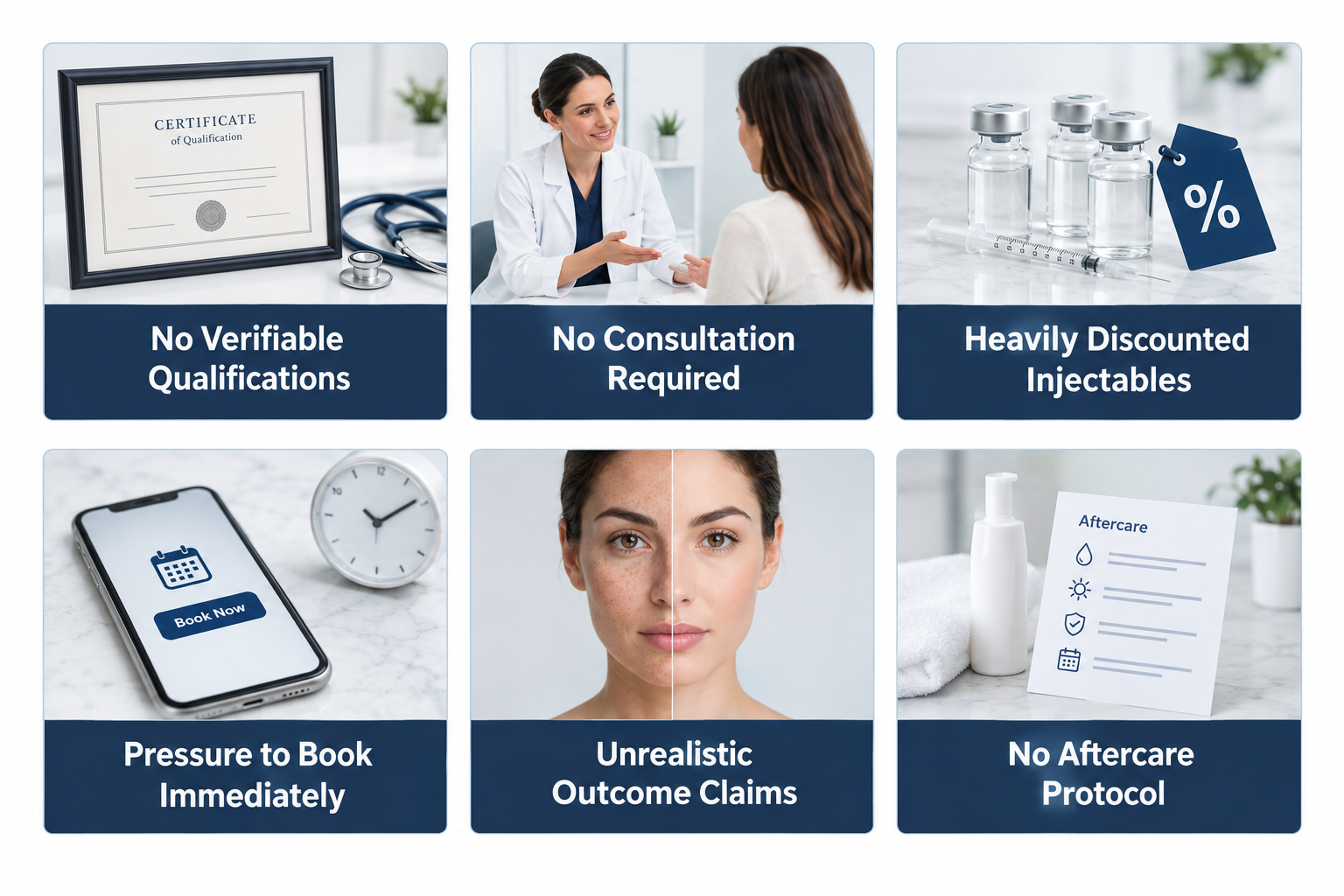
- No verifiable practitioner qualifications: If a clinic’s website does not clearly identify who will be performing treatments, or if the practitioner’s qualifications cannot be verified through a public register, this warrants further enquiry.
- Same-day booking without a consultation: Responsible providers do not recommend or perform prescription treatments without a prior clinical assessment. Clinics that allow you to book injectable treatments without any consultation process are not following best practice.
- Heavily discounted injectable treatments: Significant discounts on botulinum toxin or filler treatments can indicate the use of unlicensed products, inadequate dosing, or a practitioner who is not appropriately qualified. Price is not the only consideration, but unusually low prices for injectable treatments are worth questioning.
- Pressure to book immediately or to purchase packages: A practitioner who pressures you to commit to a course of treatments before you have had time to consider the information provided is not prioritising your informed consent.
- Unrealistic outcome claims: Any provider who guarantees specific results, describes a treatment as completely safe, or implies that a non-surgical procedure can replicate the results of surgery is not giving you an accurate picture of what to expect.
- No aftercare or complication management protocol: A responsible clinic will explain what to do if you experience an unexpected reaction after treatment and will have a clear process for managing complications. Ask specifically about this before you proceed.
How to Verify a Skin Clinic’s Credentials
Verifying a practitioner’s registration is straightforward and takes only a few minutes. The GMC register, NMC register, and GDC register are all publicly searchable online. Enter the practitioner’s name and confirm that their registration is current and that there are no fitness-to-practise concerns recorded against them. This step is particularly important for injectable treatments, where the legal requirement for a prescriber means that the practitioner’s registration status has a direct bearing on whether the treatment is being delivered lawfully.
Beyond individual registration, consider whether the clinic operates from a premises that is registered with the Care Quality Commission (CQC) if it provides regulated activities, or whether it holds relevant local authority licences for the treatments it offers. Some treatments — including certain laser and light-based procedures — may require specific licensing depending on the local authority’s requirements. A clinic that is transparent about its regulatory status and willing to answer questions about its governance is demonstrating a level of accountability that is worth valuing.
Patient reviews can provide useful context, but they should be read critically. Look for reviews that describe the consultation process, the practitioner’s communication, and the management of any concerns — not just reviews that focus on the outcome of a single treatment. A pattern of reviews describing rushed consultations, poor aftercare, or difficulty contacting the clinic after treatment is more informative than a high average star rating alone.
Questions to Ask Before Booking a Treatment
Preparing a short list of questions before your consultation helps you gather the information you need to make an informed decision. The following questions are relevant for most aesthetic treatments at a Leeds skin clinic.
- What are your qualifications, and are you registered with a statutory regulatory body?
- How many times have you performed this specific treatment, and on patients with similar concerns to mine?
- What product or device will you be using, and is it licensed for this use in the UK?
- What results can I realistically expect, and over what timeframe?
- What are the potential risks and side effects for someone with my medical history and skin type?
- What is the aftercare protocol, and what should I do if I experience a complication?
- Are there alternative treatments that might be more appropriate for my concern?
- What happens if I am not satisfied with the result?
A practitioner who answers these questions clearly, honestly, and without defensiveness is demonstrating the kind of clinical transparency that is associated with responsible practice. If any question is dismissed or deflected, consider whether this is the right provider for you.
The Role of a Skin Consultation in Treatment Planning
A skin consultation at a qualified Leeds clinic is not simply a sales conversation — it is the foundation of a safe and effective treatment plan. During a thorough consultation, a practitioner will assess your skin type, discuss your concerns and goals, review your medical history, and explain which treatments may be appropriate and why. This process may result in a recommendation that differs from what you initially had in mind, and that is not necessarily a negative outcome. A practitioner who recommends a simpler or less expensive treatment because it is more appropriate for your concern is demonstrating clinical integrity.
Some concerns that patients attribute to a single cause — such as dark circles under the eyes, for example — may actually have several contributing factors, including pigmentation, vascular visibility, volume loss, or skin laxity. A qualified practitioner will assess which factors are most relevant in your case before recommending a treatment approach, rather than applying a standard protocol to every patient with the same presenting concern. This kind of individualised assessment is one of the clearest markers of clinical competence.
Frequently Asked Questions
Do I need a GP referral to visit a skin clinic in Leeds?
Most aesthetic skin clinics in Leeds operate on a self-referral basis, meaning you can book directly without a GP referral. However, if your concern has a medical component — such as a skin condition that may require diagnosis or prescription treatment — your GP may be the more appropriate first point of contact. A responsible aesthetic clinic will refer you to a dermatologist or GP if your concern falls outside the scope of aesthetic treatment.
How do I know if a treatment is right for my skin type?
Suitability for specific treatments depends on a range of factors including your Fitzpatrick skin type, medical history, current medications, and the nature of your concern. A qualified practitioner will assess these factors during a consultation. Some treatments — particularly certain laser and light-based procedures — carry a higher risk of adverse effects in darker skin tones and require specific device settings and clinical experience to be performed safely.
Is it safe to have injectable treatments at a non-medical clinic?
In the UK, botulinum toxin and certain dermal fillers are prescription-only medicines, meaning they must be prescribed by a qualified independent prescriber. If a clinic is offering these treatments without a prescribing practitioner involved in the process, this is not compliant with UK law and represents a meaningful patient safety risk. Always confirm that the practitioner performing or overseeing your injectable treatment holds an appropriate prescribing qualification.
How many sessions will I need to see results?
The number of sessions required depends on the treatment and the concern being addressed. Some treatments — such as botulinum toxin injections — produce visible results from a single session, though maintenance appointments are typically needed every three to six months. Other treatments, such as polynucleotide therapy, microneedling, or certain laser protocols, are usually delivered as a course of sessions spaced several weeks apart. Your practitioner should give you a realistic treatment plan at your consultation, including an honest assessment of how many sessions may be needed and what level of improvement is realistic.
What should I do if I experience a complication after treatment?
Contact your treating clinic as soon as possible if you experience unexpected symptoms after a treatment. Responsible clinics have a clear aftercare and complication management protocol and should be reachable after your appointment. For serious symptoms — such as significant swelling, skin discolouration, vision changes, or signs of infection — seek urgent medical attention. If you received an injectable treatment and experience symptoms that may indicate vascular compromise, this is a medical emergency requiring immediate assessment.
Can I have multiple treatments on the same day?
Combining treatments on the same day is sometimes possible, but it depends on the specific treatments involved, your skin’s condition, and your practitioner’s clinical judgement. Some combinations are contraindicated or may increase the risk of adverse effects. A qualified practitioner will advise you on whether a combined approach is appropriate in your case and will not simply agree to multiple treatments because you have requested them.
Making an Informed Choice About Your Skin Provider in Leeds
Selecting a skin clinic in Leeds is ultimately a decision that balances clinical safety, practitioner expertise, treatment appropriateness, and your own informed expectations. The aesthetic market in Leeds is broad, and the range of treatments available continues to expand — but the quality of care behind those treatments is not uniform. Taking the time to verify practitioner qualifications, ask meaningful questions during a consultation, and understand the realistic scope of any proposed treatment is the most reliable way to protect yourself and to maximise the likelihood of a positive outcome.
A clinic that prioritises your safety over a quick booking, that is transparent about the limitations of its treatments, and that gives you the information you need to make a genuinely informed decision is demonstrating the kind of clinical responsibility that should be the baseline expectation — not a premium feature. If a consultation leaves you feeling informed, respected, and clear about what to expect, that is a strong indicator that you are in the right place. If it leaves you feeling pressured, confused, or uncertain, it is entirely reasonable to seek a second opinion before proceeding.


