
1ml Lip Filler: What Results Can You Realistically Expect?
One millilitre of lip filler is the standard starting amount offered at most aesthetic clinics, yet patients frequently arrive at consultations unsure what that volume actually means for their lips. Whether 1ml will produce a subtle enhancement or a noticeable change depends on several individual factors, including your natural lip anatomy, the filler product used, and the injection technique applied. This article explains what 1ml lip filler can realistically achieve, what the treatment involves, how long results may last, and what risks and alternatives are worth understanding before you book an appointment.
Key Takeaways
- 1ml is the most commonly used starting volume for lip filler and is generally considered a conservative, natural-looking amount for most patients.
- Results vary considerably depending on your natural lip size, the filler product chosen, and the practitioner’s technique.
- Hyaluronic acid fillers are the most widely used type for lips and are reversible with an enzyme called hyaluronidase.
- Common side effects include swelling, bruising, and tenderness, which typically resolve within one to two weeks.
- Lip filler results are temporary, generally lasting between six and twelve months depending on the product and individual metabolism.
What Does 1ml of Lip Filler Actually Mean?
One millilitre is a small but clinically meaningful volume — roughly equivalent to one-fifth of a teaspoon. In the context of lip augmentation, this amount is enough to add definition, improve symmetry, enhance the cupid’s bow, or increase overall lip volume, depending on how it is distributed. Most hyaluronic acid filler products used for lips are supplied in pre-filled syringes containing 1ml, which is why this has become the default unit of measurement in aesthetic practice.
It is important to understand that 1ml does not automatically translate to a dramatic or overfilled appearance. A skilled practitioner can use the same volume to achieve very different outcomes: a subtle plumping of thin lips, a more defined vermilion border, improved projection of the upper lip, or a balanced increase in both lips. The distribution of the product — how much goes into the body of the lip versus the border, and how much is placed in the upper versus lower lip — determines the final aesthetic result far more than the volume alone.
For patients with naturally fuller lips, 1ml may produce only a modest visible change. For patients with very thin lips, the same volume can create a more noticeable transformation. This is why a thorough consultation and assessment of your individual lip anatomy is essential before treatment.
Types of Filler Used for Lips
The vast majority of lip filler treatments in clinical practice use hyaluronic acid (HA) as the active ingredient. Hyaluronic acid is a naturally occurring substance found in the body’s connective tissues and skin. When used as a dermal filler, it is cross-linked to create a gel that can be injected into the lips to add volume and shape. Different HA filler products vary in their cross-linking density, particle size, and rheological properties — characteristics that influence how soft or firm the result feels, how much lift or projection is achieved, and how long the product lasts.
Several established brands produce HA fillers specifically formulated for lip augmentation, with varying consistencies designed to suit different treatment goals. Softer, more hydrophilic formulations are often preferred for the lip body to maintain a natural feel, while slightly firmer products may be used along the lip border for definition. Your practitioner should explain which product they intend to use and why it suits your anatomy and goals.
A key advantage of hyaluronic acid lip fillers is reversibility. If a patient is unhappy with the result, or if a complication arises, the filler can be partially or fully dissolved using an enzyme called hyaluronidase. This is an important safety consideration that distinguishes HA fillers from permanent or semi-permanent filler materials, which carry significantly higher risks and are not recommended for lip augmentation by most professional aesthetic bodies.
What Results Can 1ml Lip Filler Achieve?
The results achievable with 1ml of lip filler depend on your starting anatomy and your treatment goals. Understanding what this volume can and cannot do helps set realistic expectations before your appointment.
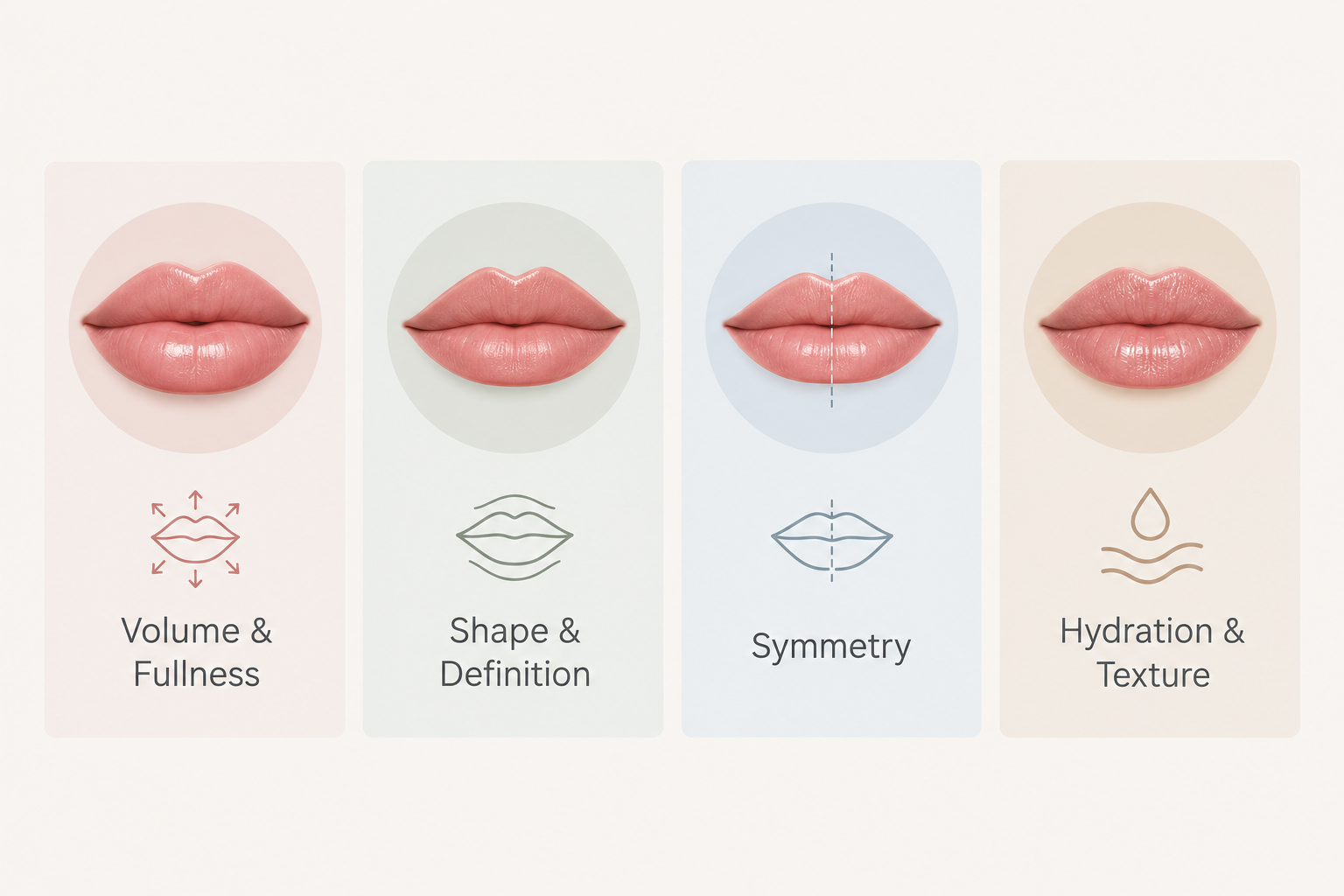
Volume and Fullness
For patients with naturally thin or flat lips, 1ml can provide a meaningful increase in fullness. The lips may appear plumper and more hydrated, and the overall shape can become more defined. However, patients seeking a very significant increase in lip size — for example, moving from very thin lips to a dramatically full appearance — may find that 1ml is insufficient and that a staged approach over multiple appointments is more appropriate. Overfilling lips in a single session carries a higher risk of an unnatural appearance and complications.
Shape and Definition
Lip filler is not only used for volume. A portion of the 1ml can be used to enhance the cupid’s bow, define the vermilion border (the edge between the lip and surrounding skin), or improve the philtrum columns — the two ridges running from the nose to the upper lip. These structural enhancements can make the lips appear more youthful and well-defined without necessarily making them look larger.
Symmetry
Many patients have some degree of natural lip asymmetry. A practitioner can use 1ml strategically to address imbalances between the left and right sides, or between the upper and lower lips. Correcting asymmetry often requires careful placement and may use a portion of the available volume, leaving less for overall augmentation.
Hydration and Texture
Hyaluronic acid attracts and retains water, which means lip filler can also improve the overall texture and hydration of the lips. Patients sometimes notice that their lips feel softer and appear less dry or creased after treatment, even before significant volume change is visible.
What Happens During a Lip Filler Appointment?
A lip filler appointment typically begins with a consultation, during which the practitioner assesses your lip anatomy, discusses your goals, reviews your medical history, and explains the treatment plan. If the consultation and treatment are combined in a single visit, you should still expect time for this discussion before any product is injected.
A topical anaesthetic cream is usually applied to the lips and surrounding area approximately 15 to 30 minutes before injection to reduce discomfort. Many HA filler products also contain lidocaine — a local anaesthetic — within the formulation itself, which further reduces pain during the procedure. Most patients describe the sensation as a mild stinging or pressure rather than significant pain, though individual pain tolerance varies.
The injections themselves typically take between 15 and 30 minutes. The practitioner may use a fine needle, a blunt-tipped cannula, or a combination of both, depending on the technique and the areas being treated. After injection, gentle massage may be applied to distribute the product evenly. You will usually be able to see an initial result immediately, though this early appearance will be affected by swelling and should not be taken as the final outcome.
Recovery and Downtime After Lip Filler
Lip filler has minimal formal downtime, but the recovery period is worth understanding before scheduling your appointment. Swelling is the most predictable and universal side effect. It typically peaks within the first 24 to 48 hours after treatment and can make the lips appear significantly larger than the intended final result. This initial swelling can be alarming if you are not expecting it, but it is a normal physiological response to injection and resolves on its own.
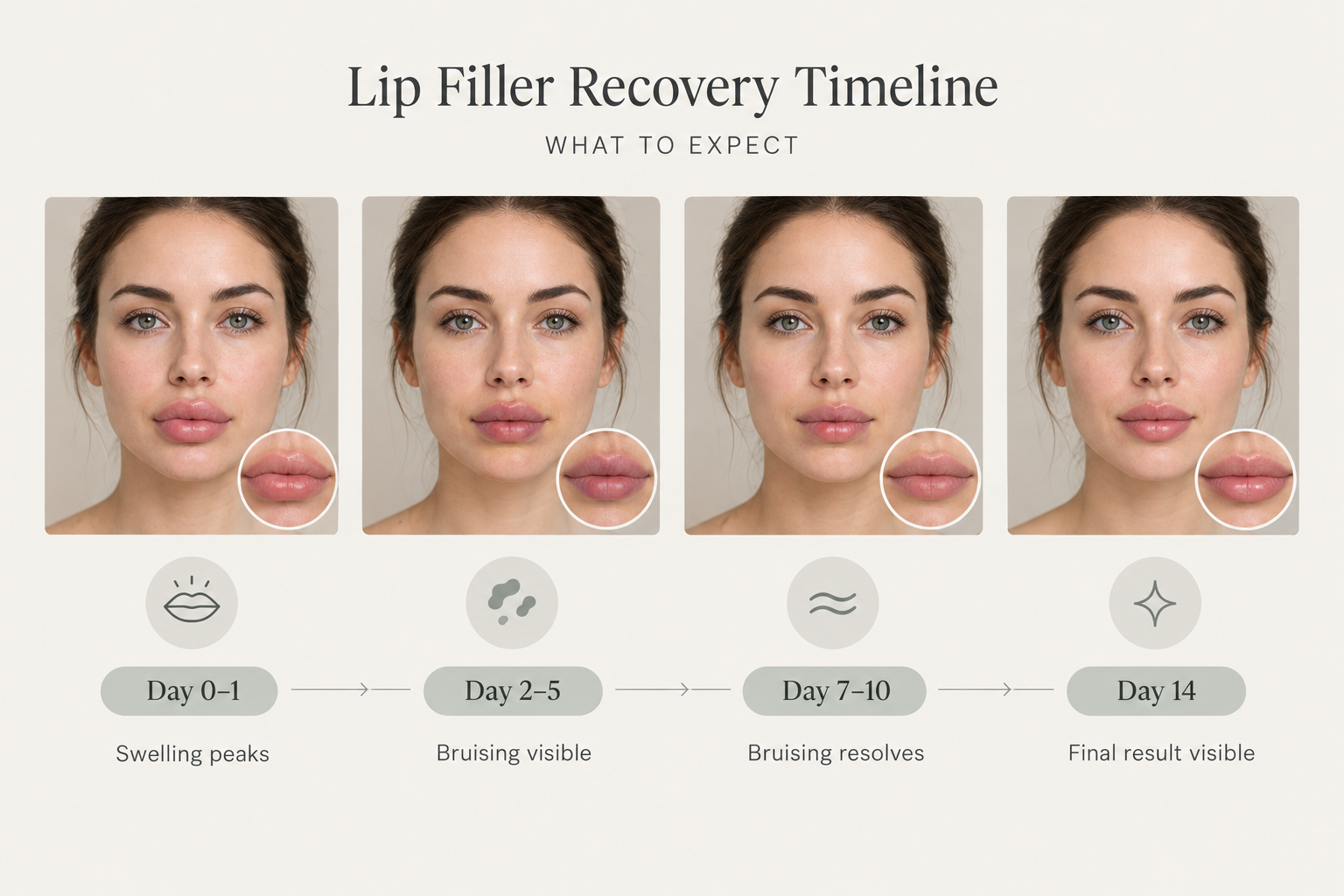
Bruising is also common and may appear at injection sites. The lips have a rich blood supply, which makes bruising more likely here than in some other treatment areas. Bruising can range from minor pinpoint marks to more visible discolouration and may take up to ten days to fully resolve. Applying a cold compress in the first few hours after treatment can help reduce both swelling and bruising.
Tenderness and sensitivity at the injection sites are expected for several days. The lips may feel firm or lumpy in the first week as the filler settles, which is normal. Most practitioners advise avoiding strenuous exercise, alcohol, and excessive heat — such as saunas or hot baths — for 24 to 48 hours after treatment, as these can increase swelling and bruising. Avoiding pressure on the lips, such as sleeping face-down, is also generally recommended in the first few days.
The final result of 1ml lip filler is usually visible once swelling has fully resolved, which for most patients is between one and two weeks after treatment. Judging the outcome before this point is not reliable.
How Long Does 1ml Lip Filler Last?
Hyaluronic acid lip filler is gradually broken down by the body’s natural enzymatic processes. The longevity of 1ml lip filler varies between individuals and depends on several factors, including the specific product used, the patient’s metabolism, lifestyle factors, and how much physical activity they engage in. Most patients can expect results to last between six and twelve months, with some products or patients experiencing results at either end of this range.
The lips are a highly mobile area of the face — they move constantly during speaking, eating, and facial expression — which means filler in this location tends to break down more quickly than filler placed in less mobile areas such as the cheeks or tear troughs. Patients who metabolise filler quickly may notice that their results fade closer to the six-month mark, while others may retain visible results for closer to a year.
Repeat treatments are required to maintain the result. Some patients choose to have a top-up appointment before the filler has fully dissolved, which can help maintain a consistent appearance over time. Others prefer to allow the filler to fully metabolise before retreating. Neither approach is universally superior; the right schedule depends on your goals and your individual response to treatment.
Risks and Side Effects of Lip Filler
Lip filler is a medical procedure and carries risks that every prospective patient should understand before consenting to treatment. Common side effects — swelling, bruising, tenderness, and temporary lumpiness — are expected and resolve without intervention in most cases. Less common but more serious complications also exist.
Asymmetry and Uneven Results
Filler may settle unevenly, or swelling may resolve asymmetrically, leading to an uneven appearance. Minor asymmetry often improves as swelling resolves. Persistent asymmetry may require a small additional treatment or, in some cases, partial dissolution with hyaluronidase.
Nodules and Lumps
Palpable lumps or nodules can occur if filler is placed too superficially, if the product is not distributed evenly, or if the patient develops a localised inflammatory response. Most lumps resolve over time or can be addressed with hyaluronidase if they persist.
Infection
Any injectable procedure carries a small risk of infection. Signs of infection — increasing redness, warmth, pain, or discharge — should be reported to your practitioner promptly. Patients with a history of cold sores (herpes simplex virus) should inform their practitioner before treatment, as lip injections can trigger an outbreak. Antiviral prophylaxis may be recommended in these cases.
Vascular Occlusion
The most serious risk associated with lip filler — and with dermal fillers more broadly — is vascular occlusion, which occurs when filler is inadvertently injected into or compresses a blood vessel, restricting blood flow to surrounding tissue. In the lip area, this can cause tissue damage and, in rare cases, necrosis (tissue death). Vascular occlusion is a medical emergency that requires immediate treatment with hyaluronidase. This risk underscores the importance of choosing a qualified and experienced practitioner who is trained to recognise and manage this complication.
Tyndall Effect
If hyaluronic acid filler is placed too close to the skin surface, it can create a bluish discolouration known as the Tyndall effect. This is more commonly associated with filler in other facial areas but can occur in the lips if technique is suboptimal.
Who May Be Suitable for 1ml Lip Filler?
Lip filler with 1ml of hyaluronic acid may be appropriate for adults who are in good general health, have realistic expectations about the outcome, and are seeking a temporary enhancement to lip volume, shape, or definition. It may be particularly relevant for patients who have noticed age-related volume loss in the lips, those with naturally thin lips who would like a subtle increase in fullness, or those seeking improved lip symmetry.
Lip filler is not suitable for everyone. Patients who are pregnant or breastfeeding are generally advised to avoid elective aesthetic treatments. Those with active skin infections, cold sores, or inflammatory conditions affecting the lips should wait until these have resolved. Patients with certain autoimmune conditions, bleeding disorders, or those taking blood-thinning medications should discuss their medical history thoroughly with their practitioner before proceeding. A history of severe allergic reactions or known hypersensitivity to any component of the filler product is also a contraindication.
Age is also a relevant consideration. Lip filler is not appropriate for patients under 18 years of age in most countries, and many reputable clinics apply stricter age policies. Younger patients with fully developed lips and no medical indication for treatment should be counselled carefully about the risks and the importance of realistic expectations.
Alternatives to 1ml Lip Filler
Lip filler is not the only option for patients interested in improving the appearance of their lips. Understanding the alternatives can help you make a more informed decision about which approach may suit your goals.
- Lip flip with botulinum toxin: A small amount of botulinum toxin injected into the orbicularis oris muscle around the upper lip can cause the lip to relax and roll slightly outward, creating the appearance of a fuller upper lip without adding volume. This is a subtle effect and is not suitable for patients seeking significant augmentation, but it may appeal to those who want a very natural result or who are not ready for filler.
- Skin boosters and hydration treatments: Injectable skin boosters containing hyaluronic acid or polynucleotides can improve lip hydration, texture, and fine lines around the mouth without adding significant volume. These are not a substitute for lip filler if volume augmentation is the goal, but they may complement filler treatment or suit patients whose primary concern is lip quality rather than size.
- Lip liner and cosmetic techniques: Non-invasive cosmetic approaches, including lip liner, lip plumping glosses, and makeup contouring, can create the appearance of fuller or more defined lips without any medical risk. These are temporary and require daily application but carry no clinical risk.
- Surgical lip augmentation: Surgical options such as lip implants or a lip lift procedure offer more permanent results but carry significantly greater risks, longer recovery times, and higher costs. These are generally considered only when non-surgical options have been exhausted or are unsuitable.
Choosing a Practitioner for Lip Filler
The safety and quality of lip filler results depend heavily on the qualifications, training, and experience of the person performing the treatment. Lip filler should be administered by a qualified medical professional — such as a doctor, dentist, or nurse prescriber with appropriate aesthetic training — who has a thorough understanding of facial anatomy, injection technique, and complication management.
Before booking treatment, it is reasonable to ask about the practitioner’s qualifications, their experience with lip augmentation specifically, which filler product they intend to use and why, and what their protocol is for managing complications such as vascular occlusion. A reputable practitioner will welcome these questions and will not pressure you into treatment during a consultation. They should also provide clear aftercare instructions and a point of contact if you experience concerns after your appointment.
Price alone should not be the deciding factor when choosing a lip filler provider. Significantly discounted treatments may reflect the use of unregulated products, inadequately trained practitioners, or both — factors that increase the risk of poor outcomes and serious complications.
Frequently Asked Questions
Will 1ml of lip filler look natural?
For most patients, 1ml is considered a conservative volume that can produce a natural-looking result when placed by an experienced practitioner. Whether the outcome looks natural also depends on your starting lip size, the product used, and the injection technique. Patients with very thin lips may see a more noticeable change than those with already moderate lip volume.
How much does 1ml lip filler cost?
The cost of 1ml lip filler varies depending on the clinic, the practitioner’s qualifications, the geographic location, and the specific product used. Prices vary widely between providers. It is important to prioritise practitioner qualifications and product quality over cost when making this decision.
Can I have more than 1ml at my first appointment?
Some practitioners will treat with more than 1ml at a first appointment if clinically appropriate, but many prefer to start conservatively and assess the result before adding more volume. A staged approach reduces the risk of overfilling and allows both the patient and practitioner to evaluate the outcome before committing to additional product.
How soon can I have a top-up after 1ml lip filler?
Most practitioners recommend waiting at least two weeks after an initial treatment before assessing whether a top-up is needed, as this allows swelling to fully resolve and the final result to become visible. Top-up treatments are typically scheduled four to six weeks after the initial appointment if additional volume is desired.
Does lip filler hurt?
Most patients experience mild to moderate discomfort during lip filler injections. Topical anaesthetic cream applied before treatment and lidocaine within the filler formulation significantly reduce pain for most people. Individual pain tolerance varies, and some patients find the procedure more uncomfortable than others.
What happens when lip filler wears off?
As hyaluronic acid filler gradually breaks down, the lips return to their natural pre-treatment appearance. The filler does not cause permanent changes to lip tissue when used appropriately. There is no evidence that lips become permanently stretched or deflated after filler dissolves, though individual anatomy and repeated treatments over many years may have cumulative effects that are not yet fully characterised in long-term research.
Can lip filler be dissolved if I don’t like the result?
Yes. Hyaluronic acid lip filler can be partially or fully dissolved using hyaluronidase, an enzyme that breaks down hyaluronic acid. Dissolution is typically effective and relatively quick, though it may require more than one session for complete removal. This reversibility is one of the key safety advantages of HA-based fillers over permanent alternatives.
Is 1ml Lip Filler the Right Starting Point for You?
For most patients considering lip augmentation for the first time, 1ml of hyaluronic acid filler represents a clinically sensible starting volume. It is enough to produce a visible improvement in lip volume, shape, or definition while remaining within a range that experienced practitioners can manage safely and reverse if needed. The results are temporary, which means the commitment is not permanent, and the treatment can be adjusted over time as your preferences evolve.
That said, 1ml lip filler is not a universally appropriate treatment. The right amount, product, and technique depend on your individual anatomy, your aesthetic goals, and your medical history. A thorough consultation with a qualified practitioner is the most reliable way to determine whether lip filler is suitable for you, what volume is appropriate, and what outcome you can realistically expect. If you are considering this treatment, prioritise finding a practitioner with verifiable medical qualifications, relevant aesthetic training, and a clear protocol for managing complications — these factors matter far more than price or convenience when it comes to your safety and satisfaction.


