
Face Laser Treatment: A Guide to Facial Laser Options
Face laser treatment covers a broad range of technologies, each designed to address different skin concerns through controlled light energy. Whether the goal is reducing pigmentation, smoothing fine lines, improving skin texture, or targeting acne scarring, the right laser option depends on the specific concern, skin type, and how much recovery time is acceptable. This article explains the main categories of facial laser treatment, how they work, what results are realistic, and what to consider before booking a consultation.
Key Takeaways
- Facial laser treatments are not a single technology — ablative, non-ablative, and fractional lasers work through different mechanisms and suit different concerns and skin types.
- Results vary depending on the laser type, the skin concern being treated, skin tone, and the number of sessions completed.
- Downtime ranges from none to several weeks depending on the treatment intensity and the device used.
- Darker skin tones require careful laser selection to reduce the risk of pigmentation changes; not all lasers are suitable for all Fitzpatrick skin types.
- A thorough consultation with a qualified practitioner is essential before any facial laser procedure to assess suitability and set realistic expectations.
What Is Face Laser Treatment?
Face laser treatment uses focused beams of light energy to target specific structures within the skin. The laser wavelength determines which chromophore — the target molecule in the skin — absorbs the energy. Common targets include water within skin cells, melanin (the pigment responsible for dark spots and uneven tone), and haemoglobin in blood vessels. By delivering energy precisely to these targets, laser devices can stimulate collagen production, remove damaged skin cells, reduce pigmented lesions, or address vascular concerns such as redness and broken capillaries.
The term “face laser treatment” is broad. It encompasses everything from gentle, no-downtime skin rejuvenation sessions to more intensive resurfacing procedures that require a recovery period of one to two weeks. Understanding the distinctions between laser categories helps prospective patients have more productive conversations with their practitioners and set appropriate expectations before treatment.
Main Categories of Facial Laser Treatment
Facial lasers are generally divided into three main categories: ablative lasers, non-ablative lasers, and fractional lasers. Each category has a different mechanism of action, a different risk and downtime profile, and a different range of suitable candidates.
Ablative Lasers
Ablative lasers remove the outer layers of the skin — the epidermis and part of the dermis — by vaporising tissue. This controlled injury triggers the body’s wound-healing response, stimulating new collagen formation and revealing fresher skin as the treated area heals. The two most established ablative laser types are the carbon dioxide (CO2) laser and the erbium:YAG (Er:YAG) laser.
The CO2 laser operates at a wavelength of 10,600 nanometres and targets water in skin cells. It is one of the most effective tools for significant skin resurfacing, addressing deep wrinkles, acne scarring, and sun-damaged skin. However, CO2 laser resurfacing typically involves a recovery period of one to two weeks, with redness, swelling, and crusting during healing. The erbium:YAG laser causes less thermal damage to surrounding tissue than CO2, which can mean a slightly shorter recovery, though it may be less effective for deeper concerns. Ablative treatments are generally not recommended for darker skin tones due to a higher risk of post-inflammatory hyperpigmentation.
Non-Ablative Lasers
Non-ablative lasers deliver energy beneath the skin surface without removing the outer skin layer. The epidermis remains intact, which means significantly less downtime — often none at all — but the results are typically more gradual and less dramatic than ablative approaches. Non-ablative lasers work by heating the dermis to stimulate collagen remodelling without causing visible surface injury.
Common non-ablative laser devices include the Nd:YAG laser (1064 nm), the 1320 nm Nd:YAG, and the 1550 nm erbium fibre laser. These are frequently used for mild to moderate skin laxity, fine lines, enlarged pores, and early signs of photoageing. Because non-ablative treatments are gentler, multiple sessions are usually required to achieve noticeable improvement — typically a course of three to six treatments spaced several weeks apart.
Fractional Lasers
Fractional laser technology represents a middle ground between ablative and non-ablative approaches. Rather than treating the entire skin surface, fractional lasers deliver energy in a grid of microscopic columns, leaving surrounding tissue intact. This pattern of treated and untreated zones accelerates healing while still stimulating meaningful collagen production.
Fractional lasers can be either ablative or non-ablative. Fractional ablative CO2 and Er:YAG devices offer significant resurfacing with a shorter recovery than fully ablative treatments — typically five to ten days rather than two weeks. Fractional non-ablative devices, such as the Fraxel 1550 nm erbium fibre laser, cause no open wounds and generally involve two to five days of mild redness and swelling. Fractional laser treatment is widely used for acne scarring, fine lines, skin texture irregularities, and stretch marks on the face and body.
Common Skin Concerns Treated with Facial Lasers
Different laser types are better suited to different skin concerns. Understanding which laser category is typically used for a given concern helps patients ask more informed questions during consultation.
Pigmentation and Sun Damage
Pigmented lesions such as sunspots, age spots, melasma, and post-inflammatory hyperpigmentation are among the most common reasons people seek face laser treatment. Q-switched lasers — including the Q-switched Nd:YAG and Q-switched ruby laser — deliver very short pulses of energy that shatter melanin granules without significantly heating surrounding tissue. Picosecond lasers, which deliver energy in trillionths of a second rather than nanoseconds, have become increasingly popular for pigmentation and tattoo removal, with some evidence suggesting they may cause less thermal damage and require fewer sessions for certain pigment types.
Melasma is a particularly complex pigmentation concern because it can be worsened by heat, meaning some laser treatments may temporarily improve the condition before triggering a rebound. Practitioners experienced in treating melasma typically use lower-energy settings, specific wavelengths, and combination approaches. Results for melasma are variable and maintenance treatment is often required.
Acne Scarring
Acne scarring — particularly atrophic scars such as ice pick, boxcar, and rolling scars — responds well to fractional laser resurfacing. Both fractional ablative and fractional non-ablative devices can improve scar depth and texture over a course of treatments. The degree of improvement depends on scar type and depth; ice pick scars, which are narrow and deep, tend to respond less completely to laser alone and may benefit from combination approaches such as subcision or punch excision alongside laser treatment. Realistic expectations are important: laser treatment for acne scarring typically produces meaningful improvement rather than complete elimination of scars.
Fine Lines and Skin Laxity
Laser skin resurfacing for fine lines and wrinkles works primarily by stimulating new collagen synthesis in the dermis. Ablative and fractional ablative lasers produce the most significant collagen remodelling and are often used for perioral lines (lines around the mouth), periorbital lines (around the eyes), and overall facial skin quality. Non-ablative and fractional non-ablative lasers offer a more gradual improvement with less downtime, making them suitable for patients who cannot accommodate a recovery period.
Vascular Concerns
Redness, rosacea, broken capillaries, and spider veins on the face are typically addressed with vascular-specific lasers. The pulsed dye laser (PDL), operating at 585 nm or 595 nm, targets haemoglobin in blood vessels and is one of the most studied devices for facial redness and vascular lesions. The Nd:YAG laser at 1064 nm can also treat deeper or larger vessels. These treatments may cause temporary bruising (purpura) in some patients, which typically resolves within one to two weeks.
Skin Texture and Pore Size
Enlarged pores and uneven skin texture are common concerns that may respond to non-ablative and fractional laser treatments. By stimulating collagen and improving dermal architecture, these devices can produce a smoother skin surface over a course of sessions. Results are generally subtle to moderate and are best maintained with a consistent skincare routine and sun protection.
Laser Treatment and Skin Tone
Skin tone is one of the most important factors in laser selection. The Fitzpatrick scale classifies skin from Type I (very fair, always burns) to Type VI (deeply pigmented, never burns). Lasers that target melanin carry a higher risk of post-inflammatory hyperpigmentation or hypopigmentation in patients with darker skin tones (Fitzpatrick Types IV–VI) because the laser energy may be absorbed by melanin in the epidermis rather than — or in addition to — the intended target.
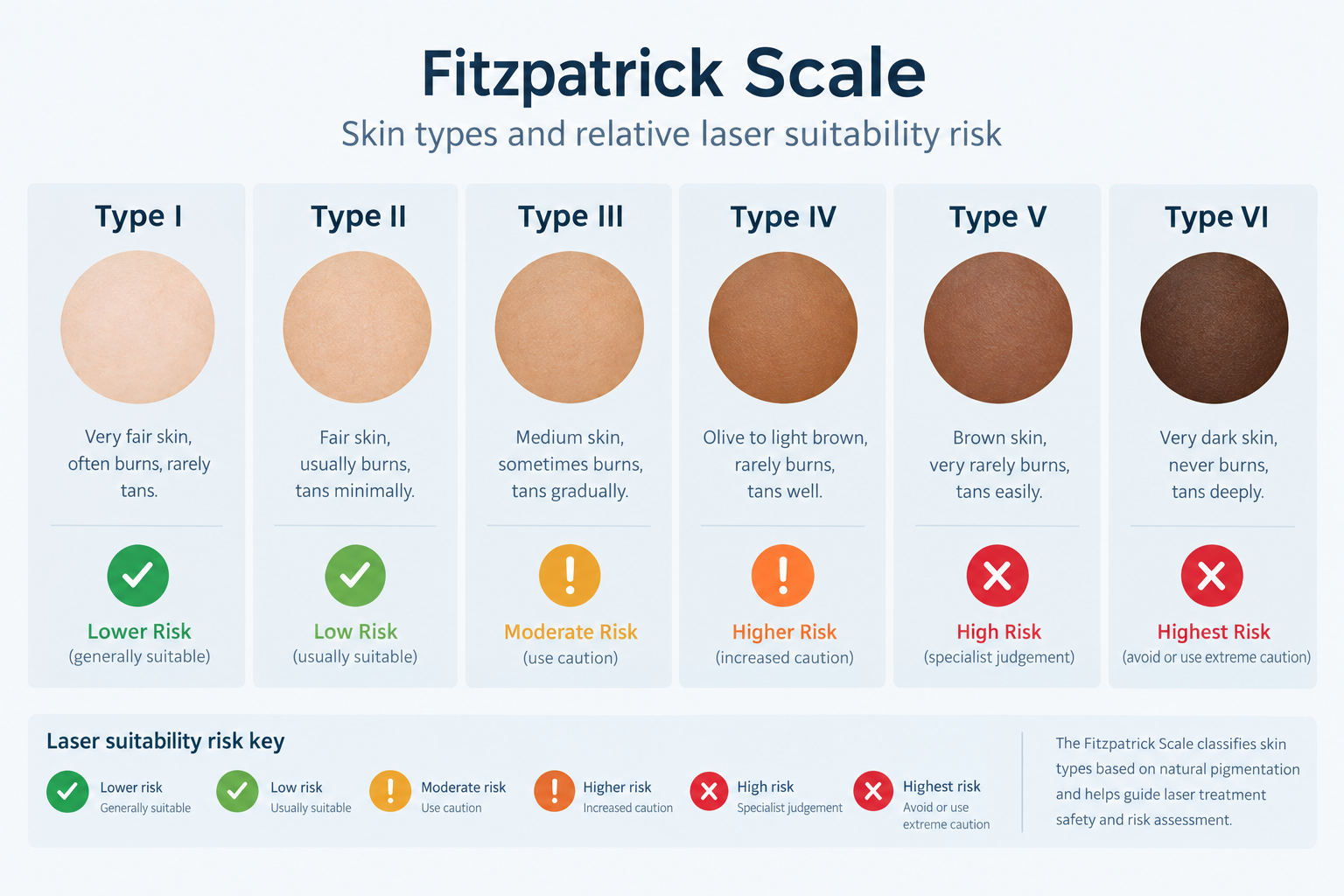
Nd:YAG lasers at 1064 nm are generally considered safer for darker skin tones because the longer wavelength penetrates more deeply and is less strongly absorbed by epidermal melanin. Picosecond lasers may also offer a more favourable safety profile for some pigmentation concerns in darker skin, though clinical evidence continues to develop. Patients with darker skin tones should seek practitioners with specific experience treating their skin type and should discuss the risk of pigmentation changes in detail before proceeding.
What to Expect During a Facial Laser Appointment
The experience of a face laser treatment appointment varies considerably depending on the device and intensity used. Before treatment, a practitioner will typically review the patient’s medical history, assess the skin, discuss the treatment plan, and explain aftercare requirements. A topical anaesthetic cream is commonly applied 30 to 60 minutes before more intensive procedures to reduce discomfort. For gentler non-ablative treatments, anaesthetic may not be necessary.
During the procedure, patients typically experience sensations ranging from mild warmth or tingling to a more pronounced snapping or heat sensation, depending on the laser type and energy settings. Treatment duration varies from around 20 minutes for a targeted non-ablative session to over an hour for full-face ablative resurfacing. Protective eyewear is worn throughout to shield the eyes from laser energy.
After treatment, the skin may appear red, swollen, or feel warm — similar to mild sunburn for non-ablative treatments, or more significantly inflamed for ablative procedures. Practitioners provide specific aftercare instructions, which typically include gentle cleansing, moisturising, avoiding sun exposure, and applying broad-spectrum SPF consistently during the healing period.
Downtime and Recovery
Recovery time is one of the most significant practical considerations when choosing a facial laser treatment. The following general ranges apply, though individual experience varies:
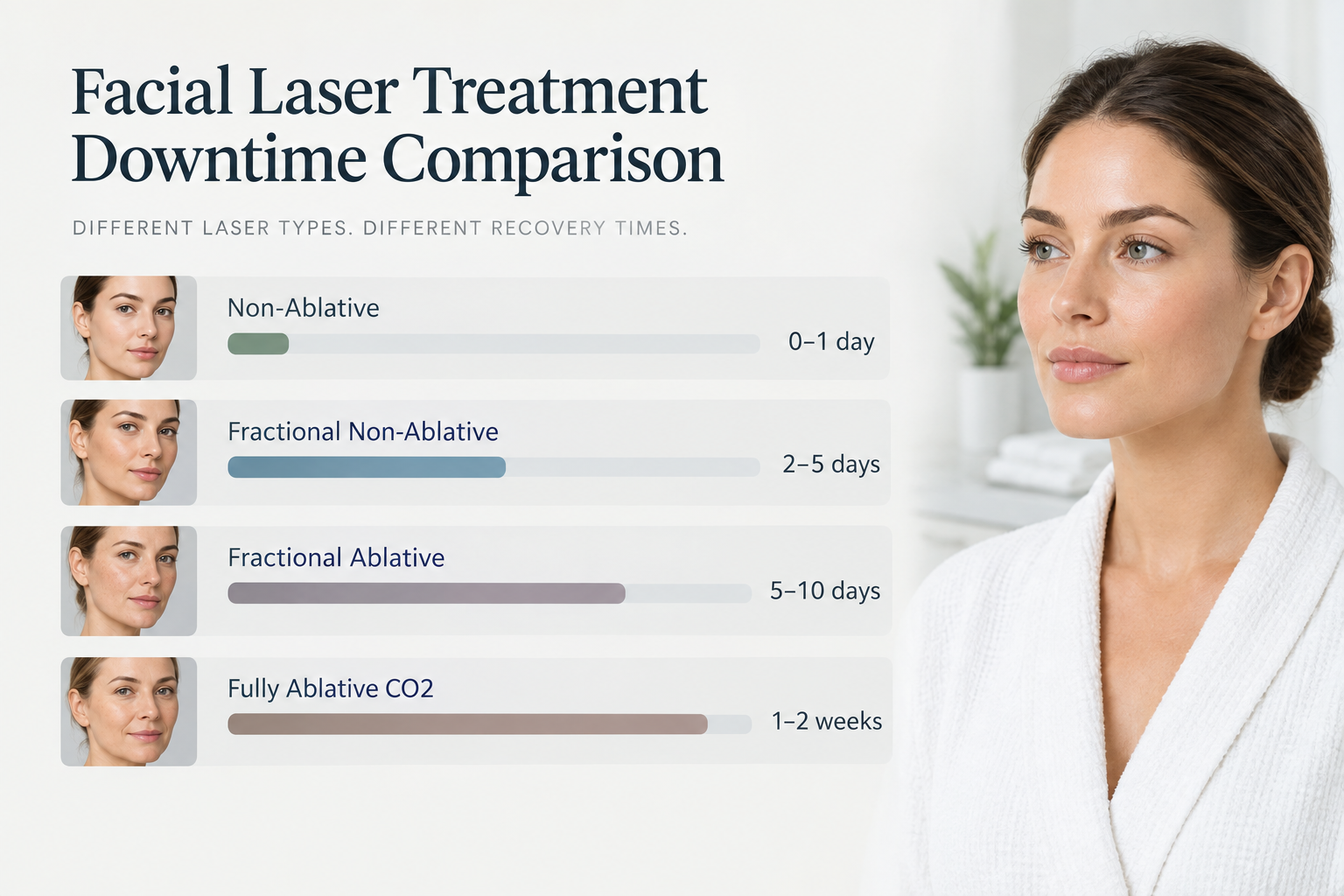
- Non-ablative lasers: Minimal to no downtime. Mild redness may resolve within a few hours to one day.
- Fractional non-ablative lasers: Two to five days of redness, mild swelling, and a bronzed or sandpaper-like skin texture as treated columns shed.
- Fractional ablative lasers: Five to ten days of more pronounced redness, swelling, and peeling or crusting.
- Fully ablative CO2 or Er:YAG resurfacing: One to two weeks of significant redness, weeping, and crusting, followed by several weeks of persistent pinkness as the skin matures.
Sun avoidance and consistent SPF use are essential during recovery and for several weeks after any laser treatment. Failure to protect the skin from UV exposure during the healing period increases the risk of post-inflammatory pigmentation changes.
Risks and Side Effects of Face Laser Treatment
All face laser treatments carry potential risks, and these should be discussed thoroughly with a qualified practitioner before proceeding. Common side effects include temporary redness, swelling, and sensitivity, which are expected parts of the healing process. More significant risks include:
- Post-inflammatory hyperpigmentation: Darkening of the treated area, more common in darker skin tones or when the skin is not adequately protected from sun exposure after treatment.
- Hypopigmentation: Lightening of the skin, which may be permanent in some cases, particularly after aggressive ablative resurfacing.
- Infection: The skin barrier is disrupted after ablative treatments, increasing the risk of bacterial or viral infection. Antiviral prophylaxis is sometimes prescribed for patients with a history of cold sores before ablative procedures.
- Scarring: Rare but possible, particularly if aftercare instructions are not followed or if the treatment is performed at inappropriate settings for the patient’s skin type.
- Prolonged redness: Some patients experience erythema that persists for several months after ablative resurfacing.
- Paradoxical worsening of pigmentation: Particularly relevant for melasma, where heat can stimulate melanocyte activity.
The risk profile of any laser treatment is significantly influenced by practitioner experience, appropriate device selection for the patient’s skin type, and adherence to pre- and post-treatment protocols.
Who May Be Suitable for Facial Laser Treatment
Suitability for face laser treatment depends on several factors that a qualified practitioner will assess during consultation. Patients who may be suitable include those with specific skin concerns — such as pigmentation, acne scarring, fine lines, or vascular lesions — who have realistic expectations about the degree of improvement achievable and who can commit to the required aftercare and sun protection.
Factors that may affect suitability or require careful consideration include:
- Skin tone and Fitzpatrick type, which influences laser selection and risk of pigmentation changes
- Active skin infections, cold sores, or inflammatory skin conditions such as active acne or eczema in the treatment area
- Recent use of isotretinoin (a prescription acne medication), which may affect wound healing — practitioners typically advise waiting six to twelve months after completing a course
- Pregnancy or breastfeeding, during which most laser treatments are deferred
- History of keloid scarring or abnormal wound healing
- Current medications that increase photosensitivity
- Recent sun exposure or tanning, which increases the risk of pigmentation complications
How Many Sessions Are Typically Needed
The number of laser sessions required depends on the treatment type, the skin concern, and the individual’s response. Non-ablative and fractional non-ablative treatments for skin rejuvenation or mild pigmentation typically involve a course of three to six sessions, spaced four to six weeks apart. Fractional ablative treatments for acne scarring may require two to four sessions. A single session of fully ablative CO2 resurfacing can produce significant improvement, though some patients benefit from a second treatment after full healing.
Maintenance sessions may be recommended after an initial course to sustain results, particularly for concerns such as pigmentation, rosacea, or skin texture. The frequency of maintenance varies by individual and by the specific laser used.
Alternatives to Facial Laser Treatment
Laser treatment is one of several options for addressing facial skin concerns, and it is not always the most appropriate choice. Alternatives worth discussing with a practitioner include:
- Intense pulsed light (IPL): A broad-spectrum light device (not technically a laser) commonly used for pigmentation, redness, and skin rejuvenation. IPL is generally less precise than laser but can treat multiple concerns simultaneously. It is not suitable for all skin tones.
- Chemical peels: Superficial, medium, or deep peels using acids such as glycolic acid, trichloroacetic acid (TCA), or phenol to resurface the skin. Chemical peels can address pigmentation, fine lines, and texture with varying degrees of downtime depending on peel depth.
- Microneedling: A device with fine needles creates controlled micro-injuries to stimulate collagen production. Microneedling with radiofrequency (RF microneedling) adds thermal energy to enhance skin tightening. It is generally considered safer across a wider range of skin tones than many laser options.
- Radiofrequency (RF) skin tightening: Devices such as Thermage or Morpheus8 use RF energy to heat the dermis and stimulate collagen. RF treatments are often used for skin laxity and are generally suitable for a broader range of skin tones.
- Topical treatments: Prescription retinoids, hydroquinone, azelaic acid, and vitamin C serums can address pigmentation and early signs of ageing over time, often used alongside or between laser treatments.
The most appropriate approach depends on the specific concern, skin type, budget, and acceptable downtime. A combination of treatments is often more effective than any single modality alone.
Frequently Asked Questions
How long do the results of face laser treatment last?
Result longevity varies by treatment type and concern. Pigmented lesion removal can produce long-lasting results if sun protection is maintained consistently, though new spots may develop over time with ongoing UV exposure. Collagen-stimulating treatments for fine lines and skin texture may produce results that last one to three years, depending on the individual’s skin ageing process and lifestyle. Vascular treatments for broken capillaries can produce lasting clearance, though new vessels may appear over time. Maintenance sessions are often recommended to sustain improvement.
Is face laser treatment painful?
The level of discomfort varies considerably by laser type and individual pain tolerance. Non-ablative treatments are generally well tolerated with minimal discomfort. Fractional and ablative treatments can cause a more pronounced heat or stinging sensation, and topical anaesthetic cream is typically applied beforehand to improve comfort. Most patients describe the experience as manageable rather than severely painful.
Can laser treatment be used around the eyes?
Certain laser treatments can be used in the periorbital area (around the eyes) to address fine lines, pigmentation, or vascular concerns. Protective metal eye shields are used during treatment near the eyes to prevent laser energy from reaching the eye itself. Not all laser devices are approved or appropriate for use in this sensitive area, and treatment should only be performed by experienced practitioners.
How soon will I see results after laser treatment?
For pigmentation treatments, some improvement may be visible within one to two weeks as the treated pigment rises to the surface and sheds. For collagen-stimulating treatments, results develop gradually over two to six months as new collagen forms. Full results from a course of fractional laser sessions for acne scarring may not be apparent until three to six months after the final treatment.
Can I wear makeup after laser treatment?
After non-ablative treatments, makeup can often be applied the following day once any redness has settled. After ablative or fractional ablative treatments, makeup should be avoided until the skin has fully re-epithelialised — typically five to fourteen days depending on treatment intensity. Practitioners provide specific guidance on when it is safe to resume makeup use.
Is laser treatment safe for darker skin tones?
Some laser treatments carry a higher risk of pigmentation changes in darker skin tones. However, several devices — particularly Nd:YAG lasers at 1064 nm and some picosecond platforms — can be used more safely across a wider range of skin tones when operated by experienced practitioners at appropriate settings. A thorough consultation with a practitioner experienced in treating diverse skin tones is essential.
Choosing the Right Facial Laser Treatment for Your Skin Concern
Face laser treatment is not a single procedure but a category of technologies with meaningfully different mechanisms, downtime profiles, risk considerations, and suitable applications. The most effective approach begins with a clear understanding of the specific skin concern — whether that is pigmentation, acne scarring, fine lines, vascular redness, or overall skin quality — and a realistic assessment of how much recovery time is acceptable.
No laser treatment produces identical results in every patient. Individual factors including skin tone, skin condition, lifestyle, sun exposure habits, and adherence to aftercare all influence outcomes. Laser treatment can produce meaningful improvement for many concerns, but it is rarely a single-session solution, and results require maintenance over time.
If you are considering face laser treatment, a consultation with a qualified and experienced practitioner is the appropriate starting point. A thorough assessment of your skin type, concerns, medical history, and goals will help determine which laser option — or combination of approaches — may be most suitable for you. Asking about the practitioner’s experience with your specific skin type and concern, the expected number of sessions, realistic outcomes, and the full risk profile will help you make a well-informed decision.


