
Choosing a Regulated Skin Clinic in Cardiff: What Patients Need to Know
Choosing a skin clinic in Cardiff is a decision that carries real consequences for your health, safety, and results. The aesthetic medicine sector in Wales — as across the UK — includes highly qualified, regulated practitioners working alongside individuals with minimal training and no clinical oversight. Understanding how to tell the difference before you book an appointment is one of the most important steps any prospective patient can take.
Key Takeaways
- Regulation in UK aesthetics is inconsistent; not every person offering injectable or skin treatments is clinically qualified or subject to meaningful oversight.
- Qualified practitioners in Cardiff may include doctors, dentists, nurses, and pharmacists — each regulated by a different professional body with different standards.
- Asking specific questions about qualifications, insurance, consent processes, and complication management before booking can significantly reduce your risk.
- Price alone is not a reliable indicator of quality or safety; some of the highest-risk treatments are also among the most aggressively discounted.
- A reputable skin clinic will always offer a consultation before treatment and will not pressure you into booking on the same day.
Why Regulation in Aesthetic Medicine Matters
Aesthetic medicine in the United Kingdom currently operates in a regulatory environment that many patient safety advocates describe as inconsistent. Unlike surgical procedures performed in hospitals, many non-surgical skin and injectable treatments can legally be offered by individuals without a healthcare background, provided those treatments do not involve prescription-only medicines. This means that in Cardiff, as elsewhere in England and Wales, a person with a short online course could legally offer treatments such as microneedling, chemical peels, or certain energy-based skin treatments without any clinical training or professional registration.
The situation is different for prescription-only treatments. Botulinum toxin injections, dermal fillers containing lidocaine, and certain other injectable treatments require a valid prescription from a regulated prescriber — a doctor, dentist, nurse prescriber, or pharmacist prescriber. However, the prescribing and the administration of these treatments do not always happen in the same place or with the same person, which creates further complexity for patients trying to assess who is actually responsible for their care.
Wales has been working alongside England on broader aesthetic regulation reforms. The Botulinum Toxin and Cosmetic Fillers (Children) Act 2021 introduced age restrictions, but comprehensive licensing for practitioners administering these treatments to adults has not yet been fully implemented across the UK at the time of writing. This makes individual due diligence by patients especially important.
What Regulated Means in Practice
When a skin clinic in Cardiff describes its practitioners as regulated, this should mean that those practitioners are registered with a recognised statutory regulatory body. The main regulators relevant to aesthetic medicine in the UK include the General Medical Council (GMC) for doctors, the Nursing and Midwifery Council (NMC) for nurses and midwives, the General Dental Council (GDC) for dentists and dental therapists, and the General Pharmaceutical Council (GPhC) for pharmacists. Each of these bodies maintains a publicly searchable register, sets standards of practice, and has the power to investigate complaints and remove practitioners from the register if standards are not met.
Registration with one of these bodies does not automatically mean a practitioner is experienced or appropriately trained in aesthetic medicine specifically. A registered nurse, for example, may have extensive experience in aesthetic injectables, or may have completed only a brief introductory course. Statutory registration is a necessary baseline, not a guarantee of specialist competence. Patients should therefore look beyond registration alone and consider the practitioner’s specific training in the treatments being offered, their ongoing professional development, and whether they hold appropriate indemnity insurance for aesthetic procedures.
Some practitioners also hold membership of voluntary professional organisations such as the British College of Aesthetic Medicine (BCAM), the Aesthetic Complications Expert (ACE) Group, or the Joint Council for Cosmetic Practitioners (JCCP). Membership of these bodies can indicate a commitment to higher standards, though membership criteria vary between organisations and should be verified directly.
How to Assess a Cardiff Skin Clinic Before Booking
Prospective patients often rely on social media presence, before-and-after photographs, or the number of reviews a clinic has accumulated. While these factors can provide some useful context, they are not a substitute for verifying the clinical credentials of the person who will actually be treating you. The following steps can help you make a more informed assessment.
Verify Practitioner Registration
Before booking any treatment at a skin clinic in Cardiff, ask for the full name of the practitioner who will be treating you and the regulatory body with which they are registered. You can then search the relevant register directly — the GMC register, NMC register, GDC register, or GPhC register — to confirm that the person is currently registered and that there are no restrictions or conditions on their practice. This takes only a few minutes and is one of the most reliable checks available to patients.
Ask About Specific Training and Experience
Statutory registration confirms a baseline professional qualification, but aesthetic medicine requires additional specialist training. Ask the clinic what specific training the practitioner has completed in the treatment you are considering, how long they have been performing that treatment, and approximately how many procedures they have carried out. A practitioner who is confident in their competence will answer these questions clearly and without defensiveness.
Confirm Insurance and Prescribing Arrangements
Any practitioner offering aesthetic treatments should hold appropriate professional indemnity insurance that specifically covers aesthetic procedures. For prescription-only treatments such as botulinum toxin or hyaluronic acid dermal fillers, ask whether the prescriber and the injector are the same person, or whether a separate prescribing arrangement is in place. If a prescription is issued remotely without a face-to-face assessment, this raises questions about the adequacy of the clinical oversight involved.
Assess the Consultation Process
A reputable skin clinic will offer a consultation before any treatment. This consultation should involve a review of your medical history, a discussion of your goals and expectations, an explanation of the proposed treatment including its risks and limitations, and an opportunity for you to ask questions. Written informed consent should be obtained before treatment begins. If a clinic offers to treat you at the same appointment as your first enquiry, or discourages questions about risks, these are meaningful warning signs.
Look at the Clinical Environment
Injectable and skin treatments carry infection risks if performed in an inadequate environment. The treatment room should be clean, appropriately equipped, and private. Products used should be from reputable, licensed suppliers. If you are receiving injectable treatments, ask whether the clinic stocks hyaluronidase — the enzyme used to dissolve hyaluronic acid filler in the event of a complication — and whether the practitioner is trained to manage vascular occlusion, one of the most serious complications associated with dermal filler treatment.
Common Treatments Offered at Skin Clinics in Cardiff
Understanding what different treatments involve, and what level of clinical skill they require, can help you assess whether a provider is appropriately qualified for the specific procedure you are considering.
Botulinum Toxin Injections
Botulinum toxin — commonly known by brand names such as Botox, Azzalure, and Bocouture — is a prescription-only medicine used in aesthetic practice to temporarily reduce the appearance of dynamic facial lines, including forehead lines, frown lines between the eyebrows, and crow’s feet around the eyes. Because it is a prescription-only medicine, it must be prescribed by a qualified prescriber following an appropriate assessment. Results typically become visible within a few days to two weeks and generally last between three and six months, though individual response varies. Risks include bruising, headache, asymmetry, and in rare cases unwanted muscle weakness in adjacent areas. Treatment should only be performed by a practitioner with specific training in facial anatomy and injectable technique.
Dermal Fillers
Hyaluronic acid dermal fillers are used to restore volume, soften lines, and enhance facial contours. Common treatment areas include the lips, cheeks, nasolabial folds, and jawline. Dermal fillers are not universally prescription-only in the UK — formulations without lidocaine can be purchased and administered without a prescription — which means the regulatory oversight around their use is less consistent than for botulinum toxin. Serious complications, including vascular occlusion leading to tissue damage or vision changes, are rare but can occur and require immediate management by a trained clinician. Patients should ensure their practitioner has specific training in filler complications and access to hyaluronidase.
Skin Treatments and Facials
Many Cardiff skin clinics offer a range of non-injectable treatments including chemical peels, microneedling, HydraFacial, LED light therapy, and medical-grade facials. These treatments vary considerably in their depth of effect, associated risks, and the level of training required to perform them safely. Chemical peels, for example, range from superficial formulations suitable for use by trained aestheticians to medium and deep peels that should only be performed by clinicians with appropriate medical training. Microneedling carries infection risks and is contraindicated in certain skin conditions. Patients should ask specifically about the depth and formulation of any peel or device-based treatment being proposed.
Laser and Energy-Based Treatments
Laser treatments, intense pulsed light (IPL), radiofrequency, and ultrasound-based skin tightening devices are used for concerns including pigmentation, redness, skin laxity, and hair removal. These treatments carry risks including burns, post-inflammatory hyperpigmentation, and scarring if performed incorrectly or on unsuitable skin types. Laser and IPL devices in the UK are subject to some regulatory requirements, but the standards for operator training vary. Patients with darker skin tones face a higher risk of pigmentation complications from certain laser and light-based treatments and should ensure their practitioner has specific experience treating their skin type.
Red Flags to Watch For
Certain practices should prompt caution regardless of how professional a clinic’s marketing appears. Being aware of these warning signs can help prospective patients in Cardiff avoid providers who may not meet appropriate standards of care.
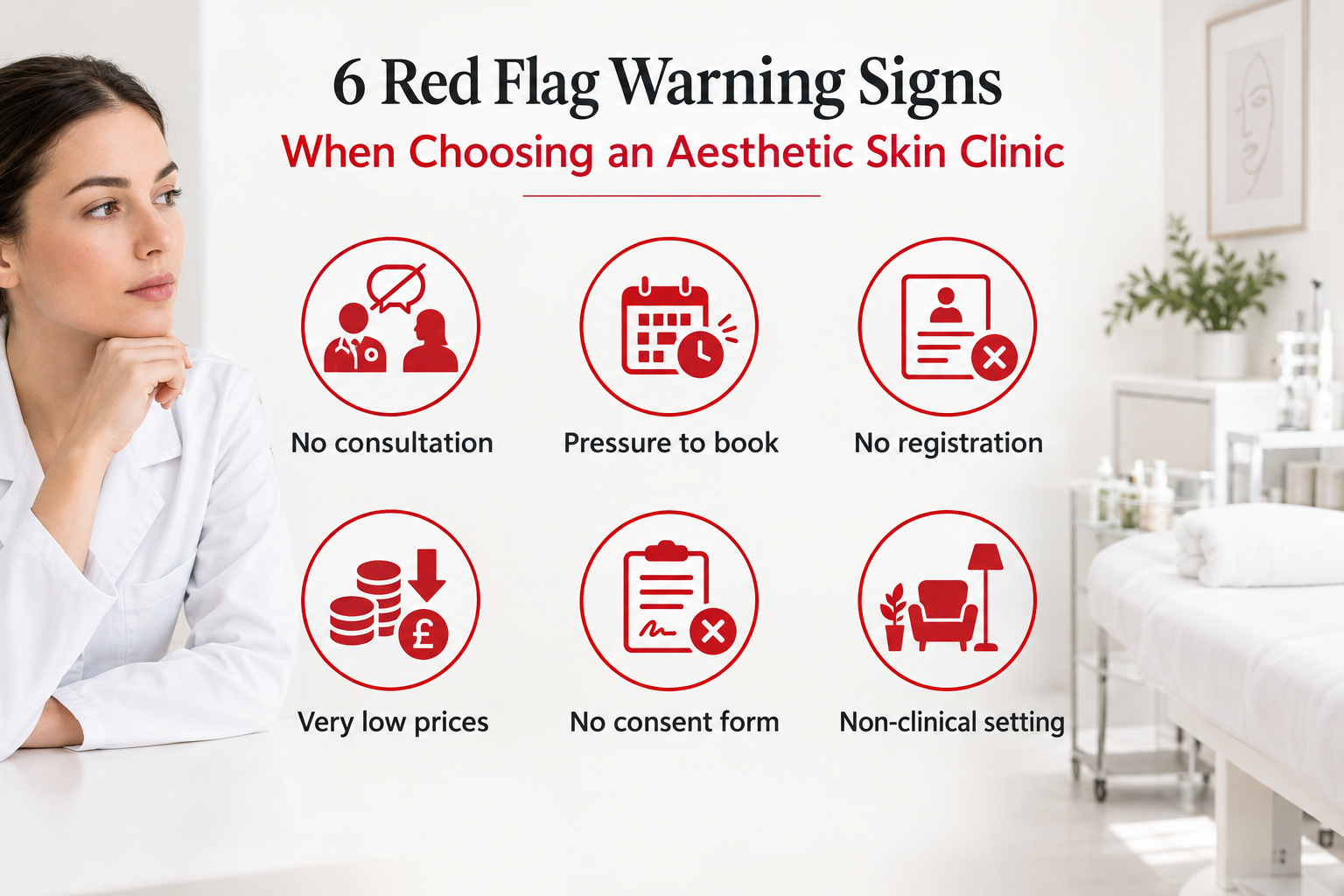
- No consultation offered before treatment: Any reputable clinic will assess your suitability before proceeding, not after payment is taken.
- Pressure to book immediately or take advantage of a limited-time offer: Legitimate clinical decisions should never be driven by promotional urgency.
- Inability or unwillingness to name the regulatory body with which the practitioner is registered: This information should be readily available and transparently shared.
- Treatments priced significantly below the typical market range: Unusually low prices may reflect the use of unregulated or counterfeit products, inadequate training, or both.
- No written consent process: Informed consent is a clinical and ethical requirement, not an optional formality.
- Guarantees of specific results: No ethical practitioner can guarantee a particular outcome, as individual response to treatment varies.
- Treatments offered in non-clinical settings such as homes, pop-up events, or beauty salons without appropriate clinical infrastructure: The environment in which treatment is delivered affects both safety and the ability to manage complications.
Questions to Ask Before Booking
Asking direct questions before committing to treatment is not only reasonable — it is an important part of protecting your own safety. A practitioner who is confident in their qualifications and practice will welcome these questions rather than deflect them.
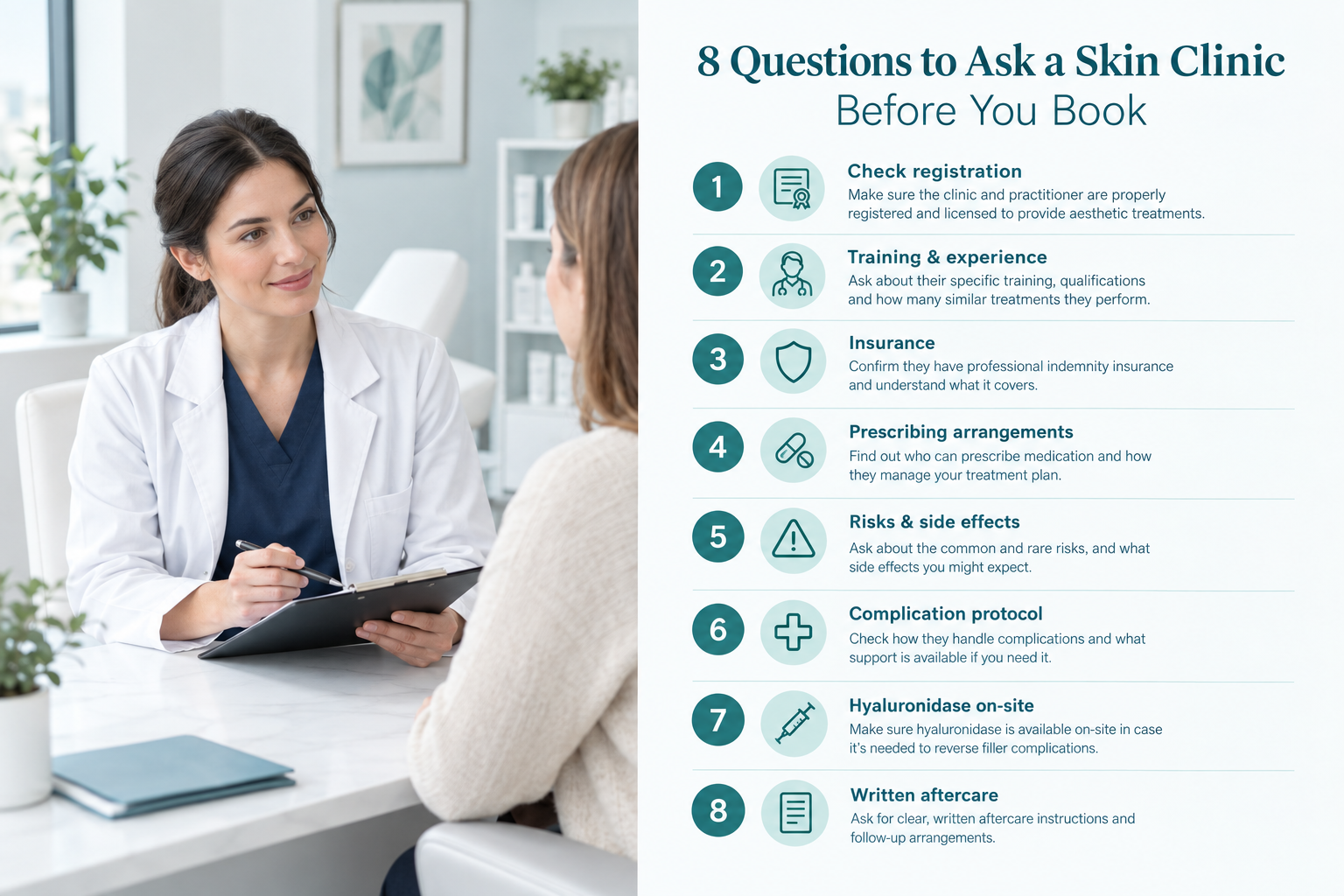
- What is your professional registration, and which regulatory body can I check this with?
- What specific training have you completed in this treatment, and how long have you been performing it?
- Do you hold professional indemnity insurance that covers aesthetic procedures?
- Who prescribes the medicines used in this treatment, and will I have a face-to-face assessment with the prescriber?
- What are the realistic risks and side effects of this treatment for someone with my medical history?
- What happens if I experience a complication — who do I contact, and what is your protocol?
- Do you stock hyaluronidase on-site if I am having dermal filler treatment?
- Will I receive written information about aftercare and what to watch for after treatment?
Understanding Pricing in the Cardiff Aesthetics Market
Aesthetic treatment pricing in Cardiff varies considerably between providers, and the relationship between price and quality is not straightforward. Higher prices do not automatically indicate better qualifications or safer practice, but very low prices — particularly for injectable treatments — can be a meaningful warning sign. The cost of genuine, licensed aesthetic products, appropriate clinical insurance, and the time required for a proper consultation and consent process all contribute to the overhead of a responsibly run clinic. When prices appear significantly below what comparable clinics charge, it is worth asking why.
Promotional offers such as group discounts, flash sales, or heavily discounted introductory packages for injectable treatments are generally inconsistent with responsible clinical practice. Aesthetic medicine decisions should be based on clinical suitability, not promotional timing. Patients who feel pressured by time-limited offers may benefit from stepping back and seeking a second opinion from a different provider before proceeding.
The Role of the Consultation
A thorough pre-treatment consultation is one of the clearest indicators of a responsibly run skin clinic. During a consultation, a qualified practitioner should take a relevant medical history, ask about current medications and any history of allergies or adverse reactions to previous treatments, assess the treatment area, discuss your goals and whether the proposed treatment is likely to help achieve them, explain the realistic benefits and limitations of the treatment, and describe the possible risks and side effects in terms you can understand. The consultation should also be an opportunity for you to ask questions and to decide, without pressure, whether you wish to proceed.
Some clinics charge for consultations; others offer them without charge. A consultation fee is not inherently a negative sign — it can reflect the time and clinical expertise involved. What matters more is whether the consultation is genuinely thorough and patient-centred, rather than a brief formality before treatment is sold.
Frequently Asked Questions
Can anyone legally offer aesthetic treatments in Cardiff?
For non-prescription treatments such as certain chemical peels, microneedling, and some energy-based treatments, there is currently no legal requirement in Wales for the practitioner to hold a clinical qualification. For prescription-only treatments including botulinum toxin and lidocaine-containing dermal fillers, a valid prescription from a regulated prescriber is required. This regulatory gap means that patient due diligence is especially important when choosing a provider.
How do I check if a practitioner is registered?
You can search the registers of the General Medical Council, Nursing and Midwifery Council, General Dental Council, and General Pharmaceutical Council directly on their respective websites. These searches are free and publicly available. Simply enter the practitioner’s name and confirm their registration status and any conditions on their practice.
Is it safe to have aesthetic treatments in a beauty salon?
This depends entirely on the qualifications of the individual performing the treatment and the nature of the treatment itself. Some beauty therapists hold appropriate training for certain non-prescription skin treatments. However, injectable treatments and prescription medicines should only be administered in an appropriate clinical environment by a qualified and registered practitioner. The physical setting alone does not determine safety, but a clinical environment with appropriate equipment and emergency protocols is an important factor.
What should I do if I experience a complication after treatment?
Contact the clinic or practitioner who treated you as soon as possible. For serious or rapidly developing symptoms — particularly after dermal filler treatment, such as severe pain, skin colour changes, or any visual disturbance — seek urgent medical attention without delay. These symptoms may indicate a vascular complication that requires immediate treatment. Keep any aftercare information you were given, as this may be relevant to the clinician assessing you.
Are before-and-after photos a reliable way to assess a clinic?
Before-and-after photographs can give a general impression of a practitioner’s aesthetic approach, but they have significant limitations as a quality indicator. Photographs can be edited, may not represent typical results, and tell you nothing about the practitioner’s qualifications, safety record, or how they manage complications. They should be considered alongside — not instead of — verification of credentials and a thorough consultation.
Do I need a GP referral to attend a skin clinic in Cardiff?
Most aesthetic skin clinics in Cardiff operate on a self-referral basis, meaning you can book directly without a GP referral. However, if you have a skin condition that may be medical in nature — such as a suspicious mole, persistent rash, or inflammatory skin disease — it is advisable to see your GP before seeking aesthetic treatment, as some conditions require medical diagnosis and management rather than cosmetic intervention.
Making a Safe and Informed Choice About Your Skin Clinic in Cardiff
The aesthetic medicine sector in Cardiff includes many skilled, qualified, and genuinely patient-focused practitioners. It also includes providers who do not meet the standards that patients reasonably expect. The difference is not always visible from a clinic’s website, social media presence, or price list. Protecting yourself requires a small amount of active research — verifying registration, asking direct questions about qualifications and protocols, and taking the time to attend a proper consultation before committing to any treatment.
Regulated practitioners welcome scrutiny because transparency is part of responsible clinical practice. If a clinic or practitioner is reluctant to answer straightforward questions about their qualifications, insurance, or complication management, that reluctance is itself informative. Conversely, a practitioner who answers clearly, explains risks honestly, and does not pressure you toward an immediate decision is demonstrating the kind of professional conduct that is worth seeking out.
If you are considering any skin treatment — whether injectable, device-based, or topical — taking the time to choose a regulated, appropriately qualified provider in Cardiff is the single most important step you can take before your first appointment. A brief consultation with a qualified practitioner can also help you understand which treatments, if any, are genuinely suited to your concerns and goals, rather than simply the treatments being most actively promoted.


