
How Long After Microneedling Can You Wear Makeup? A Patient Guide
After a microneedling session, one of the most common questions patients ask is how soon they can apply makeup. The short answer is that most practitioners recommend waiting at least 24 hours, and often 48 to 72 hours, before applying any cosmetic products to treated skin. The exact timing depends on the depth of treatment, your skin’s individual response, and the type of products you plan to use. This guide explains why the waiting period matters, what happens to your skin during recovery, and how to reintroduce makeup safely without compromising your results.
Key Takeaways
- Most practitioners advise waiting a minimum of 24 hours before applying makeup after microneedling, with 48 to 72 hours being a more cautious and commonly recommended window.
- Freshly needled skin has thousands of microscopic channels that remain temporarily open, making it highly vulnerable to irritants, bacteria, and allergens found in many cosmetic products.
- Mineral-based makeup is generally considered a safer first choice when reintroducing cosmetics, as it is less likely to contain irritating fragrances, preservatives, or occlusive ingredients.
- Deeper or more aggressive microneedling treatments may require a longer makeup-free period than standard superficial sessions.
- Following your practitioner’s specific aftercare instructions always takes priority over general guidance.
What Microneedling Does to Your Skin
Microneedling, also known as collagen induction therapy, uses a device fitted with fine needles to create controlled micro-injuries across the surface of the skin. These tiny punctures stimulate the skin’s natural wound-healing response, which involves the release of growth factors and the gradual production of new collagen and elastin. The treatment is commonly used to address fine lines, acne scarring, enlarged pores, uneven skin texture, and general skin quality concerns.
Immediately after microneedling, the treated area is left with thousands of microscopic channels penetrating the epidermis and, depending on needle depth, into the upper dermis. These channels are not visible to the naked eye, but they represent a meaningful disruption to the skin barrier. The skin barrier normally acts as a protective layer that keeps moisture in and external substances out. When this barrier is temporarily compromised, the skin becomes significantly more permeable and reactive than usual.
Redness, warmth, and mild swelling are expected in the hours following treatment. Some patients experience a sensation similar to mild sunburn. Pinpoint bleeding may occur during the procedure itself, particularly at greater needle depths. By the following day, most patients notice that acute redness has reduced, though the skin may still appear flushed and feel sensitive. Peeling or dryness can develop over the following two to five days as the skin continues to heal and renew itself.
Why Makeup Timing Matters After Microneedling
Applying makeup too soon after microneedling carries genuine risks that go beyond minor irritation. The open microchannels created during treatment allow substances to penetrate the skin far more deeply than they would under normal circumstances. This enhanced permeability is actually used therapeutically when practitioners apply serums immediately after needling to improve ingredient absorption. However, the same mechanism means that cosmetic products applied too early can introduce harmful substances directly into the deeper layers of the skin.
Many conventional makeup products contain ingredients that are well tolerated on intact skin but can cause significant problems when they reach the dermis. Fragrances, alcohol, synthetic preservatives such as parabens, and certain pigments may trigger inflammatory reactions, contact dermatitis, or allergic responses when they bypass the normal skin barrier. There is also a meaningful infection risk. Makeup brushes, sponges, and applicators can harbour bacteria, and introducing these to freshly needled skin increases the likelihood of folliculitis or, in more serious cases, a skin infection requiring medical treatment.
Beyond the risk of adverse reactions, applying heavy or occlusive makeup products too early may interfere with the skin’s healing process. The inflammatory phase of wound healing requires adequate oxygen exchange and moisture regulation. Thick foundations or setting powders applied prematurely can disrupt this environment and potentially affect the quality of the healing response, which in turn may influence the final result of the treatment.
The Recommended Waiting Period: What Most Practitioners Advise
The most widely cited minimum waiting time before applying makeup after microneedling is 24 hours. However, many experienced practitioners recommend extending this to 48 or 72 hours, particularly after treatments performed at greater needle depths or with radiofrequency-assisted microneedling devices. The reasoning is straightforward: the longer the skin is allowed to begin healing without the introduction of external products, the lower the risk of irritation, infection, or interference with the healing process.
Superficial microneedling sessions, sometimes described as lighter or maintenance treatments, typically use shorter needle depths and cause less disruption to the skin barrier. Patients who have undergone a lighter session may find that their skin feels ready for gentle cosmetics within 24 hours. In contrast, deeper treatments targeting more significant scarring or skin laxity involve greater needle penetration and a more pronounced inflammatory response. For these sessions, a 48 to 72 hour makeup-free period is a more appropriate guideline, and some practitioners advise waiting the full 72 hours as a precaution.
It is worth noting that individual skin sensitivity also plays a role. Patients with reactive or sensitised skin, a history of rosacea, or those who are new to microneedling may benefit from erring on the side of caution and waiting longer before reintroducing any cosmetic products. Your treating practitioner is best placed to give you a personalised recommendation based on the specifics of your treatment and your skin type.
What You Can and Cannot Apply in the First 24 to 72 Hours
During the initial recovery window, the focus should be on supporting the skin’s healing process rather than covering or enhancing its appearance. Most practitioners recommend applying only practitioner-approved, fragrance-free, and preservative-minimal products during this period. Hyaluronic acid serums, gentle peptide formulations, and medical-grade moisturisers are commonly recommended to support hydration and barrier recovery. Some clinics provide specific post-procedure products as part of their aftercare protocol.
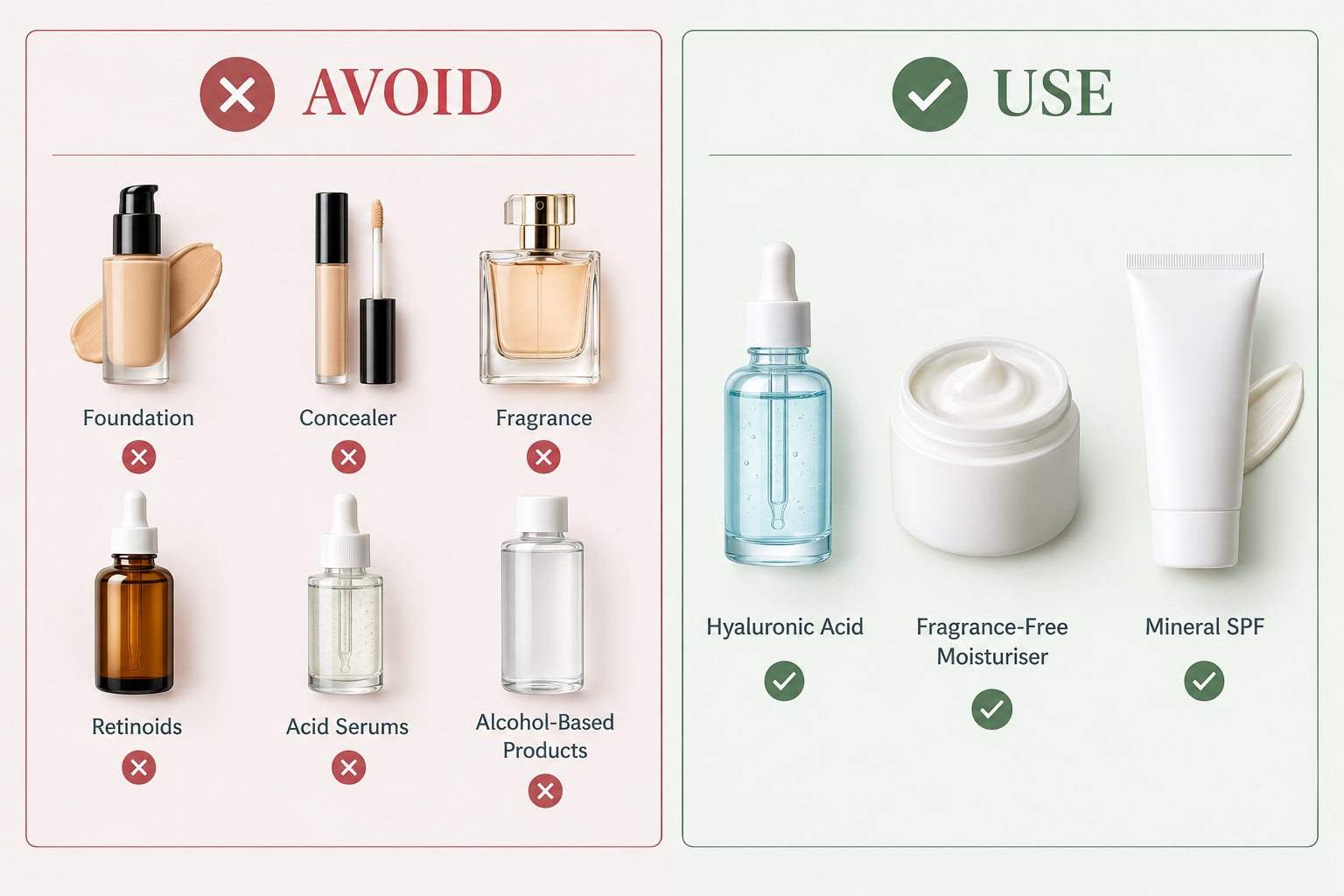
Products to avoid in the first 24 to 72 hours include all conventional foundation, concealer, powder, blush, bronzer, and setting spray. Retinoids, vitamin C serums, exfoliating acids such as glycolic or salicylic acid, and any product containing alcohol should also be avoided, as these can cause significant irritation on compromised skin. Sun protection is important during recovery, but chemical sunscreens containing avobenzone, oxybenzone, or similar UV filters may irritate freshly needled skin. A gentle mineral sunscreen containing zinc oxide or titanium dioxide is generally better tolerated and is often recommended by practitioners as soon as the skin can accept topical products.
Touching the face unnecessarily, using unclean hands, or applying any product with a brush or sponge that has not been thoroughly cleaned should also be avoided during the recovery period. Contaminated applicators are a common and underappreciated source of post-procedure skin infections.
Reintroducing Makeup Safely After the Waiting Period
Once the recommended waiting period has passed and your skin no longer feels acutely sensitive or raw, you can begin reintroducing makeup gradually. Starting with the lightest, most minimal products is advisable rather than returning immediately to a full makeup routine. Mineral makeup products, which typically use zinc oxide or titanium dioxide as their base, are often recommended as a first step because they tend to be free from fragrances, synthetic dyes, and many of the preservatives found in conventional cosmetics. Some mineral formulations also offer a degree of sun protection, which is beneficial during the post-treatment period when the skin is more vulnerable to UV damage.
When applying makeup for the first time after microneedling, use clean fingers or a freshly sanitised brush rather than a sponge or beauty blender, which can harbour bacteria even after washing. Apply products gently without rubbing or dragging the skin. Avoid heavy coverage products that require significant blending pressure, as the skin may still be mildly sensitive even after the initial recovery window has passed.
If you notice any stinging, burning, increased redness, or unusual skin reactions when reintroducing a product, remove it gently with a mild cleanser and allow the skin more time to recover before trying again. A reaction at this stage does not necessarily mean the product is unsuitable for your skin in general; it may simply indicate that the skin barrier has not yet fully recovered.
How Needle Depth and Treatment Type Affect Recovery Time
Not all microneedling treatments are equivalent, and the type of device and needle depth used significantly influence how long the skin needs before makeup can be safely applied. Standard dermaroller or automated microneedling pen treatments performed at depths of 0.5 to 1.5 millimetres are associated with a relatively brief recovery period. At these depths, the epidermis is disrupted but the dermis is only minimally affected, and the skin barrier typically begins to recover within 24 hours.
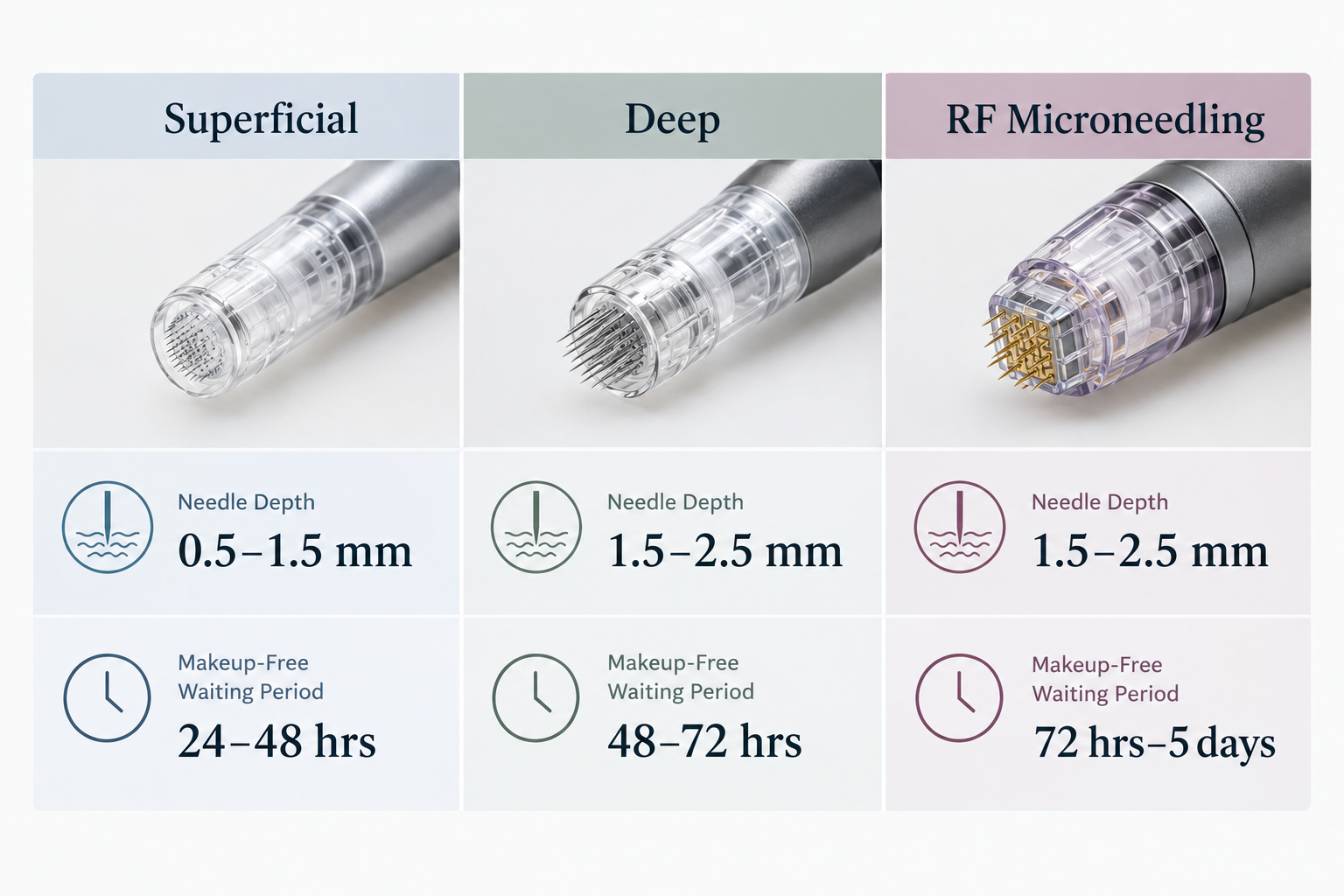
Treatments performed at depths of 1.5 to 2.5 millimetres or greater, which are used for more significant scarring or skin laxity, cause a more pronounced inflammatory response and a longer period of barrier disruption. Radiofrequency microneedling, which combines needle penetration with the delivery of radiofrequency energy into the dermis, adds a thermal component to the treatment and is associated with a more extended recovery period. Patients who have undergone radiofrequency microneedling are often advised to wait 72 hours or longer before applying any cosmetic products, and some practitioners recommend waiting up to five days for full makeup application.
Platelet-rich plasma, or PRP, is sometimes applied to the skin immediately after microneedling to enhance the healing response. When PRP is used as part of the treatment, the same general aftercare principles apply, though practitioners may have specific guidance about the timing of product reintroduction in this context.
Skin Care Products to Prioritise During Recovery
Supporting the skin’s recovery after microneedling involves more than simply avoiding makeup. The products you do apply during the healing period can meaningfully influence how quickly and effectively the skin barrier recovers. Hydration is a priority, as the skin loses moisture more readily when the barrier is compromised. A fragrance-free, non-comedogenic moisturiser applied gently two to three times daily can help maintain the skin’s moisture levels and reduce the sensation of tightness or dryness that many patients experience in the days following treatment.
Hyaluronic acid is a commonly recommended ingredient during post-microneedling recovery because it attracts and retains moisture without introducing potentially irritating actives. Growth factor serums and peptide formulations are also used by some practitioners as part of post-procedure protocols, as these ingredients may support the skin’s natural repair processes. However, the evidence for specific post-procedure topical ingredients remains an active area of research, and recommendations vary between practitioners and clinics.
Sun protection is non-negotiable during the recovery period. Freshly needled skin is more susceptible to UV-induced damage and post-inflammatory hyperpigmentation, particularly in patients with medium to darker skin tones. A broad-spectrum mineral sunscreen with an SPF of at least 30 should be applied as soon as the skin can tolerate it, and sun exposure should be minimised for at least one week following treatment.
Risks of Applying Makeup Too Soon
The consequences of applying makeup before the skin has adequately recovered from microneedling range from mild and temporary to more significant. At the milder end, patients may experience increased redness, stinging, or a flare of sensitivity that prolongs the overall recovery period. These reactions are uncomfortable but typically resolve without lasting effects once the offending product is removed and the skin is allowed to settle.
More concerning is the risk of infection. Bacteria introduced through contaminated makeup products or applicators can enter the open microchannels and cause folliculitis, pustules, or in rare cases a more significant skin infection. Patients who develop signs of infection, including increasing redness, warmth, swelling, pus, or fever, should seek prompt medical assessment rather than attempting to manage the situation at home.
There is also a risk of contact sensitisation. Repeated exposure of compromised skin to allergens or irritants found in cosmetic products can, in some cases, trigger a sensitisation response that makes the skin reactive to those ingredients in the future, even on intact skin. This is a less commonly discussed but clinically relevant consideration, particularly for patients who undergo regular microneedling sessions.
Finally, applying heavy or occlusive products too soon may theoretically interfere with the inflammatory signalling that drives collagen stimulation. While the clinical evidence on this specific point is limited, it is a reasonable basis for caution, particularly given that the primary goal of microneedling is to stimulate a controlled healing response.
Frequently Asked Questions
Can I wear makeup the day after microneedling?
Some patients with intact, non-sensitive skin who have undergone a superficial microneedling session may be able to apply very light, mineral-based makeup 24 hours after treatment. However, 48 to 72 hours is a more cautious and widely recommended waiting period. Always follow the specific guidance provided by your treating practitioner, as they can assess your individual skin response.
What type of makeup is safest to use first after microneedling?
Mineral makeup products based on zinc oxide or titanium dioxide are generally considered the safest first choice after microneedling. These formulations tend to avoid fragrances, synthetic preservatives, and many of the ingredients that are most likely to irritate compromised skin. Avoid heavy liquid foundations, products containing alcohol, and anything with a strong fragrance until the skin has fully recovered.
Can I use concealer to cover redness after microneedling?
The temptation to cover post-treatment redness with concealer is understandable, but applying concealer before the skin has adequately healed carries the same risks as any other makeup product. If redness is a significant concern, discuss this with your practitioner before treatment. They may be able to advise on timing your appointment to allow sufficient recovery before a social event.
How long does redness last after microneedling?
Redness after microneedling typically peaks in the first few hours following treatment and begins to subside within 24 to 48 hours for most patients. Some degree of flushing or pinkness may persist for up to five days, particularly after deeper treatments. Individual variation is significant, and factors such as skin sensitivity, treatment depth, and the number of passes performed all influence how long redness lasts.
Does the waiting time change if I had radiofrequency microneedling?
Yes. Radiofrequency microneedling combines needle penetration with thermal energy delivery, which causes a more pronounced skin response than standard microneedling. Most practitioners recommend waiting at least 72 hours before applying any makeup after radiofrequency microneedling, and some advise waiting up to five days depending on the intensity of the treatment.
Can I wear SPF after microneedling?
Sun protection is strongly recommended after microneedling, but the type of sunscreen matters. Chemical sunscreens may irritate freshly needled skin. A gentle mineral sunscreen containing zinc oxide or titanium dioxide is generally better tolerated and can usually be applied once the skin is no longer acutely sensitive, often within 24 hours of a standard treatment. Your practitioner will advise on the appropriate timing for your specific situation.
Will wearing makeup too soon ruin my microneedling results?
Applying makeup too soon is unlikely to completely negate the collagen-stimulating effects of microneedling, but it may cause irritation, infection, or a prolonged recovery that affects the overall experience and potentially the quality of healing. Protecting the skin during the recovery window is an important part of getting the most from your treatment.
When to Speak to Your Practitioner About Post-Treatment Concerns
Most post-microneedling recovery follows a predictable pattern of redness, mild sensitivity, and gradual improvement over three to five days. If your skin is not improving as expected, or if you develop signs that fall outside normal recovery, contacting your treating practitioner promptly is the appropriate course of action. Signs that warrant professional assessment include increasing rather than decreasing redness beyond 48 hours, the development of pustules or crusting, significant swelling, pain that is worsening rather than improving, or any systemic symptoms such as fever. These may indicate an infection or an adverse reaction that requires clinical management. Attempting to cover concerning skin changes with makeup rather than seeking advice is not recommended, as it may delay appropriate treatment and worsen the outcome.


