
How Long Does Microneedling Last? Results, Longevity & Maintenance
Microneedling can produce meaningful improvements in skin texture, tone, and firmness, but one of the most common questions patients ask before booking is how long those results actually last. The honest answer is that longevity varies considerably depending on the concern being treated, the number of sessions completed, and individual factors such as age, skin type, and lifestyle. This article explains what the evidence suggests about microneedling result duration, what influences how long improvements are maintained, and what realistic expectations look like before and after a course of treatment.
Key Takeaways
- Microneedling results are not permanent; most patients see improvements that last between three and six months after a single session, with longer-lasting outcomes possible after a full course of treatments.
- Collagen remodelling continues for several weeks to months after each session, meaning the full benefit of a treatment course may not be visible immediately.
- Concerns such as acne scarring and enlarged pores tend to show more durable improvements than fine lines or skin laxity, which are more affected by ongoing ageing.
- Maintenance sessions, typically once or twice a year, are commonly recommended to sustain results over time.
- Individual factors including skin condition, age, sun exposure, and aftercare habits all influence how long microneedling results last.
What Is Microneedling and How Does It Work?
Microneedling, also referred to as collagen induction therapy, is a minimally invasive skin treatment that uses a device fitted with fine needles to create controlled micro-injuries in the skin’s surface. These tiny punctures trigger the skin’s natural wound-healing response, stimulating the production of collagen and elastin — the structural proteins responsible for skin firmness, elasticity, and smoothness. The procedure is performed at varying needle depths depending on the concern being addressed and the area of the face or body being treated.
The mechanism behind microneedling is well established in dermatological literature. When the skin detects micro-injuries, it initiates a repair cascade involving growth factors, fibroblast activation, and new collagen synthesis. This process does not happen overnight; collagen remodelling typically continues for four to six weeks after each session, and in some cases longer. This delayed response is one reason why the full results of a microneedling course are usually assessed several weeks after the final treatment rather than immediately after.
Microneedling devices range from manual dermarollers to professional motorised pens used in clinical settings. Professional treatments generally allow more precise needle depth control and consistent pressure, which may influence both the effectiveness and the safety profile of the procedure. Radiofrequency microneedling, a variation that combines needle penetration with radiofrequency energy, is a separate category of treatment with a different mechanism and result profile, and is not the same as standard microneedling.
How Long Do Microneedling Results Last?
After a single microneedling session, visible improvements in skin texture and radiance may last approximately three to six months, though this varies between individuals. A single session is generally considered insufficient for addressing deeper concerns such as acne scars, significant skin laxity, or hyperpigmentation. Most clinical protocols recommend a course of three to six sessions spaced four to six weeks apart, after which results tend to be more pronounced and longer lasting.
Following a complete treatment course, many patients report that improvements in skin texture, pore appearance, and mild scarring remain noticeable for six to twelve months or longer. However, microneedling does not halt the ageing process, and the skin continues to change over time. Fine lines and skin laxity concerns are therefore more likely to require earlier maintenance than structural improvements to scarring.
It is important to understand that microneedling results are cumulative. Each session builds on the collagen produced by the previous one, which is why a course of treatments typically delivers more durable outcomes than a single appointment. Patients who complete a recommended course and then maintain results with periodic top-up sessions often report the most sustained improvements over time.
Results by Skin Concern
The longevity of microneedling results differs depending on the specific concern being treated. Acne scarring, particularly atrophic or rolling scars, tends to respond well to microneedling and improvements can be long lasting because the structural changes to scar tissue are relatively stable once achieved. Studies have shown meaningful reductions in scar severity following multiple sessions, and these improvements may persist for a year or more in suitable candidates.
Fine lines and skin texture improvements are also achievable with microneedling, but these concerns are more susceptible to ongoing ageing, sun damage, and lifestyle factors. Results in these areas may begin to diminish more noticeably after six to nine months without maintenance. Hyperpigmentation and uneven skin tone can respond to microneedling, though results vary more widely and may depend on the underlying cause of pigmentation. Skin laxity improvements are generally more modest with standard microneedling compared with energy-based alternatives, and longevity in this area tends to be shorter.
Factors That Influence How Long Results Last
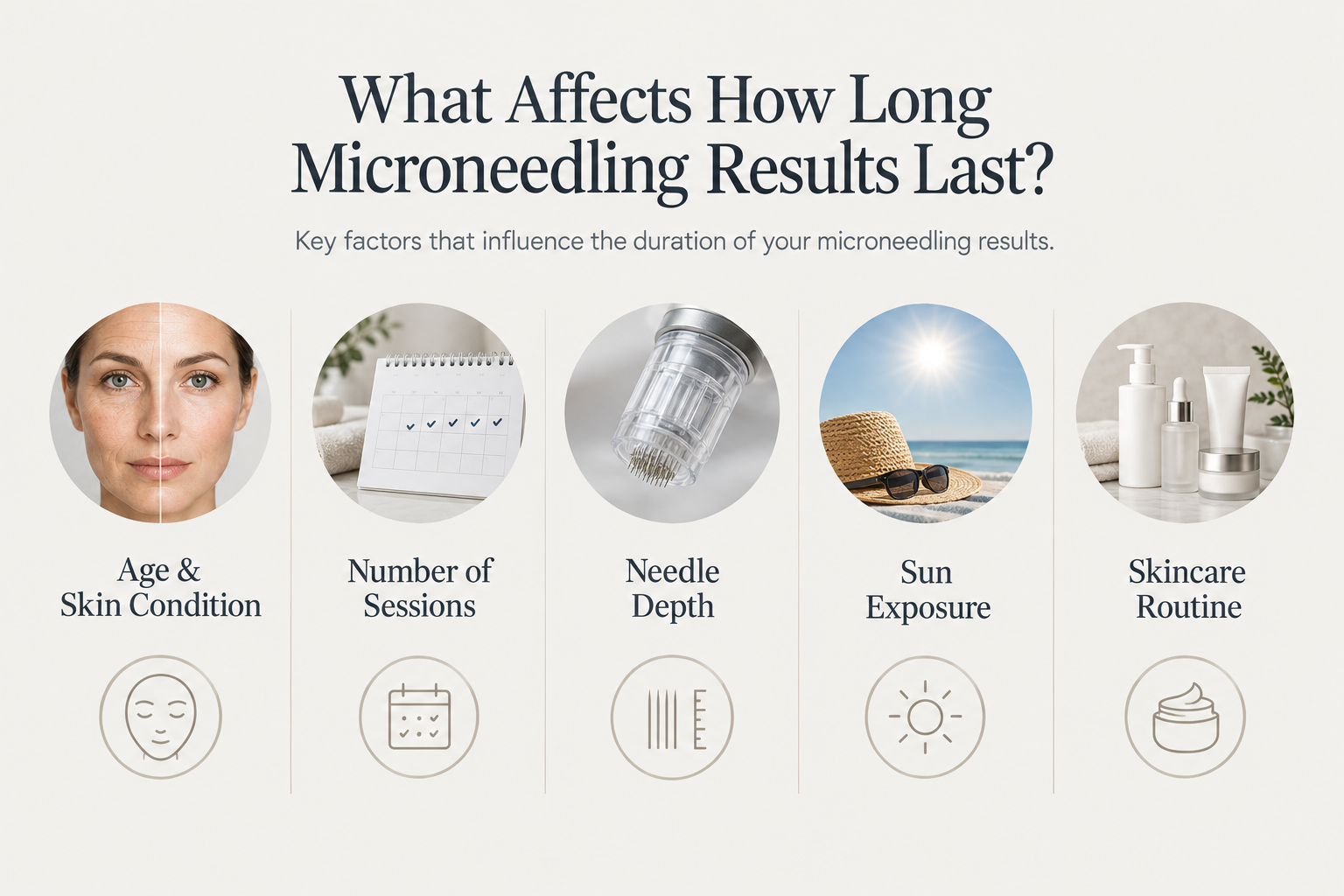
Several variables affect how long microneedling improvements are maintained after treatment. Understanding these factors helps set realistic expectations and informs decisions about treatment frequency and aftercare.
Age and Skin Condition
Younger patients with good baseline skin quality and early signs of ageing tend to respond more quickly to microneedling and may maintain results for longer. As skin ages, collagen production naturally slows, which means the skin’s ability to generate new collagen in response to treatment may be reduced. Older patients or those with more advanced skin laxity may require more sessions to achieve comparable results and may find that maintenance is needed more frequently.
Number of Sessions Completed
The number of microneedling sessions completed is one of the most significant factors influencing result longevity. A single session produces a limited collagen response, whereas a full course of three to six treatments creates a more substantial and sustained improvement in the skin’s structural integrity. Patients who complete a recommended course consistently report longer-lasting outcomes than those who have only one or two sessions.
Needle Depth and Treatment Parameters
The depth at which the needles penetrate the skin influences the degree of collagen stimulation. Superficial treatments targeting the epidermis may improve skin radiance and texture but produce a shorter-lived response. Deeper treatments targeting the dermis stimulate a more significant collagen remodelling process and may produce more durable results, though they also carry a higher risk of side effects and require longer recovery. Treatment parameters should always be determined by a qualified practitioner based on individual skin assessment.
Sun Exposure and Lifestyle Factors
Ultraviolet radiation is one of the primary drivers of collagen degradation in the skin. Patients who have significant sun exposure without adequate sun protection after microneedling may find that results diminish more quickly. Smoking, poor nutrition, inadequate hydration, and high levels of chronic stress can also impair collagen synthesis and accelerate skin ageing, potentially shortening the duration of microneedling improvements. Consistent use of broad-spectrum SPF is widely recommended as part of post-treatment care and ongoing skin maintenance.
Skincare Routine and Aftercare
The skincare products used before and after microneedling can influence both the quality of results and how long they last. Ingredients such as retinoids, vitamin C, and peptides support collagen production and may complement the effects of treatment when used appropriately. However, certain active ingredients should be avoided immediately after microneedling to prevent irritation. A practitioner should provide specific aftercare guidance tailored to the individual’s skin type and the treatment performed.
When Do Microneedling Results Appear?
Some patients notice an initial improvement in skin radiance and texture within a few days of treatment, often described as a subtle glow. However, this early change reflects reduced inflammation and improved hydration rather than new collagen formation. The more meaningful structural improvements — including changes to scar texture, pore size, and skin firmness — develop gradually as collagen remodelling progresses over four to eight weeks following each session.
For patients completing a course of treatments, the most noticeable results are typically visible four to six weeks after the final session. This timeline means that patients should not assess the full outcome of a treatment course immediately after the last appointment. Managing expectations around this delayed response is an important part of the pre-treatment consultation process.
How Many Sessions Are Typically Needed?
The number of microneedling sessions recommended depends on the concern being treated and the individual’s skin response. For general skin texture improvement and mild fine lines, a course of three sessions spaced four to six weeks apart is a common starting point. For more significant concerns such as moderate acne scarring, deeper wrinkles, or stretch marks, four to six sessions or more may be recommended before a meaningful assessment of results can be made.
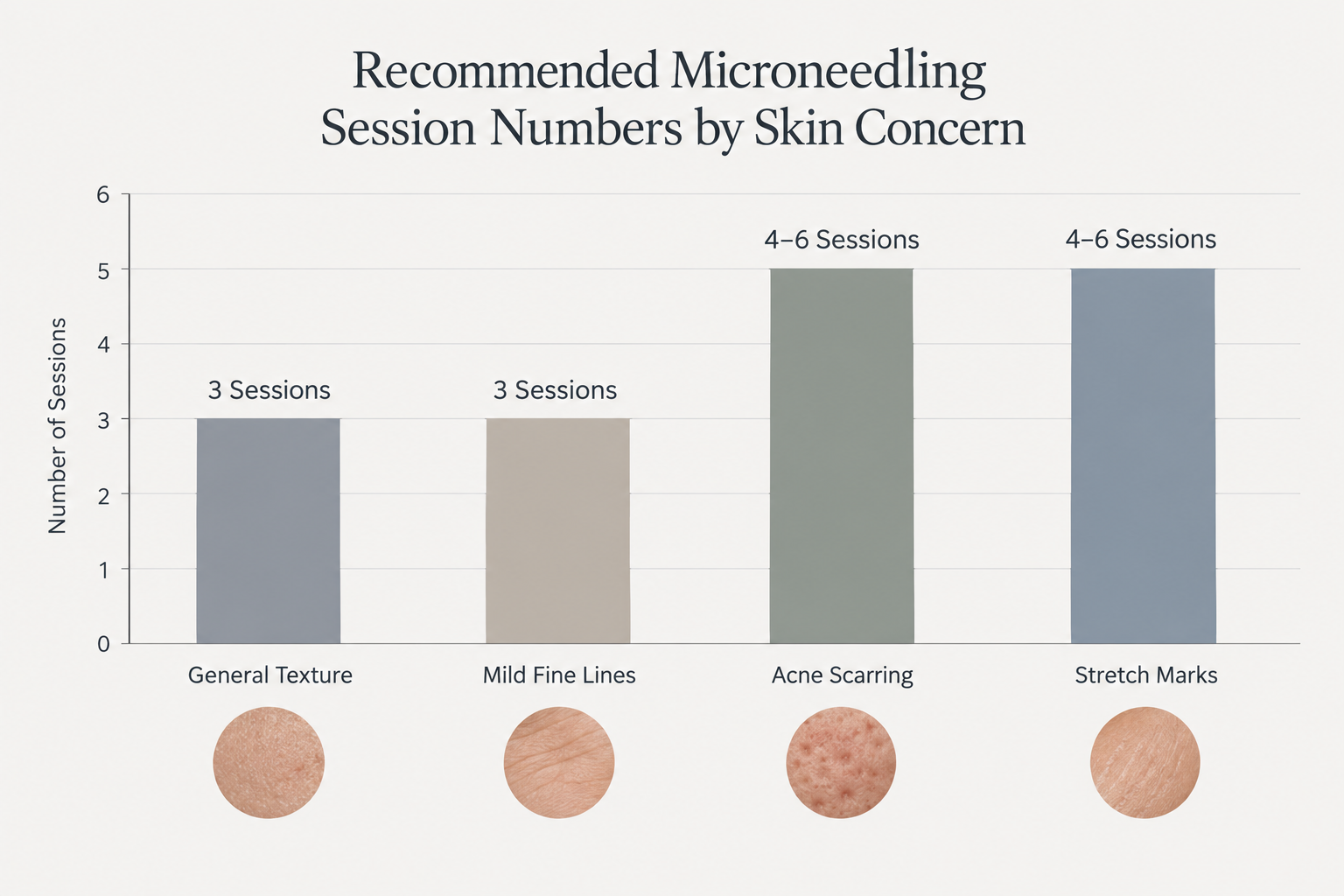
It is worth noting that individual responses to microneedling vary. Some patients see significant improvement after three sessions; others with more resistant concerns may require additional treatments. A qualified practitioner should reassess the skin after each session and adjust the treatment plan accordingly rather than applying a fixed protocol to every patient.
Maintenance Treatments and Long-Term Planning
Because microneedling results are not permanent, maintenance sessions are typically recommended to sustain improvements over time. For most patients who have completed an initial course, one to two maintenance sessions per year is a commonly suggested approach, though this varies depending on the concern, the individual’s skin ageing rate, and their goals.
Maintenance microneedling sessions are generally performed at a lower frequency than the initial course and may use shallower needle depths, as the skin’s collagen levels have already been improved. Some patients choose to combine maintenance microneedling with other treatments — such as chemical peels, topical growth factors, or hyaluronic acid boosters — to address multiple skin concerns simultaneously. Any combination approach should be discussed with a practitioner to ensure treatments are compatible and appropriately timed.
Long-term planning for microneedling should also account for the natural progression of skin ageing. A patient in their thirties maintaining results for acne scarring will have different long-term needs than a patient in their fifties addressing skin laxity and fine lines. Periodic skin assessments allow the treatment plan to evolve as the skin’s condition changes over time.
Risks, Side Effects, and Downtime
Microneedling is generally considered a well-tolerated procedure when performed by a trained practitioner using appropriate equipment, but it is not without risks. Common side effects include redness, swelling, and skin sensitivity immediately after treatment, which typically resolve within one to three days for superficial treatments. Deeper treatments may involve more pronounced redness and a longer recovery period of up to five to seven days.
Less common but possible adverse effects include post-inflammatory hyperpigmentation, particularly in patients with darker skin tones, infection if aftercare instructions are not followed, and prolonged redness or irritation. Scarring is a rare but recognised risk, particularly if the procedure is performed incorrectly or at inappropriate depths. Patients with active acne, rosacea, eczema, psoriasis, or open skin lesions in the treatment area are generally not suitable candidates for microneedling until those conditions are managed.
Microneedling is not recommended during pregnancy or breastfeeding, and patients taking certain medications — including oral retinoids or blood thinners — may need to pause treatment or seek medical advice before proceeding. A thorough consultation and medical history review should always precede treatment.
Alternatives to Microneedling
Patients considering microneedling for skin texture, scarring, or rejuvenation may also want to understand the alternatives available, as different treatments suit different concerns and skin types.
Chemical peels use acid solutions to remove the outer layers of skin and stimulate renewal. Superficial peels require little downtime and can improve skin tone and texture, while medium and deep peels address more significant concerns but involve longer recovery. Results from chemical peels may last several months, and like microneedling, maintenance is typically needed.
Laser resurfacing treatments, including fractional laser and ablative laser, can produce more dramatic improvements in skin texture, pigmentation, and scarring than standard microneedling, but they generally involve more downtime and carry a higher risk profile. They may be more suitable for patients with significant photodamage or deeper scarring who have not achieved adequate results with microneedling.
Radiofrequency microneedling combines the collagen-stimulating effect of needles with radiofrequency energy delivered directly into the dermis. This combination may produce more pronounced skin tightening than standard microneedling and is often used for skin laxity concerns. Results may last longer than standard microneedling in some patients, though the evidence base continues to develop and individual responses vary.
Polynucleotide injections and skin booster treatments address skin quality concerns through a different mechanism — delivering hydrating or regenerative compounds into the dermis rather than stimulating the skin’s surface repair response. These may be used alongside microneedling or as an alternative depending on the patient’s primary concern.
The most appropriate treatment depends on the individual’s skin type, concern, downtime tolerance, and budget. A qualified practitioner can help assess which option or combination of options is most likely to achieve the desired outcome.
Frequently Asked Questions
Can microneedling results be permanent?
Microneedling results are not permanent. The collagen produced in response to treatment is real and structural, but the skin continues to age naturally over time. Improvements in acne scarring can be long lasting because scar tissue changes are relatively stable, but fine lines, skin laxity, and texture concerns will gradually return without maintenance. Most patients benefit from periodic top-up sessions to sustain their results.
How soon after microneedling will I see results?
Some patients notice improved skin radiance within a few days of treatment, but the more significant structural improvements — particularly in scarring and skin firmness — develop over four to eight weeks as collagen remodelling progresses. The full results of a treatment course are typically assessed four to six weeks after the final session.
Does microneedling work after just one session?
A single microneedling session can produce some improvement in skin texture and radiance, but one session is generally insufficient for addressing deeper concerns such as acne scars, significant fine lines, or enlarged pores. A course of three to six sessions is typically recommended for meaningful and longer-lasting results.
How often should I have maintenance microneedling?
After completing an initial treatment course, most practitioners recommend one to two maintenance sessions per year to sustain results. The exact frequency depends on the concern being treated, how the individual’s skin responds, and their long-term goals. A practitioner should reassess the skin periodically and adjust the maintenance schedule accordingly.
Does microneedling work for acne scars long term?
Microneedling has a reasonable evidence base for improving atrophic acne scars, particularly rolling and boxcar scars. Improvements achieved through a full course of treatments can be long lasting because the structural changes to scar tissue are relatively stable. However, results vary between individuals, and some patients may require additional sessions or combination approaches for optimal outcomes.
Is at-home microneedling as effective as professional treatment?
At-home dermarollers use much shorter needle lengths than professional devices and do not penetrate to the same depth in the dermis. They may offer some superficial skin texture benefits but are unlikely to produce the same degree of collagen stimulation or the same longevity of results as professional microneedling. There is also a higher risk of incorrect technique, inadequate sterilisation, and skin damage with at-home use.
What can I do to make microneedling results last longer?
Consistent use of broad-spectrum SPF, avoiding excessive sun exposure, maintaining a supportive skincare routine with ingredients such as vitamin C and peptides, not smoking, and attending recommended maintenance sessions are all factors that may help extend the duration of microneedling results. A practitioner can advise on the most appropriate aftercare and maintenance plan for individual skin needs.
Planning Microneedling Around Realistic Expectations
Microneedling is a well-established skin treatment with a meaningful evidence base for improving acne scarring, skin texture, and skin quality. Results are real but not permanent, and the longevity of improvements depends on a combination of factors including the concern treated, the number of sessions completed, individual skin characteristics, and ongoing aftercare. For most patients, a course of three to six sessions followed by periodic maintenance offers the most sustained outcome.
Before committing to treatment, a thorough consultation with a qualified practitioner is essential. This should include a review of your skin concerns, medical history, realistic expectations, and a clear treatment plan that outlines the number of sessions recommended, the expected timeline for results, and a maintenance strategy. Microneedling is not suitable for everyone, and a clinical assessment is the appropriate starting point for determining whether it is the right approach for your individual skin goals.


