
How Long Does Chin Filler Last? Longevity, Factors & What to Expect
Chin filler is one of the more popular non-surgical options for improving lower face balance, projecting a recessed chin, or softening an asymmetric jawline. A common and entirely reasonable question before committing to treatment is how long the results actually last. The honest answer is that chin filler longevity varies between individuals, but most patients can expect results to remain visible for somewhere between 12 and 24 months, with some cases lasting longer depending on the product used and individual factors. This article explains what influences that timeline, what the treatment involves, what realistic results look like, and what happens when the filler gradually breaks down.
Key Takeaways
- Chin filler results typically last between 12 and 24 months, though individual variation is significant and some patients may see effects persist longer.
- The type of hyaluronic acid filler used, the volume injected, individual metabolism, and lifestyle factors all influence how quickly results fade.
- Chin filler is not permanent; the body gradually breaks down hyaluronic acid over time, and maintenance treatments are usually needed to sustain results.
- Results can be partially or fully reversed using hyaluronidase if needed, which is an important safety consideration.
- A thorough consultation with a qualified practitioner is essential to assess suitability, set realistic expectations, and choose an appropriate product.
What Is Chin Filler and How Does It Work?
Chin filler refers to the injection of a dermal filler product into the chin area to add volume, improve projection, refine the chin’s shape, or address asymmetry. The vast majority of chin filler treatments use hyaluronic acid (HA) fillers, which are gel-like substances that attract and retain water within the tissue. Hyaluronic acid is a naturally occurring molecule found in the skin and connective tissue, which is why HA-based fillers are generally well tolerated.
Different HA filler products vary in their cross-linking density, particle size, and rheological properties — meaning how firm or flexible the gel is. Denser, more cohesive fillers are typically chosen for the chin because the area benefits from structural support rather than soft superficial volume. These firmer products tend to integrate with the surrounding tissue in a way that provides definition and projection while remaining natural in appearance. The specific product selected by a practitioner will depend on the patient’s anatomy, the degree of correction needed, and the practitioner’s clinical preference.
Some practitioners also use calcium hydroxylapatite (CaHA) fillers for chin augmentation. CaHA fillers have a different mechanism — they provide immediate volume and also stimulate collagen production over time. Their longevity profile differs from HA fillers, and they cannot be dissolved with hyaluronidase, which is an important distinction when considering reversibility.
How Long Does Chin Filler Typically Last?
For most patients treated with hyaluronic acid chin filler, visible results last between 12 and 24 months. This range reflects genuine clinical variability rather than imprecision. Some patients find their results begin to soften noticeably around the 12-month mark, while others retain good definition for closer to 18 or even 24 months before a top-up feels necessary. A smaller proportion of patients, particularly those who received a denser or higher-volume treatment, may notice effects persisting beyond two years.
Calcium hydroxylapatite fillers used in the chin area may last somewhat longer — often cited in the range of 12 to 18 months for immediate volume, with the collagen-stimulating effect potentially extending the overall improvement. However, individual results vary here too, and the absence of reversibility with CaHA products means the risk-benefit calculation differs from HA fillers.
It is worth understanding that filler longevity is not a binary on-or-off phenomenon. Results do not disappear suddenly on a fixed date. Instead, the filler gradually metabolises and the volume slowly reduces over months. Many patients notice a gradual softening of definition rather than a dramatic change, which means the timing of a maintenance appointment is often a matter of personal preference as much as clinical necessity.
Factors That Influence How Long Chin Filler Lasts
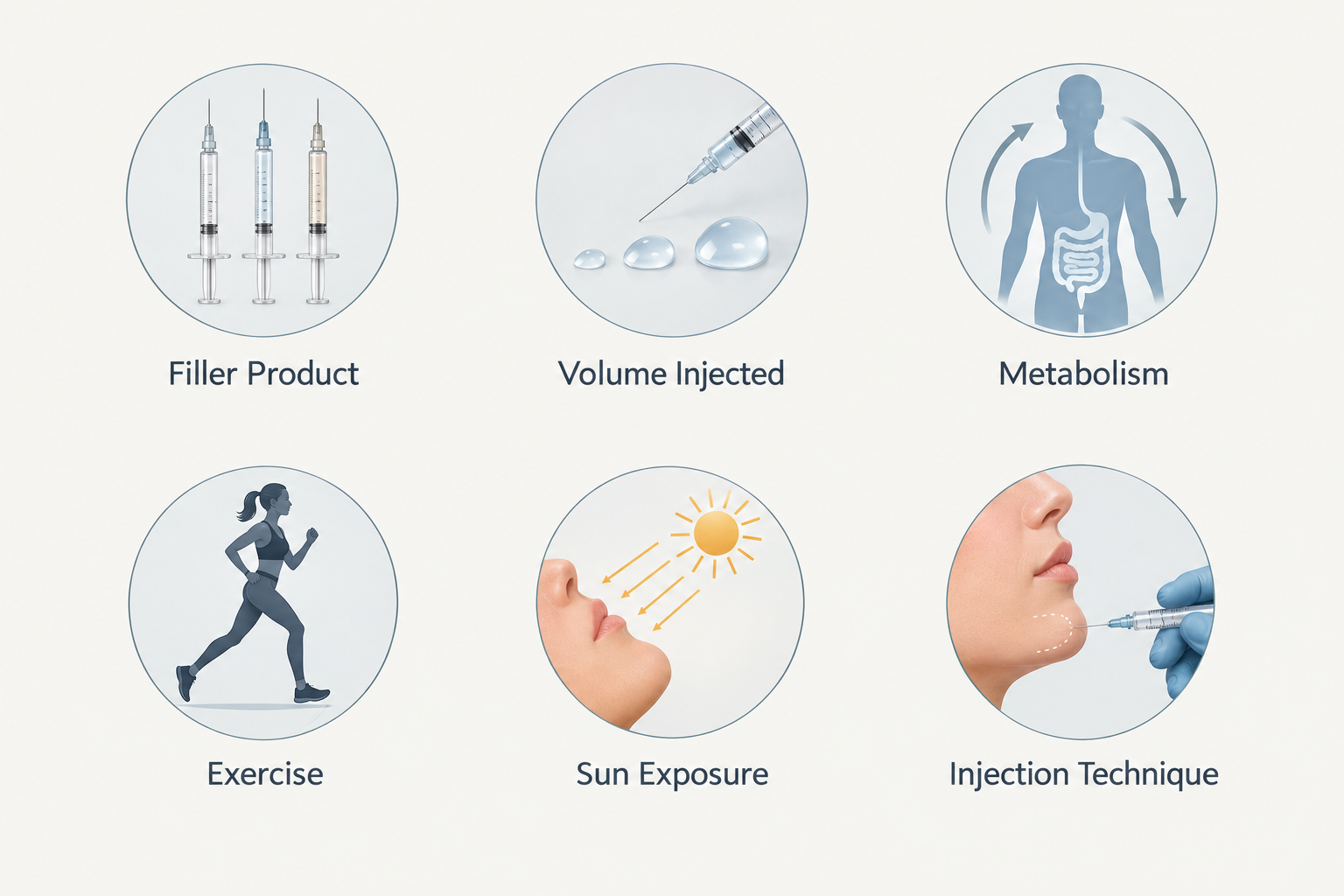
Several interconnected factors determine where an individual’s results fall within the typical longevity range. Understanding these helps set realistic expectations before treatment.
Filler Product and Formulation
Not all hyaluronic acid fillers are equivalent. Products designed for structural augmentation — such as those used in the chin and jawline — are formulated with higher cross-linking density, which makes them more resistant to enzymatic breakdown. A denser, more cohesive filler placed in the chin tends to last longer than a softer product that might be more appropriate for lips or fine lines. The specific brand and product range chosen by the practitioner therefore has a meaningful influence on longevity.
Volume of Filler Injected
The amount of filler placed during a session influences how long results remain visible. A larger initial volume may sustain a noticeable result for longer, even as gradual breakdown occurs, because there is more product present before the effect becomes cosmetically insufficient. Conversely, a conservative treatment with a small volume may require a top-up sooner. This does not mean that more filler is always better — appropriate volume depends on the individual’s anatomy and aesthetic goals — but it is a relevant factor in longevity.
Individual Metabolism
Hyaluronic acid is broken down by naturally occurring enzymes called hyaluronidases, which are present in the body’s tissues. The rate at which this enzymatic breakdown occurs varies between individuals and is influenced by factors that are not fully predictable in advance. Some people metabolise filler noticeably faster than others, meaning their results fade more quickly regardless of the product used. This is one reason why two patients treated with the same product and volume may have quite different experiences of longevity.
Exercise and Physical Activity
Higher levels of physical activity, particularly intense cardiovascular exercise, are associated with faster filler metabolism in some patients. Increased circulation and metabolic rate may accelerate the breakdown of hyaluronic acid. This does not mean patients should avoid exercise — the effect is modest and the health benefits of physical activity are significant — but it is a factor worth discussing with a practitioner, particularly for patients who train intensively.
Sun Exposure and Skin Care
Chronic ultraviolet exposure and significant sun damage can accelerate the degradation of hyaluronic acid in the skin. Consistent use of broad-spectrum sun protection may therefore contribute to maintaining filler results for longer, alongside its well-established benefits for overall skin health. Smoking is also associated with accelerated tissue breakdown and may negatively affect filler longevity.
Injection Technique and Placement Depth
Where and how the filler is placed influences both the aesthetic result and its longevity. Filler placed in deeper tissue planes, closer to the periosteum (the membrane covering the bone), tends to be more stable and longer-lasting than product placed more superficially. Practitioner technique, anatomical knowledge, and experience with chin augmentation all contribute to achieving a result that is both aesthetically appropriate and durable.
Previous Filler Treatments
Patients who have had repeated filler treatments in the same area over time sometimes find that subsequent treatments last longer. One proposed explanation is that repeated stimulation of the tissue may encourage some degree of collagen production, providing a degree of structural support that persists even as the filler itself breaks down. This effect is not guaranteed and should not be the primary reason for repeated treatments, but it is a pattern some practitioners observe clinically.
What Happens During a Chin Filler Appointment?
A chin filler appointment typically begins with a consultation to assess facial anatomy, discuss aesthetic goals, and review medical history. Relevant considerations include any previous filler treatments, known allergies, bleeding disorders, medications such as anticoagulants, and whether the patient is pregnant or breastfeeding — all of which may affect suitability or timing.
Before injection, the skin is cleaned and a topical anaesthetic cream may be applied to improve comfort. Many HA filler products also contain lidocaine, a local anaesthetic, within the formulation, which helps reduce discomfort during the procedure. The practitioner will use a fine needle or cannula to place the filler at the appropriate depth and location within the chin. The appointment itself is usually brief, often completed within 30 to 45 minutes including preparation time.
Mild swelling, tenderness, and bruising in the treated area are common in the days following treatment and are generally temporary. Most patients find these settle within one to two weeks. The final result becomes clearer once initial swelling has resolved, which typically takes around two weeks. Strenuous exercise, significant heat exposure such as saunas, and pressure on the treated area are usually advised against for a short period after treatment.
Risks and Side Effects of Chin Filler
Chin filler carries risks that prospective patients should understand before proceeding. Common and generally temporary side effects include swelling, bruising, redness, and tenderness at the injection site. These typically resolve within one to two weeks without intervention.
Less common but more significant risks include infection, nodule formation, and filler migration — where product moves from the intended location over time. Asymmetry is also possible, particularly if the initial placement is not perfectly balanced or if the filler settles unevenly.
The most serious risk associated with any dermal filler treatment is vascular occlusion, where filler inadvertently enters or compresses a blood vessel, potentially compromising blood supply to surrounding tissue. In the chin and lower face, this risk is present and underscores the importance of treatment by a qualified, experienced practitioner who understands the relevant anatomy and has access to hyaluronidase for emergency reversal if an HA filler is used. Vascular complications are rare but can have serious consequences if not recognised and managed promptly.
Delayed hypersensitivity reactions and biofilm formation are uncommon but recognised complications of dermal filler treatments. These may present as swelling or nodules appearing weeks or months after treatment and require professional assessment.
Can Chin Filler Be Reversed?
One of the meaningful advantages of hyaluronic acid chin filler is that it can be partially or fully dissolved using an enzyme called hyaluronidase. This is injected into the treated area and breaks down the hyaluronic acid relatively quickly, often within 24 to 48 hours. Reversal may be sought if a patient is unhappy with the aesthetic result, if a complication arises, or if the filler has migrated. The availability of a reversal option is an important safety consideration and one reason why many practitioners prefer HA fillers for facial augmentation.
Calcium hydroxylapatite fillers cannot be dissolved with hyaluronidase. If a patient is unhappy with a CaHA result, management options are more limited and the product must be allowed to break down naturally over time. This distinction is worth discussing with a practitioner when choosing between filler types.
Maintaining Chin Filler Results Over Time
Because chin filler results are temporary, patients who wish to maintain their improved chin definition will need periodic top-up treatments. The frequency of maintenance depends on individual longevity — which, as discussed, varies considerably — but many patients return for a top-up somewhere between 12 and 18 months after their initial treatment.
Some practitioners recommend a maintenance approach where a smaller volume of filler is added before results have fully faded, rather than waiting until the effect has completely resolved. This can help sustain a consistent appearance and may mean that less product is needed at each maintenance session compared with starting from scratch. Whether this approach suits an individual patient depends on their goals, budget, and how their results have evolved.
It is also worth noting that facial anatomy changes over time due to natural ageing processes, including bone resorption, fat redistribution, and changes in skin laxity. A practitioner may adjust the treatment plan at each maintenance visit to account for these changes rather than simply repeating the same treatment.
Alternatives to Chin Filler
Chin filler is not the only option for patients interested in improving lower face balance or chin definition. Understanding the alternatives helps in making an informed decision.
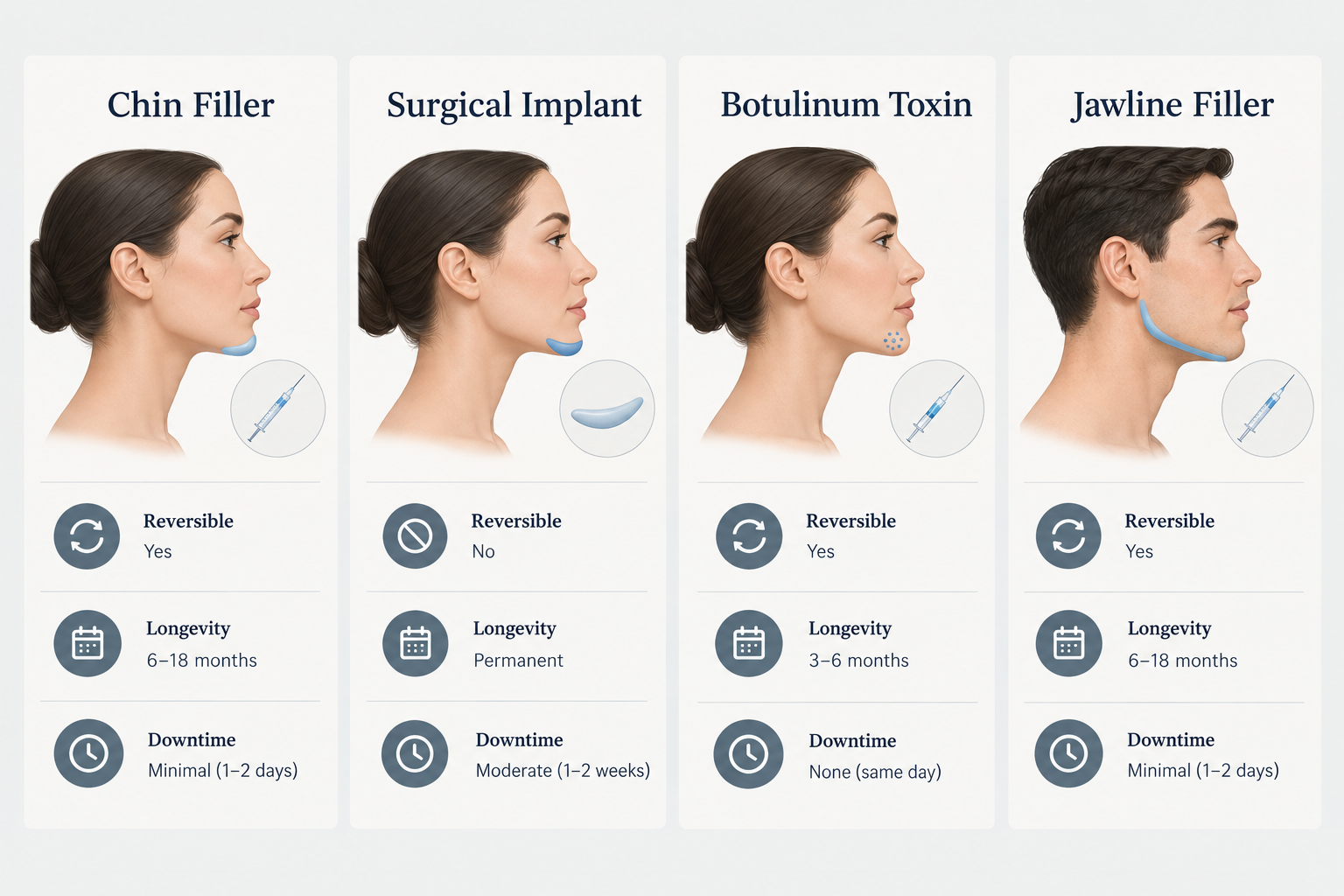
- Surgical chin implant: A permanent surgical option that places a solid silicone implant over the chin bone. Results are long-lasting and do not require maintenance, but the procedure carries surgical risks, requires recovery time, and is not reversible without further surgery. It may be more appropriate for patients seeking significant, permanent augmentation.
- Orthognathic surgery: For patients whose chin position is related to jaw structure or bite alignment, surgical jaw repositioning may be considered. This is a more complex procedure typically performed by maxillofacial surgeons and is not a cosmetic-only option.
- Botulinum toxin for chin dimpling: Injections of botulinum toxin into the mentalis muscle can soften chin dimpling or a cobblestone texture on the chin surface. This does not add projection or volume but can improve the appearance of the chin skin. Results typically last three to four months.
- Jawline filler: Filler placed along the jawline rather than specifically at the chin can improve overall lower face definition and may complement or substitute for chin-specific treatment depending on the patient’s concerns.
- Skin tightening treatments: For patients whose primary concern is skin laxity rather than volume or projection, energy-based treatments such as radiofrequency or ultrasound-based skin tightening may be more appropriate than filler.
The most suitable option depends on the individual’s anatomy, the degree of change they are seeking, their tolerance for downtime and risk, and whether they prefer a temporary or more permanent solution. A qualified practitioner can help assess which approach aligns best with realistic goals.
Who May Be Suitable for Chin Filler?
Chin filler may be worth discussing with a practitioner for adults who are bothered by a recessed or underprojected chin, mild chin asymmetry, or a lack of lower face definition. It tends to suit patients who want a non-surgical option, prefer a reversible treatment, or want to assess the aesthetic effect of chin augmentation before considering a surgical implant.
Chin filler is generally not suitable during pregnancy or breastfeeding. Patients with active skin infections, certain autoimmune conditions, or a history of severe allergic reactions should discuss these factors with a practitioner before proceeding. Those taking anticoagulant medications may have an increased risk of bruising and should inform their practitioner in advance. Patients with unrealistic expectations or those seeking a degree of change that filler cannot realistically achieve may be better served by a surgical consultation.
Frequently Asked Questions
Does chin filler hurt?
Most patients describe chin filler as mildly uncomfortable rather than significantly painful. Topical anaesthetic cream applied before treatment and lidocaine within the filler formulation help manage discomfort during the procedure. Some tenderness in the area is normal for a few days afterwards.
How soon will I see results after chin filler?
An immediate change in chin shape is usually visible after treatment, though initial swelling can make the result look slightly more pronounced than the final outcome. Once swelling settles — typically within one to two weeks — the result becomes clearer and more representative of the long-term appearance.
Will chin filler look natural?
When performed by an experienced practitioner using an appropriate product and volume, chin filler can produce a natural-looking improvement in lower face balance. Overfilling or using an inappropriate product can lead to an unnatural appearance, which is one reason why practitioner selection and a conservative approach to volume are important.
Can chin filler migrate?
Filler migration — where product moves from the intended location — is possible with any dermal filler treatment. In the chin area, using a denser, more cohesive product and placing it at the correct depth reduces this risk. Migration is more commonly associated with softer fillers placed superficially. If migration occurs, hyaluronidase can be used to dissolve HA filler.
How much does chin filler cost?
Chin filler pricing varies depending on the clinic, the practitioner’s experience, the product used, and the volume required. It is generally priced per syringe or per millilitre of product. Patients should be cautious of unusually low prices, as these may reflect less experienced practitioners or lower-quality products. A thorough consultation should be included as part of the process.
Is chin filler the same as a non-surgical rhinoplasty?
No. Non-surgical rhinoplasty refers to filler treatment of the nose, not the chin. However, both the nose and chin contribute to facial profile balance, and some patients benefit from addressing both areas. A practitioner can assess whether treating one or both areas is appropriate for an individual’s concerns.
What happens if I stop having chin filler top-ups?
If maintenance treatments are not continued, the filler will gradually break down and the chin will return to its pre-treatment appearance over time. There is no evidence that stopping filler treatments causes the chin to look worse than it did before treatment began.
Planning Chin Filler: What to Consider Before Your Consultation
Chin filler can be a practical and effective non-surgical option for improving lower face proportion, but realistic expectations are essential. Results typically last between 12 and 24 months, are influenced by multiple individual factors, and require maintenance to sustain. The treatment carries genuine risks — including the small but serious risk of vascular complications — which makes practitioner qualification and experience a priority rather than an afterthought.
Before booking a treatment, it is worth reflecting on whether the change you are seeking is achievable with filler, whether you are comfortable with a temporary result that requires ongoing maintenance, and whether the reversibility of HA filler is important to you. Discussing these questions openly during a consultation — including your medical history, previous treatments, and aesthetic goals — will help a qualified practitioner determine whether chin filler is appropriate and, if so, which product and approach may best suit your anatomy. If the degree of change you are hoping for exceeds what filler can realistically deliver, a surgical consultation may be a more appropriate starting point.


