
Eye Bags: Causes, Contributing Factors and What They Mean
Eye bags are one of the most common aesthetic concerns that patients raise during consultation, yet the term covers several distinct changes that can look similar but have very different underlying causes. Understanding why eye bags form is the essential first step before considering any treatment, because the cause largely determines which approach, if any, is likely to help.
Key Takeaways
- Eye bags can result from fat prolapse, fluid retention, skin laxity, volume loss, or a combination of these factors, and each has a different mechanism.
- Genetics plays a significant role; some people develop prominent under-eye changes in their twenties regardless of lifestyle.
- Lifestyle factors such as sleep quality, salt intake, alcohol consumption, and allergies can worsen puffiness, particularly in younger patients.
- Ageing causes structural changes to the orbital fat compartments, skin, and supporting ligaments that contribute to persistent eye bags over time.
- A clinical assessment is necessary to identify the specific cause before any treatment is recommended, because no single approach addresses every type of under-eye concern.
What Are Eye Bags?
The term eye bags typically refers to a visible fullness or swelling beneath the lower eyelid, sometimes accompanied by a shadow, discolouration, or a tired appearance. Clinically, this area is complex. The lower eyelid and the region immediately below it involve multiple tissue layers, including skin, orbicularis oculi muscle, orbital septum, fat compartments, and the underlying bony orbit. Changes in any of these layers, or in the fluid dynamics of the surrounding tissue, can produce what patients describe as eye bags. Because the causes are varied, the appearance of under-eye puffiness in a 25-year-old who wakes up with temporary swelling is fundamentally different from the structural lower eyelid fullness seen in a 55-year-old with fat prolapse and skin laxity, even though both may use the same term to describe their concern.
The Role of Orbital Fat Prolapse
One of the most clinically significant causes of eye bags is the forward displacement of orbital fat, a process often described as fat prolapse or fat herniation. The eye sits within the bony orbit and is cushioned by pockets of fat. These fat compartments are held in place by a thin fibrous layer called the orbital septum. With age, the orbital septum gradually weakens and loses its structural integrity, allowing the fat behind it to push forward and create visible bulges beneath the lower eyelid.
There are three distinct fat compartments in the lower eyelid: the medial, central, and lateral pockets. The medial compartment is often the first to become prominent, producing a fullness near the inner corner of the eye. As the process progresses, the central and lateral compartments may also become visible, creating a more continuous band of puffiness across the lower eyelid. This type of eye bag is structural rather than fluid-related, which means it tends to be present consistently rather than fluctuating with sleep or hydration. It does not typically resolve with lifestyle changes alone, and it is one of the primary reasons patients seek surgical or non-surgical intervention.
How Ageing Changes the Under-Eye Area
Ageing affects the under-eye area through several simultaneous processes that interact with one another. The skin of the lower eyelid is among the thinnest on the body, and it loses collagen and elastin over time, becoming less able to support the underlying structures. This skin laxity means that even modest fat prolapse becomes more visible, because the overlying skin no longer provides the same degree of resistance or camouflage.
The retaining ligaments that anchor the lower eyelid and cheek tissues also weaken with age. As the cheek descends, a groove known as the tear trough or nasojugal groove becomes more pronounced. This creates a shadow beneath any forward-displaced fat, making eye bags appear more prominent than the fat volume alone would suggest. The combination of fat prolapse above and volume loss in the mid-cheek below is a key reason why the under-eye area can look hollow and puffy at the same time, which is a common source of confusion for patients.
Bone resorption is another age-related factor that is less widely discussed but clinically relevant. The orbital rim, the bony edge surrounding the eye socket, gradually recedes with age. This reduces the structural support for the overlying soft tissues and contributes to the sunken, shadowed appearance that often accompanies eye bags in older patients. The interaction between bony changes, soft tissue descent, and fat redistribution means that the under-eye area in an older patient is genuinely structurally different from that of a younger person, not simply a more pronounced version of the same anatomy.
Genetics and Hereditary Factors
Genetics is a major determinant of whether a person develops eye bags and at what age they become noticeable. Some individuals inherit a tendency toward a weaker orbital septum, larger orbital fat compartments, or thinner lower eyelid skin, all of which predispose them to earlier or more prominent fat prolapse. It is not unusual for patients in their mid-twenties to present with structural eye bags that closely mirror those of a parent at the same age.
Ethnic background also influences the anatomy of the lower eyelid and the distribution of orbital fat. Certain anatomical variations are more common in particular populations, affecting both the appearance of the under-eye area and the approach that may be most appropriate for treatment. A thorough family history and assessment of baseline anatomy are therefore relevant parts of any clinical evaluation for under-eye concerns.
Fluid Retention and Temporary Puffiness
Not all under-eye swelling is structural. Fluid retention is a common cause of temporary puffiness that can be mistaken for persistent eye bags. The tissue around the eyes is loose and relatively thin, making it one of the first areas where excess fluid becomes visible. Several factors can drive this type of transient swelling.
Sleep position plays a role: lying flat allows fluid to redistribute toward the face, and many people notice more pronounced puffiness immediately after waking that gradually reduces over the course of the morning. High dietary salt intake encourages the body to retain water, which can manifest as facial and periorbital puffiness. Alcohol consumption has a similar effect, partly through dehydration and partly through its influence on fluid balance. Crying causes temporary periorbital swelling through a combination of increased blood flow and osmotic fluid shifts in the delicate eyelid tissue.
Allergic reactions are another important cause of under-eye puffiness. Allergic rhinitis, hay fever, and contact allergies can all trigger histamine release, which increases vascular permeability and leads to fluid accumulation in the periorbital area. Patients who notice that their eye bags worsen significantly during certain seasons or after exposure to specific triggers may have an allergic component that is worth investigating and managing before pursuing aesthetic treatment.
Sleep Quality and Fatigue
Poor sleep quality is frequently cited as a cause of eye bags, and there is a physiological basis for this association. During sleep, the lymphatic system clears metabolic waste and excess fluid from tissues. Insufficient or disrupted sleep impairs this process, allowing fluid to accumulate in the periorbital area. Fatigue also causes blood vessels to dilate, which can increase the visibility of the vascular network beneath the thin lower eyelid skin, contributing to a darker, more shadowed appearance alongside any puffiness.
It is worth noting that while sleep deprivation can worsen the appearance of the under-eye area, improving sleep alone is unlikely to resolve structural eye bags caused by fat prolapse or significant skin laxity. Sleep quality is most relevant as a contributing factor in younger patients whose under-eye concerns are primarily fluid-related rather than anatomical.
Skin Quality, Pigmentation and Vascular Visibility
Eye bags are sometimes conflated with dark circles, but these are distinct concerns that can coexist or occur independently. Understanding the difference matters because the causes and appropriate responses differ considerably.
Dark circles beneath the eyes can result from several mechanisms. Hyperpigmentation, where the skin itself contains excess melanin, is more common in patients with darker skin tones and can be influenced by sun exposure, post-inflammatory changes, or genetic predisposition. Vascular visibility occurs when the blood vessels beneath the thin lower eyelid skin are visible through the skin surface, producing a bluish or purplish discolouration. This is more common in patients with very fair skin or thin lower eyelid tissue. Shadowing from structural eye bags or a pronounced tear trough can also create the appearance of dark circles even when the skin pigmentation itself is normal.
Skin quality changes, including reduced hydration, loss of collagen, and surface texture irregularities, can make the under-eye area look more tired and aged without necessarily involving significant fat prolapse. These changes may respond to different interventions than structural eye bags, which is why a careful clinical assessment that distinguishes between pigmentation, vascular, structural, and skin quality components is important before any treatment plan is formed.
Lifestyle Factors That Worsen Eye Bags
Several modifiable lifestyle factors can exacerbate existing under-eye changes or accelerate their development. Chronic sun exposure damages collagen and elastin in the lower eyelid skin, accelerating the skin laxity that makes fat prolapse more visible. Smoking has a similar effect through oxidative stress and impaired collagen synthesis, and it also affects microcirculation in a way that can worsen the appearance of the periorbital area.
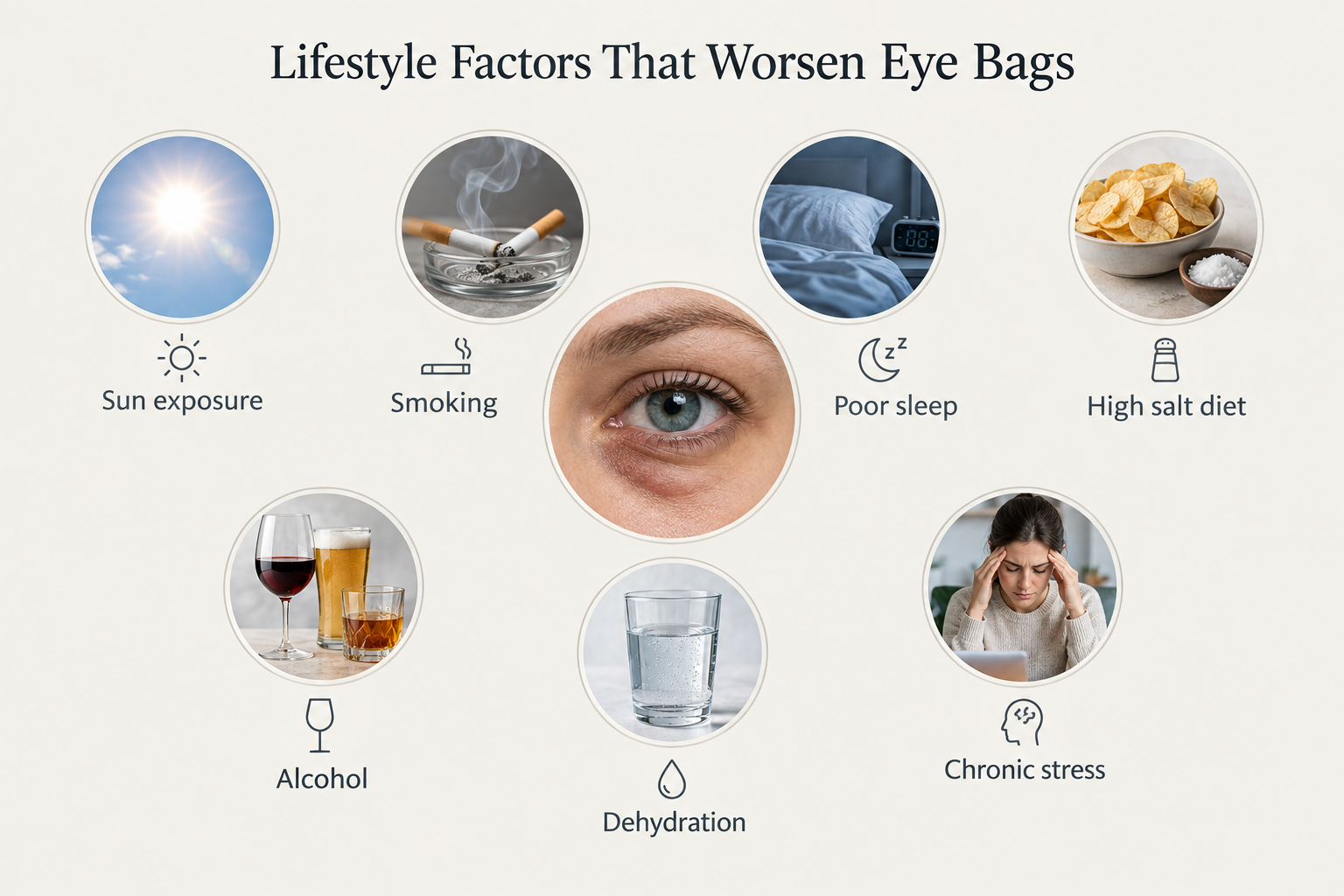
Chronic dehydration affects skin quality and can make the under-eye area appear more hollow and shadowed. High stress levels influence cortisol production, which in turn affects fluid retention and skin integrity over time. While none of these factors is the primary cause of structural eye bags, they can meaningfully influence how pronounced the under-eye area appears and how quickly age-related changes progress.
Medical Conditions That Can Cause Under-Eye Puffiness
In some cases, persistent or sudden-onset periorbital swelling may have an underlying medical cause that warrants investigation rather than aesthetic treatment. Thyroid dysfunction, particularly hypothyroidism, can cause generalised facial puffiness including around the eyes. Kidney disease affects fluid balance and can produce periorbital oedema. Certain medications, including some antihypertensives, corticosteroids, and antihistamines, list periorbital swelling among their potential effects.
Patients who notice a rapid change in the appearance of their under-eye area, swelling that is asymmetric, associated with pain or visual changes, or accompanied by other systemic symptoms should seek medical evaluation before pursuing any aesthetic intervention. A qualified practitioner will take a relevant medical history and may recommend further investigation if there is any clinical concern about an underlying condition contributing to the presentation.
Why the Cause Matters for Treatment
The reason that identifying the cause of eye bags is so important is that different causes respond to different treatments, and an approach that is appropriate for one type of under-eye concern may be ineffective or even counterproductive for another.
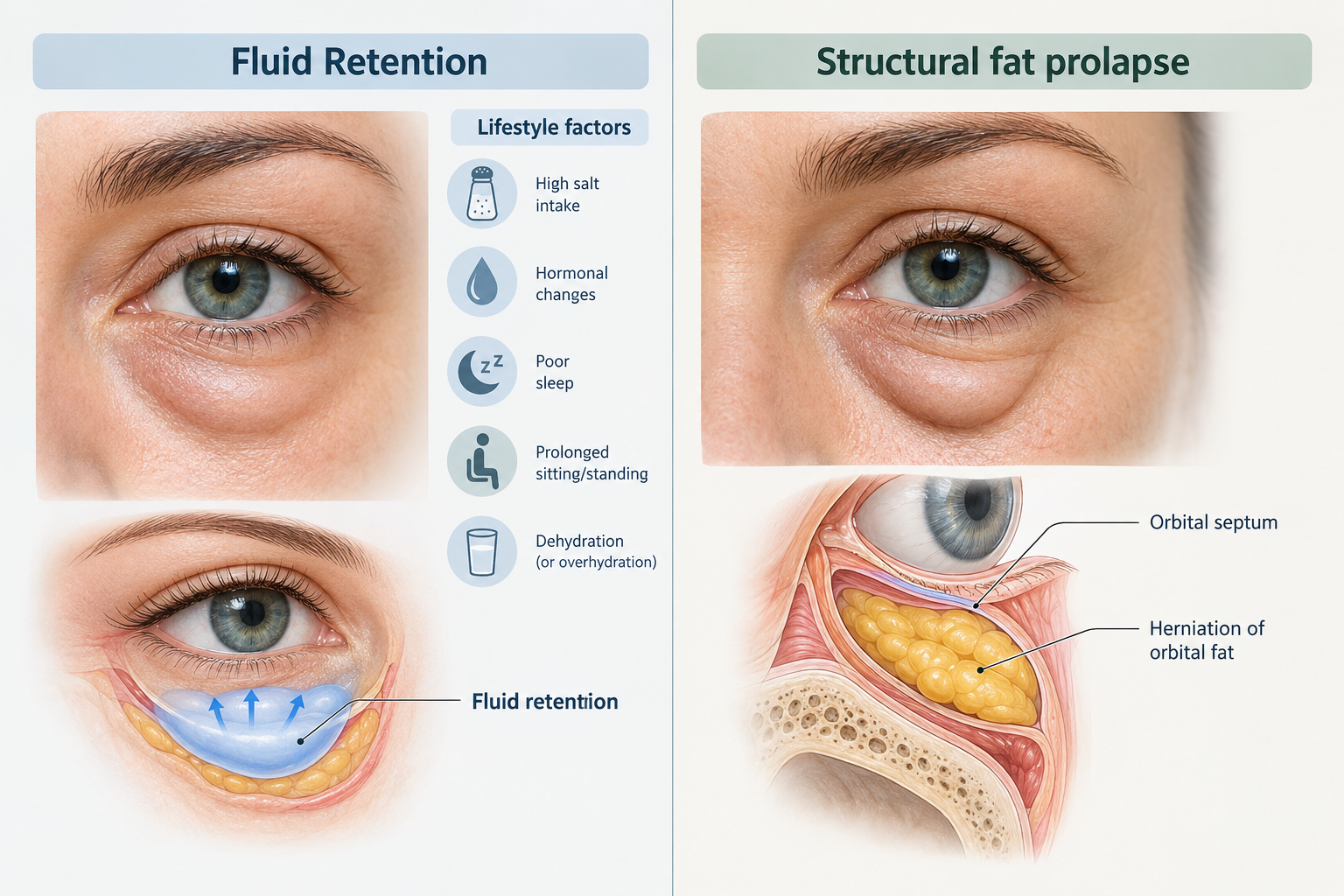
Structural eye bags caused by fat prolapse and orbital septum laxity are unlikely to respond meaningfully to topical skincare, lifestyle changes, or treatments aimed at improving skin quality alone. Surgical lower blepharoplasty, which involves repositioning or removing excess orbital fat and addressing skin laxity, is considered the most definitive approach for this type of eye bag, though it carries surgical risks and requires appropriate patient selection. Non-surgical options such as radiofrequency skin tightening or certain energy-based devices may offer modest improvement in mild cases by improving skin laxity, but they do not address the underlying fat prolapse directly.
Tear trough hollowness, which creates a shadow beneath the eye rather than true puffiness, may be addressed with careful dermal filler placement in appropriate candidates, though this is a technically demanding area with specific risks that require discussion with an experienced practitioner. Polynucleotide injections are sometimes used in the periorbital area with the aim of improving skin quality, hydration, and fine lines, though they are not a treatment for structural fat prolapse. Fluid-related puffiness driven by lifestyle factors may improve with dietary changes, improved sleep, allergy management, and reduction of alcohol intake, making these the logical first steps for patients whose puffiness is primarily transient.
Frequently Asked Questions
Can eye bags go away on their own?
Temporary puffiness caused by fluid retention, poor sleep, or allergies can reduce on its own or with lifestyle adjustments. Structural eye bags caused by fat prolapse and skin laxity are unlikely to resolve without intervention, as the underlying anatomical changes do not reverse spontaneously.
At what age do eye bags typically develop?
This varies considerably between individuals. Some people notice structural eye bags in their twenties due to genetic predisposition, while others do not develop significant under-eye changes until their forties or fifties. Lifestyle factors and sun exposure can influence the timeline.
Are eye bags always a cosmetic concern, or can they indicate a health problem?
Most eye bags are cosmetic in nature, but sudden or significant periorbital swelling, particularly if asymmetric or accompanied by other symptoms, can occasionally reflect an underlying medical condition such as thyroid dysfunction, kidney disease, or an allergic reaction. A medical assessment is appropriate if the presentation is unusual or changes rapidly.
Does drinking more water help with eye bags?
Adequate hydration supports overall skin quality and may help reduce fluid retention-related puffiness in some individuals. However, hydration alone is unlikely to have a meaningful effect on structural eye bags caused by fat prolapse or significant skin laxity.
Can eye cream treat eye bags?
Topical products may help with skin hydration, fine lines, and mild discolouration in the under-eye area, but there is limited evidence that any topical product can meaningfully reduce structural fat prolapse or significant skin laxity. Managing expectations about what skincare can realistically achieve in this area is important.
Is there a difference between eye bags and dark circles?
Yes. Eye bags refer to puffiness or fullness beneath the lower eyelid, while dark circles refer to discolouration in the same area. They can coexist, but they have different causes and may require different approaches. Dark circles can result from pigmentation, vascular visibility, or shadowing from structural changes.
Do eye bags get worse with age?
For most people, yes. The structural changes that contribute to eye bags, including orbital septum weakening, skin laxity, ligament loosening, and bony resorption, are progressive with age. The rate of progression varies between individuals and is influenced by genetics, lifestyle, and sun exposure history.
Understanding Your Eye Bags Before Seeking Treatment
Eye bags are rarely a single, simple problem. They represent the visible result of one or more underlying changes, whether that is fat prolapse through a weakened orbital septum, fluid accumulation driven by lifestyle or allergy, skin laxity from ageing and sun damage, volume loss in the mid-cheek creating a shadow, or a combination of several of these factors occurring simultaneously. The same appearance can have meaningfully different causes in different patients, which is why a thorough clinical assessment by a qualified practitioner is the essential starting point before any treatment decision is made.
If you are concerned about the appearance of your under-eye area, a consultation focused on identifying the specific cause of your eye bags will give you a much clearer picture of which options, if any, are likely to be relevant for your situation. Understanding the cause is not just a preliminary step; it is the foundation of any approach that is likely to produce a realistic and appropriate outcome.


