
Chin Filler Injection Process: Step-by-Step Guide
Chin filler is a non-surgical treatment used to enhance chin projection, balance facial proportions, and refine the jawline using injectable hyaluronic acid or calcium hydroxylapatite.
This guide walks through the entire chin filler journey, from initial consultation to aftercare, so readers can approach the process with realistic expectations. Understanding the anatomy, injection technique, and recovery helps anyone considering chin augmentation make a more informed decision when exploring specialists through Science Beauty.



Thousands of satisfied customers

Preparation Before Chin Filler Appointmen
Preparing properly for the treatment can support safety, comfort, and the overall quality of results. Clinicians generally provide specific instructions during consultation, tailored to individual medical history and the chin augmentation plan discussed.
Medical Conditions and Medications to Discuss
Certain conditions and medications may affect suitability or increase the risk of complications. Patients are usually asked to disclose the following before proceeding with injection:
- Known allergies, including to hyaluronic acid or anaesthetic agents
- Autoimmune disorders or active skin infections in the area
- Previous fillers, implants, or facial surgery in the lower face
- Pregnancy or breastfeeding, where treatment is typically postponed
- Blood thinners, certain supplements, and anti-inflammatory medications
Pre-Treatment Instructions
In the days before the appointment, patients may be advised to avoid alcohol, smoking, and excessive sun exposure. Strenuous exercise and certain supplements or anti-inflammatory medications may also need to be paused under medical guidance to reduce bruising and swelling risk.
Setting Realistic Treatment Goals
Clear communication with the injector helps align expectations around desired chin shape and facial harmony. The fillers can create subtle refinement or more noticeable projection, but achievable improvements depend on individual anatomy, so goals should be discussed openly beforehand.

Chin Filler Step by Step
A typical chin filler appointment moves through several distinct stages, each designed to ensure safety while achieving natural-looking results. From assessment through to final review, every step contributes to how the chin ultimately looks and feels once swelling resolves.
The process is rarely rushed. Clinicians typically spend as much time planning the treatment as performing it, since anatomy varies considerably between patients and directly affects technique, filler volume, and injection depth chosen for augmentation.
Initial Consultation and Facial Assessment
During consultation, a practitioner assesses facial proportions, existing chin projection, jawline balance, and skin quality. Medical history, allergies, and aesthetic goals are discussed to determine candidacy. This stage establishes whether the chosen treatment is a suitable option or whether an alternative approach should be considered instead.
Treatment Planning and Injection Mapping
The injector maps out injection points based on the desired outcome, selecting a filler type and volume suited to the chin area. Symmetry goals are factored into a personalised plan, considering the transverse width of the chin and its vertical height for balanced results.
Skin Preparation Before Injection
Before injecting, the treatment area is cleansed and disinfected, and any makeup is removed. Before photos are taken for reference, injection sites are marked, and the practitioner reviews final expectations with the patient to confirm the planned appearance.
Local Anaesthetic and Comfort Measures
Topical numbing cream is typically applied before injection, and many dermal fillers contain lidocaine to reduce discomfort during the procedure itself. Cooling methods may also be used alongside careful injection technique to minimise sensation, particularly around the mentalis muscle and surrounding tissue.
Chin Filler Injection Technique
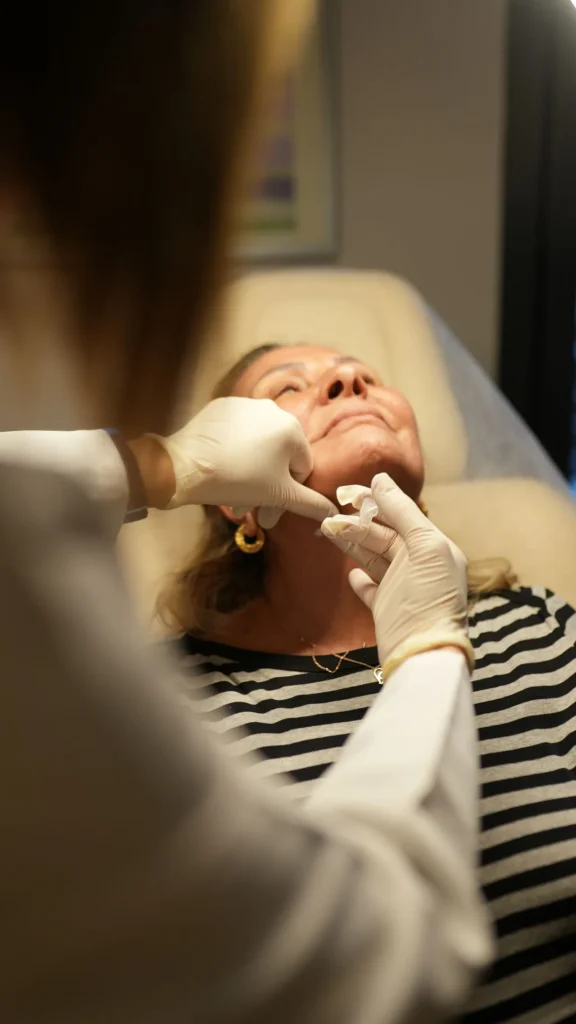
Filler is introduced using either a needle or cannula, depending on the injector’s judgement and the treatment plan. The practitioner selects an approach based on anatomy and safety considerations. Product is placed into the tissue, then moulded by hand to achieve balanced contour and projection.
Final Assessment After Injection
Once injection is complete, symmetry is evaluated, and small touch-ups may be added if needed. The area is cleaned, and initial results are reviewed with the patient, though final appearance typically becomes clearer once swelling has settled over the following days.
Techniques Used During Chin Filler Injection
Practitioners select from several dermal filler techniques for the augmentation depending on facial anatomy, the area of the chin being treated, and the desired outcome. No single method suits every patient, which is why individual assessment matters.
Needle Versus Cannula Technique
Needle and cannula each offer distinct advantages during injection, and the choice often depends on chin anatomy and injector preference.
| Factor | Needle Technique | Cannula Technique |
| Precision | High, useful for targeted placement | Broader, less pinpoint control |
| Bruising risk | Generally higher | Generally lower |
| Comfort | Can involve more discrete injection points | Fewer entry points, often more comfortable |
| Common use | Small, defined areas | Larger areas requiring even distribution |
Injection Depth and Filler Placement
Filler may be placed superficially for subtle contour refinement or deeper for structural support and stronger anterior projection of the chin. Deeper placement is commonly used when the primary goal is augmenting projection rather than softening surface-level texture.
Customised Injection Approach
Treatment is adapted depending on individual concerns, since a small chin, asymmetry, or weak profile each require different handling. Common variations in approach include:
- Additional volume for a recessed or retruded chin
- Asymmetry correction using uneven filler distribution
- Structural support for a weak jawline transition
- Combined chin and jawline enhancement for overall balance

Recovery After Chin Filler Injection
Recovery from the injection is generally straightforward, though swelling and mild bruising are common in the initial period. Following aftercare guidance can support smoother healing and help maintain the intended results.
First 24 to 48 Hours
Swelling is most noticeable in the first two days following treatment. Practitioners commonly recommend the following during this early period:
- Applying a cold compress to reduce swelling
- Avoiding pressure or touching the treated area
- Skipping makeup application over injection sites
- Sleeping on the back where possible to protect placement
Healing Timeline
Swelling typically reduces significantly within the first week, though some patients notice gradual changes over 7 to 10 days. Final appearance and settled filler placement usually become clearer once any residual puffiness has fully resolved.
Activities to Avoid During Recovery
Certain activities may increase swelling, bruising, or affect filler placement during the healing period. Patients are generally advised to avoid:
- Strenuous exercise for 24 to 48 hours
- Facial massages near the treated area
- Saunas, steam rooms, and excessive heat exposure
- Alcohol consumption in the first day or two
Results and Longevity
Chin filler results are designed to look natural rather than dramatically altered, with outcomes varying between individuals based on anatomy and the type of filler used during augmentation.
When Final Results Become Visible
Immediate improvement in projection is usually visible right after treatment, though the desired chin contour typically becomes clearer once swelling has fully subsided, generally within 7 to 10 days following injection.
How Long Chin Fillers Last
Hyaluronic acid fillers used in chin augmentation typically last between 12 and 18 months, though longevity depends on metabolism, lifestyle, and the specific area of the face treated. Some offer longer-lasting alternatives, though these involve different considerations.
Maintenance Treatments
Many patients return for periodic maintenance appointments to preserve consistent projection and overall facial balance. A follow-up consultation is often recommended around the 12-month mark to assess whether further filler is needed.

Choosing a Qualified Practitioner for Chin Fillers
Selecting a suitably qualified injector matters considerably given the blood supply to the chin, including the important anatomical arteries, which sit close to common injection sites. Practitioners should demonstrate clear knowledge of facial anatomy and safe injection practice.
Readers researching chin filler options can use Science Beauty to compare independent specialists and verified clinics across London, review qualifications, and understand pricing factors before booking. As an independent booking platform, Science Beauty does not perform treatments itself, but helps readers explore suitable options with greater confidence and clarity.
Frequently Asked Questions
How long does the chin filler injection process take?
A chin filler appointment typically takes between 30 and 45 minutes, including consultation, numbing, and injection itself. Straightforward cases may be quicker, while more complex chin augmentation involving jawline blending can take slightly longer depending on the injector’s assessment and planned technique.
Does the procedure hurt?
Most patients describe mild discomfort rather than significant pain, particularly since numbing cream is typically applied beforehand and many fillers contain lidocaine. Cooling methods and careful injection technique are commonly used to further minimise sensation throughout the chin filler injection process.
How long does swelling last after chin filler injections?
Swelling is usually most noticeable in the first 48 hours, gradually reducing over the following week. Most patients see significant improvement within 7 to 10 days, though individual healing timelines can vary depending on the technique used and personal factors such as skin condition.
When can normal activities be resumed after chin filler?
Many patients return to normal daily activities the same day, though strenuous exercise, saunas, and alcohol are typically avoided for 24 to 48 hours. Following aftercare guidance from the treating practitioner can help support smoother healing and reduce swelling or bruising risk.
How long do the results last?
Results from hyaluronic acid chin filler typically last 12 to 18 months, though this varies by filler type, metabolism, and lifestyle factors. Some patients opt for periodic maintenance appointments to preserve consistent projection and facial balance over tim
Can chin fillers be dissolved if needed?
Hyaluronic acid chin fillers can typically be dissolved using hyaluronidase, an enzyme that breaks down the filler. This option may be considered if results are uneven, overly firm, or if a patient wishes to return to their pre-treatment appearance.
What should be avoided after the injections?
Aftercare typically involves avoiding strenuous exercise, alcohol, excessive heat, and facial massages for at least 24 to 48 hours. Patients are also generally advised against applying pressure to the treated area or sleeping face-down during the initial recovery period.
Are there risks with chin fillers?
As with any injectable treatment, chin filler carries risks including bruising, swelling, asymmetry, or rarer vascular complications linked to the chin’s blood supply. Choosing a qualified injector reduces risk considerably, and patients should seek immediate medical attention if unusual pain, blanching, or discolouration occurs.