
Skin Booster Treatments in London
Skin boosters work at a cellular level to address what daily skincare simply cannot reach — structural dehydration, declining collagen density, and progressive loss of elasticity in the deeper dermal layers. Independent specialists available through the platform use injectable hyaluronic acid formulations to hydrate and improve skin quality from within, targeting the physiological causes of dull, ageing skin rather than masking surface symptoms.
The booster treatment category has expanded considerably, and the clinical distinctions between products now matter significantly to outcomes. Verified practitioners featured on Science Beauty assess individual needs — from mild dehydration in younger patients to pronounced skin laxity in those experiencing more advanced ageing — and match both the product and injection technique to the specific anatomy and goals of each patient.

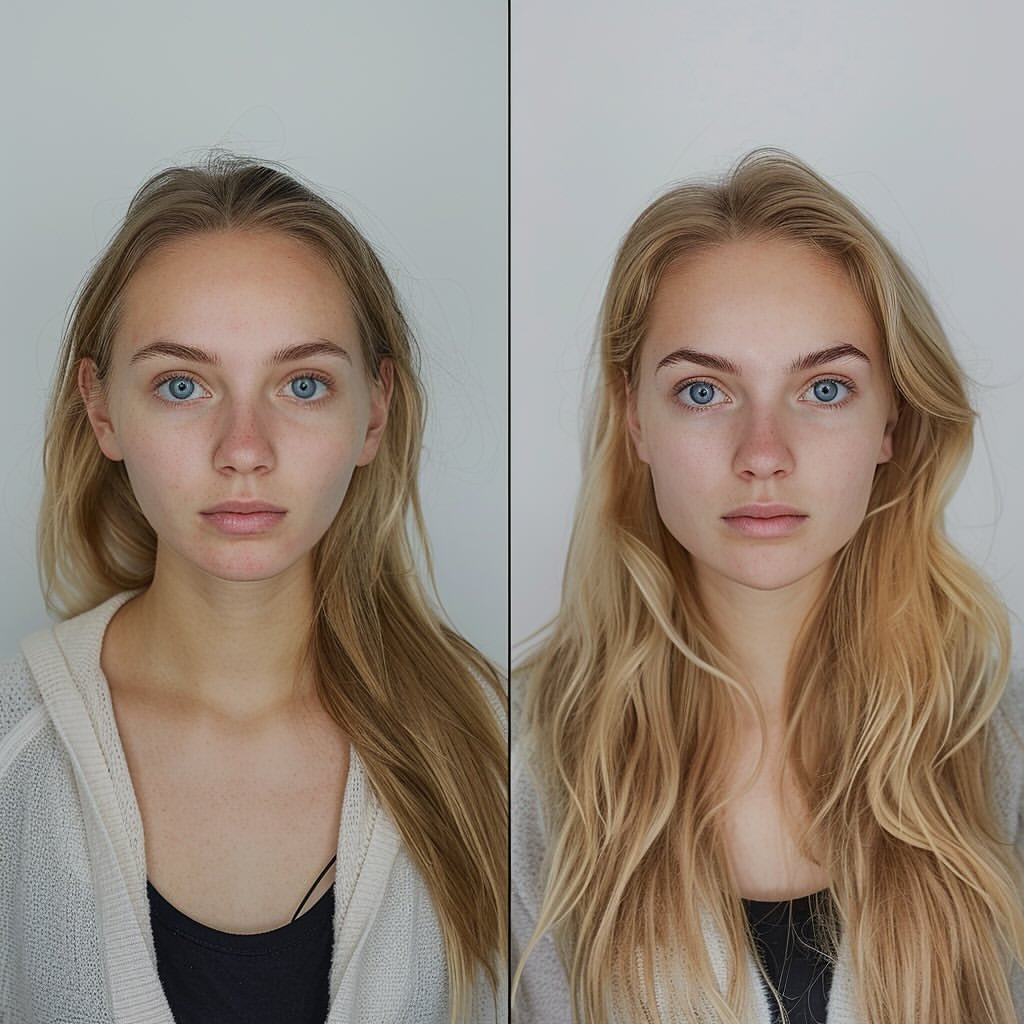
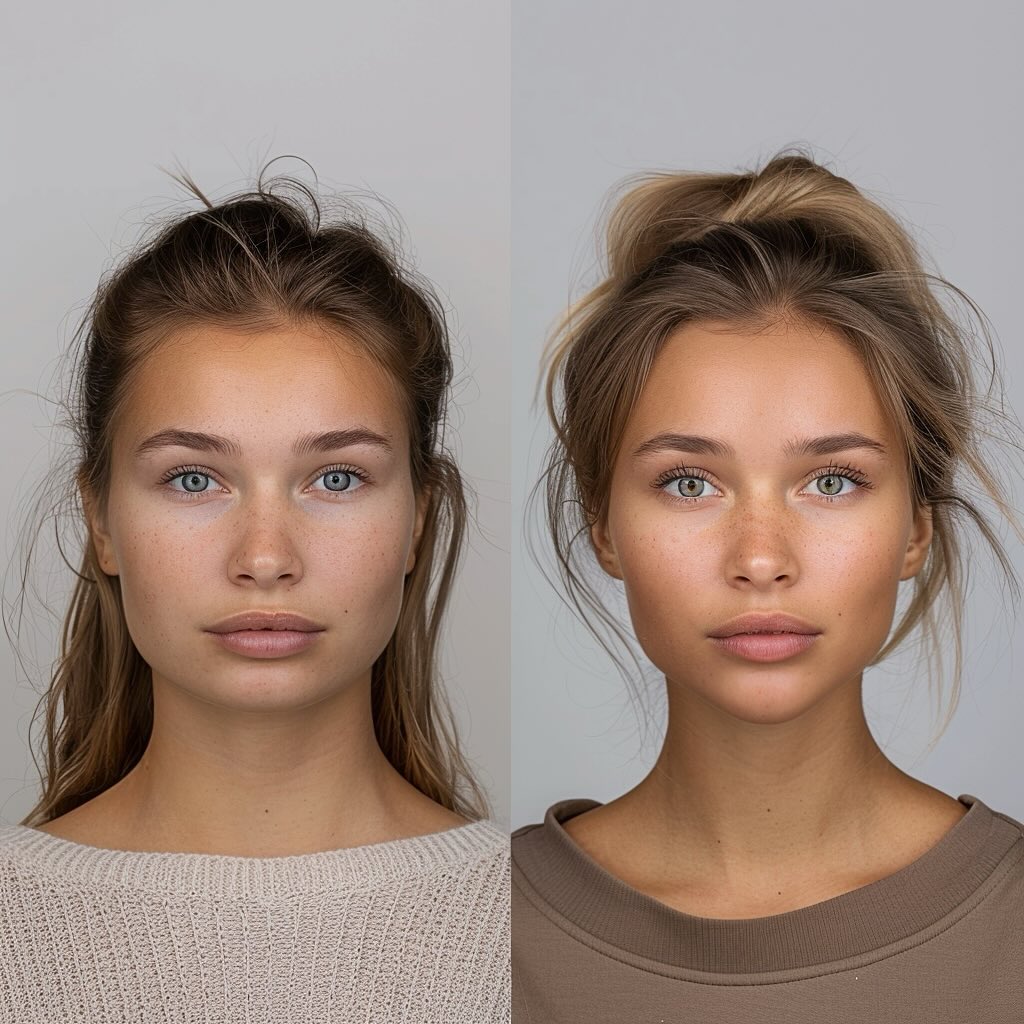
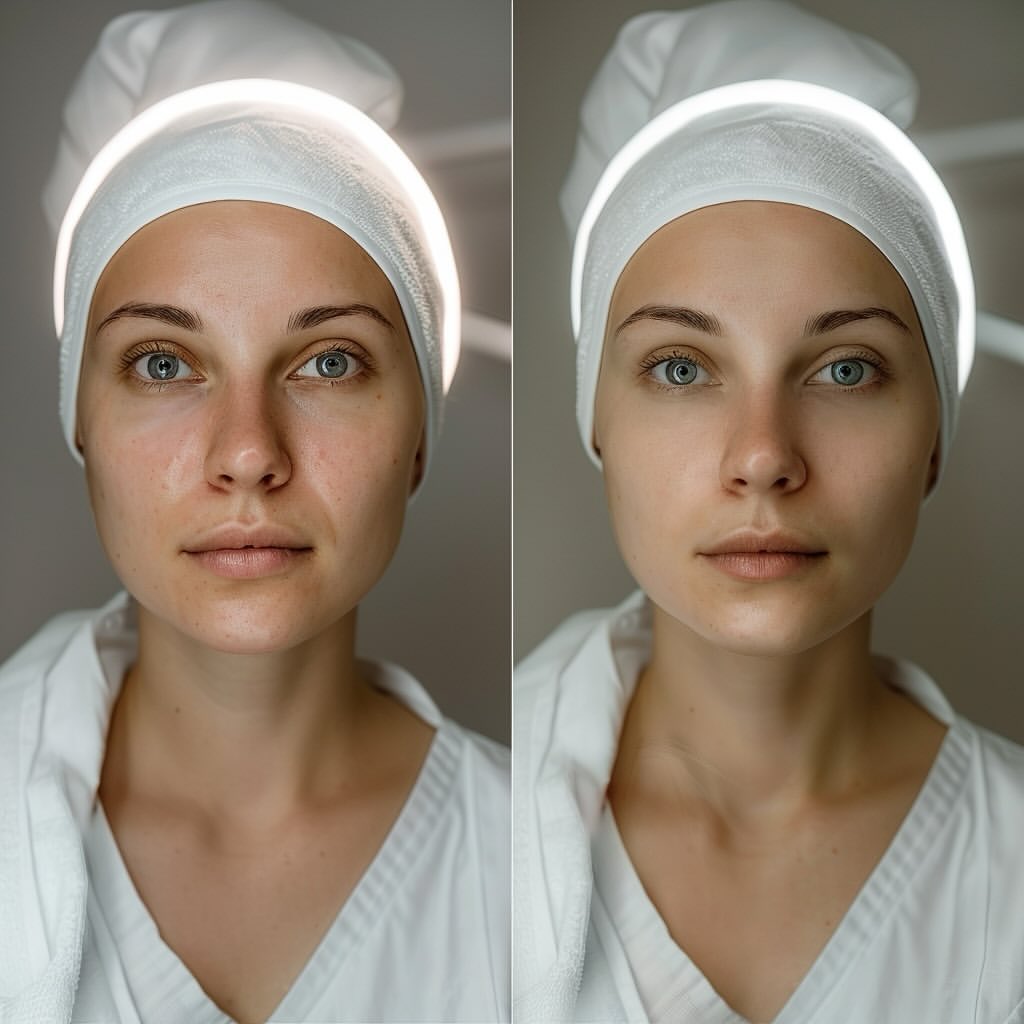
Thousands of satisfied customers

How Much Do Skin Boosters Cost in London?
Direct Answer
Skin boosters in London typically cost between £250 and £450 per session, with an average price of around £300–£350. Prices vary based on the product used, treatment area, and clinic location, with smaller single-syringe treatments starting around £150–£250. Premium central London and Harley Street clinics often charge £450–£600 or more per session.
Typical Skin Booster Prices in London
- Single small syringe / trial session: £150–£250
- Standard single session: £250–£450
- Premium / Harley Street single session: £450–£600
- Course of 2 sessions (recommended protocol): £500–£800
- Course of 3 sessions: £900–£1,200
Key Pricing Factors
- Practitioner qualifications: GMC or NMC-registered practitioners at JCCP-accredited clinics typically charge more than unregulated providers offering the same treatment name.
- Clinic location: Harley Street and central London clinics typically charge 30–60% more than equivalent sessions in outer London.
- Product used: Premium HA skin booster formulations cost the clinic 2–3× more than standard hyaluronic acid products, and this is reflected in the price.
- Course structure: A single session typically costs around 60–70% of the price per session within a 2–3 session course — not 50% — as consultation and skin assessment remain constant per visit.
- What’s included: Some clinics quote a low headline price and charge separately for the initial consultation or additional treatment areas.
What Should Be Included in the Price
- Consultation and skin assessment with a GMC or NMC registered practitioner
- Confirmation of the specific HA skin booster product used, in writing
- Topical anaesthetic for comfort during injection
- Guidance on the recommended course (typically 2 sessions, 4 weeks apart)
- Aftercare advice, including avoiding makeup and heat exposure for 24–48 hours
Pricing Red Flags
Skin boosters advertised below £100 in London are a warning sign rather than a bargain. Suspiciously low prices usually indicate one of: an unqualified injector, an unverified or diluted product, or a non-clinical setting. Correcting lumps, infection, or an uneven result costs significantly more than a properly performed treatment in a CQC-regulated clinic.
For a personalised quote based on the area and number of sessions you need, book a free consultation.
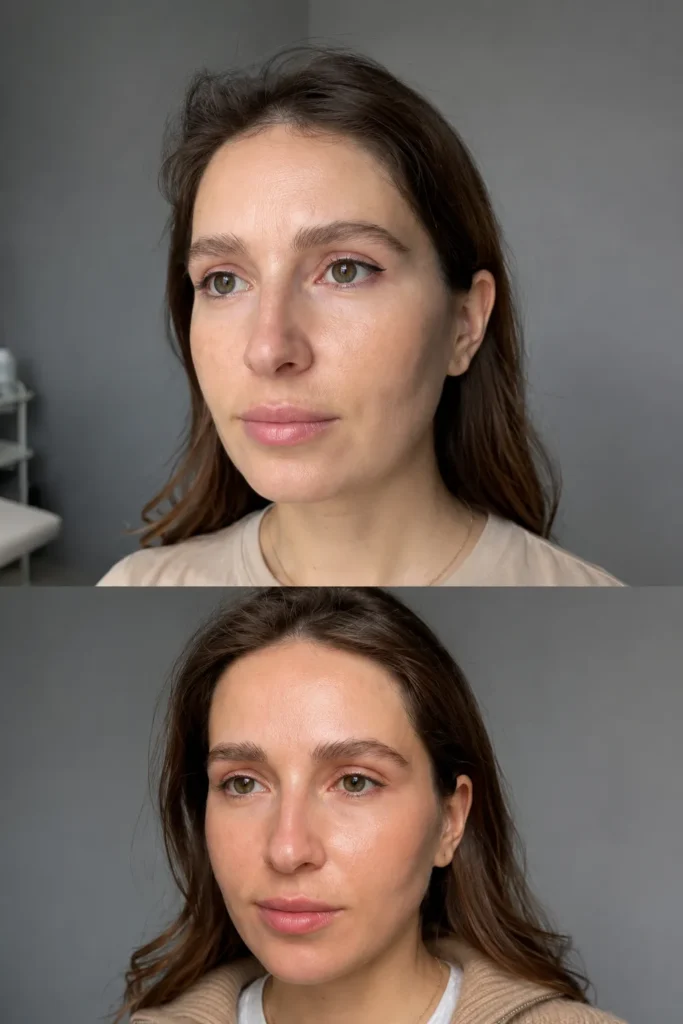
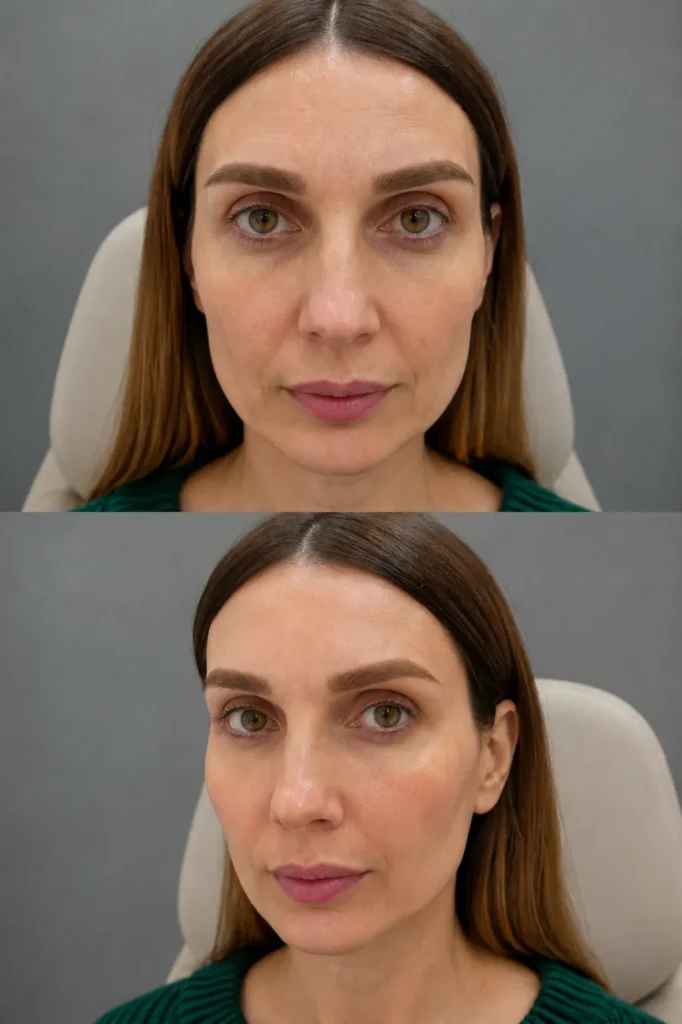
Before and After Skin Booster Treatment
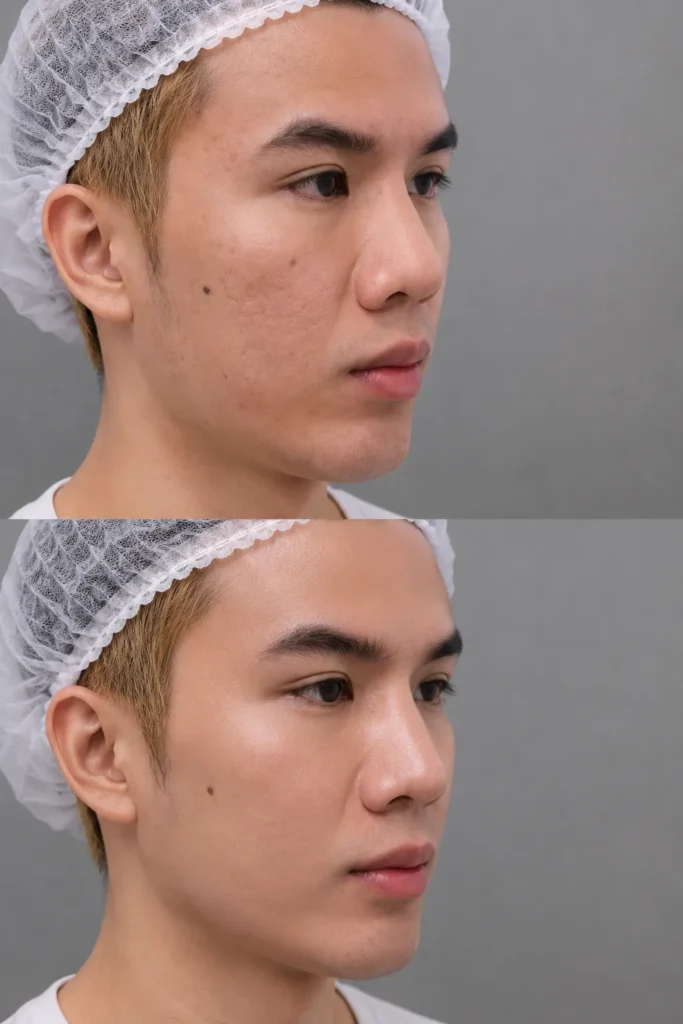
The visible changes patients commonly seek from booster treatment relate less to structural alteration and more to an overall improvement in skin quality — the kind of transformation that produces a rested, luminous complexion without changing facial anatomy. Independent specialists and clinics consistently report that patients describe their skin as looking healthier, more even in tone, and noticeably more hydrated in the weeks following a completed course.
Results vary considerably according to individual anatomy, baseline condition, the treatment plan recommended, the practitioner’s technique, and the specific product used. Patients with severely dehydrated or lax skin may require multiple sessions to achieve optimal results, whereas those seeking preventative hydration or early-stage rejuvenation often respond after fewer treatments. Commonly discussed treatment outcomes include:
- Visibly improved skin radiance and reduction in dullness
- Smoother texture with softening of fine lines
- Enhanced elasticity and firmness over 4–6 weeks post-treatment
- Prolonged hydration with reduced skin dryness between sessions

What Is a Skin Booster?
A skin booster is a class of injectable treatment that delivers highly purified, low-viscosity hyaluronic acid directly into the dermis — the mid-layer of the skin — using a series of microinjections across the treatment area. Unlike conventional dermal fillers, which are designed to add volume or reshape contours, boosters are formulated specifically to hydrate the skin from within and stimulate its own regenerative processes, including collagen and elastin production.
The most widely used booster products available through clinics in London include Profhilo (IBSA), Juvederm Volite (Allergan), and Restylane Skinboosters (Galderma). Each product has a distinct formulation and injection technique — Profhilo, in particular, uses a unique five-point injection protocol, the BAP technique, and is among the most studied and clinically supported options for skin quality improvement in the UK. All are considered safe when administered by a suitably qualified medical practitioner in a regulated clinical environment.
The mechanism shared across boosters is the same: hyaluronic acid — a substance naturally present in human tissue — is reintroduced beneath the skin’s surface, where it binds with water molecules to deeply hydrate surrounding tissue. This process simultaneously stimulates fibroblasts, the cells responsible for producing collagen and elastin, supporting progressive improvement in texture, elasticity, and overall skin health over the weeks following treatment.
The Skin Booster Treatment Process: Step by Step
Clinical Assessment
A qualified practitioner reviews your medical history, assesses skin quality, hydration levels, and degree of laxity, and determines product suitability based on individual needs and goals.
Pre-Treatment Protocol
The treatment area is cleansed, and a topical anaesthetic cream is applied. Most booster formulations also contain lidocaine, which further reduces discomfort during the injection process.
Treatment Implementation
The chosen product is administered via a fine needle or cannula at multiple injection points across the treatment area, following a structured protocol — such as the five-point BAP technique used for Profhilo.
Immediate Post-Procedure Review
The practitioner inspects the treatment area, confirms product distribution, and addresses any immediate reactions. Small, transient bumps at injection sites are normal and typically resolve within 24 hours.
Post-Procedure Care
Written aftercare guidance is provided. Patients are typically advised to avoid strenuous exercise, heat exposure, and facial massage for 24–48 hours following treatment.
Procedure time: 20–45 minutes. Recovery: Minimal. Mild redness or swelling at injection sites usually resolves within 24–48 hours; most patients return to normal activity the same day.
Benefits of Skin Booster Treatment
Skin boosters address a specific category of ageing that topical skincare cannot resolve — the gradual depletion of intrinsic hyaluronic acid and declining fibroblast activity beneath the surface. By delivering hydration and bio-stimulation directly into the dermis, they improve skin quality at a cellular level, enhancing not only appearance but also the resilience against further environmental and chronological deterioration.
The progressive nature of the results is a clinically meaningful advantage. Unlike treatments that produce immediate volumising effects, boosters generate measurable improvement in elasticity and radiance as collagen and elastin production increases over the four to six weeks following each session.
Key advantages associated with skin booster treatment, as reported by practitioners and patients:
- Deep hydration that persists beyond the effects of topical moisturisers
- Stimulation of collagen and elastin for progressive improvement in skin elasticity
- Improvement in texture and reduction in fine lines without altering facial structure
- Suitable for all skin types, including sensitive and mature skin
- Minimal downtime with same-day return to most normal activities
- Compatible with complementary treatments, including anti-wrinkle injections and dermal fillers
Skin Booster Treatment Options
Profhilo
Profhilo uses patented NAHYCO® technology to combine high- and low-molecular-weight hyaluronic acid into a cohesive formulation designed to spread evenly within superficial tissue planes. It is administered across five points on each side of the face using the BAP technique, in two sessions spaced four weeks apart. It is particularly well-suited to patients experiencing generalised skin laxity, dehydration, or early-to-moderate loss of firmness.
Juvederm Volite
Juvederm Volite, developed by Allergan using Vycross® technology, is designed to remain in the skin longer than most booster options — up to six to nine months with a single treatment session. It is administered via micro-injections across the treatment area and is suitable for patients seeking an efficient protocol without the need for multiple sessions.
Restylane Skinboosters
Restylane Skinboosters is typically delivered as a course of three sessions spaced two to four weeks apart, using microinjections of stabilised hyaluronic acid to improve skin hydration, elasticity, and overall quality. It is commonly used on the face, neck, décolletage, and hands.
Skin Boosters and Polynucleotides Combined
For patients seeking more comprehensive skin rejuvenation, independent specialists may recommend combining booster treatment with polynucleotide (PDRN) injections. This protocol addresses both hydration and cellular regeneration simultaneously, and is particularly considered for patients with more pronounced skin ageing, dryness, or conditions affecting its quality.
Available skin booster options accessible via Science Beauty’s verified practitioners:
- Profhilo (face, neck, décolletage, hands, abdomen)
- Juvederm Volite (face, neck, hands)
- Restylane Skinboosters (face, neck, décolletage, hands)
- Combined skin booster and polynucleotide protocols
- Targeted single-area treatment for specific concerns
Why Choose Science Beauty for Skin Boosters in London?
Science Beauty operates as an independent booking platform, not a clinic. Every specialist and clinic listed undergoes a structured verification process before appearing on the platform.
Practitioners featured through Science Beauty are assessed against defined selection criteria rather than simply proximity or availability. This ensures that patients exploring skin booster treatment in London are connected with qualified, experienced injectors working in appropriate clinical environments.
Patients can compare practitioners, review credentials, and make informed decisions without pressure or time constraints — an approach that aligns with the considered, patient-led model that complex injectable treatments require.
Specialist selection criteria applied by Science Beauty:
- Active GMC, NMC, or equivalent professional registration
- Verified training and experience in injectable booster treatments
- Demonstrated knowledge of multiple booster products and protocols
- Operation within a CQC-compliant or equivalent regulated clinical environment
- Evidence-based approach to treatment planning and patient consultation
- High patient satisfaction as assessed through verified reviews
The terms ‘best’ and ‘premier’ used in reference to practitioners or treatments signify those that meet our selection criteria, including active GMC/NMC registration, verified clinical experience, high patient satisfaction, and the use of clinically proven, evidence-based protocols. Science Beauty acts as an independent booking platform to ensure quality and safety in aesthetic care.
Frequently Asked Questions
How long do skin booster results last?
Most protocols require an initial course of sessions, and results from a completed course typically last six to nine months, after which a single maintenance session is generally sufficient to sustain the improvement. Profhilo’s two-session protocol can produce visible results for up to six months. Individual variation in metabolism, lifestyle, and skin condition affects longevity, and a follow-up consultation with the treating practitioner is the appropriate point at which to assess whether further treatment is indicated.
Are skin boosters safe?
Skin booster injections are considered safe when administered by a qualified medical professional in a regulated environment. As with any injectable treatment, side effects such as minor bruising, redness, or temporary swelling at injection points can occur, but these typically resolve within a few days. Serious complications are rare and are significantly reduced by choosing a practitioner with appropriate medical training, product knowledge, and a thorough pre-treatment consultation process.
How many sessions are needed?
The number of sessions depends on the product chosen and the individual’s condition. Profhilo is typically administered in two sessions spaced four to six weeks apart, after which maintenance is recommended every six months. Restylane Skinboosters generally requires three sessions in the initial course. Juvederm Volite can achieve results in a single session for suitable patients. Final recommendations are confirmed at consultation with the independent specialist.
Is a skin booster the same as a dermal filler?
No. Skin boosters and dermal fillers both use hyaluronic acid, but achieve entirely different outcomes. Fillers alter the structural appearance of the face by adding volume or reshaping contours; boosters are designed to improve the quality of the skin itself — its texture, hydration, elasticity, and radiance — without changing facial anatomy. Many patients use both treatments in combination, addressing structural and quality concerns through complementary protocols recommended by their practitioner.
What are the risks of skin booster treatment?
The most common side effects are temporary bumps at the injection sites, which typically resolve within 24 hours as the product is absorbed, along with the possibility of minor bruising or swelling at injection points. More significant adverse events — including infection, vascular occlusion, or product migration — are rare but possible, and underline the importance of selecting a practitioner with medical training, anatomical knowledge, and appropriate emergency protocols in place.
Is a skin booster treatment worth it?
For patients whose primary concern is overall skin quality — dehydration, dullness, fine lines, or early laxity — boosters are among the most clinically targeted injectable options available. They address the physiological mechanisms underlying these concerns rather than masking symptoms, and the results accumulate progressively as collagen production responds over several weeks. Whether treatment is appropriate and which product offers the best fit depends on individual anatomy and goals, which is why the initial consultation with an independent specialist is the essential first step.
What happens during the consultation?
The pre-treatment consultation is where the independent specialist or clinic assesses your skin condition, reviews your medical history, and determines whether booster treatment is appropriate. The practitioner will evaluate skin type, degree of dehydration or laxity, and any relevant concerns before recommending a specific product, protocol, and number of sessions. This assessment directly determines treatment suitability, product choice, and final pricing.
Can skin boosters be combined with other treatments?
Skin boosters can be used alongside other injectable treatments to enhance the overall effect, with the suitability of any combined protocol dependent on individual anatomy, condition, and the timing between treatments. Combinations with anti-wrinkle injections, dermal fillers, or polynucleotides are commonly discussed by independent specialists, particularly where patients have both structural concerns and skin quality goals. Sequencing and product selection for any combined approach are determined during the consultation.
How much do skin boosters cost in London?
Skin boosters in London typically cost between £250 and £450 per session, with an average price of around £300–£350. Prices vary based on the product used, treatment area, and clinic location, with smaller single-syringe treatments starting around £150–£250. Premium central London and Harley Street clinics often charge £450–£600 or more per session.