
Plinest Polynucleotide Treatments in London
Plinest is an injectable polynucleotide option for people looking to improve hydration, elasticity, texture and tone without adding facial volume. Independent specialists available through the Science Beauty platform offer this service in London for specific concerns such as dullness, fine lines, crepiness and age-related changes, with plans tailored to the area treated and the individual’s goals.
The formulation contains high-purity polynucleotides derived from salmon DNA and is used to support fibroblast activity and the production of collagen and elastin. Rather than adding volume, the approach is intended to improve hydration and overall skin quality progressively. Practitioners assess the eye area and other treatment zones and tailor the plan to individual needs and rejuvenation goals.

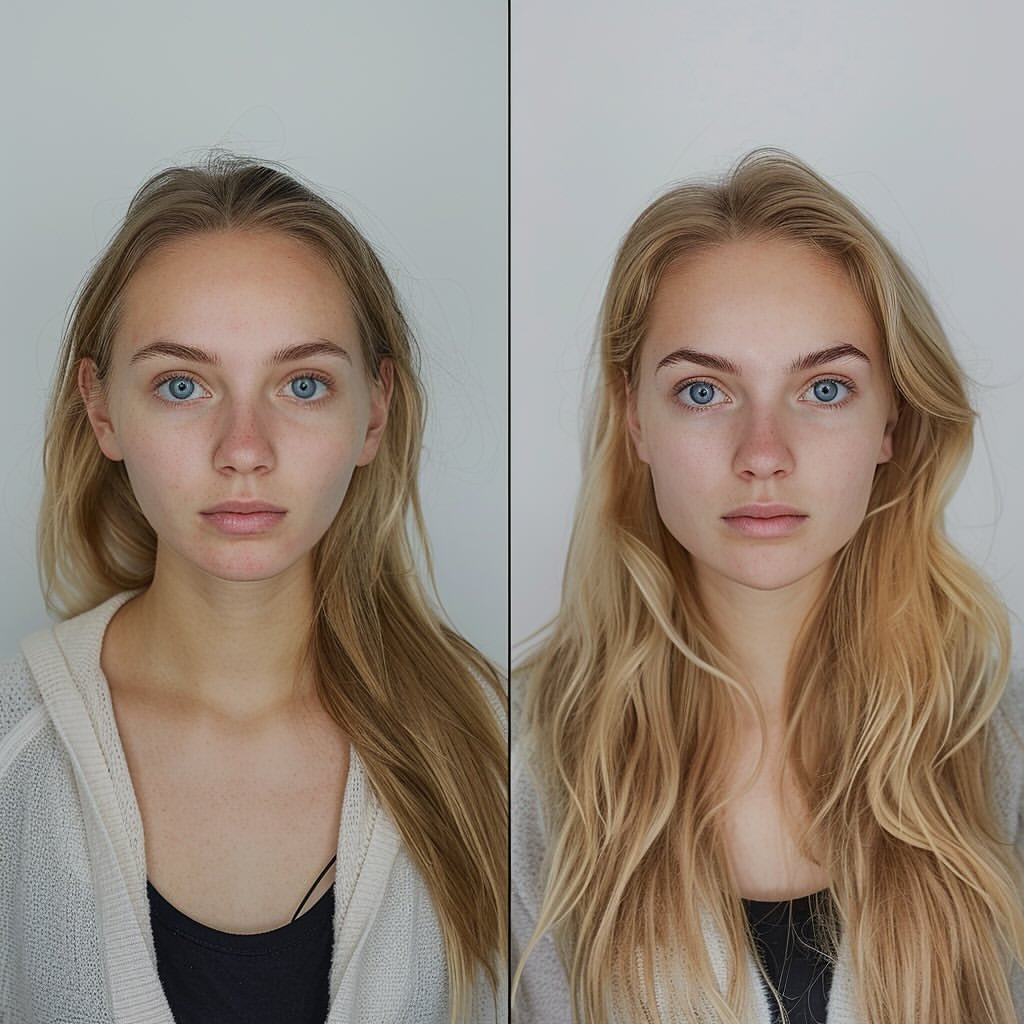
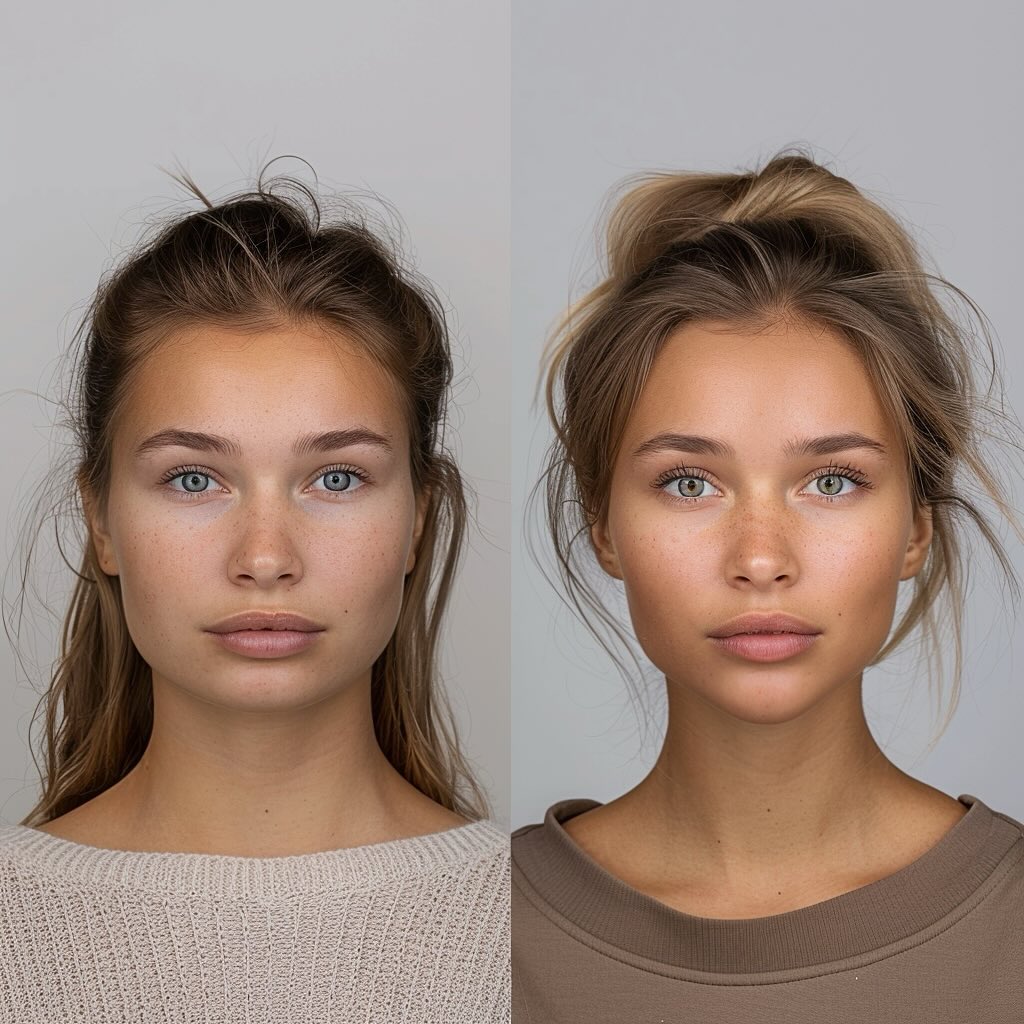
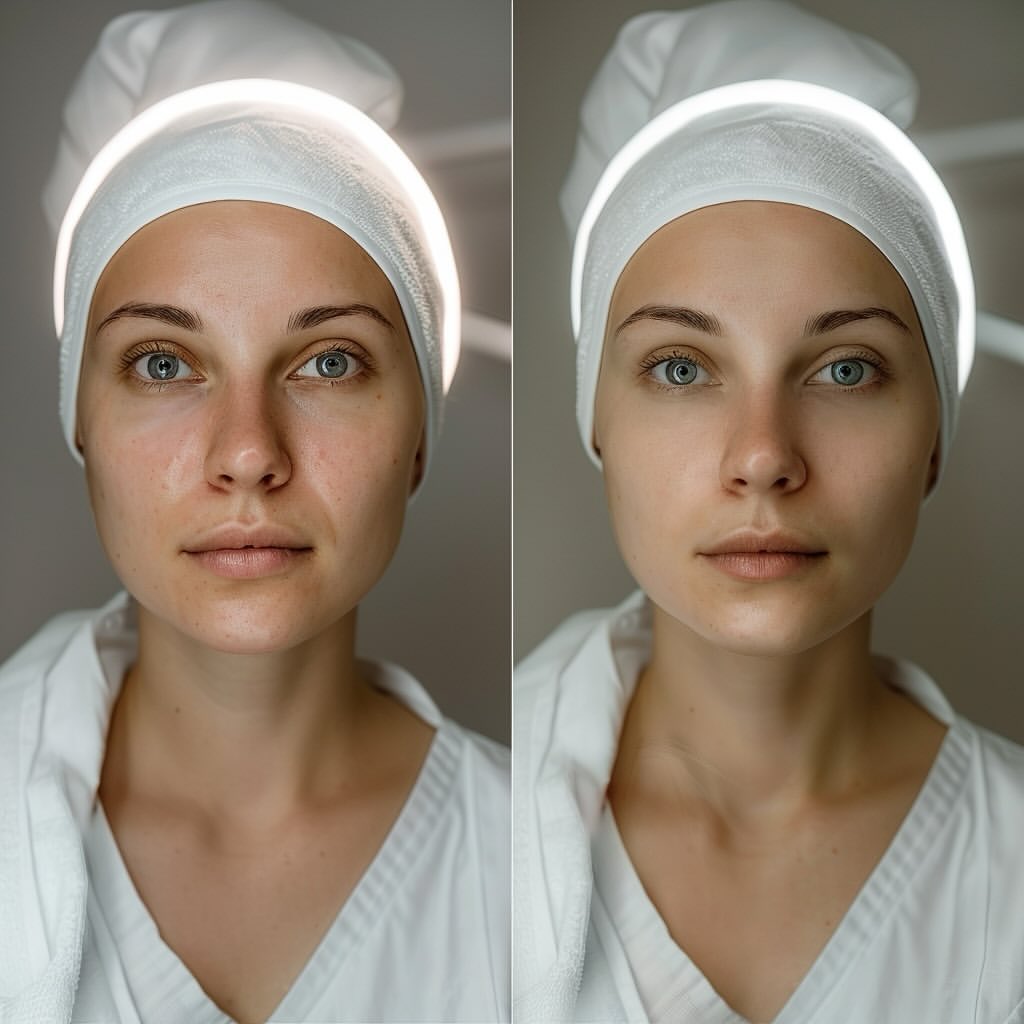
Thousands of satisfied customers
How Much Does Plinest Treatment Cost in London?
Direct Answer
The typical Plinest polynucleotide price in London is £250–£450 per session, averaging around £320–£350. The figure varies by formulation (One, Eye, or Body), treatment area and clinic location, while introductory first-session offers start around £170–£200. Premium central London, Mayfair and Harley Street clinics often charge £450–£575 or more per session.
Typical Plinest Treatment Prices in London
- Introductory / first-session offer: £170–£200
- Standard single session (face): £250–£450
- Plinest Eye (periorbital area): £300–£450
- Premium / Harley Street or Mayfair session: £450–£575
Key Pricing Factors
- Practitioner qualifications: GMC-registered doctors typically administer this treatment, as Plinest is a biological injectable requiring assessment of skin density, laxity and hydration to select the right formulation.
- Clinic location: Harley Street and Mayfair clinics typically charge more than equivalent sessions in outer London.
- Product formulation: Plinest is available in variants for the face (One), delicate under-eye area (Eye), and body, with the periorbital formulation typically costing more per session due to the precision required in that thin-skinned zone.
- Course structure: A single session typically costs more per visit than a session within a recommended 3-session course, as the manufacturer-recommended protocol is spaced 2–3 weeks apart.
- What’s included: Some clinics offer a discounted introductory first session, with subsequent sessions returning to the standard price.
What Should Be Included in the Price
- Consultation and skin assessment with a GMC-registered doctor, including screening for fish allergy given the salmon-derived source
- Confirmation of the specific Plinest formulation used, in writing
- Numbing cream available for comfort, as most areas involve micro-injections or cannula delivery
- Guidance on the recommended course (typically 3 sessions, 2–3 weeks apart)
- Realistic timeline for results, which build progressively over several weeks
Pricing Red Flags
Plinest treatment advertised below £120 in London is a warning sign rather than a bargain. Suspiciously low prices usually indicate one of: an unqualified practitioner, an unverified product, or a non-clinical setting. Correcting swelling, infection, or an allergic reaction costs significantly more than a properly performed treatment in a CQC-regulated clinic.
For a personalised quote based on your skin concern and the formulation right for you, book a free consultation.
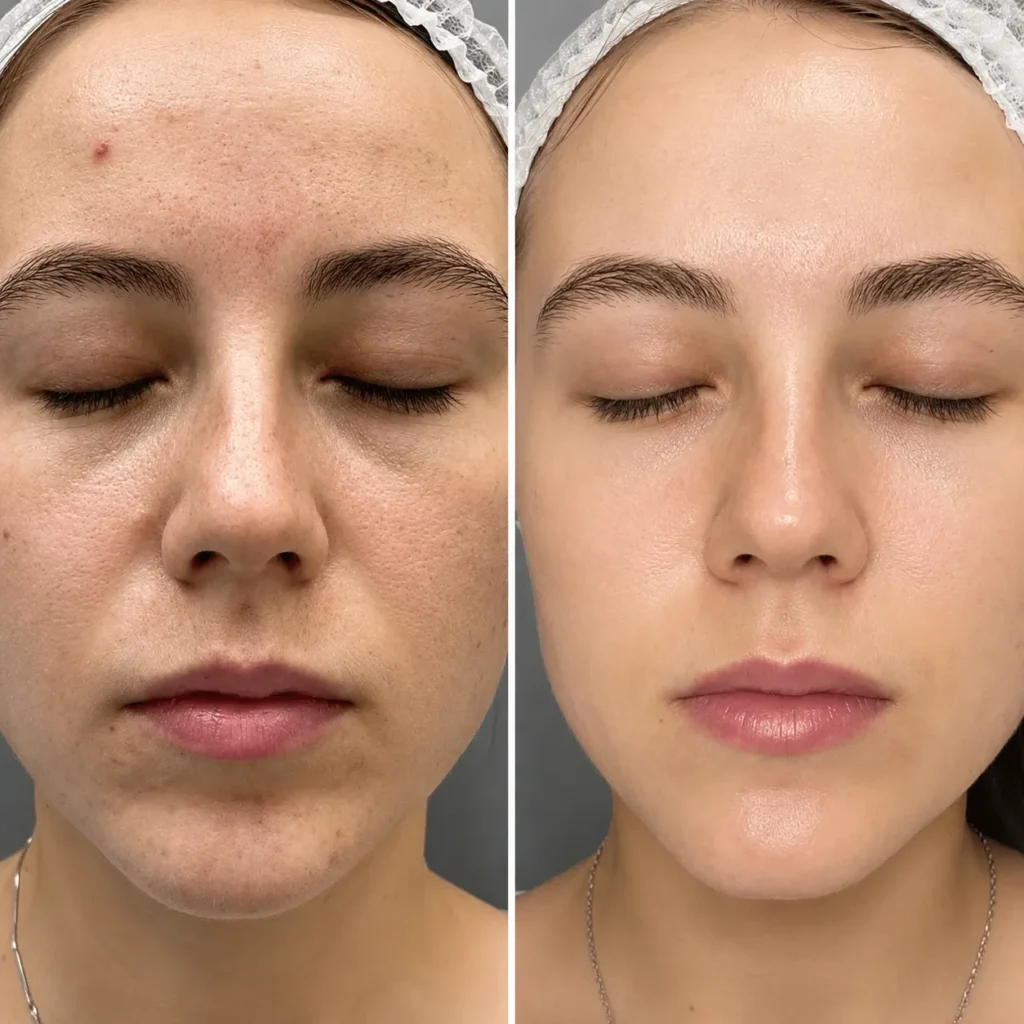
Before and After Plinest Polynucleotide Treatment
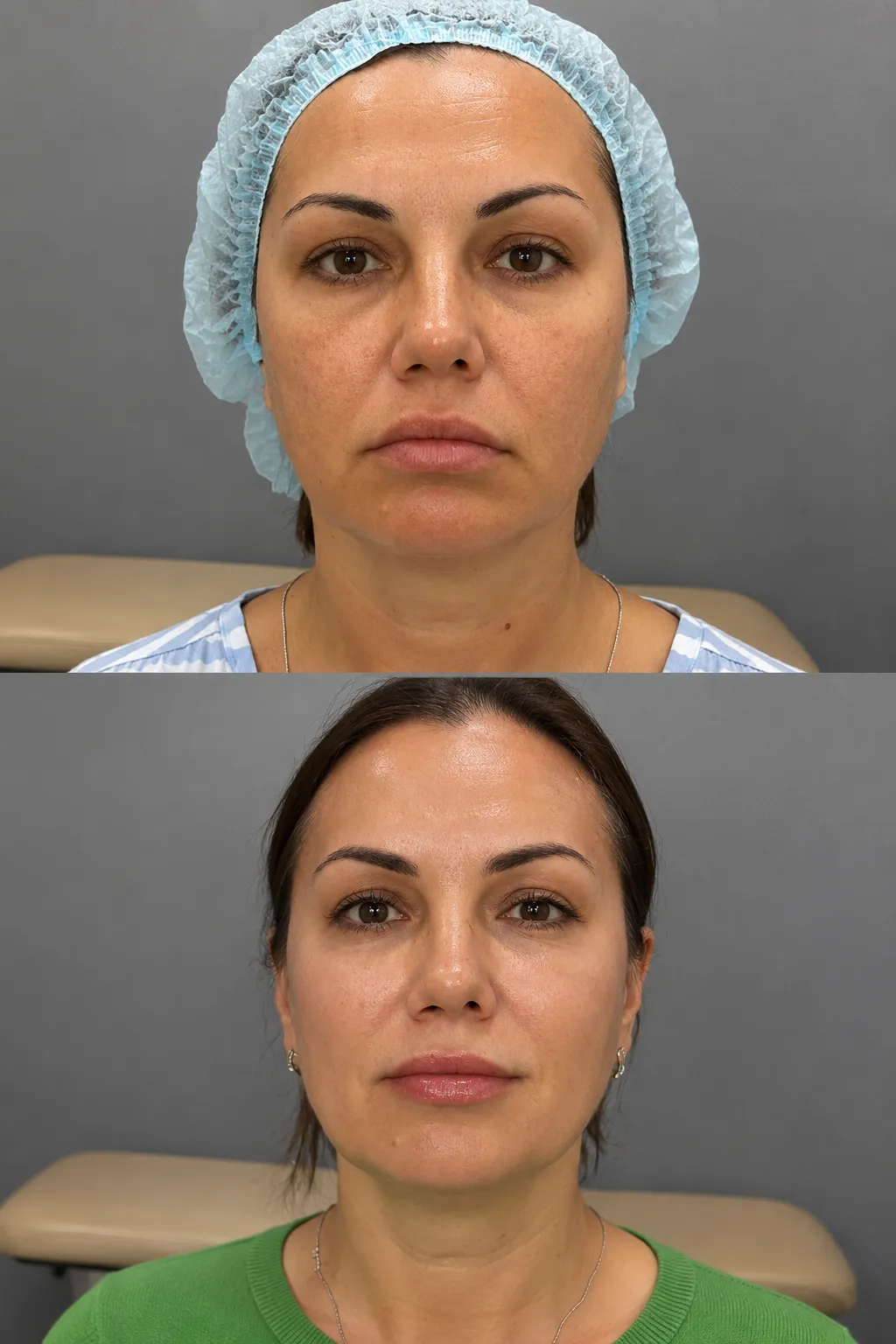
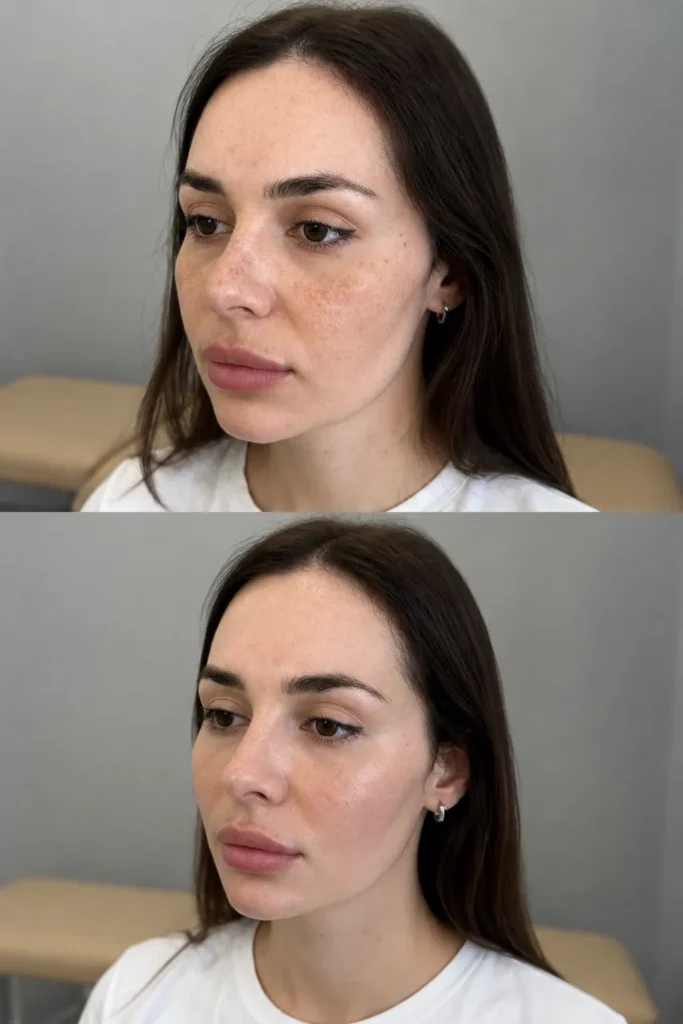
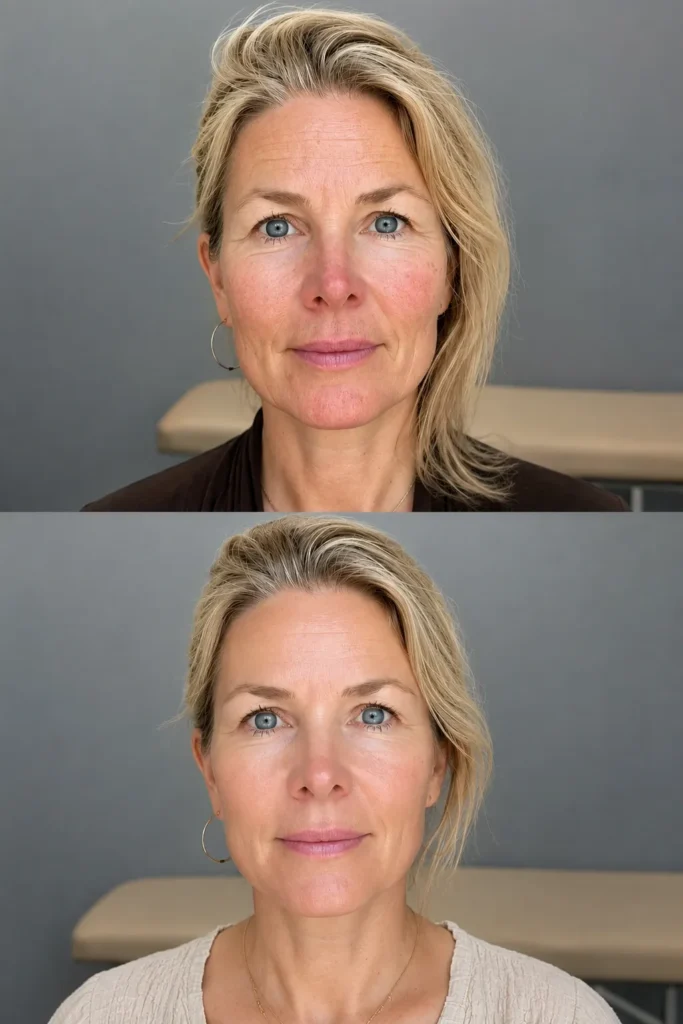
Patients presenting for Plinest polynucleotide treatment in London commonly describe dull, dehydrated skin, visible fine lines and wrinkles, laxity around the eyes or jawline, and uneven skin texture and appearance. As commonly reported by independent specialists and clinics, the progression following a structured course tends to be gradual and cumulative rather than immediate.
Results vary meaningfully depending on anatomy, age, lifestyle factors, the plan selected, practitioner technique, and the specific Plinest formulation used. Individuals with more pronounced skin dehydration and early laxity tend to observe some of the most notable transformations, though outcomes are genuinely individual and cannot be guaranteed.
Commonly discussed outcomes following Plinest polynucleotide treatment:
- Improved skin hydration and a sustained dewy, radiant complexion
- Reduction in the appearance of fine lines and wrinkles, particularly around the eyes and mouth
- Enhanced skin elasticity and firmness across the mid-face and neck
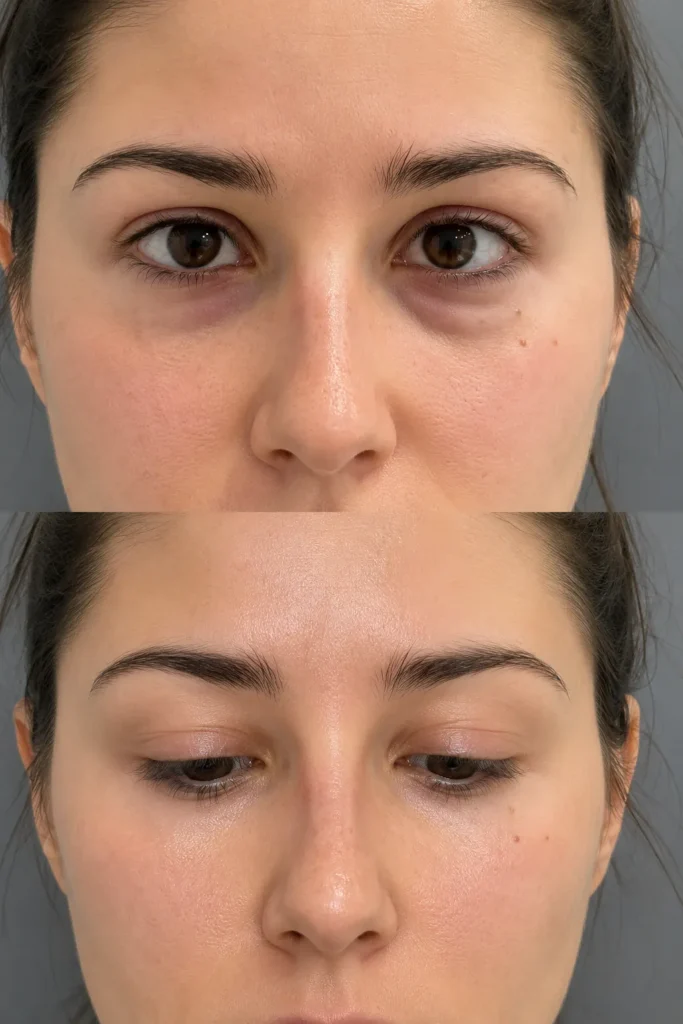
- Improvement in skin tone, texture, and overall skin quality, including reduction of dark circles
What is Plinest Polynucleotide Treatment?
Plinest is a medical-grade injectable polynucleotide gel developed by Mastelli, Italy, containing a proprietary formulation of high-purity polynucleotides (PN-HPT®). These molecules are derived from salmon DNA through a rigorous purification process that removes proteins responsible for allergic reactions, leaving chains of nucleotide units with documented regenerative properties.
When introduced intradermally, Plinest works at a cellular level by activating fibroblasts — the dermal cells responsible for collagen and elastin production. Unlike hyaluronic acid skin boosters or dermal fillers, it does not add volume. Instead, it supports tissue regeneration and improves the skin’s own capacity to repair and renew itself.
Three main formulations address distinct concerns: standard Plinest for face, neck, and décolletage; Plinest Eye, specifically designed for the delicate periorbital region, including dark circles and crepey skin; and Plinest Hair for skin and hair rejuvenation at the scalp level. Each product is clinically tested, regulatory-approved, and assessed for biocompatibility across a wide range of skin conditions.
The Plinest Polynucleotide Treatment Process: Step by Step
1. Clinical Assessment
An independent aesthetic practitioner evaluates skin condition, medical history, goals, and suitability for Plinest polynucleotide treatment.
2. Personalised Treatment Plan
The practitioner selects the appropriate formulation, concentration, and injection strategy based on unique skin needs and rejuvenation goals.
3. Pre-Treatment Protocol
A topical anaesthetic is applied to the area. Skin is cleansed and mapped for the precise placement of the injection sites.
4. Treatment Delivery
A series of micro-injections deposits Plinest polynucleotides intradermally across the mapped area, stimulating fibroblast activity and beginning the skin repair process.
5. Post-Procedure Guidance
The treating practitioner provides personalised aftercare advice, including skincare adjustments, sun protection guidance, and scheduling of follow-up sessions.
Procedure time: 30–45 minutes.
Recovery: Minimal downtime is typical; mild redness or small bumps at injection sites usually resolve within 24–48 hours.
Benefits of Plinest Polynucleotide Treatments
The documented regenerative properties of polynucleotides distinguish Plinest from conventional aesthetic injectables. By operating at a biological rather than structural level, it may support longer-term improvements to skin quality — including hydration, elasticity, and collagen production — rather than addressing surface appearance alone. Many patients who engage with bespoke treatment plans through independent specialists report cumulative benefits across a course of sessions.
A further advantage lies in its compatibility with other aesthetic medicine interventions. Verified practitioners accessible through Science Beauty often integrate Plinest polynucleotide treatment into broader personalised plans alongside hyaluronic acid-based dermal fillers, anti-wrinkle injections, or skin boosters such as Profhilo, where clinically appropriate. This layered approach can address multiple aspects of skin ageing without requiring surgical intervention.
Key therapeutic and aesthetic advantages commonly associated with Plinest:
- Helps stimulate collagen and elastin production through fibroblast activation
- Helps hydrate the skin via increased endogenous hyaluronic acid synthesis
- Supports a gradual reduction in fine lines and wrinkles over several weeks
- Improves overall skin health and radiance without adding unnatural volume
- Anti-inflammatory properties that may help improve skin tone and reduce redness
- Suitable for a wide range of skin types and concerns, including acne-related skin damage
Plinest Polynucleotide Treatment Options in London
Plinest Full-Face Regenerative Treatment
The standard formulation is used across the face, neck, and décolletage to rejuvenate overall skin texture and appearance, improving elasticity and radiance. A typical course involves two to three sessions spaced 2–4 weeks apart, with maintenance sessions recommended every six to nine months thereafter.
Plinest Eye — Periorbital Polynucleotide Treatment
Plinest Eye is a specialised formulation developed for the delicate periorbital region, where standard injectables carry a higher risk. Independent practitioners use it to address dark circles, a crepey texture, fine lines and loss of elasticity around the eyes — an area that responds poorly to dermal fillers alone.
Plinest Hair — Scalp and Skin Rejuvenation
Plinest Hair applies the documented regenerative properties of polynucleotides to the scalp, supporting skin and hair rejuvenation by helping to optimise the follicular environment. Aesthetic practitioners use it for patients experiencing diffuse hair thinning or reduced scalp vitality alongside other skin concerns.
Combined Protocols: Polynucleotides with Hyaluronic Acid
Some verified practitioners combine the treatment with hyaluronic acid-based skin boosters or dermal fillers. This approach addresses both structural volume loss and cellular-level skin regeneration simultaneously, offering a more comprehensive outcome for patients with multiple aesthetic concerns.
Treatment areas available through Science Beauty’s network of independent practitioners:
- Face (cheeks, forehead, perioral region)
- Periorbital area and under-eyes
- Neck and décolletage
- Scalp and hair
- Body areas, including hands, inner arms, and knees
Why Choose Science Beauty for Plinest Polynucleotide Treatments?
Science Beauty operates as an independent booking platform connecting patients with verified aesthetic practitioners and doctor-led clinics across central London. Every specialist listed meets defined selection criteria before being featured.
The platform prioritises practitioner accountability, clinical transparency, and patient safety — enabling informed decisions before any consultation is booked.
Specialist selection criteria applied by Science Beauty:
- Active GMC, NMC, or GPhC registration verified before listing
- Demonstrable advanced training in injectable aesthetics and facial anatomy
- Clinical experience with Plinest and polynucleotide treatments specifically
- Practice within a CQC-compliant or equivalently regulated environment
- Evidence-based protocols and documented patient satisfaction
- Transparent pricing and a thorough pre-treatment consultation process
Frequently Asked Questions About Plinest Polynucleotide Treatments in London
How long do Plinest treatment results last?
Results from a standard course of Plinest polynucleotide typically last between six and twelve months, with some patients reporting maintained improvement up to eighteen months, depending on age, skin condition, lifestyle, and the number of sessions completed. Independent specialists generally recommend maintenance treatments every six to nine months to sustain collagen and elastin production and preserve the improvements achieved.
Is Plinest polynucleotide treatment safe?
Plinest is a clinically tested, regulatory-approved injectable derived from highly purified salmon DNA, with the protein fraction removed to minimise the risk of allergic reaction. It is biocompatible and generally well-tolerated, though suitability varies by individual skin condition and medical history. As with any injectable aesthetic treatment, risks such as bruising, temporary swelling, or small bumps at the injection sites exist and should be discussed thoroughly during consultation with the treating practitioner.
What are the risks associated with Plinest treatment?
Plinest is generally well-tolerated, with the most commonly reported side effects being temporary redness, mild swelling, and small raised papules at injection sites, which typically resolve within 24–48 hours. Individuals with a fish allergy should not undergo the procedure, as polynucleotides are derived from salmon DNA and may trigger an adverse reaction despite the purification process. As with any injectable aesthetic procedure, there is a small risk of bruising, infection, or asymmetry, which is why treatment should only be carried out by a qualified practitioner following a thorough medical consultation.
How many sessions of Plinest treatment are needed?
The first session serves as both an assessment and an initial treatment, allowing the practitioner to observe individual skin response before confirming the full plan. Most independent practitioners then recommend completing two to three sessions in total, spaced two to four weeks apart. The cumulative benefits of high-purity polynucleotides are most apparent following a complete initial treatment course.
Is Plinest treatment worth it for improving skin quality?
For patients seeking genuine, biologically-driven improvement in skin quality, hydration, and elasticity rather than immediate volumisation, Plinest polynucleotide treatments are regarded by many experienced practitioners in aesthetic medicine as a highly valuable addition to a personalised plan. The documented regenerative properties of polynucleotides address ageing at a cellular level, offering progressive results that often complement other aesthetic interventions over time.
Can I have Plinest treatment if I have a fish allergy?
Polynucleotides derived from salmon DNA are contraindicated for individuals with documented fish allergies, as residual proteins may trigger an adverse reaction despite the purification process. Practitioners accessible via Science Beauty will assess this during the initial consultation and, where relevant, recommend alternative regenerative or hyaluronic acid-based skin boosters such as Profhilo or Sunekos as clinically appropriate alternatives.
What is the difference between Plinest and dermal fillers?
Dermal fillers, typically composed of hyaluronic acid, work by physically adding volume beneath the skin surface to restore contour, lift soft tissue, or fill lines and wrinkles immediately. Plinest polynucleotide treatment takes an entirely different approach: rather than adding volume, it promotes collagen and elastin production through fibroblast activation, improving overall skin health progressively over weeks. The two procedures are frequently combined in bespoke treatment plans.
What does Plinest polynucleotide treatment feel like?
Most patients describe the pain as tolerable, particularly when a topical anaesthetic cream has been applied beforehand. A series of small injections are placed across the area, which may cause brief, mild discomfort. Following treatment, small raised papules at injection sites are common and typically resolve within 24 to 48 hours. The overall experience is minimally invasive, with most patients returning to normal activities on the same day.
Can Plinest be combined with other aesthetic treatments?
Yes. Verified independent practitioners featured on Science Beauty frequently incorporate Plinest polynucleotide treatment into combined protocols alongside anti-wrinkle injections, hyaluronic acid fillers, microneedling, radiofrequency treatments, and skin boosters. This approach to aesthetic medicine can address both regenerative and volumising aspects of skin ageing within a single, tailored consultation and treatment journey, helping patients to achieve a more youthful skin texture and appearance.
How much does Plinest treatment cost in London?
Plinest treatment in London typically costs between £250 and £450 per session, with an average price of around £320–£350. Prices vary based on the Plinest formulation used (One, Eye, or Body), the treatment area, and clinic location, with introductory first-session offers starting around £170–£200. Premium central London and Mayfair or Harley Street clinics often charge £450–£575 or more per session.