

Hyaluronic Acid Filler Treatments in London
Restore facial volume and address age-related changes with pharmaceutical-grade hyaluronic acid dermal fillers at our London clinic. Our precision injection techniques deliver targeted correction of wrinkles, fine lines, and volume loss using biocompatible ha fillers formulated to integrate seamlessly with your tissue architecture. Each treatment plan reflects individual anatomical assessment and aesthetic objectives.



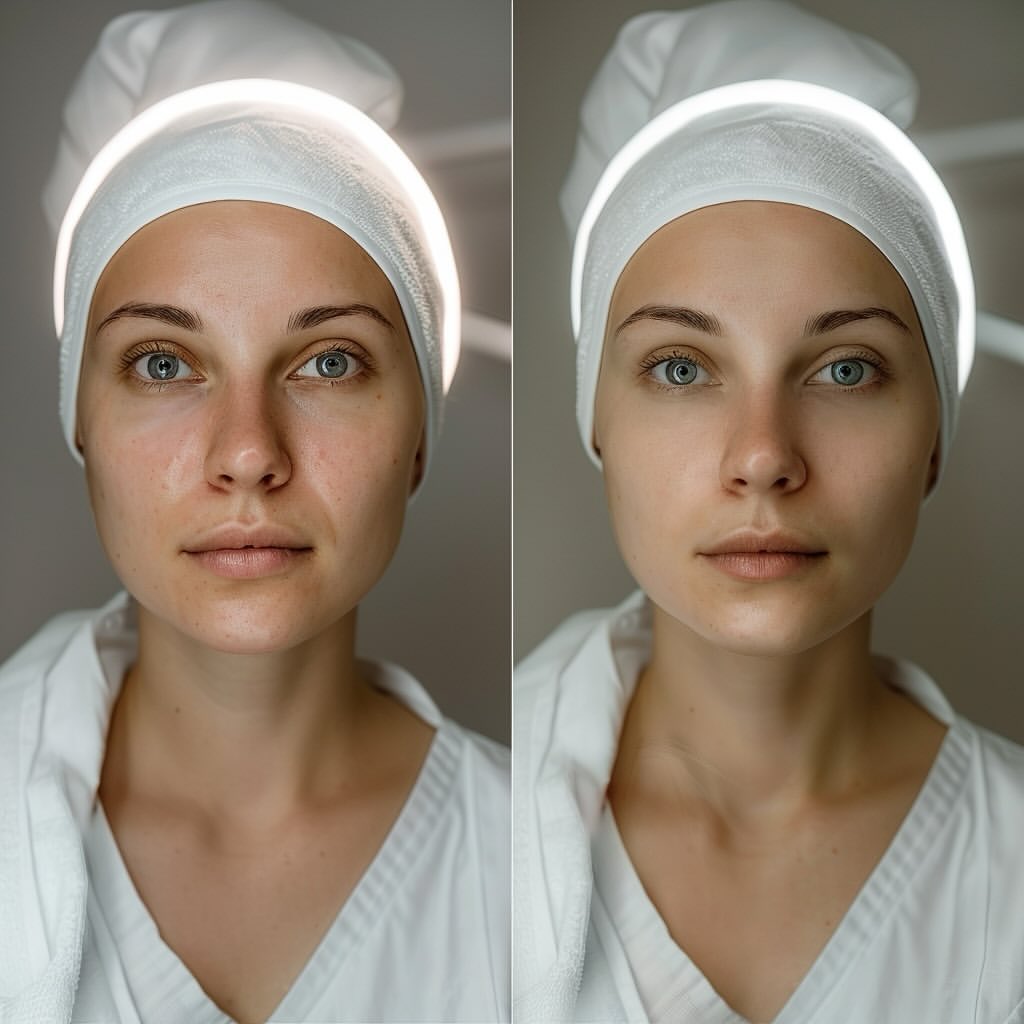
Thousands of satisfied customers
How Much Do Hyaluronic Acid Fillers Cost in London?
Direct Answer
Hyaluronic acid (HA) fillers in London typically cost between £200 and £600 per 1ml syringe, with an average price of around £300–£350. Prices vary based on the specific brand used, the treatment area, and the practitioner’s qualifications, with entry-level 0.5ml treatments starting around £150–£250. Premium central London and Harley Street clinics often charge £600–£950 or more for delicate areas or premium branded products.
Typical Hyaluronic Acid Filler Prices in London
- Entry-level 0.5ml syringe: £150–£250
- Standard 1ml syringe (mid-tier brand, e.g. Kairax, Revolax): £200–£400
- Premium 1ml syringe (e.g. Juvederm, Restylane, Teosyal): £300–£600
- Delicate area (e.g. tear trough): £450–£950
- Premium / Harley Street syringe: £600–£950
Key Pricing Factors
- Practitioner qualifications: GMC, GDC or NMC-registered practitioners charge more than non-medical injectors, particularly for delicate or structural areas that carry a higher complication risk.
- Clinic location: Harley Street and central London clinics typically charge 30–60% more than equivalent treatments in outer London.
- Filler brand: HA fillers span a wide price spectrum — mid-tier CE-marked brands (e.g. Revolax, Kairax) typically cost less per syringe than premium European brands (e.g. Juvederm, Restylane, Teosyal, Belotero), which use more advanced cross-linking technology.
- Treatment area: Structural areas like the cheeks or jawline typically require more product than smaller corrections, while delicate areas like the tear trough cost more per ml due to the precision required.
- What’s included: Some clinics quote a low headline price and charge separately for the initial consultation or a follow-up review.
What Should Be Included in the Price
- Consultation with a GMC, GDC or NMC registered medical injector
- Confirmation of the specific HA filler brand used, in writing
- Topical or local anaesthetic for comfort
- Guidance on the expected 6–18 month duration of results, depending on the product
- Follow-up review to check symmetry and settling
Pricing Red Flags
HA filler advertised below £120 per syringe in London is a warning sign rather than a bargain. Suspiciously low prices usually indicate one of: an unqualified injector, an unverified or counterfeit product, or a non-clinical setting. Correcting a complication — vascular occlusion, infection, or asymmetry — costs significantly more than a properly performed treatment in a CQC-regulated clinic. Unlike permanent fillers, genuine HA products are fully reversible with hyaluronidase if needed, which is one reason they remain the standard choice in regulated UK clinics.
For a personalised quote based on the area and product right for your face, book a free consultation.
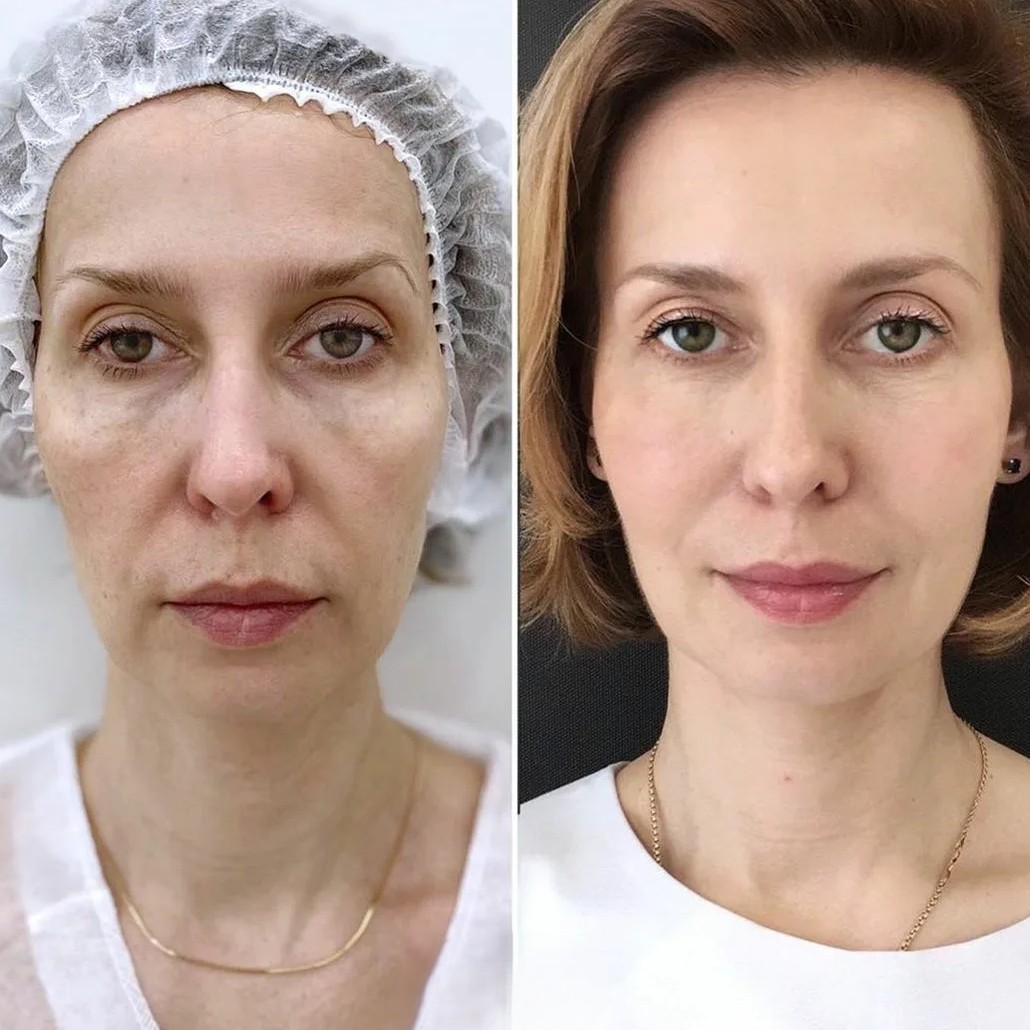
Before and After Hyaluronic Acid Filler Treatment
Hyaluronic acid injection produces measurable improvements across multiple facial zones:
- Diminished appearance of nasolabial folds
- Reduced visibility of fine lines and wrinkles
- Restored midface projection
- Enhanced lip contour and fullness
- Softened marionette lines
- Improved under-eye volume
Results manifest progressively as the gel integrates with dermal tissues. Initial enhancement appears within 48 hours, with optimal outcomes visible between days 10-14 following treatment. The hyaluronan scaffold attracts interstitial fluid, creating natural-looking augmentation that evolves subtly.

What is a Hyaluronic Acid Filler?
Hyaluronic acid fillers represent a class of injectable dermal volumizers containing non-animal stabilized hyaluronic acid – a glycosaminoglycan polysaccharide found naturally throughout human connective tissue. These cosmetic injectables function as biocompatible gel fillers that restore dermal scaffolding compromised by chronological aging.
The injectable ha formulations we utilize undergo cross-linking processes that modulate degradation rates, extending clinical efficacy. Different viscosities and particle concentrations address specific anatomical requirements: higher G-prime values create structure in deep tissue planes, while softer formulations hydrate superficial dermis to minimize the appearance of fine lines. Products such as Juvederm, Teosyal, and Voluma each possess distinct rheological properties suited to particular treatment objectives.
Hyaluronic acid’s hygroscopic nature enables each molecule to attract up to 1,000 times its weight in water, providing sustained hydration alongside structural support. This mechanism distinguishes ha fillers from alternative injectable materials, offering reversibility through hyaluronidase enzyme administration if anatomical correction becomes necessary.

The Hyaluronic Acid Filler Process: Step by Step
Clinical Assessment (30 minutes)
Comprehensive evaluation begins with detailed medical history review, including prior aesthetic procedures, medication use, and contraindications to dermal filler injections. Facial analysis identifies areas of volume loss, skin elasticity assessment, and anatomical mapping of injection sites. Digital photography documents baseline appearance, establishing objective comparison points for post-treatment evaluation.
Pre-Treatment Protocol (15 minutes)
The treatment area undergoes antiseptic preparation using chlorhexidine solution. Topical anaesthetic cream containing lidocaine may be applied to numb superficial tissues, though many hyaluronic acid dermal fillers incorporate local anaesthetic within the gel formulation itself. Ice application provides additional patient comfort while inducing vasoconstriction that minimizes bruise formation.
Treatment Implementation (30-45 minutes)
A qualified medical professional utilizes fine-gauge needles or blunt-tip cannulas to inject hyaluronic acid precisely into predetermined tissue planes. The technique varies by anatomical region: bolus injections create focal augmentation for areas like smile lines, while linear threading addresses wrinkle correction along dynamic folds. Volume is deposited gradually, with intermittent assessment ensuring bilateral symmetry and desired results.
The practitioner manipulates injected material through external massage, distributing product evenly and preventing nodule formation. Each syringe delivers measured quantities – typically 0.5ml to 1.5ml per anatomical subunit – with real-time adjustments based on tissue response.
Post-Procedure Care (10 minutes)
Immediately after treatment, gentle compression minimizes swelling at injection sites. Patients receive specific aftercare instructions: avoiding strenuous activity for 24 hours, sleeping with head elevation, and refraining from alcohol consumption that could exacerbate redness or bruising. Cold compresses may be utilized in the days after treatment to manage any localized inflammation.

Benefits of Hyaluronic Acid Filler
Hyaluronic acid filler injections offer multiple therapeutic advantages beyond simple volumization:
- Dermal Hydration Enhancement – The polysaccharide structure creates an osmotic gradient that draws moisture into treated areas, improving skin texture and reducing the appearance of fine lines independent of volumetric correction. This hydration effect supports collagen synthesis through improved cellular signaling.
- Controlled Reversibility – Unlike permanent implant materials, hyaluronic acid can be dissolved using hyaluronidase enzyme, providing a safety mechanism should aesthetic outcomes require modification or adverse events occur.
- Biocompatibility Profile – As a substance found naturally in human dermis, injectable hyaluronic acid demonstrates minimal immunogenicity. This reduces risks of allergic reactions compared to xenogeneic materials, contributing to the treatment’s minimally invasive classification.
- Versatile Application Range – Dermal fillers can be used across multiple facial zones: adding volume to cheeks, defining jawline contour, addressing loss of volume in temples, filling nasolabial folds, correcting tear trough deformity and dark circles, enhancing lip fullness, and softening perioral wrinkles. This adaptability enables comprehensive treatment plans targeting global facial aging.
- Progressive Natural Results – Unlike surgical interventions requiring extended recovery, hyaluronic acid is injected with minimal downtime. Results develop gradually as the gel scaffold integrates, avoiding the abrupt transformation that signals cosmetic intervention.
- Collagen Stimulation – Emerging evidence suggests mechanical dermal stretching from filler placement triggers fibroblast activation, potentially stimulating endogenous collagen production. This neocollagenesis may extend benefits beyond the filler’s physical presence.
Our Hyaluronic Acid Filler Treatments
We provide specialized injectable protocols tailored to individual aging patterns:
- Targeted Wrinkle Correction – Precision injection addressing isolated lines and wrinkles, including frown lines, crow’s feet, and forehead creases. Superficial dermal placement of low-viscosity gel smooths surface irregularities.
- Volumetric Restoration Protocol – Deep tissue plane injection restoring age-related volume depletion. Targets midface structures, temples, and perioral regions where fat atrophy creates a sagging appearance of the face.
- Lip Enhancement Program – Customized augmentation using soft, malleable formulations. Addresses vermillion border definition, volume asymmetry, and perioral rhytids while maintaining natural proportions.
- Non-Surgical Facial Contouring – Strategic filler placement to create structure along jawline, enhance chin projection, and define cheekbone prominence. Utilizes high-cohesivity products for architectural support.
- Combination Therapy Approach – Integrated treatment combining hyaluronic acid fillers with botulinum toxin (Botox) for comprehensive facial rejuvenation. Addresses both static volume loss and dynamic muscle-related wrinkles.

Why Choose Us?
Our clinic demonstrates commitment to clinical excellence through:
- Advanced Practitioner Credentials – Our medical professionals maintain specialized training in facial anatomy, having completed advanced certification programs in aesthetic medicine. Continuous education ensures familiarity with evolving injection techniques and product innovations.
- Premium Product Selection – We exclusively utilize FDA-approved and CE-marked hyaluronic acid dermal fillers from established pharmaceutical manufacturers. Each product undergoes rigorous quality assurance, with batch traceability maintained for patient safety.
- Individualized Treatment Planning – No two faces age identically. Our assessment protocols identify your specific pattern of volume loss, skin elasticity changes, and aesthetic priorities. This personalized approach prevents the uniform, over-filled appearance associated with template-based injection.
- Safety-First Methodology – Comprehensive medical history screening identifies contraindications before treatment proceeds. Our emergency protocols include immediate access to hyaluronidase for rare vascular complications, and practitioners maintain current certification in complication management.
- Evidence-Based Practice – Treatment recommendations reflect published clinical data rather than marketing claims. We provide realistic expectations regarding longevity, with most patients experiencing results that last for several months to over one year, depending on anatomical location and product selection.
- Comprehensive Aftercare Support – Following treatment, patients receive detailed guidance for optimal healing. We remain accessible for questions during recovery and schedule systematic follow-up to assess outcomes and plan maintenance sessions.
Frequently Asked Questions
How long do hyaluronic acid fillers last?
Injectable hyaluronic acid typically maintains clinical efficacy between 6-18 months, with significant variation based on anatomical placement, product formulation, and individual metabolic factors. Areas with greater muscular activity – such as lips and smile lines – demonstrate faster degradation than relatively static regions like cheeks. Products with higher cross-linking density, such as Voluma, often extend beyond 12 months in deep tissue planes.
Are hyaluronic acid fillers dangerous?
When administered by a qualified medical professional following proper technique, hyaluronic acid filler injections carry a favorable safety profile. Common transient effects include redness, mild bruising, and temporary swelling at the injection site, typically resolving within days after treatment. Serious adverse events remain rare but include vascular occlusion if product inadvertently enters blood vessels. Our protocols minimize such risks through anatomical knowledge, aspiration technique, and appropriate product selection.
How much filler is needed for natural results?
Volume requirements vary substantially based on the degree of correction desired and anatomical starting point. Initial treatments typically utilize 1-2ml per region, with some patients requiring 3-5ml for comprehensive facial rejuvenation addressing multiple zones. Conservative initial treatment allows assessment of tissue response before additional volume is added in subsequent sessions. This staged approach prevents overcorrection while achieving a youthful appearance that respects individual facial proportions.
Is hyaluronic acid filler worth it?
Patient satisfaction with hyaluronic acid dermal fillers consistently exceeds 85% in published studies, reflecting both aesthetic improvement and the treatment’s minimally invasive nature. The value proposition depends on individual priorities: those seeking subtle enhancement with limited downtime typically find significant benefit, while individuals expecting permanent transformation may require alternative interventions. The reversible nature, combined with natural-looking results when properly executed, makes ha fillers a cornerstone of contemporary facial aesthetics.
Can hyaluronic acid fillers be combined with other treatments?
Hyaluronic acid injections integrate effectively into comprehensive skincare and aesthetic protocols. Combination with botulinum toxin addresses both static volume loss and dynamic wrinkle formation. Laser treatments, chemical peels, and medical-grade skincare complement filler treatments by improving skin texture and elasticity. Spacing between procedures – typically 2 weeks when combining with energy-based devices – prevents inflammation overlap while optimizing outcomes.
What should I avoid after hyaluronic acid filler treatment?
Immediately after treatment, minimize activities that increase facial blood flow: strenuous exercise, alcohol consumption, sauna exposure, and prolonged sun exposure for 24-48 hours. Avoid applying pressure to treated areas, which could displace product before integration occurs. Do not receive dental procedures involving local anaesthetic containing epinephrine for 2 weeks, as vasoconstriction may affect filler settling. Most patients resume normal skincare routines within 24 hours, though facial massage should be avoided for one week unless directed by your practitioner for specific contouring purposes.
How much do hyaluronic acid fillers cost in London?
Hyaluronic acid (HA) fillers in London typically cost between £200 and £600 per 1ml syringe, with an average price of around £300–£350. Prices vary based on the specific brand used, the treatment area, and the practitioner’s qualifications, with entry-level 0.5ml treatments starting around £150–£250. Premium central London and Harley Street clinics often charge £600–£950 or more for delicate areas or premium branded products.