

Lip Filler Treatments in Tyburina
Lip filler treatment represents a non-surgical approach to lip augmentation utilising hyaluronic acid-based dermal filler products. The procedure addresses patients seeking volume restoration, contour refinement, or structural correction. Treatment duration typically ranges from 30 to 45 minutes, with visible results manifesting immediately and continuing to improve over subsequent days as hydration levels optimise within the tissue.

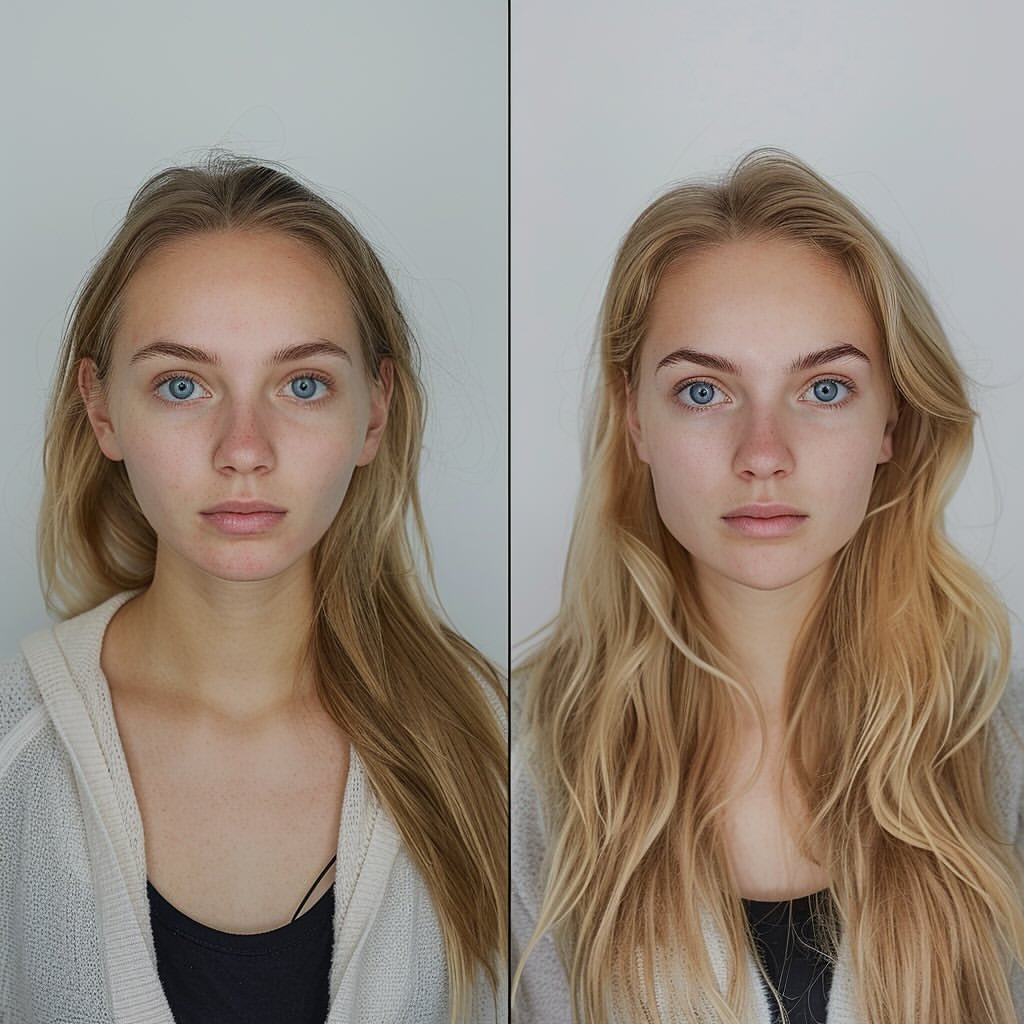
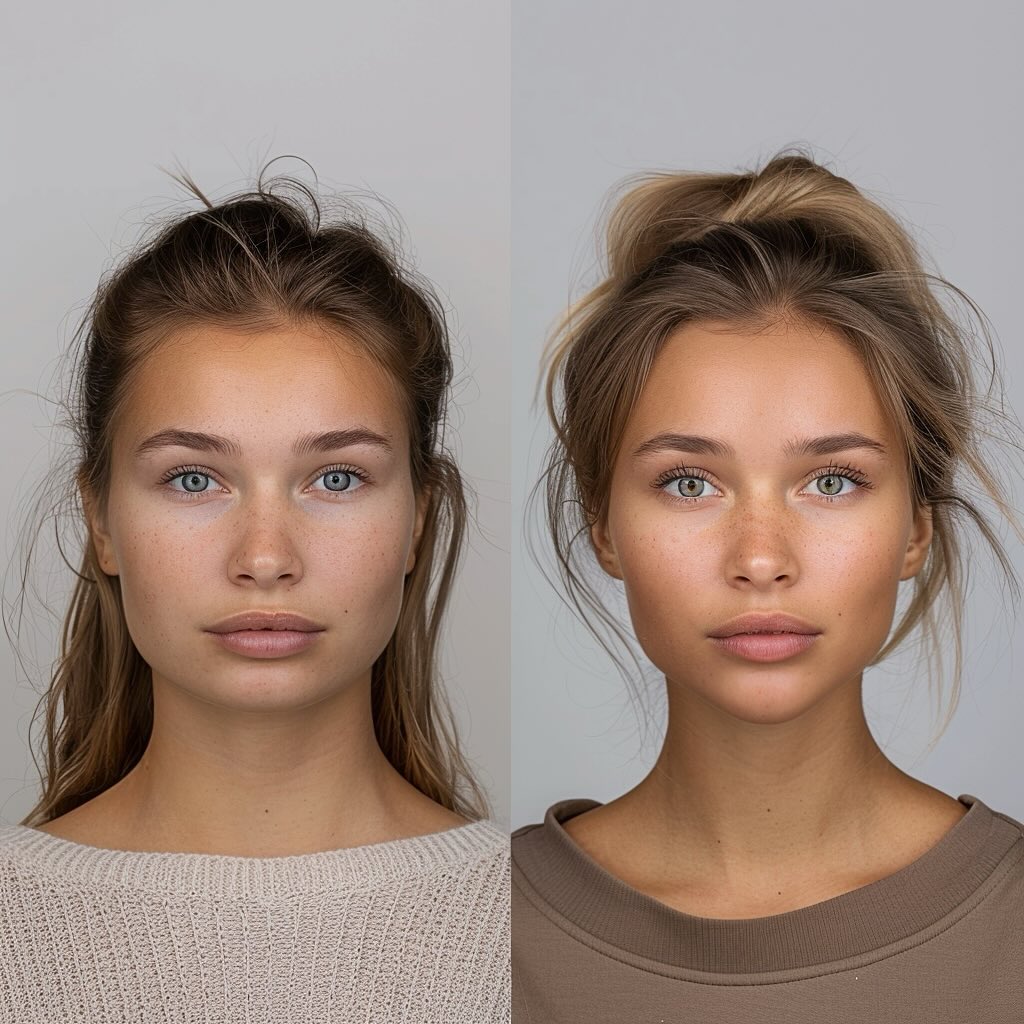
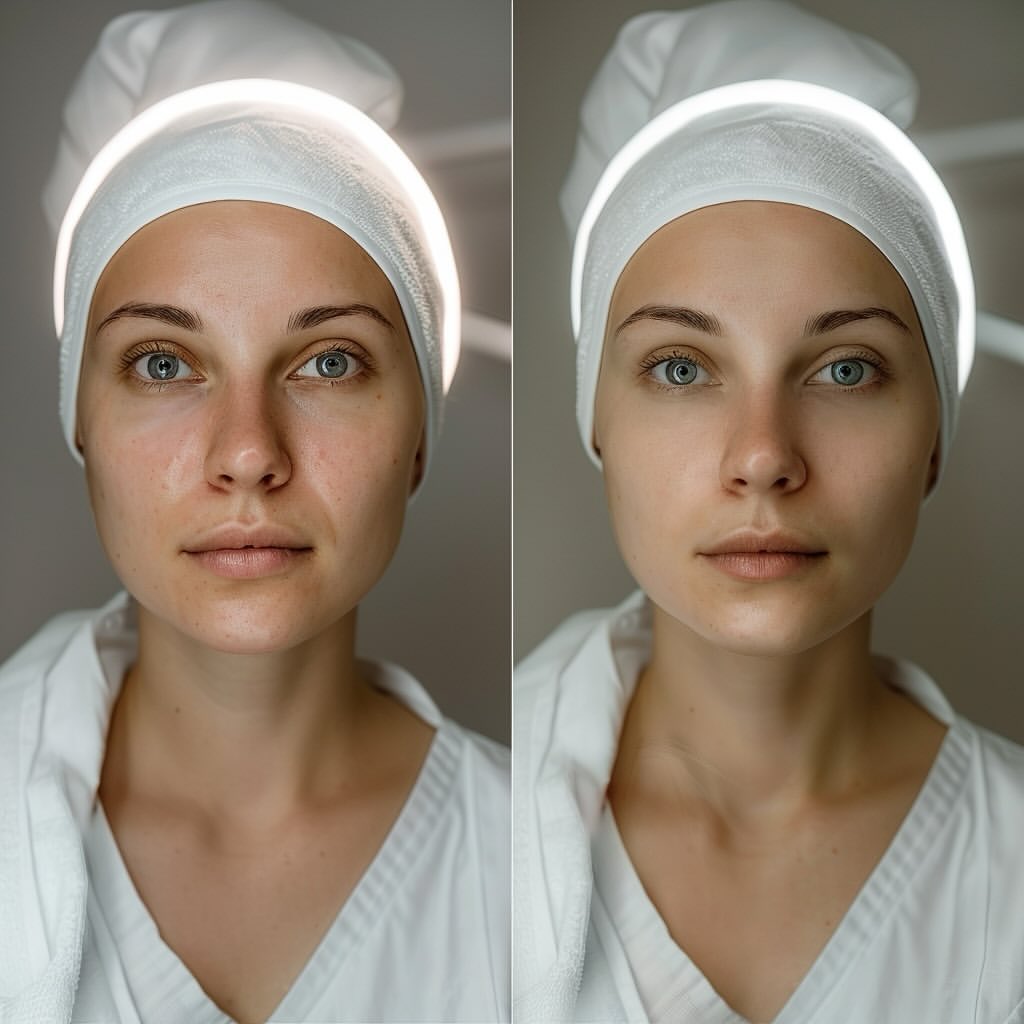
Thousands of satisfied customers
Lip Filler Pricing Overview in Tyburina
Our clinic in Tyburina offers transparent pricing structures:
- Signature Lip Definition (0.5ml): £420
- Standard Lip Augmentation (1.0ml): £450
- Advanced Volumisation (1.5ml): £550
- Comprehensive Enhancement (2.0ml): £700
Each treatment includes thorough consultation, topical anaesthetic application, precise injection technique, and post-treatment assessment. All pricing encompasses premium hyaluronic acid fillers, sterile clinical environment, and comprehensive aftercare guidance with follow-up appointments.
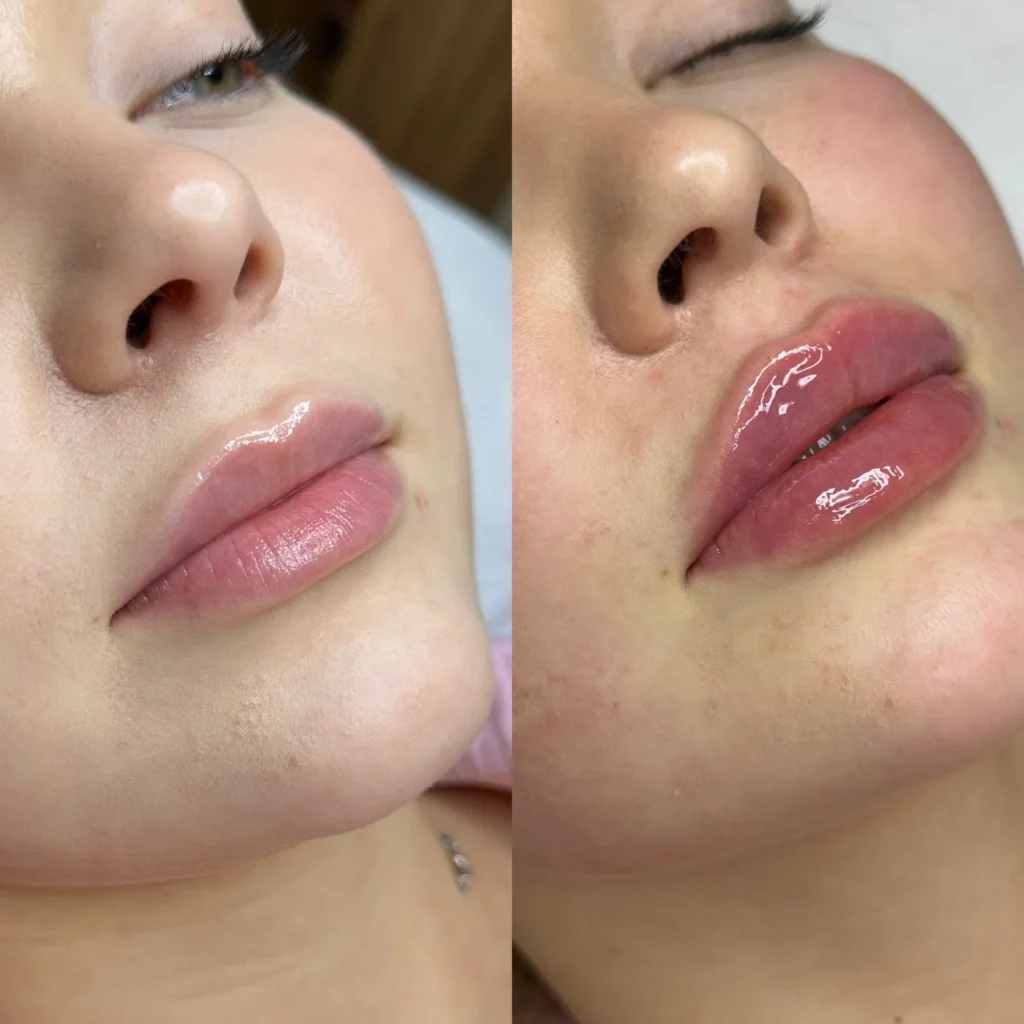
Before and After: Lip Filler Results in Tyburina
Clinical outcomes demonstrate measurable improvements in volume, symmetry, and proportional balance relative to facial features. Patients typically observe enhancement of the vermilion border, improved definition of Cupid’s bow, and restoration of age-related volume depletion. Key benefits include:
- Correction of asymmetrical lip architecture
- Addition of volume to naturally thin lips
- Refinement of lip contour and shape
- Hydration of lip tissue for improved texture
- Rejuvenation of perioral aesthetics
- Natural looking results that complement existing facial features

What is Lip Filler Treatment?
Dermal lip fillers represent advanced injectable formulations specifically designed to enhance lip volume and structure.
Composition and Molecular Structure
Hyaluronic acid fillers contain cross-linked molecules derived from non-animal sources, suspended in physiological solution. The specific rheological properties—including G-prime values and cohesivity—determine the filler’s lifting capacity and integration within lip tissue layers.
Unique Characteristics of Our Selected Products
Our clinic exclusively utilises FDA-approved and CE-marked filler products from manufacturers including Restylane and Belotero. These formulations incorporate lidocaine for patient comfort and demonstrate superior longevity through optimised cross-linking technology, with cohesive gel matrices that resist migration.
Clinical Selection Rationale
We choose filler products based on established safety profiles, published clinical data, and predictable tissue response. The selection process prioritises products with documented reversibility using hyaluronidase, minimal inflammatory potential, and consistent batch-to-batch uniformity.
Regulatory Approval and Safety Certification
All dermal filler treatments utilise products bearing FDA clearance and CE marking, indicating compliance with international medical device regulations. These certifications require extensive biocompatibility testing, clinical trials, and post-market surveillance to ensure patient safety and product efficacy.
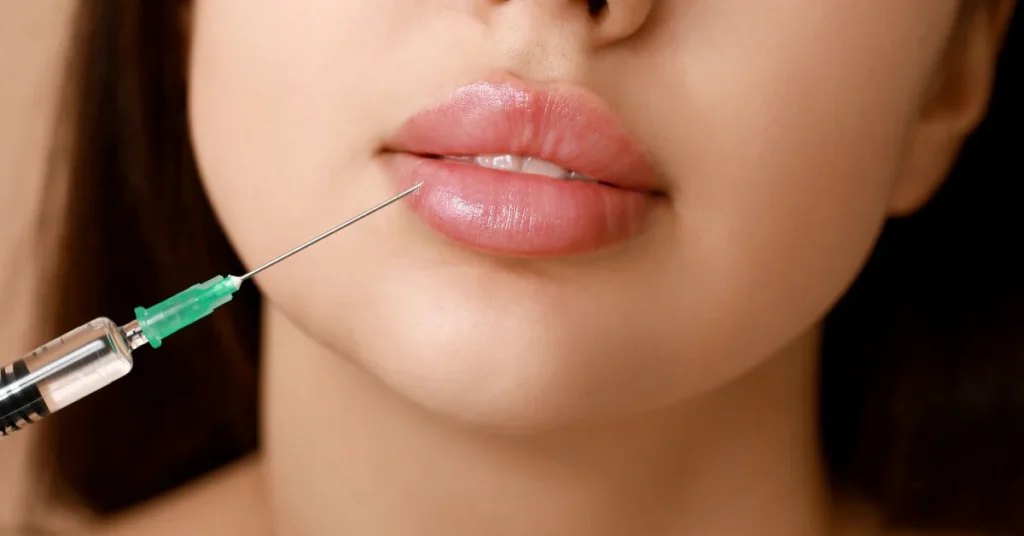
The Lip Filler Treatment Process in Tyburina: Step By Step
Clinical Consultation and Anatomical Assessment
The consultation involves detailed examination of lip anatomy, including assessment of vermilion height, white roll definition, and philtral column prominence. Discussion encompasses aesthetic goals, medical history screening for contraindications, and photographic documentation. The practitioner evaluates facial proportions, dental occlusion, and existing asymmetries to formulate a personalised treatment plan.
Pre-Treatment Preparation Protocol
The lip area undergoes thorough cleansing with antiseptic solution to minimise infection risk. Strategic marking identifies injection points along the vermilion border, body of the lip, and Cupid’s bow. Application of topical local anaesthetic or numbing cream proceeds for 15-20 minutes, though many filler products also contain integrated lidocaine.
Injection Technique and Filler Placement
Fillers are injected using fine-gauge needles or blunt-tip cannulas, depending on the anatomical target and desired outcome. The practitioner employs various techniques—linear threading, serial puncture, or cross-hatching—to deposit filler within specific tissue planes. Depth of injection varies from superficial dermal placement for fine lines to deep submucosal injection for structural volume.
Intra-Procedure Contouring and Refinement
Following initial filler placement, meticulous attention to detail guides the moulding and shaping process. The injector assesses symmetry, palpates for irregularities, and adds volume incrementally to achieve balanced proportions. This stage ensures the natural shape of the lips remains preserved whilst achieving the desired enhancement.
Post-Injection Protocol and Immediate Aftercare
Treatment concludes with gentle massage to distribute product evenly and application of cold compresses to minimise swelling. The patient receives detailed aftercare instructions regarding activity restrictions, signs of complications requiring immediate attention, and expected timeline for bruising and swelling to subside. A follow-up appointment typically schedules for two weeks post-treatment.
Procedure Duration: 30-45 minutes
Recovery Period: Initial swelling peaks within 48 hours, with most bruising and tenderness resolving within 7-10 days. Full aesthetic outcome becomes apparent after two weeks once tissue hydration stabilises.

Benefits of Lip Filler Treatment
Professional filler injections and lip augmentation deliver multiple clinical and aesthetic advantages:
- Natural Volume Enhancement
Hyaluronic acid-based fillers add volume whilst maintaining the natural architecture of lip tissue. The hydrophilic properties of hyaluronic acid attract moisture, creating subtle plumpness that appears organic rather than artificial, respecting individual lip proportions. - Extended Duration of Effect
Modern dermal filler treatments demonstrate longevity ranging from 9 to 18 months, depending on product selection, injection depth, and individual metabolic factors. Restylane lip products particularly exhibit prolonged persistence due to optimal cross-linking density. - Minimal Recovery Requirements
The non-surgical nature of lip enhancement permits immediate return to most activities. Unlike surgical augmentation procedures, lip filler treatment requires no incisions, general anaesthetic, or extended downtime, with most patients resuming work within 24-48 hours. - Tissue Hydration Properties
Hyaluronic acid fillers also contain hygroscopic molecules that bind water within the dermis. This characteristic improves lip texture, reduces fine lines around the lip area, and enhances overall lip quality beyond simple volumisation. - Established Safety Profile
Decades of clinical use and published research confirm the safety of hyaluronic acid fillers. The naturally occurring substance demonstrates excellent biocompatibility, minimal immunogenic potential, and low rates of adverse reactions when administered by highly trained practitioners. - Absence of Product Migration
Premium filler products maintain cohesivity within injected tissue planes. The cross-linked gel structure prevents uncontrolled spread to adjacent anatomical regions, ensuring results remain localised to the intended treatment zone throughout the product’s lifespan. - Compatibility with Complementary Procedures
Lip injections integrate seamlessly with other aesthetic treatment modalities including skin booster protocols, neuromodulator therapy, and dermal filler treatments addressing other facial features. This flexibility enables comprehensive facial rejuvenation strategies tailored to individual ageing patterns.
Our Lip Filler Treatment Options in Tyburina
We offer personalised treatment pathways designed to address diverse aesthetic requirements:
- Signature Lip Definition (0.5ml)
This conservative approach targets the vermilion border and Cupid’s bow, creating subtle definition and hydration. The technique enhances the natural lip contour without dramatic volume increase, ideal for patients seeking refinement rather than transformation. The precise placement along the white roll creates optical illusion of fuller lips. - Standard Lip Augmentation (1.0ml)
One millilitre represents the most frequently requested volume for lip filler consultation, providing balanced enhancement across upper and lower lips. This option corrects minor asymmetries, restores age-related volume loss, and achieves measurable structural improvement whilst maintaining natural proportions and avoiding excessive projection. - Advanced Multi-Session Restoration
Patients presenting with significant volume deficiency or requiring correction of previous unsatisfactory treatments benefit from staged protocols. Administering 2-3 syringes across multiple sessions separated by 4-6 weeks permits gradual tissue expansion, reduces complication risk, and allows incremental refinement towards the desired aesthetic endpoint. - Perioral Combination Packages
Comprehensive lower-face rejuvenation addresses not only lip volume but also perioral rhytides—commonly termed “smoker’s lines”—and marionette lines extending from oral commissures. This integrated approach treats the area within the context of surrounding anatomy for harmonious aesthetic outcomes. - Lip Refresh & Maintenance Sessions
Proactive maintenance before complete filler resorption preserves structural architecture and prevents return to baseline. These sessions utilise reduced product volumes (typically 0.5ml) administered at 9-12 month intervals, maintaining collagen stimulation and ensuring long-term stability of achieved results.
Each lip filler procedure undergoes customisation based on comprehensive assessment of facial anatomy, including consideration of dental occlusion affecting lip posture, natural lip thickness variations between upper and lower lips, and ethnic variations in lip morphology. The bespoke lip treatment acknowledges that standardised approaches fail to account for individual anatomical nuances.
Why Choose Our Tyburina Clinic for Lip Enhancement?
Our clinic in Tyburina distinguishes itself through demonstrable clinical excellence:
- Practitioner Credentials and Specialist Training
Our expert team comprises medical professionals holding relevant licensure with documented training in facial anatomy and injectable techniques. Practitioners maintain membership in professional bodies and participate in continuing education programmes specific to dermal filler products and complication management. - Authenticated Product Sourcing
We exclusively source filler products through authorised distribution channels, with each product bearing holographic authenticity labels and batch traceability. This guarantee ensures patients receive genuine pharmaceutical-grade materials rather than counterfeit or diverted products circulating in unregulated markets. - Results Assurance Framework
Our clinic offers results-oriented practice with complementary adjustment sessions if initial outcomes require refinement. This commitment reflects confidence in technical execution and acknowledges individual variation in tissue response to injectable treatments within reasonable parameters. - Medical Indemnity Coverage
Comprehensive medical indemnity insurance protects both practitioners and patients in the unlikely event of adverse outcomes requiring medical intervention. This coverage extends beyond basic liability to encompass specific complications associated with dermal filler treatments, demonstrating our commitment to patient welfare. - Individualised Treatment Planning
Each aesthetic treatment begins with thorough consultation examining facial proportions, lip anatomy, and patient expectations. The personalised treatment plan incorporates photographic analysis, discussion of realistic outcomes, and consideration of factors including occupation, lifestyle, and previous cosmetic procedures that may influence treatment approach. - Structured Follow-Up Protocols
Post-treatment care includes scheduled review appointments at two weeks and three months, with open access for earlier assessment if concerns arise. This ongoing relationship permits optimisation of results, documentation of outcomes, and establishment of long-term maintenance strategies appropriate to individual ageing patterns.
Frequently Asked Questions
How long do lip fillers typically last?
Dermal filler treatments in the lips demonstrate longevity ranging from nine to eighteen months, influenced by product selection, injection depth, and individual metabolic rate. Restylane and similar high-cohesivity formulations generally persist longer than lower-density alternatives. Maintenance sessions before complete resorption extend overall duration of aesthetic benefit.
Is the lip augmentation procedure painful?
Most patients report minimal discomfort during filler injections due to topical local anaesthetic application prior to treatment. Additionally, contemporary filler products contain integrated lidocaine, providing anaesthesia as injection proceeds. Sensations typically described include pressure and mild stinging rather than significant pain, with post-procedure tenderness manageable through standard analgesia.
How much downtime should I expect after the treatment in Central London?
Immediate swelling peaks within the first 48 hours post-treatment, with visible bruising possible depending on individual vascular fragility and injection technique employed. Most patients resume normal activities within 24 hours, though optimal social presentation typically returns after 3-5 days once initial oedema resolves. Residual subtle swelling may persist for up to two weeks.
Will my lips look and feel natural after the filler?
When administered by highly trained practitioners respecting anatomical proportions, hyaluronic acid fillers integrate within lip tissue to produce natural looking results. The lips feel soft to palpation once initial swelling subsides, though patients may detect subtle firmness during the first few days. Appropriate product selection and conservative volumisation prevent the overfilled appearance associated with excessive treatment.
What are the side effects?
Temporary adverse effects include swelling, bruising, redness, and tenderness at injection sites, typically resolving within one week. Uncommon complications encompass prolonged oedema, palpable nodules, or asymmetry requiring adjustment. Serious complications such as vascular compromise remain rare but constitute medical emergencies requiring immediate hyaluronidase administration and specialist intervention.
Is Lip Filler Procedure safe?
The filler treatment utilises products bearing FDA clearance and CE marking, indicating rigorous safety testing and regulatory approval. Decades of clinical application across millions of treatments worldwide establish hyaluronic acid-based fillers among the safest aesthetic interventions. Safety depends critically upon practitioner competence, appropriate patient selection, and use of authentic filler products through legitimate supply chains.
Can Lip Filler be reversed?
Hyaluronic acid fillers can be dissolved rapidly using hyaluronidase enzyme, which degrades the cross-linked gel structure within hours to days. This reversibility distinguishes hyaluronic acid-based products from permanent or semi-permanent alternatives, providing a safety mechanism should complications arise or aesthetic outcomes prove unsatisfactory. The dissolving process itself requires clinical expertise to ensure complete and even product removal.
How much filler do I need?
Volume requirements vary substantially based on baseline lip anatomy, aesthetic objectives, and degree of age-related volume loss requiring correction. Initial treatments typically utilise 0.5ml to 1.0ml, with enhancement visible from even conservative volumes. The lip filler consultation process incorporates visual simulation and incremental approach to determine optimal quantity, recognising that conservative initial treatment permits subsequent augmentation more safely than attempting correction of excessive volumisation.